
Placing a floor lamp in a living room corner is one of the most effective ways to transform a dark, underutilized nook into a functional design feature. However, a corner placement fundamentally changes how light behaves, as the adjacent walls act as immediate reflectors or barriers. Selecting the right lamp shade style for your living room corner requires balancing aesthetic preferences with practical considerations like light distribution, material durability under tropical humidity, and spatial constraints. By understanding how different shade shapes, materials, and sizes interact with nearby walls, you can select a combination that provides the exact balance of ambient warmth, task lighting, or dramatic accentuation your home requires.
How Corner Placement Alters Light and Visual Balance
When a floor lamp is tucked into a corner, its light does not simply radiate outward into the room; instead, it immediately interacts with the two intersecting walls. This proximity creates a wall bounce effect, where the color and texture of your walls dictate how much light is amplified or absorbed. In many homes in the Philippines, walls are constructed from painted concrete plaster, which can either bounce crisp light back into the room if painted in light tones like cream or off-white, or absorb it if finished in darker, textured accent colors. If the shade is too close to these surfaces, it can create harsh, distracting hot spots of light rather than a soft, welcoming glow.
Spatial constraints also play a critical role in corner layouts. Corners are often tight zones shared with other furniture pieces, such as a cozy accent chair, a native rattan bookshelf, or indoor plants like a snake plant or peace lily. A floor lamp must have enough physical clearance so that the shade does not press against the walls or crowd adjacent items. If a shade is too wide, it risks being bumped by passersby or crushed against a wall, which can damage the shade material over time.
Products mentioned in this guide
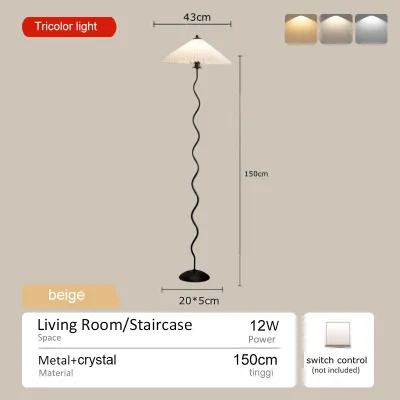
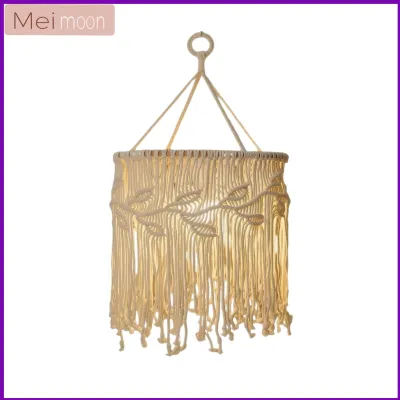
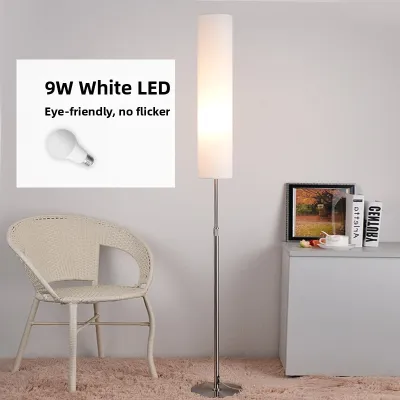
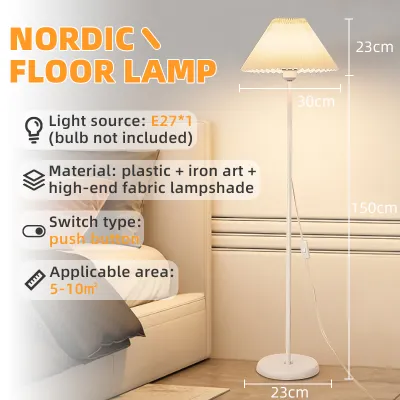
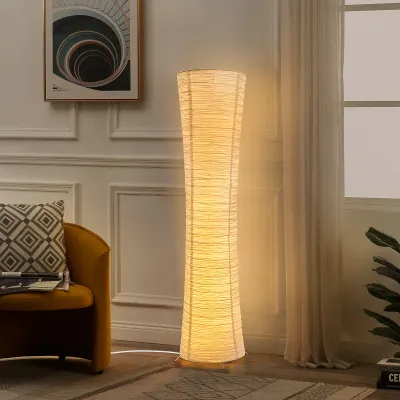
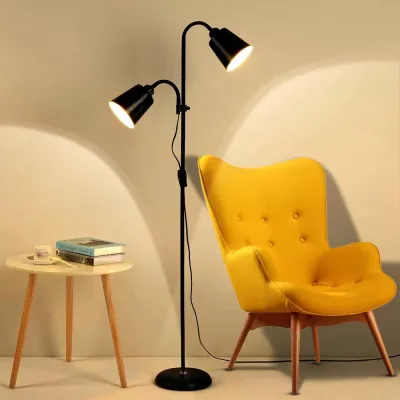
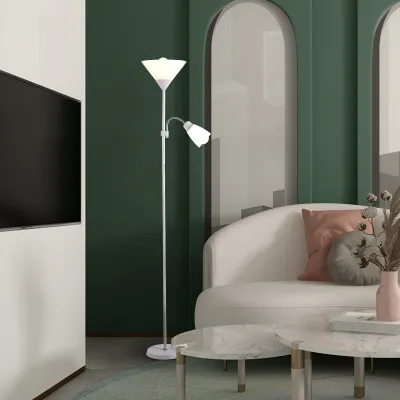
Prices are valid at publication and may change. Please refer to the product page for the latest price.
Achieving visual balance in a corner requires matching the visual weight of the lamp and its shade to the surrounding decor. A delicate, thin-stemmed lamp with a massive drum shade can look top-heavy and awkward next to a low-profile sofa. Conversely, a small, tapered shade on a heavy wooden base might look swallowed up when placed behind a large armchair. The goal is to create a harmonious transition where the lamp complements the height and scale of nearby furniture, drawing the eye upward without overwhelming the corner.
Choosing the Right Shade Shape for Your Corner Goals
The geometry of a lamp shade is the primary factor determining how light is directed, focused, and dispersed throughout your living room. Unlike open-area lighting, corner lighting must be highly intentional because the walls restrict lateral light spread. Before choosing a shape, you must define what you want the corner lamp to achieve: do you need to brighten the entire room, create a focused reading nook, or highlight architectural details?

Different shade shapes act as physical templates that sculpt the light beam. Some shapes allow light to escape from both the top and bottom, while others restrict output to a single direction. By matching the geometric properties of the shade to your specific lighting goals, you can turn a dark corner into a highly functional zone. Let us examine the most common shade shapes and how they perform when positioned in a corner.
Drum and Cylinder Shades for Even Ambient Light
Drum and cylinder shades feature vertical sides that are parallel from top to bottom, creating a symmetrical profile. This geometry allows light to escape equally from both the top and the bottom of the shade, while also diffusing light horizontally through the sides if the material is translucent. In a living room corner, this design is highly effective for generating even, omnidirectional ambient light that helps eliminate dark shadows across a wider seating area.
Because drum shades diffuse light outward, they are excellent for general illumination in cozy reading nooks or adjacent to main sofa setups. The light passing through the sides softens the contrast between the bright bulb and the dark corner, reducing eye strain. This makes the space feel larger and more open, as the soft glow gently washes the surrounding walls without creating harsh lines.
However, drum and cylinder shades have distinct limitations regarding upward light spill. Because the top opening is just as wide as the bottom, a significant amount of light is projected directly toward the ceiling. If your living room has low ceilings or visible structural beams, this upward beam can cast prominent shadows or highlight ceiling imperfections. Additionally, if the lamp is placed too close to a corner, the upward light can create a stark, V-shaped shadow on the intersecting walls, which may detract from the desired soft aesthetic.
Empire and Bell Shades for Focused Downward Glow
Empire and bell shades feature a tapered design where the top opening is significantly narrower than the bottom. The classic empire shade has straight, sloping sides, while the bell shade curves outward toward the bottom rim. This tapering acts as a funnel, directing a small amount of light upward while concentrating the vast majority of the illumination downward in a wide, pooling pattern.
This downward concentration of light makes empire and bell shades highly suitable for corners dedicated to specific tasks, such as reading, crafting, or navigating a dark pathway. When placed next to a favorite armchair or a side table, the wide bottom opening casts a generous, soft pool of light directly onto your lap or table surface. The tapered top prevents excessive upward light spill, keeping the upper walls and ceiling in a softer, more relaxed shadow.
The wider base of these shades also helps ground the lamp visually, making them an excellent match for traditional, rustic, or transitional living rooms that feature heavy hardwood or wicker furniture. However, because the bottom opening is wide, you must carefully position the lamp relative to your seating. If the lamp is too tall or placed too close to an eye-level seat, the wide bottom opening can expose the bare bulb, causing uncomfortable glare for anyone sitting nearby.
Cone and Coolie Shades for Dramatic Wall Washing
Cone and coolie shades feature extremely steep, narrow angles. A coolie shade has a very wide bottom diameter and a tiny top opening, while a cone shade is more compact and highly directional. These shapes severely restrict upward light spill, forcing almost all the light downward and outward at a wide angle, creating a dramatic, highly focused beam.
In a corner, this directional control can be used to achieve a stunning wall washing effect. By directing the wide beam of light downward against the intersecting walls, you can highlight the texture of plaster, concrete, or decorative wood paneling. This technique adds depth and architectural interest to the living room, turning the corner itself into a visual focal point. It is also an ideal way to illuminate a corner sculpture, a large indoor plant, or a gallery wall without scattering light into the rest of the room.
The primary trade-off of cone and coolie shades is their reduced contribution to the room’s overall ambient brightness. Because the light is directed downward and the top is nearly closed, the upper half of the corner remains dark. This can make the wider living space feel smaller or more closed-in if there are no other light sources in the room. Therefore, these shades are best reserved for accent lighting or decorative drama rather than as the primary light source for a busy family room.
How Materials and Liners Control Light Quality
While the shape of the shade dictates the direction of the light, the material and inner liner determine its quality, color temperature, and intensity. In the Philippines, choosing the right material also requires considering environmental factors like high humidity and ambient heat. Fabric shades, such as linen, cotton, or canvas, are popular for their ability to provide a soft, warm, and highly diffused glow. However, in humid tropical climates, untreated natural fabrics can attract moisture, leading to sagging, staining, or mold growth over time. If you prefer a fabric shade, look for synthetic blends or treated materials that resist moisture absorption.
Paper shades offer a minimalist, organic aesthetic that diffuses light beautifully, but they are highly delicate and susceptible to warping in humid conditions or tearing during cleaning. For a more durable alternative that still offers excellent light control, consider glass or metal shades. Glass shades can be frosted to diffuse light evenly or tinted to add warmth, while metal shades are completely opaque, directing all light through their openings for a highly focused, industrial look.
The inner liner of the shade plays a massive role in shaping the corner’s atmosphere. A white or silver liner reflects light efficiently, maintaining a crisp, bright, and neutral color temperature that is ideal for reading or tasks. A gold or brass liner, on the other hand, warms the light as it bounces off the interior surface, casting a rich, amber glow that makes a corner feel incredibly cozy and inviting.
Additionally, heat dissipation is a critical safety factor when selecting materials. Opaque or heavy materials like metal and thick glass can trap heat inside the shade. If the lamp is placed close to concrete walls, wooden furniture, or delicate window drapes, this trapped heat can create a safety hazard or damage nearby finishes. Ensure there is adequate ventilation space around the top of the shade, and pair these materials with cool-operating LED bulbs to minimize heat buildup.
Sizing and Proportion Rules for Corner Spaces
To ensure your floor lamp looks intentional and functions safely, you must follow established sizing and proportion guidelines. A poorly proportioned shade can make the lamp unstable, crowd the corner, or cause uncomfortable glare. As a general rule of thumb for visual stability, the shade’s diameter should be approximately two-thirds the height of the lamp base, and the shade’s height should be roughly equal to the width of its base.
When placing a lamp in a corner, you must measure the physical clearance of the space. The shade should have at least 5 to 10 centimeters of clearance from the adjacent walls to prevent heat buildup and allow air to circulate. If you are placing the lamp behind or next to a sofa, ensure the shade does not overhang the seating area so much that it interferes with head movement or blocks pathways. For tight corners, a slim cylinder or a narrow drum shade is often the most practical choice, as it provides vertical elegance without requiring a wide footprint.
Eye-level placement is another crucial factor for comfort. When you are seated on your living room sofa or accent chair, the bottom of the lamp shade should sit at or slightly below your eye level. This positioning ensures that the hot spot of the bulb is completely shielded by the shade, preventing direct glare from straining your eyes while you relax or watch television. If the lamp is too tall, you may need to adjust its position further into the corner or choose a deeper shade style that covers more of the bulb assembly.
Essential Compatibility and Safety Checks Before Buying
Before purchasing a new lamp shade, you must verify that it is physically and electrically compatible with your existing floor lamp base. Lamp shades attach to bases using different fitter types, and buying the wrong one will prevent proper installation. The most common types are spider fitters, which sit on top of a metal U-shaped harp; uno fitters, which thread directly onto the socket beneath the bulb; and slip-uno fitters, which slide over the socket and are held in place by the bulb itself. Take a close look at your lamp base to determine which system it uses.
Electrical safety is paramount, especially in the Philippines where the standard residential voltage is 220V. Always check the maximum wattage rating printed on your lamp’s socket and ensure your chosen bulb does not exceed this limit. Using a bulb with a wattage that is too high for the fixture or the shade can cause excessive heat buildup, leading to scorched fabric, brittle plastic liners, or even a fire hazard. To maximize safety and energy efficiency, opt for high-quality LED bulbs, which produce minimal heat while delivering excellent brightness. Look for products that carry local safety certifications, such as the Import Commodity Clearance (ICC) sticker or the Philippine Standard (PS) mark, to ensure they meet national safety standards.
Finally, establish safe physical boundaries in your living room layout. Never place a floor lamp where the shade can come into direct contact with lightweight window drapes, curtains, or hanging indoor plants, as movement from open windows or ceiling fans could push these materials against a hot bulb. Ensure the lamp base is heavy and stable, particularly if placed in high-traffic pathways where children or pets might bump into it.
Frequently Asked Questions (FAQ)
Can I use a dark-colored shade in a dim living room corner?
Yes, you can use a dark-colored shade in a dim corner, but you must be prepared for how it alters the light distribution. Dark materials like black, navy, or deep charcoal absorb the majority of the light passing through the sides, preventing the shade from diffusing ambient light into the room. Instead, the lamp will project focused beams of light out of the top and bottom openings, creating a highly dramatic, moody pool of light. If you want to use a dark shade but still need functional brightness, pair it with a high-lumen LED bulb (ensuring it is within the fixture’s wattage limit) and choose a shade with a highly reflective white or metallic inner liner to maximize the light projected downward.
What is the best shade style to prevent glare on a nearby TV screen?
To prevent distracting reflections on a nearby television screen, the best option is an opaque or heavily lined drum or cylinder shade. These styles block lateral light transmission, preventing stray light from casting a direct glare across the room onto your TV screen. Avoid open-sided glass shades or very wide coolie shades that scatter light horizontally. Additionally, position the floor lamp slightly behind the plane of the television screen or deep within the corner, and ensure the bottom of the shade sits below eye level when you are seated, keeping the bright bulb completely hidden from your line of sight while watching your favorite shows.

Community discussion
Share your experience or ask a question. Comments are reviewed before publication.