
Choosing a mirror in the bathroom with a frame is a balancing act between style and spatial perception. In a compact bathroom, the right frame does not just sit on the wall; it actively shapes how light, depth, and boundaries are perceived. By selecting frames with slim profiles, light-reflective finishes, and soft organic curves, you can visually push back the walls of a small bathroom and make the entire space feel significantly more open.
How Frame Design Affects Visual Space in Small Bathrooms
The physical presence of a frame acts as a visual boundary. In a tight bathroom, a heavy, ornate frame can create a hard stop for the eye, making the wall feel closer than it actually is. This visual weight can make a small room feel cramped, especially when space is already at a premium.
Conversely, a sleek, minimal profile allows the eye to glide effortlessly across the wall surface. By minimizing the border, you maximize the reflective surface of the glass, which is the primary driver of the illusion of depth.
Products mentioned in this guide
![[In stock] 16/20 inch Round Mirror Wall Decor with Frame Large Bathroom Mirror with Organizer Wall Mounted Circle Mirror Black Metal Frame for Bathroom Entry Dining Room & Living Room](https://img.lazcdn.com/g/p/af01f9a085e5d0dabc28a88450b3e4f6.jpg_400x400q80.jpg_.webp)
Prices are valid at publication and may change. Please refer to the product page for the latest price.
The finish of the frame also plays a critical role in how light behaves. Matte finishes absorb light, creating distinct shadows and defining the mirror’s boundaries sharply. Light-reflective finishes, such as polished metals or gloss lacquers, catch and scatter both natural and artificial light, softening the edges of the mirror and blending it into the surrounding environment.
Color coordination is another powerful tool for spatial manipulation. Selecting a frame color that closely matches or complements your wall paint reduces visual contrast. When the frame blends with the wall, the transition between the mirror and the room becomes seamless, tricking the brain into perceiving the reflection as an extension of the actual room.
Best Framed Mirror Styles for Compact Bathrooms
To achieve an open, airy feel in a compact bathroom, you should prioritize frame styles that emphasize visual lightness and continuous spatial flow. The goal is to select a design that provides structural support and aesthetic character without dominating the limited wall space.

The ideal style depends heavily on your existing bathroom decor, wall colors, and lighting layout. For instance, a modern, minimalist bathroom benefits from different frame characteristics than a rustic or traditional space. Understanding how these styles interact with your specific environment ensures that the mirror enhances, rather than disrupts, the room’s visual proportions.
Minimalist Thin-Profile Frames
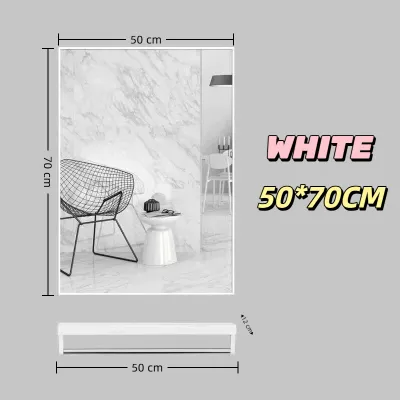
Minimalist thin-profile frames are exceptionally effective for small bathrooms because they reduce the frame’s physical and visual footprint. By keeping the border to a fraction of an inch, you dedicate the maximum possible area to the glass reflection. This maximizes the amount of light bounced back into the room, which is essential for making tight spaces feel larger.
When selecting these ultra-thin frames, material choice is crucial, particularly in humid tropical climates like the Philippines. High humidity can cause low-quality materials to warp, rust, or degrade quickly. Look for slim frames made from anodized aluminum, stainless steel, or engineered composites that offer high structural rigidity without requiring a thick profile.
Before purchasing, always check the manufacturer’s specifications for moisture resistance and edge sealing. A well-sealed mirror prevents moisture from penetrating the backing, which can lead to “black edge” or desilverization. Ensuring the frame is specifically rated for high-humidity environments will preserve both its structural integrity and its clean, space-expanding appearance over time.
Light-Toned Wood and Metallic Finishes
Light-toned wood finishes, such as ash, white oak, or light bamboo, along with brushed metallic finishes like satin brass or chrome, are excellent choices for enhancing brightness. These materials naturally reflect light rather than absorbing it, making them ideal for windowless or poorly lit bathrooms. The warm, soft tones of light wood or the subtle gleam of brushed metal add warmth and depth without creating a heavy visual block.
In highly compact spaces, it is generally best to avoid dark, heavy woods like mahogany or wenge, as well as solid matte black frames. These dark colors create a strong, high-contrast outline that acts as a visual anchor, drawing attention to the exact boundaries of the room and making the walls feel like they are closing in.
Additionally, verify the durability of the finish against standard bathroom cleaning chemicals and persistent moisture. Wooden frames must be treated with a marine-grade sealer or a water-resistant polyurethane coating to prevent swelling and mold growth. Metallic finishes should have a clear protective coat to resist tarnish and corrosion from daily exposure to steam and water splashes.
Arched and Soft-Curved Frames
Arched and soft-curved frames offer a powerful psychological benefit in tight, boxy bathrooms. Most bathrooms are dominated by hard, straight lines from tiles, vanities, and shower enclosures, which can contribute to a feeling of visual claustrophobia. Introducing a curved or arched top edge breaks up these rigid lines, softening the overall aesthetic and drawing the eye upward to create an illusion of greater ceiling height.
When planning for an arched mirror, consider the proportions of the arch relative to your ceiling height. The peak of the arch should have enough breathing room below the ceiling or any crown molding to avoid looking cramped. A good guideline is to leave at least several inches of wall space above the highest point of the frame to maintain a balanced, intentional look.
You must also ensure that the curved frame does not conflict with existing overhead lighting fixtures or wall-mounted medicine cabinets. If you have a low-hanging vanity light, an arched mirror might crowd the fixture or cast awkward shadows. Measure the vertical clearance carefully, and consider using side sconces if overhead space is limited.
Sizing and Proportions for Small Bathroom Mirrors
Determining the optimal dimensions for your framed mirror requires a careful look at your vanity and wall space. A common mistake is choosing a mirror that is too small, which can make the entire vanity area look disjointed and reduce the amount of light reflected. Conversely, a mirror that is too wide can overwhelm the vanity and make the room feel unbalanced.
As a general guideline, the width of the framed mirror should be slightly narrower than the width of the vanity top. Leaving a margin of two to four inches on each side creates a clean, framed look that anchors the vanity without crowding the edges. For example, if you have a 30-inch vanity, a mirror width of 24 to 26 inches, including the frame, often provides the most balanced proportion.
Vertical sizing is equally important for maximizing wall reflection. To create the illusion of a taller ceiling, select a taller mirror that extends upward as far as practically possible. However, you must leave adequate clearance above the backsplash—typically four to six inches—to protect the frame from water splashes, and at least a few inches below the ceiling or light fixtures to maintain visual balance.
In tight, narrow layouts with double vanities, you must decide between one large continuous mirror or two separate framed mirrors. Two individual, vertically oriented mirrors with slim frames can make a narrow double vanity feel more organized and spacious by creating vertical columns of light and reflection. If you choose a single large mirror, ensure the frame is exceptionally thin to prevent the massive border from dominating the entire wall.
Layout and Lighting Strategies to Maximize the Illusion
The placement of your framed mirror plays a vital role in how effectively it expands the room. Whenever possible, position the mirror to reflect natural light sources, such as a window, or open doorways and lighter wall sections. Reflecting an open space or a source of natural light instantly doubles the perceived depth of the room and boosts overall brightness.
Coordinating your vanity lighting is essential to prevent harsh shadows that emphasize the frame’s bulk. Avoid placing a single overhead light directly above a thick frame, as this can cast a dark shadow down the face of the mirror and onto your vanity. Instead, opt for slim, evenly distributed overhead fixtures or side-mounted sconces that wash the mirror and the surrounding wall with soft, even light.
Be mindful of what the mirror will reflect from its fixed position. In a compact bathroom, reflecting a cluttered shelf, a dark corner, or a busy tile pattern can make the room feel twice as cluttered. Aim to keep the reflected area clean, organized, and painted in light, neutral tones to maximize the clean, open feel.
Pre-Purchase and Installation Safety Checklist
Before purchasing and installing a framed mirror, you must verify that your wall structure can safely support the weight. Framed mirrors, especially those with metal or solid wood frames, can be significantly heavier than frameless alternatives. Locate the wall studs using a stud finder, and ensure you use appropriate heavy-duty wall anchors or mounting brackets rated for the mirror’s specific weight.
If you are considering a framed mirror with integrated LED lighting, check for proper damp-rated or wet-rated certifications. Bathrooms are high-moisture environments, and electrical components must be adequately sealed against water vapor to prevent short circuits or electrical hazards. Look for recognized safety certification marks on the product label or manufacturer documentation.
For any installation involving fixed electrical wiring, working at heights, or mounting heavy suspended loads in damp areas, prioritize safety by isolating the power supply at the circuit breaker before starting. If you are unsure about your wall’s load-bearing capacity or the electrical connections, stop and consult a qualified professional to ensure a safe and secure installation.
Frequently Asked Questions (FAQ)
Can a large framed mirror overwhelm a very small bathroom?
Yes, a large mirror can overwhelm a small bathroom if the frame is excessively thick or dark. While a larger glass area is highly beneficial for reflecting light and creating depth, a bulky frame will consume valuable visual space and make the wall feel cluttered. To prevent this, scale the frame thickness down as the overall dimensions of the mirror increase, opting for ultra-thin, light-colored, or metallic borders.
Are frameless mirrors better than framed ones for making a room look bigger?
Frameless mirrors offer maximum, uninterrupted reflection, making them a popular choice for ultra-compact spaces. However, a well-chosen thin-framed mirror can be just as effective while adding necessary design structure, protecting the glass edges from chipping, and preventing moisture from seeping into the silver backing. The key is to select a frame that is thin, light-toned, and visually unobtrusive.

Community discussion
Share your experience or ask a question. Comments are reviewed before publication.