
Arranging led branch vine lights in a small condo bedroom requires utilizing vertical surfaces, natural architectural lines, and non-damaging mounting methods to maximize floor space. By draping these flexible branch lights along headboards, cascading them down vertical corners, or hanging them as a floating canopy near the ceiling, you can introduce a warm, organic glow that makes a compact room feel deeper and more inviting. This approach allows you to bypass bulky floor lamps or bedside tables, transforming empty walls into functional decorative elements.
Preparing Your Condo Bedroom and Lighting Kit
Before unboxing your led branch vine lights, a systematic assessment of your condo bedroom layout is essential. Small studio or one-bedroom units in the Philippines often feature concrete walls and limited electrical outlets, meaning you must plan your lighting pathway around existing power sources. Measure the distance from your nearest outlet to the target wall or headboard area to ensure the power cord can reach without being stretched tightly. Sketching a quick layout on paper helps you visualize the flow of the branches and determine exactly where the main trunk of the vine will sit.
When preparing your lighting kit, verify the technical specifications of your specific product rather than relying on generic category descriptions. Check the manufacturer’s label to confirm the exact voltage, base or interface type, wattage limit, and overall dimensions of the vine. Ensure the set is certified by local or international electrical safety bodies (such as the PS mark or ICC sticker in the Philippines). Additionally, confirm whether your lights support a dimming method and if the controller is compatible with your installation environment, especially if you plan to plug them into a smart plug or home automation system.
Products mentioned in this guide
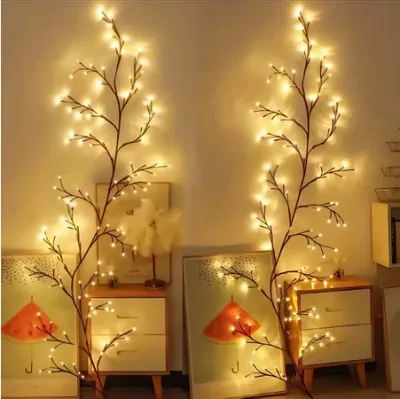
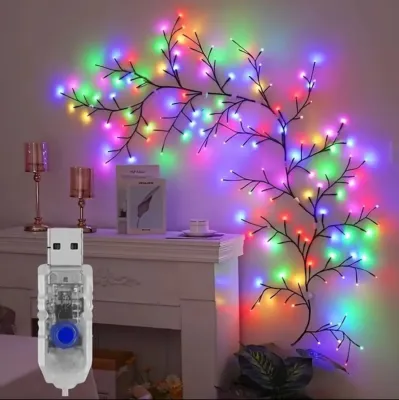
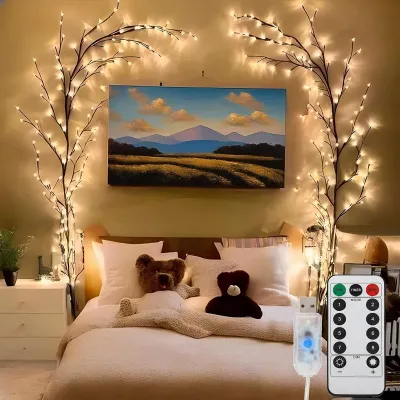
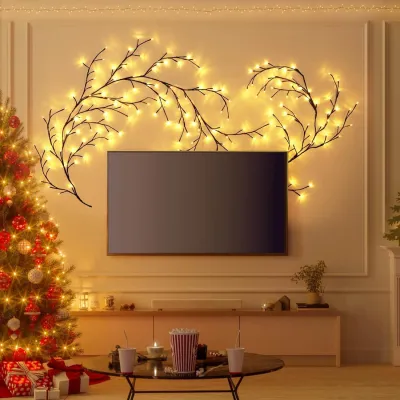
Prices are valid at publication and may change. Please refer to the product page for the latest price.
For any installation involving suspended loads, working at height, or routing near damp areas like en-suite bathroom doors, safety must be your absolute priority. Always isolate the power by unplugging the unit before mounting or adjusting the branches. Use a stable step stool or ladder to reach high areas, and never attempt to modify the fixed wiring of your condo yourself. If your installation requires new electrical outlets or permanent wall modifications, always consult a qualified professional electrician to ensure compliance with the Philippine Electrical Code.
Having the right tools on hand prevents mid-installation delays and protects your condo’s interior finishes. Gather damage-free adhesive hooks, clear cable clips, plastic zip ties, and a sturdy step stool to safely reach higher sections of your wall or ceiling. Clear adhesive clips are particularly useful because they blend into the background, letting the delicate vine design take center stage. A step stool ensures you do not overreach or stand on unstable furniture, which is a common cause of household accidents during decorative installations.
Living in a rented or managed condominium means adhering to strict property guidelines regarding wall damage. Most condo association rules or lease agreements strictly prohibit drilling holes, driving nails, or using heavy-duty mounting tape that strips paint upon removal. Opting for high-quality, removable adhesive hooks allows you to achieve a beautiful, cascading vine effect without risking your security deposit. Always clean the wall surface with a dry microfiber cloth before applying any adhesive, as dust and moisture can significantly reduce the bond strength.
Space-Saving Arrangement Techniques for Small Rooms
Framing the Headboard and Bed Area
The bed is naturally the focal point of any small bedroom, and framing it with led branch vine lights enhances this central feature without consuming valuable floor or bedside table space. Start by mapping out the shape of your headboard or the wall space directly above it. Apply damage-free adhesive hooks along the perimeter, spacing them roughly 30 to 45 centimeters apart to distribute the weight of the vine evenly. When mounting the main vine trunk, avoid pulling the wires taut; instead, allow the branches to drape with a slight, natural sag to mimic the organic growth of a real climbing plant.

Once the main trunk of the vine is securely anchored, you can gently bend and shape the smaller lateral branches. High-quality led branch vine lights feature flexible internal wiring that holds its shape when bent, allowing you to fan the twigs upward and outward. Ensure that the lowest hanging branches are positioned high enough so they do not brush against your pillows, bedding, or head when you sit up to read. Keeping the branches clear of active bedding areas prevents accidental snagging and reduces wear and tear on the delicate wire connections.
Draping Along Walls and Vertical Corners
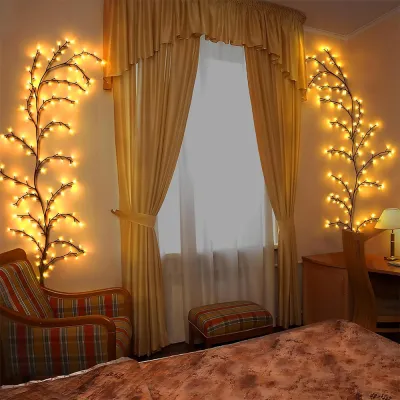
Vertical corners are often underutilized in small condo layouts, making them the perfect canvas for a cascading light installation. Draping your led branch vine lights down a corner draws the eye upward, creating a visual illusion of height that makes low ceilings feel more spacious. Begin by securing the top anchor point of the vine near the ceiling joint using a heavy-duty adhesive hook. Let the main trunk of the vine drop straight down the corner, using clear cable clips along the seam of the walls to keep the central wire perfectly aligned.
After securing the vertical trunk, pull the individual branch tips outward along both adjacent walls to create a three-dimensional, climbing effect. This technique balances the visual weight of the room, turning a dark, neglected corner into a soft, glowing architectural feature. Be careful not to overcrowd one side; spread the branches symmetrically or in a natural, tapering pattern that gets sparser as it nears the floor. This structured yet organic distribution ensures the lighting feels integrated into the room’s design rather than looking like an afterthought.
Creating a Floating Canopy or Curtain Effect
For an immersive atmosphere, suspending your led branch vine lights near the ceiling or across a window frame creates a floating canopy that adds depth without cluttering your living space. To construct a window curtain effect, mount adhesive hooks along the top architrave or casing of the window frame. Drape the main vine horizontally across the top, allowing the individual leafy branches to hang downward like a glowing valance. This setup frames your view of the city skyline at night while leaving your floor space completely unobstructed.
When adjusting the density of the downward-hanging branches, aim for a balance that allows natural light to enter during the day. Do not bunch the branches too closely together; spread them out so they cover the upper third of the window or wall space. This open arrangement ensures that your curtains or blinds can still operate smoothly without catching on the wires. At night, the downward-pointing LEDs cast a soft, indirect glow that bounces off the window glass, doubling the ambient light effect in your room.
Hiding Power Cords to Reduce Visual Clutter
In a compact condo bedroom, exposed, messy cables can instantly disrupt the peaceful ambiance you are trying to create. To maintain a clean and intentional aesthetic, route the main power cable of your led branch vine lights neatly along the baseboards or behind your headboard. Use small, clear adhesive cable clips spaced closely together to keep the cord flat against the wall, preventing it from sagging or bowing outward. If your walls are painted a distinct color, consider using paintable plastic cord covers that snap shut, allowing you to paint the channel to match your wall perfectly.
The bulky power adapter and controller box of your LED lights can be difficult to hide gracefully. A practical solution is to tuck the adapter behind your bed frame or bedside table, ensuring it does not get pinched between the furniture and the wall. Alternatively, you can place the power strip and adapter inside a small, decorative woven basket made of natural fibers like seagrass or rattan, which fits beautifully into tropical interior styles. This keeps the unsightly plastic components out of view while keeping them easily accessible if you need to manually turn the lights off or adjust the settings.
While hiding your cables, you must prioritize safety over aesthetics to prevent electrical and physical hazards. Never run power cords or extension cables under rugs, carpets, or heavy furniture, as continuous foot traffic or compression can wear down the insulation and lead to short circuits or fires. Avoid routing cables across active walking paths where they can become tripping hazards, especially in the dark. Additionally, ensure that cords are not pinched in door hinges, window frames, or tight gaps between your mattress and bed frame, as mechanical stress can damage the internal copper wiring.
Maintaining Your Lights in a Humid Climate
The tropical climate of the Philippines introduces unique challenges for indoor electronics, particularly high humidity levels and temperature fluctuations from air conditioning. Before setting up your lights, check the Ingress Protection (IP) rating on the product label. Most indoor led branch vine lights are rated IP20, which means they are designed strictly for dry indoor environments and have no resistance to water ingress. If your condo experiences high humidity, ensure your room is well-ventilated or use a dehumidifier to protect the delicate internal circuitry of the LEDs from moisture-induced corrosion.
Keeping your vine lights clean is essential for maintaining their brightness and preventing dust buildup, which can trap heat. Perform routine dusting using a dry microfiber cloth or a soft-bristled static duster, gently wiping along the main trunk and individual branches. Avoid using wet cloths, liquid cleaning solutions, or chemical sprays, as moisture can seep into the LED diode casings and cause premature failure. Always unplug the power adapter from the wall outlet before cleaning to eliminate any risk of electrical shock.
The combination of high humidity and heat from tropical weather can gradually weaken the adhesive backing on your wall hooks. Periodically inspect your mounting hooks to ensure they remain firmly attached to the wall and are not beginning to peel or slip. If you notice a hook lifting, remove it immediately, clean the wall surface with rubbing alcohol, let it dry completely, and apply a fresh adhesive strip. If your lights begin to flicker, emit a burning smell, or if the power adapter feels unusually hot to the touch, unplug them immediately, discontinue use, and consult a qualified technician or the manufacturer.
Frequently Asked Questions (FAQ)
Can I use adhesive hooks for heavy vine lights?
Yes, you can use adhesive hooks, but you must verify the weight capacity printed on the product packaging before installation. Most standard led branch vine lights are relatively lightweight, but longer or more densely branched models can exert significant downward pull. To ensure a secure hold, distribute the weight of the vine evenly by spacing your hooks no more than 40 centimeters apart. Always clean the wall surface thoroughly, apply the hook, and allow the adhesive to cure for the manufacturer’s recommended time—usually 1 hour to 24 hours—before hanging any weight on it.
Will the LED branches get hot and damage my wall paint?
LED diodes are highly efficient and emit very little heat compared to traditional incandescent bulbs, making them safe to place directly against painted drywall or concrete. However, while the branches themselves remain cool to the touch, the main power adapter and controller box do generate heat during operation. To prevent damage to your wall paint or surrounding materials, always position the power adapter in a well-ventilated area. Avoid placing the adapter in direct contact with fabrics, bedding, or enclosed, unventilated spaces where heat can build up over time.

Community discussion
Share your experience or ask a question. Comments are reviewed before publication.