
To transform a standard condominium balcony into a cozy evening retreat, you typically need between 5 and 15 meters of outdoor fairy string lights. The exact length depends heavily on your balcony’s dimensions and how you plan to drape or hang the strands. A simple straight-line run along a railing requires far less length than a dramatic zigzag pattern across the ceiling or a series of deep, elegant swags. By taking precise measurements and applying simple layout multipliers, you can avoid the frustration of a strand that stops short or leaves you with awkward, excess bundles of wire.
Measuring Your Balcony and Choosing a Layout Pattern
To determine the exact length of fairy string lights required, begin by measuring the physical boundaries of your balcony using a standard tape measure. If you plan to wrap the lights along the top rail of your balcony balustrade, measure the linear distance from one end of the railing to the other. For balconies with a brick, concrete, or glass balustrade, you might prefer to run the lights along the perimeter of the ceiling or trace the frame of the sliding glass door. Write down these base linear measurements in meters.
Once you have the base measurements, you must apply a layout multiplier to account for how the lights will hang. If you prefer a taut, perfectly straight line, a 1:1 ratio is sufficient, but you should still add an extra half-meter to prevent the wire from being pulled too tight at the connection points. For a classic draped or “swag” effect along the railing, multiply your linear measurement by 1.2 to 1.3. This extra 20% to 30% of length provides the necessary slack for the wire to dip gracefully between mounting points. If you plan to create a dense vertical curtain of lights or a zigzag pattern across the balcony ceiling, use a piece of non-stretch string to mock up the path first, then measure that string to find your required length.
Products mentioned in this guide
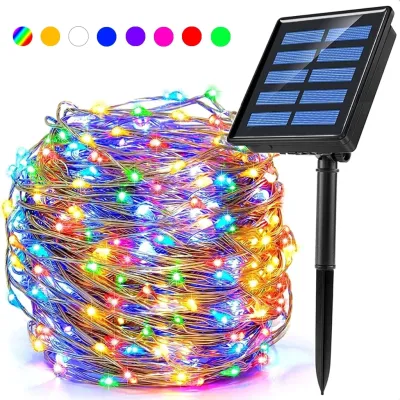
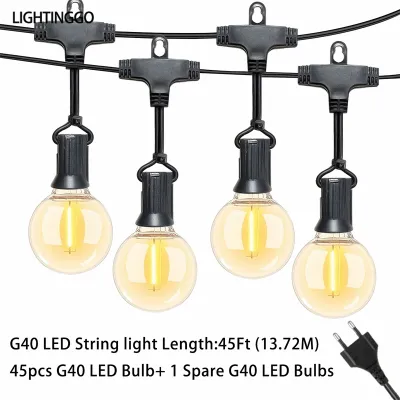
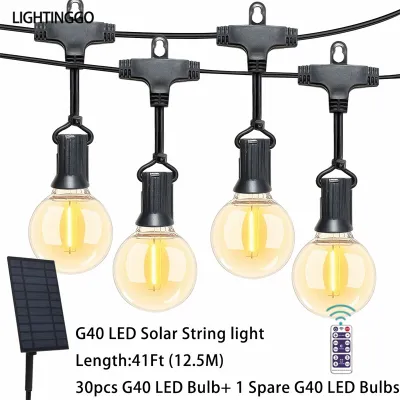
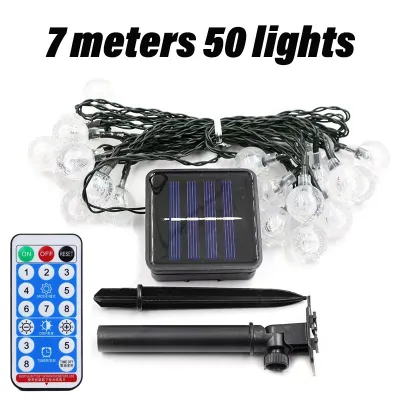
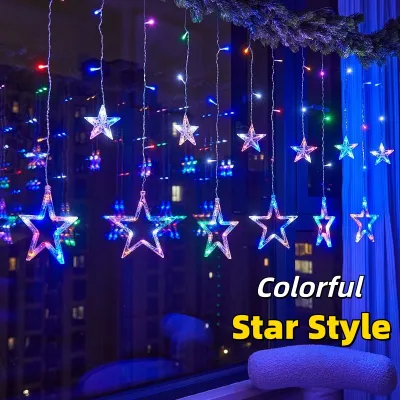
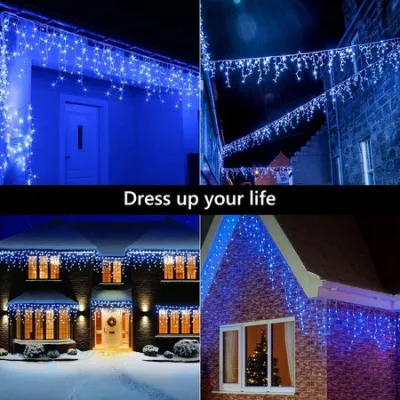
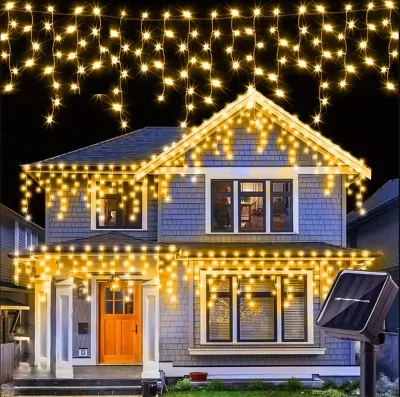
Prices are valid at publication and may change. Please refer to the product page for the latest price.
Do not forget to calculate the distance from your power source to the start of the illuminated section of the light string. Many outdoor fairy lights include a “lead cable”—a length of unlit wire between the plug or transformer and the first bulb. If your balcony lacks an outdoor electrical outlet, you will likely need to run the power cord through a sliding door or window to an indoor outlet. Measure this distance carefully. If the product you select has a short lead cable, you may need to purchase a compatible, weatherproof extension cord or factor this distance into your total length calculations so that active light bulbs do not end up sitting inside your living room.
Selecting Brightness and Density for a Warm Ambient Glow
Achieving a cozy, inviting atmosphere on your balcony requires selecting the right light quality and bulb density. When browsing options, check the product packaging or specifications for the color temperature, which is measured in Kelvin (K). For a warm, relaxing glow that mimics candlelight, look for lights rated between 2200K and 2700K, often labeled as “warm white” or “soft glow.” Avoid cool white lights rated at 5000K or higher, as these emit a stark, bluish-white light that can feel clinical and ruin the relaxing ambiance of an outdoor seating area.

Bulb density—how closely the lights are spaced along the wire—also plays a critical role in the overall visual effect. Standard copper-wire fairy lights typically feature micro-LED bulbs spaced 10 centimeters apart, which provides a continuous, twinkling line of light. If you prefer a softer, more dispersed glow, look for strands with 15 to 20 centimeters of spacing between bulbs. Checking the total bulb count on the packaging is an excellent way to gauge density; a 10-meter strand with 100 LEDs will offer a much brighter, more concentrated light output than a 10-meter strand with only 50 LEDs.
Additionally, verify the wattage and lumen output of the light set to ensure it is suitable for ambient lighting rather than task lighting. Low-voltage LED fairy lights are highly recommended for condo balconies because they consume very little power and generate virtually no heat. This makes them safe to drape near outdoor fabrics, wooden privacy screens, or synthetic plants. High-voltage incandescent strands, by contrast, can become hot to the touch and consume significantly more electricity, making them less practical for prolonged evening use.
Checking Weather Resistance and Power Requirements
Because your balcony is exposed to the elements, selecting lights with the appropriate weather resistance is vital for safety and longevity. The tropical climate in the Philippines brings intense sun, high humidity, and heavy seasonal rainfall. Always check the product label for an Ingress Protection (IP) rating. For outdoor balcony use, look for a minimum rating of IP44, which indicates the lights are protected against splashing water from any direction. If your balcony is highly exposed to wind-driven rain, upgrading to an IP65-rated set is highly recommended, as these are completely dust-tight and protected against water jets.
Electrical compatibility is another critical safety factor. Verify that the light set is designed for the local standard voltage of 220V at 60Hz. If the lights use a step-down transformer plug (which converts the high voltage to a safe 5V, 12V, or 24V), ensure the transformer itself is rated for outdoor use if it will be plugged into an exterior outlet. Look for recognized safety marks, such as the Philippine Standard (PS) quality mark or an Import Clearance Certificate (ICC) sticker, to ensure the product has passed local electrical safety standards.
Proper cable routing is essential to prevent electrical hazards and physical accidents. Avoid running wires across the balcony floor where water can pool during heavy downpours or where people might trip. If you must route a cable from an indoor outlet to the balcony, use a flat, heavy-duty cable that can pass through the rubber seals of your sliding door without being pinched or stripped. If you have an outdoor outlet, it must be protected by a weatherproof, “in-use” cover that keeps the plug dry even when a cord is plugged in. Always isolate the power supply by unplugging the lights before adjusting, hanging, or cleaning the strand.
Safe Installation and Condo Balcony Guidelines
Installing your fairy lights safely requires respecting both physical safety and your condominium’s building regulations. Most condo corporations strictly prohibit drilling holes into exterior walls, concrete ceilings, or aluminum window frames, as drilling can damage the building’s waterproofing envelope and lead to leaks. Instead, opt for damage-free mounting solutions. Outdoor-rated adhesive clips are excellent for smooth surfaces like glass or painted metal, but ensure the adhesive is formulated to withstand high tropical heat and humidity without melting. For metal railings, grilles, or wooden balcony posts, UV-resistant plastic zip ties are an incredibly secure, inexpensive, and completely reversible mounting option.
When hanging lights, always prioritize personal safety, especially if your balcony is on a high floor. Use a sturdy, slip-resistant step stool or ladder rather than standing on balcony furniture. Keep your center of gravity well inside the balcony railing, and never lean over the edge to secure a wire. If you need to hang lights along a high ceiling or an hard-to-reach outer beam, consider using a telescoping pole or consulting a qualified professional to assist with the installation.
Finally, consult your condominium administration’s house rules or deed of restrictions before finalizing your lighting setup. Many buildings have strict guidelines regarding the appearance of balconies from the street. Some properties ban flashing, blinking, or multi-colored lights to maintain a uniform building facade, while others may restrict lights that are bright enough to disturb neighbors in adjacent units. Choosing a steady, warm white glow is generally the safest option to comply with building aesthetics while creating a peaceful personal sanctuary.
Frequently Asked Questions (FAQ)
Are solar-powered fairy string lights a good alternative for balconies without outdoor outlets?
Solar-powered fairy string lights can be a convenient alternative, but their effectiveness depends heavily on your balcony’s orientation and daily sun exposure. Because most condominium balconies are recessed or covered by an overhanging ceiling, they often receive only indirect sunlight or remain shaded for most of the day. A solar panel requires several hours of direct, unobstructed sunlight to fully charge its internal battery. If your balcony faces north or is deeply shaded, the solar panel will struggle to charge, resulting in a significantly shorter runtime and a much dimmer light output compared to plug-in models.
Furthermore, seasonal weather patterns in the Philippines can impact solar performance. During the rainy season, prolonged overcast skies and heavy cloud cover mean your solar lights may not charge sufficiently to turn on at night. If you have a south- or west-facing balcony that receives ample direct sunlight, solar lights can work well. However, for most covered condo balconies, a plug-in set or a rechargeable USB-powered light string remains the most reliable choice for consistent, bright ambient lighting throughout the year.

Community discussion
Share your experience or ask a question. Comments are reviewed before publication.