
Finding the perfect bedside desktop lamp requires balancing personal visibility with your partner’s sleep quality. The ideal lamp must offer highly directional light control, adjustable brightness levels, and a warm color temperature. By focusing on these features, you can easily read your favorite book in bed without casting a disruptive glare across the room.
To achieve this, look for a lamp with a flexible gooseneck or adjustable arm, a deep shade that narrows the beam angle, and a stepless dimmer. These elements ensure the light shines directly onto your pages while keeping the rest of the bed in comfortable darkness.
Evaluating Brightness and Color Temperature for Nighttime Comfort
Controlling the intensity and tone of your light is the first line of defense against eye strain and partner sleep disruption. When shopping for a desktop lamp, the dimming mechanism is a critical specification to verify. Stepless dimming, which allows you to smoothly adjust the light from 100% down to a faint glow, is highly preferable over stepped dimming. Stepped dimmers often jump between pre-set levels that may either be too dim to read comfortably or too bright for a dark room.
Products mentioned in this guide
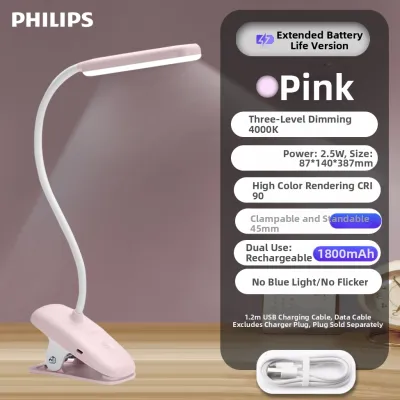
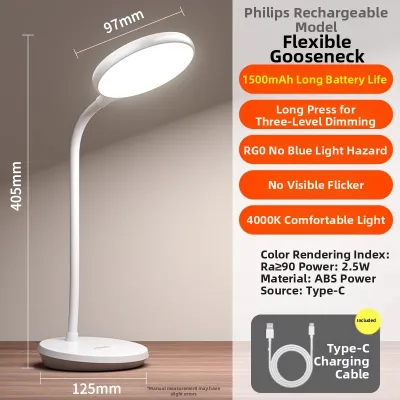
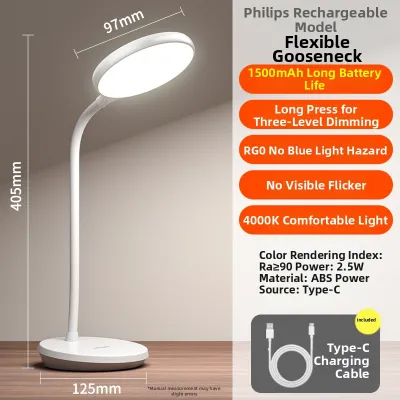
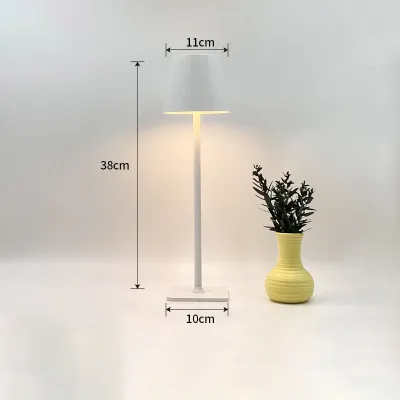
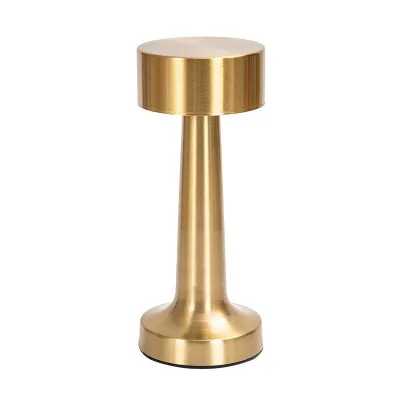
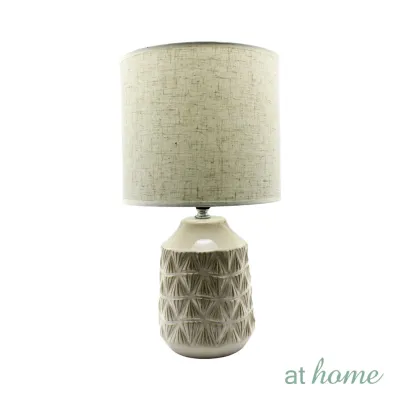
Prices are valid at publication and may change. Please refer to the product page for the latest price.
Always check the product label or specifications for the minimum lumen output. A lamp that can dim down to a very low level ensures you can read in a pitch-black room without illuminating the entire space. If the lamp uses replaceable bulbs, verify that both the bulb and the lamp fixture are rated for dimming to prevent annoying flickering or buzzing.
Color temperature plays an equally vital role in preparing your body for sleep. Look for lamps or bulbs that offer a warm color temperature, typically between 2700K and 3000K. This range mimics the soft, amber glow of candlelight, which is much gentler on the eyes at night. Avoid cool white or daylight settings (5000K and above) for bedtime reading, as these blue-toned lights can suppress melatonin production and keep you awake.
Many modern desktop lamps feature adjustable color temperature controls. If you share a room, a lamp with a dedicated warm or night mode allows you to switch from a neutral working light during the day to a soft, sleep-friendly glow at night. Always verify these settings on the product packaging before purchasing.
Directing Light: Beam Angle and Arm Flexibility
Even the dimmest light can disturb a sleeping partner if it spreads widely across the bed. To prevent this, you must look closely at how the lamp directs its beam. A lamp with a highly flexible arm or a multi-jointed gooseneck is essential for bedside reading. This design allows you to pull the light source close to your book and angle it downward, keeping the beam concentrated on your pages.

In contrast, lamps with fixed shades or rigid stands tend to scatter light in all directions. While these are excellent for general ambient lighting, they are poorly suited for shared bedrooms. An adjustable arm lets you position the light below eye level, which naturally shields your partner’s eyes from direct glare.
The design of the lamp shade itself is another critical factor in light containment. Look for a deep, opaque shade made of metal, thick plastic, or dense fabric. The shade should fully enclose the bulb so that the light source is not visible from the side. A reflective interior lining, such as silver or white, helps maximize the light directed onto your book, allowing you to use a lower, less disruptive brightness setting.
Before choosing a highly adjustable lamp, consider its physical footprint and stability. A flexible arm requires a sturdy, weighted base to prevent the lamp from tipping over when fully extended. Measure your nightstand surface to ensure the base fits securely without crowding other essentials like your phone, water glass, or alarm clock.
Checking Switches, Power, and Nightstand Fit
A bedside lamp must be easy and quiet to operate, especially when you are ready to drift off to sleep. Evaluate the placement and type of switch before making a decision. Touch-sensitive controls located on the base are highly convenient, as they eliminate the need to fumble for a cord in the dark. They also operate silently, unlike mechanical click switches that can startle a light sleeper.
If the lamp uses an inline cord switch, check where the switch is positioned along the cable. A switch placed too far down the cord may slip behind the nightstand, forcing you to stretch or lean out of bed to turn off the light. Look for models where the switch is integrated into the lamp base or located within easy arm’s reach on the upper portion of the cord.
Electrical compatibility and safety are paramount when setting up any lighting fixture. In the Philippines, the standard household voltage is 220V at 60Hz. Always verify that the lamp’s product label matches these electrical specifications to avoid damaging the internal circuitry or creating a safety hazard. Look for local safety certification marks, such as the Philippine Standard (PS) mark or Import Commodity Clearance (ICC) sticker, to ensure the product meets national safety standards.
Additionally, measure the distance from your nightstand to the nearest wall outlet. Many desktop lamps come with relatively short power cords, which may require you to use an extension cord. To maintain a clean, clutter-free look and reduce tripping hazards, select a lamp with a cord length that comfortably reaches your outlet. If you live in a high-humidity tropical environment, ensure the power cord and plug are robust and free from exposed wiring.
Adapting the Lamp for Multiple Bedroom Scenarios
Many bedrooms serve multiple purposes, from a quiet sanctuary for sleep to a temporary home office. If you use your bedside space for working, studying, or browsing on a tablet, a versatile desktop lamp can adapt to these changing needs. Look for lamps that offer multi-scene presets or a built-in memory function. A memory function automatically restores your last-used brightness and color temperature settings when you turn the lamp back on, saving you from a sudden burst of bright light in the middle of the night.
Integrated utility features can also help streamline your bedside setup. Many modern desktop lamps feature built-in USB charging ports or wireless charging pads on the base. These additions are highly practical for charging your phone or e-reader overnight, reducing the number of adapters and cables cluttering your nightstand. However, verify the charging port’s output specifications on the label to ensure it provides sufficient power for your devices.
When deciding between a dedicated reading light and a multi-purpose desktop lamp, consider your primary activities. If you only read occasionally, a simple, low-wattage lamp with a warm bulb may suffice. However, if you frequently transition between working on a laptop and reading a physical book, investing in a high-quality desktop lamp with adjustable color temperatures and flexible positioning will provide the best long-term utility.
In tropical climates, materials matter just as much as features. High humidity can cause metal joints to rust or fabric shades to accumulate dust and mildew over time. Opt for lamps made with rust-resistant finishes, anodized aluminum, or easy-to-wipe plastic and glass surfaces to ensure your bedside setup remains clean and functional for years to come.
Frequently Asked Questions (FAQ)
Can I use a standard desktop lamp for bedside reading?
Yes, you can use a standard desktop lamp, but you must check its features carefully. Many standard desk lamps are designed for broad task lighting and may have wide beam spreads that spill light across the entire bed, potentially disturbing your partner. To make a standard desktop lamp work for bedside reading, ensure it has an adjustable arm to direct the light downward and a low-wattage, warm-toned bulb to minimize glare.
How do I clean and maintain the lamp shade and adjustable joints?
To clean your lamp safely, always unplug it from the wall outlet and allow the bulb to cool completely before touching any parts. For metal, plastic, or glass shades, gently wipe the surfaces with a dry microfiber cloth to remove dust. If your lamp has adjustable joints or a gooseneck, check the tension screws periodically and tighten them gently if the arm begins to sag. Stop adjusting immediately if you feel strong resistance to avoid damaging the internal wiring or stripping the joints.

Community discussion
Share your experience or ask a question. Comments are reviewed before publication.