
An effective floor lamp for ambient lighting serves as the foundation of a living room’s visual comfort, transforming a stark, unevenly lit space into a warm and inviting sanctuary. Unlike focused task lights or dramatic accent spotlights, a great ambient floor lamp disperses soft, glare-free illumination across a wide area, establishing a balanced baseline of light that fills the room. To achieve this, the ideal fixture relies on highly diffusive shade materials, strategic light direction—such as bouncing light off ceilings and walls—and adjustable brightness levels. By prioritizing these characteristics, you can create a relaxing evening environment that minimizes eye strain and complements your home’s overall design.
What Ambient Light Actually Does for Your Living Room
To select the right fixture, it is essential to understand how ambient light functions within a layered lighting scheme. In interior design, lighting is divided into three primary categories: ambient, task, and accent. Task lighting provides concentrated illumination for specific activities like reading, while accent lighting highlights architectural features or artwork. Ambient light, on the other hand, acts as the “fill light” of the room. It does not target a single spot; instead, it establishes the overall brightness level, allowing family members to navigate the space safely and comfortably without relying on harsh overhead fixtures.
The primary mechanism of high-quality ambient illumination is diffusion. When light passes through a semi-translucent barrier or reflects off a broad surface, it scatters in multiple directions. This scattering effect softens the transition between light and shadow, eliminating the deep, dramatic shadows that can make a living room feel cold or cavernous. By softening these contrasts, ambient light creates a visually cohesive environment that feels instantly relaxing to the human eye.
Products mentioned in this guide
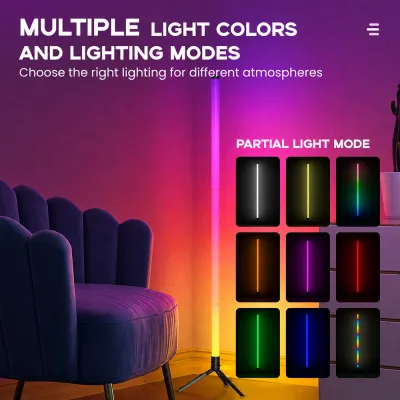
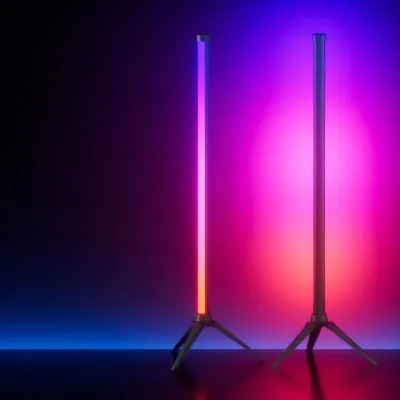
Prices are valid at publication and may change. Please refer to the product page for the latest price.
Furthermore, visual comfort is heavily influenced by how light enters our field of vision. Direct exposure to an exposed bulb causes glare, which leads to eye fatigue and headaches over time. An effective ambient floor lamp avoids this by directing its output away from direct eye level, often bouncing it off the ceiling or nearby walls. This indirect illumination mimics the natural, scattered light of daytime, providing a gentle, glare-free glow that makes the living room a much more comfortable space for extended relaxation, conversation, or entertainment.
Key Features That Make a Floor Lamp Effective for Ambient Light
Achieving the desired ambient glow requires a close look at the physical components of the floor lamp. The first and most critical element is the shade material and its level of opacity. Materials like linen, cotton, rice paper, and frosted glass are excellent choices for ambient lighting because they are semi-translucent. They allow a portion of the light to pass through gently while scattering the rest, creating a soft, omnidirectional glow. In contrast, clear glass shades offer no diffusion, resulting in harsh glare, while solid metal or opaque plastic shades block lateral light entirely, turning the fixture into a directional spotlight rather than an ambient source.

The shape of the shade also dictates how the light is distributed throughout the room. A classic drum shade, which is open at both the top and bottom, allows light to escape vertically to wash the ceiling and floor while diffusing light horizontally through the fabric. An empire shade, which tapers toward the top, directs more light downward, making it slightly more directional but still highly effective if the fabric is sufficiently translucent. Understanding these structural differences helps you select a shade that aligns with your specific lighting goals.
Another highly effective design for ambient illumination is the uplighter, often referred to as a torchiere. These lamps feature a bowl-shaped shade that directs light straight upward toward the ceiling. By using the ceiling as a massive reflector, an uplighter disperses light across a vast area, creating a highly efficient, indirect ambient source that makes the entire room feel larger and more open. If your living room has light-colored ceilings, a torchiere can serve as the primary backbone of your ambient lighting setup.
Color temperature plays an equally vital role in setting the mood of your living room. Measured in Kelvins (K), color temperature dictates whether a light source looks warm and yellow or cool and blue. For living rooms, especially in residential settings where relaxation is the priority, warm white to neutral white ranges—typically between 2700K and 3000K—are highly recommended. This range mimics the gentle glow of sunset or candlelight, which helps signal to the body that it is time to wind down. Cooler temperatures, such as 4000K or higher, can feel overly clinical and disruptive to an evening atmosphere.
Finally, dimming capabilities are indispensable for a truly functional ambient floor lamp. The lighting needs of a living room change constantly throughout the day. A bright, clear light may be necessary during a rainy afternoon or while hosting a gathering, but a much softer, low-level glow is preferred when watching a movie or winding down before bed. Choosing a floor lamp with a built-in dimmer switch, or ensuring that the fixture is compatible with dimmable LED bulbs and external dimming accessories, gives you the flexibility to adjust the room’s atmosphere instantly.
Sizing and Styling the Lamp for Your Space
A floor lamp must not only perform well electrically but also harmonize physically with your living room’s layout and decor. Proportions and height are key considerations. As a general rule, the bottom of the lamp shade should sit at or near eye level when you are seated on your sofa or armchair—typically between 58 to 64 inches from the floor. This height prevents you from looking directly up into an exposed bulb while seated, preserving the glare-free quality of the ambient light. Additionally, the lamp’s overall height should scale with your ceiling; exceptionally tall lamps can look awkward under low ceilings, while short lamps may get lost in double-height spaces.
The physical footprint and base stability of the lamp are critical safety and practical factors, particularly in active households. A heavy, weighted base is essential to prevent the lamp from tipping over if it is accidentally bumped. This is especially important in high-traffic areas, or in homes with young children and pets. Before purchasing, measure the available floor space around your seating arrangements to ensure the base can sit completely flat on the floor without extending into walkways or causing a tripping hazard.
Visual weight is another styling dimension to consider. A lamp with a thin, minimalist metal stem and a light-colored shade has a low visual weight, making it ideal for smaller living rooms where you want to maintain an open, airy feel. Conversely, a lamp with a chunky ceramic, wood, or tripod base has a high visual weight, serving as a prominent design statement. Matching the visual weight of the lamp to your existing furniture prevents the fixture from overpowering the room or looking like an mismatched afterthought.
Electrical and Safety Verifications Before Purchase
Before finalizing your purchase, it is crucial to perform several technical and safety checks to ensure the floor lamp operates safely in your home. In the Philippines, the standard residential electrical system operates at 220 volts (V) at a frequency of 60 hertz (Hz). Always verify that the lamp’s electrical components, including the socket and internal wiring, are rated for 220V. Additionally, check the plug type; most local outlets accommodate flat two-prong plugs (Type A) or three-prong grounded plugs (Type B). Using adapters on incompatible plugs can sometimes lead to loose connections and electrical hazards.
Power socket compatibility also extends to the bulb base. The most common screw-in socket type in the Philippines is the E27 base. Ensure that the floor lamp you choose uses a standard socket size that makes finding replacement bulbs easy at local hardware stores or online marketplaces.
Power cord management is another vital safety consideration. Measure the distance from your desired lamp placement to the nearest wall outlet. The power cord should be long enough to reach the outlet comfortably without being stretched taut. Avoid routing cords under rugs, carpets, or heavy furniture, as this can trap heat and cause the insulation to wear down over time, creating a fire hazard. If a cord must cross a walkway, use a low-profile, rubber cord protector to prevent tripping.
Always review the manufacturer’s maximum wattage limit, which is typically printed on a label near the bulb socket. Exceeding this limit can melt the socket, damage the wiring, and pose a severe fire risk. When using modern LED bulbs, which draw significantly less power than traditional incandescent bulbs, ensure the bulb’s actual wattage (not its “incandescent equivalent”) falls well below the fixture’s maximum rating. In tropical, humid climates, proper heat dissipation is essential; choosing high-quality LED bulbs designed for enclosed or semi-enclosed shades helps prevent premature bulb failure due to heat buildup.
While most floor lamps are plug-and-play fixtures, certain scenarios require professional assistance. If you plan to connect your floor lamp to a wall outlet controlled by a dedicated wall switch, or if you wish to integrate the fixture into a complex, hardwired smart home automation system, consult a qualified electrician. A professional can ensure that the wiring, switches, and dimmers are fully compatible and safely installed according to local electrical codes.
Building Your Shortlist: A Condition-Based Selection Guide
To simplify your decision-making process, use this structured, step-by-step framework to evaluate and compare your floor lamp options:
- Step 1: Assess the Room's Existing Light: Turn on your current living room lights during the evening. Identify specific dark corners, shadows, or areas where the light feels harsh. This helps you determine exactly where the floor lamp should be placed to fill the gaps in your ambient layer.
- Step 2: Filter by Light Direction: Evaluate your ceiling height and color. If you have light-colored ceilings of standard height, prioritize uplighters (torchieres) to maximize light bounce. If you have dark ceilings, exposed beams, or want a more localized glow, look for omnidirectional lamps with fabric or paper shades.
- Step 3: Verify Dimmer and Bulb Compatibility: Check the product specifications of your candidate lamps. Ensure they support dimmable LED bulbs and match your home's 220V electrical standard. If the lamp has a built-in dimmer, verify that it works seamlessly with the specific type of LED bulb you plan to use.
- Step 4: Compare Size, Style, and Budget: Measure your physical space one last time to confirm the lamp's height and base footprint will fit comfortably. Finally, compare your remaining options against your budget in Philippine Pesos (₱), factoring in the cost of high-quality, energy-efficient LED bulbs to complete the setup.
Frequently Asked Questions (FAQ)
Can a single floor lamp provide enough ambient light for a large living room?
In most cases, a single floor lamp cannot provide sufficient ambient light for a large or open-plan living room. Light intensity naturally decreases as it travels farther from the source. While a high-output uplighter can bounce a significant amount of light off the ceiling to brighten a medium-sized space, a larger room will still have dark corners and uneven illumination. To achieve balanced, comfortable ambient lighting in a spacious room, it is best to pair your floor lamp with other light sources, such as recessed ceiling lights, wall sconces, or table lamps, to distribute the light evenly.
Are smart bulbs a practical choice for ambient floor lamps?
Yes, smart bulbs are an exceptionally practical upgrade for ambient floor lamps. They allow you to adjust the color temperature, fine-tune the brightness levels, and set automated schedules directly from your smartphone or smart home assistant without needing a physical dimmer switch on the lamp itself. However, you must exercise caution if your floor lamp already features a built-in physical dimmer switch. Using a smart bulb on a circuit controlled by a traditional analog dimmer can cause flickering, buzzing, or permanent damage to the bulb’s internal electronics. For the best results, only use smart bulbs in lamps with standard on/off switches.

Community discussion
Share your experience or ask a question. Comments are reviewed before publication.