
Transforming a bedroom into a serene sanctuary is a popular way to unwind after a long, humid day. In many Philippine homes, where urban noise and compact condo layouts can make relaxation a challenge, ambient lighting has become an essential tool for creating a peaceful personal retreat. A galaxy night lamp offers an immersive visual escape, projecting drifting nebulae, shifting auroras, and sharp fields of stars across your ceiling and walls. Finding the right model requires looking beyond flashy online advertisements to evaluate how these devices interact with your specific space, electrical setup, and sleep habits.
How Galaxy Night Lamps Influence Bedroom Ambiance
Galaxy night lamps utilize specialized lenses, light-emitting diodes (LEDs), and sometimes low-powered lasers to cast dynamic celestial patterns. The visual impact of these devices depends heavily on the projection style you choose. Starry sky projections typically feature sharp, distinct points of light that mimic a clear night sky, providing a structured and grounding visual backdrop. Nebula projections offer fluid, cloud-like formations that blend multiple colors together, creating a soft, abstract glow. Aurora projections simulate the wavy, shifting bands of the northern lights, introducing a gentle sense of motion that can make a small bedroom feel infinitely more spacious.
Adjusting the color temperature and brightness of these projections is vital for maintaining proper sleep hygiene. While vibrant blues and deep purples are visually striking, they contain higher levels of blue light, which can interfere with the body’s natural production of melatonin if used too close to bedtime. Opting for warmer tones, such as soft reds, oranges, or dim amber, helps signal to your brain that it is time to wind down. Many high-quality galaxy lamps allow you to dim the projection to a fraction of its maximum brightness, ensuring the light is soft enough to support sleep rather than keep you awake.
Products mentioned in this guide
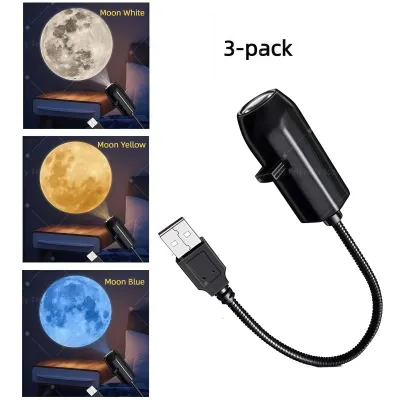
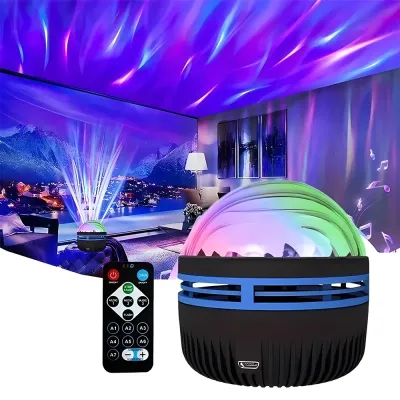
![[Low Price]LED Star Galaxy Lamp Moon Earth Wall Decor Switchable Pattern Projection Night Light 360 Degrees Adjustable For Home Bedroom Decoration Babalux](https://img.lazcdn.com/g/p/2e96b6985947ea81fc7c66d496539339.jpg_400x400q80.jpg_.webp)
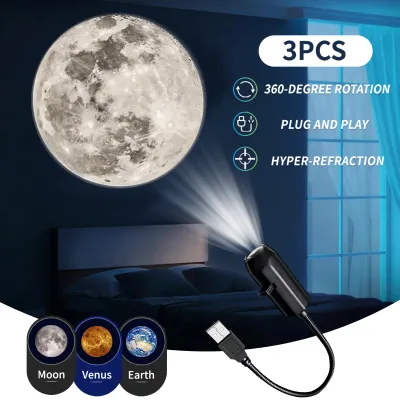
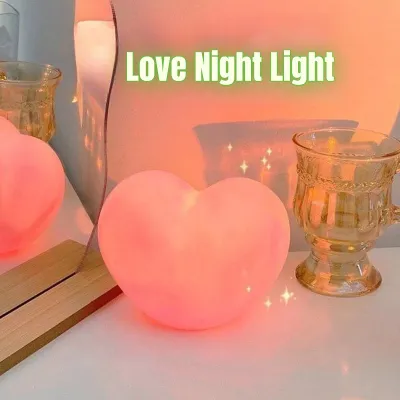
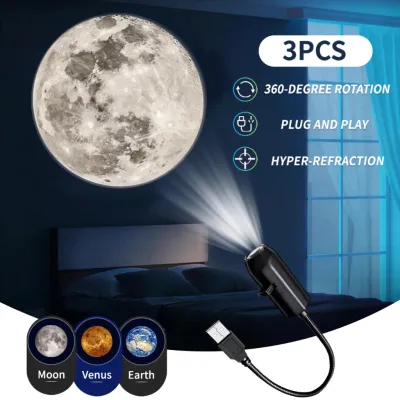
Prices are valid at publication and may change. Please refer to the product page for the latest price.
The movement of the projection also plays a significant role in setting the mood. Dynamic lighting, where the clouds or stars rotate at a slow, rhythmic pace, can have a soothing, almost meditative effect that helps quiet a racing mind. However, some individuals find any form of movement distracting when trying to fall asleep. In such cases, a static lighting mode is preferable, offering a stable and unchanging visual environment. Choosing a lamp that allows you to toggle between dynamic rotation and static projection ensures you can customize the experience to match your fluctuating relaxation needs.
Key Features to Evaluate for a Calming Atmosphere
To ensure your galaxy night lamp enhances rather than disrupts your rest, several functional features deserve close inspection before you make a purchase. An automatic shutoff timer is arguably the most critical feature for a bedroom lamp. Leaving a projector running all night can overstimulate your senses during lighter sleep cycles and unnecessarily consume electricity. Look for models that offer multiple timer settings, such as one-hour, two-hour, or four-hour intervals, allowing the device to power down automatically once you have safely drifted off to sleep.

Bedside convenience is another major factor in maintaining a relaxing environment. Getting out of a comfortable bed to turn off a lamp or adjust its settings can easily disrupt the drowsiness you have carefully cultivated. A dedicated remote control allows you to adjust brightness, change color schemes, and toggle rotation speeds from under the covers. For those interested in smart home integration, some advanced models connect to home Wi-Fi networks, enabling control via mobile applications or voice commands through compatible smart assistants, which integrates seamlessly into modern smart home ecosystems.
The internal mechanics of a galaxy projector can make or break its effectiveness as a sleep aid. Because these devices rely on small internal motors to rotate the lenses and create moving patterns, they inevitably produce some level of mechanical sound. In a quiet bedroom, a high-pitched hum or a persistent clicking noise can quickly become an annoyance, especially for light sleepers. When evaluating different models, pay close attention to user feedback regarding motor noise, prioritizing lamps that operate silently or produce only a faint, low-frequency white noise.
Finally, look for a high degree of adjustability in the lamp’s core projection settings. The ability to fine-tune the focus ensures that the stars and nebulae remain sharp and clear, whether projected onto a low ceiling or a distant wall. Speed controls are equally important, as a rotation that is too fast can feel chaotic rather than calming. A wide palette of color combinations allows you to experiment with different atmospheric effects, ensuring you can always find a setting that matches your mood on any given evening.
Safety, Power, and Placement Checks
Integrating any electrical device into your sleeping area requires a thorough assessment of safety and compatibility. In the Philippines, the standard residential electrical supply operates at 220 volts and 60 hertz. Many modern galaxy night lamps are designed with USB power interfaces, which operate at a safe, low voltage of 5 volts. If the lamp comes with a direct AC wall adapter, you must verify that the adapter is rated for 220V input and features a plug compatible with local outlets, typically the flat two-pin Type A or Type B configuration. Avoid using loose or poorly fitting adapters, as they can create electrical resistance and pose a fire hazard.
Because galaxy projectors utilize bright LEDs and laser diodes, they generate a modest amount of heat during continuous operation. To mitigate overheating risks, it is essential to establish safe clearance distances around the device. Never place the projector directly on soft surfaces like mattresses, pillows, or blankets, which can block ventilation grates and trap heat. Instead, position the lamp on a stable, flat surface such as a nightstand, shelf, or desk, keeping it at least 30 centimeters away from curtains, mosquito nets, and other flammable materials.
The choice of power source also influences how you arrange your bedroom space. USB-powered models offer excellent flexibility, as they can run off standard wall chargers, computer ports, or even portable power banks, making them highly versatile for different room layouts. However, managing the power cable is crucial for safety in a darkened room. Ensure the cable is routed neatly along walls or behind furniture to prevent tripping hazards, and avoid stretching cords tightly across walkways.
Lastly, always consult the manufacturer’s instruction manual to understand the specific operating limits of your device. Some budget-friendly projectors are not rated for continuous, long-term use and may require a cool-down period after a few hours of operation. Adhering to these guidelines not only ensures safe operation within your home but also extends the overall lifespan of the light source and internal motor.
Building Your Shortlist: Evaluating Options Online and In-Store
When shopping for a galaxy night lamp on online marketplaces or at local home decor retailers, navigating product listings requires a critical eye. Online product images are frequently enhanced with digital editing to make the projections appear incredibly bright, sharp, and expansive. To get an accurate understanding of a lamp’s real-world performance, look past the promotional graphics and focus on customer-uploaded photos and videos in the review sections. These raw images provide a much more realistic representation of how the projection looks in an actual bedroom setting, including its true brightness, color saturation, and coverage area.
Build quality and post-purchase support are equally important considerations. A well-constructed lamp should feel sturdy, with high-quality plastics and securely fitted lenses. Before finalizing your purchase, review the seller’s warranty terms and return policies. Reliable sellers often provide a clear warranty period, which offers peace of mind in case the internal motor or laser diode encounters issues shortly after delivery. Be cautious of listings that offer no warranty or fail to provide clear contact information for customer support.
As you browse, watch out for common red flags in product descriptions. Be skeptical of listings that make exaggerated performance claims, such as promising a tiny, low-wattage device can project high-definition images across an entire multi-story house. Another major red flag is the complete absence of safety certifications, such as CE, RoHS, or FCC markings, on the product packaging or in the specifications. These certifications indicate that the device has undergone testing for electrical safety and material hazards, which is vital for any product left running in a bedroom.
To find the perfect match for your home, create a personalized checklist based on your specific room dimensions and personal sensitivities. Measure your ceiling height and the distance from your planned placement spot to the target projection surface, as some lamps perform best within specific distance ranges. If you are highly sensitive to light, prioritize models with extensive dimming capabilities. If you are a light sleeper, make silent motor operation your top priority. By matching the technical specifications of the lamp to the unique physical and sensory characteristics of your bedroom, you can confidently select a galaxy projector that delivers a truly relaxing and safe ambient experience.
Frequently Asked Questions (FAQ)
Can I leave a galaxy night lamp on all night?
While some high-end galaxy night lamps are designed with robust thermal management systems that allow for extended use, it is generally not recommended to leave them running continuously all night. Most manufacturers advise limiting continuous operation to a few hours to prevent the internal LEDs and laser diodes from overheating, which can degrade the components and shorten the device’s lifespan. Utilizing the built-in automatic shutoff timer is the safest and most efficient practice. Setting the timer to turn off after one or two hours ensures you have ample ambient light to fall asleep, while protecting the device from unnecessary wear and reducing your household energy consumption.
How far should the lamp be placed from the ceiling for the best effect?
The ideal placement distance for a galaxy night lamp typically ranges between 1.5 to 3 meters from the target ceiling or wall. This distance allows the projection lenses to spread the light wide enough to cover a significant portion of the room without losing image clarity or brightness. If the lamp is placed too close to the ceiling, the projected image will be small and highly concentrated, which can feel intense rather than relaxing. Conversely, placing it too far away can cause the stars and nebulae to appear blurry, dim, and out of focus. To find the perfect spot, temporarily place the lamp on different surfaces—such as a low bedside table, a dresser, or a shelf—and adjust the focus ring until you achieve a sharp, beautifully balanced projection.
Are galaxy projectors safe for children's rooms?
Galaxy projectors can be a wonderful addition to a child’s bedroom, helping to ease a fear of the dark and establish a calming bedtime routine, provided certain safety precautions are strictly followed. First, ensure all power cables are securely managed and routed out of reach to prevent tripping hazards or accidental pulling of the device. The projector itself should be placed on a high, stable shelf where curious hands cannot reach it. Additionally, pay close attention to the laser safety classification of the device. Many galaxy lamps use low-power lasers to project sharp stars; you must position the projector at an angle that prevents anyone, especially children, from looking directly into the light lenses, as direct exposure can be harmful to young eyes.

Community discussion
Share your experience or ask a question. Comments are reviewed before publication.