
Choosing the right accent lighting can transform the comfort and functionality of your home. If you want to illuminate dark corners without the hassle of cutting into your drywall or hiring an electrician, choosing a wall lamp indoor modern rechargeable fixture offers an elegant, wire-free solution. These battery-powered lights mount almost anywhere, providing instant illumination exactly where you need it.
In the Philippines, where sudden power outages during the rainy season are common, these battery-operated lights provide an invaluable emergency backup. They also solve a common structural challenge: many local homes feature solid concrete walls that make retrofitting traditional wired sconces incredibly difficult and messy. By understanding a few key specifications, you can select the perfect model to enhance your space.
Understanding Your Space: Hallway vs. Bedside Lighting Needs
Before browsing online marketplaces, define the primary functional goals of your lighting. Hallways and bedside areas serve entirely different purposes, and a lamp that excels in one spot might perform poorly in the other. Matching the fixture’s capabilities to the physical demands of the room ensures long-term satisfaction.
Products mentioned in this guide
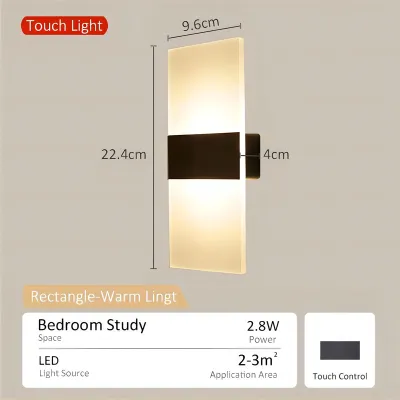
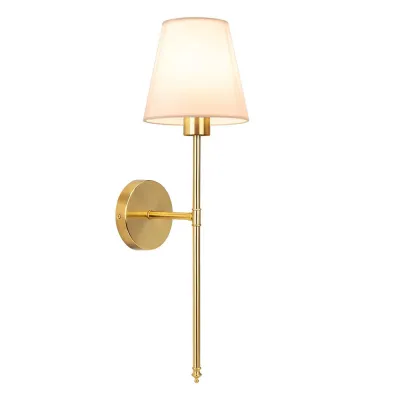
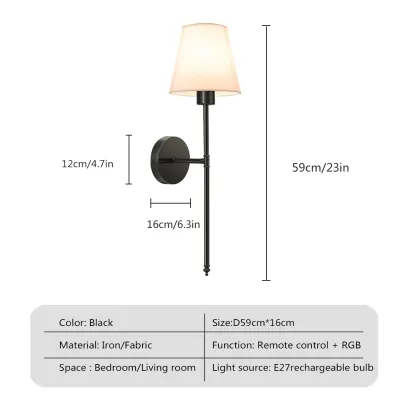
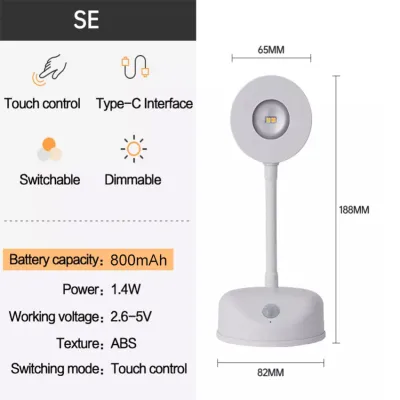
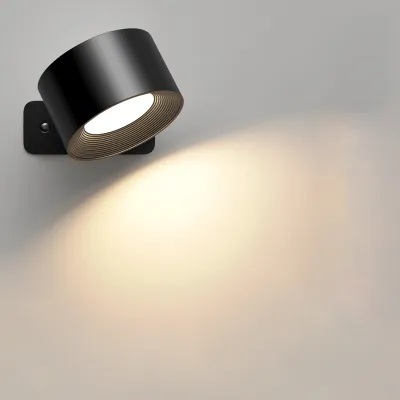
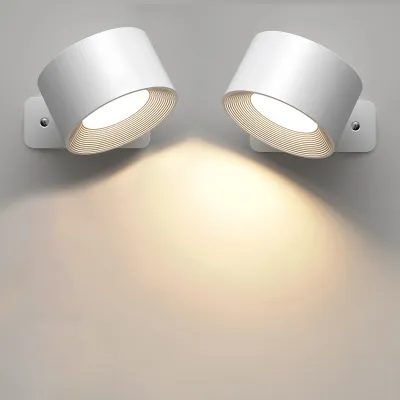
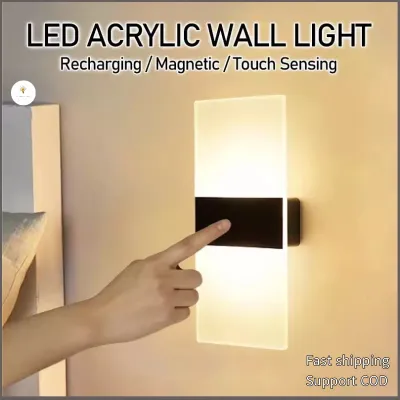
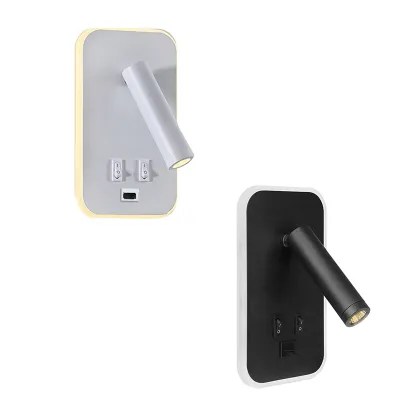
Prices are valid at publication and may change. Please refer to the product page for the latest price.
Hallways are high-traffic transition zones where safety and navigation are the top priorities. Lighting in these areas needs to guide your footsteps, reveal floor-level obstacles, and prevent trips without casting harsh, blinding glare in the middle of the night. Because hallways are often narrow, low-profile or flush-mount designs are essential to prevent family members from accidentally bumping into the fixtures.
Bedside areas, by contrast, require localized task and ambient lighting designed for winding down. A bedside lamp must support activities like reading or journaling while remaining soft enough to signal your body that it is time to sleep. Accessibility is key here; you want a fixture with controls that are easy to reach from a lying position, along with adjustable heads or swing arms to direct the light precisely onto your book.
While some minimalist, low-profile designs can work in both settings, specialized features usually deliver better results. For instance, a motion-activated sensor is highly convenient in a dark corridor but can be incredibly disruptive next to a bed where tossing and turning might trigger a sudden burst of light. Identifying your primary location first will narrow down your choices significantly.
Key Specifications for a Wall Lamp Indoor Modern Rechargeable Fixture
To ensure your new light performs reliably, you must look beyond aesthetic appeal. Technical specifications dictate how bright the lamp shines, how long it operates on a single charge, and how long the fixture itself will last.

Brightness and Color Temperature
Do not rely on unverified marketing claims regarding brightness. Instead, check the manufacturer’s product label for the rated lumen output. For bedside reading, a range of 100 to 200 lumens is generally sufficient to prevent eye strain, while low-glare hallway guidance can operate comfortably on 50 to 100 lumens.
Color temperature, measured in Kelvin (K), significantly influences the mood of a room. Warmer tones ranging from 2700K to 3000K are highly recommended for bedside use because they mimic sunset, helping your body transition into sleep mode. Slightly cooler or neutral tones, around 4000K, provide crisp, clear visibility that is better suited for safe hallway navigation. Many modern fixtures now offer adjustable color temperatures, allowing you to cycle through warm, neutral, and cool settings.
Dimming capabilities are another critical feature to verify before purchasing. Adjustable brightness levels allow you to customize the light level to your comfort and directly impact energy consumption. Lowering the brightness by half can often double or triple the runtime of your battery between charges.
Battery Capacity and Charging Methods
Battery capacity is measured in milliampere-hours (mAh), and a higher number generally indicates a longer runtime. However, actual battery life depends heavily on your chosen brightness setting and how frequently the light is turned on. A lamp run constantly at maximum brightness will drain its battery far faster than one used on a low, motion-activated setting.
Consider how you prefer to charge the device. Many modern fixtures feature a detachable magnetic base, allowing you to pull the light body off the wall to charge it via a USB-C cable while leaving the mount intact. Other models feature built-in, non-detachable batteries that require you to bring a portable power bank directly to the wall or remove the entire fixture from its mount to reach an outlet.
Finally, check the manufacturer’s stated charge cycles and battery replacement policies. Integrated, non-replaceable batteries limit the overall lifespan of the fixture; once the battery can no longer hold a charge, the entire unit must be replaced. Models that utilize standard, replaceable lithium-ion cells offer superior long-term value and sustainability.
Design, Mounting, and Safety Considerations
Proper installation is crucial for both the safety of your household and the preservation of your walls. Because rechargeable lamps do not rely on structural wiring, you have more flexibility in placement, but you must still adhere to safe mounting practices.
Mounting methods generally fall into two categories: no-drill adhesive mounts and traditional screw-in brackets. Adhesive mounts are ideal for lightweight fixtures and are highly popular among renters because they leave no permanent marks on smooth surfaces like tile, glass, or polished wood. For heavier metal fixtures, or for a secure, long-term installation on drywall or masonry, screw-in mounts are highly recommended.
Safety boundaries must be respected when using adhesive backings. Never apply adhesive mounts to heavily textured walls, freshly painted surfaces, or delicate wallpaper, as the weight of the battery-powered lamp can cause the adhesive to peel away, resulting in a damaging fall. Always clean the target surface thoroughly with rubbing alcohol and let it dry completely before applying the adhesive, and verify the lamp’s weight against the adhesive pad’s rated capacity.
If you choose a dual-purpose fixture that allows for optional hardwiring into an existing electrical box, safety must come first. Always isolate the power by turning off the main circuit breaker before interacting with any electrical wiring. Verify that the voltage matches your local standard, which is typically 220V in the Philippines, check the rated wattage limits, and consult a qualified professional electrician to complete the installation safely.
Material choices also play a major role in how well the fixture integrates into your modern interior. Common materials include matte metals, lightweight acrylics, and natural wood finishes. When selecting a material, check the manufacturer’s care instructions to ensure you do not damage the finish with harsh household cleaners, and ensure the design complements your existing decor.
Matching the Lamp to Your Specific Scenario
To finalize your purchase decision, match the specific features of the lamp to the daily routines of your household.
For Hallways
- Prioritize motion sensors and built-in dusk-to-dawn sensors so the light only activates when someone walks by in the dark.
- Select low-profile, flush-to-the-wall designs to keep narrow walkways clear and unobstructed.
- Choose a larger battery capacity (3000mAh or higher) if your hallway experiences high foot traffic, as frequent sensor triggers will drain the battery quickly.
For Bedside Use
- Look for touch-sensitive controls located directly on the lamp body, or models that include a convenient remote control.
- Opt for adjustable swing arms or rotating heads so you can direct the beam onto your reading material without disturbing a sleeping partner.
- Select fixtures with warm dimming capabilities to minimize blue light exposure before bedtime, supporting healthy sleep hygiene.
For Renters or Flexible Spaces
- Focus on magnetic, modular sconces that can be detached easily and used as portable flashlights during power interruptions.
- Opt for lightweight plastic or aluminum bodies that rely reliably on high-quality adhesive strips.
- Look for multi-pack options to create a cohesive, matching aesthetic across different rooms without a major financial investment.
Before making your final purchase, run through a quick pre-purchase checklist. Verify if the charging cable is included in the package and check its length. Measure your intended wall space to ensure the physical dimensions of the fixture will clear nearby doors or curtains, and review the manufacturer’s warranty terms regarding battery defects.
Frequently Asked Questions (FAQ)
Can I use a rechargeable wall lamp in a humid area like a bathroom?
Standard indoor rechargeable wall lamps are not designed to withstand high humidity or direct water exposure. Moisture can easily penetrate the battery compartment of an unrated fixture, leading to internal corrosion, short circuits, or permanent battery failure. Always check the product’s IP (Ingress Protection) rating on the manufacturer’s label before installation. If the lamp lacks a certified moisture-resistant rating, such as IP44 or higher, do not install it in a bathroom or near indoor water sources.
Do rechargeable wall lamps require special electrical wiring?
Purely battery-operated, rechargeable wall lamps do not require any in-wall electrical wiring, junction boxes, or professional electrical modifications. This makes them incredibly simple to install in spaces where running new wires is physically difficult or cost-prohibitive. They only require access to a standard electrical outlet, such as the standard 220V outlets used in the Philippines, to plug in their charging cable when the battery runs low. If a fixture features a dual-power hybrid design that supports both battery and hardwired operation, always isolate the power at the breaker and consult a professional electrician for the hardwired setup.

Community discussion
Share your experience or ask a question. Comments are reviewed before publication.