
Selecting the ideal wall lamp with sensor requires matching the specific sensor technology to the physical layout and movement patterns of your home. In transitional spaces like narrow corridors, a motion-activated sensor ensures hands-free safety and energy efficiency. Conversely, a bedside area demands a more controlled approach, where sudden light triggers can disrupt sleep, making manual overrides, dimming capabilities, or low-level dusk-to-dawn modes far more appropriate. By evaluating how you navigate these distinct zones, you can choose a fixture that enhances comfort without causing unnecessary glare or false activations.
Understanding Sensor Modes for Your Specific Needs
To make an informed purchase, you must first understand the three primary sensor technologies available for wall sconces. Motion sensors, typically utilizing passive infrared (PIR) technology, detect changes in heat signatures within their field of view. These fixtures are highly efficient because they only illuminate when someone is actively moving through the space, making them excellent for saving energy in areas that remain empty for most of the day.
Dusk-to-dawn sensors rely on photocells that continuously measure ambient light levels. Instead of reacting to physical movement, these sensors automatically turn the light on when the room darkens and turn it off when ambient light returns. This mode is ideal for providing continuous, low-level orientation lighting throughout the night, ensuring that spaces are never left in complete darkness.
Products mentioned in this guide
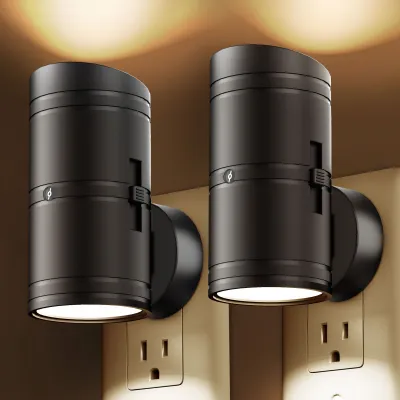
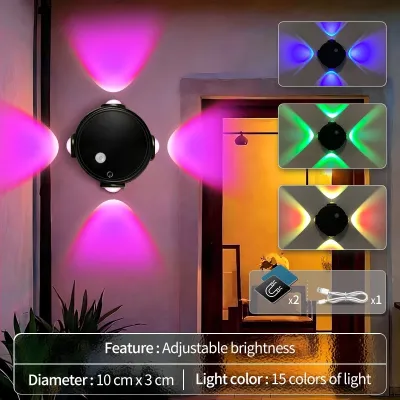
![[Lifetime warranty]LED wall light outdoor waterproof IP68 led Garden lights for balcony courtyard villa Two Colors corridor lights With light sensor and motion sensor](https://img.lazcdn.com/g/p/0ccd895a76a2bb54d9e8afa0cfac5a75.jpg_400x400q80.jpg_.webp)
Prices are valid at publication and may change. Please refer to the product page for the latest price.
Dual-mode sensors offer a versatile combination of both technologies. A typical dual-mode fixture might maintain a very dim, low-output glow from dusk to dawn, but instantly ramp up to full brightness when it detects motion. This provides a constant guiding light that transitions into a bright task light exactly when you need to navigate the space.
While these modes sound straightforward, their real-world performance depends heavily on individual product specifications. Sensor sensitivity, detection angles, and lux thresholds vary significantly from one model to another. Before buying, always check the manufacturer’s technical details rather than assuming all sensors will behave identically in your specific room layout.
Corridor Lighting: Navigating Narrow Hallways Safely
Corridors are transitional zones where safety and clear visibility are the primary goals. Because hallways are often narrow and confined, choosing the right light output and color temperature is crucial. High-output bulbs can create harsh glare that temporarily blinds you when walking out of a dark room. Opting for lower light outputs, such as 150 to 300 lumens, paired with a warm color temperature of 2700K to 3000K, helps preserve your night vision while providing sufficient illumination.

Sensor placement and detection angles require careful planning in narrow corridors. If a sensor has an excessively wide detection angle, it may trigger false alarms when family members or pets walk past the hallway entrance in adjacent rooms. Mounting the wall lamp at a standard height of 1.5 to 1.8 meters and positioning it so the sensor’s field of view is directed strictly down the walking path will minimize these disruptive activations.
Adjustable delay settings are another essential feature to consider for hallway lighting. The delay timer controls how long the light remains on after motion is no longer detected. In windowless corridors or homes with slow-moving occupants, setting a longer delay of one to two minutes ensures that no one is suddenly left in pitch darkness mid-journey.
In tropical climates like the Philippines, indoor environmental factors can also influence sensor performance. High ambient temperatures and humidity can occasionally reduce the sensitivity of passive infrared sensors, which rely on detecting temperature differences between a human body and the surrounding air. Selecting a high-quality fixture with adjustable sensitivity controls allows you to fine-tune the sensor to account for local climate conditions.
Bedside Lighting: Balancing Reading and Midnight Navigation
Bedside lighting serves a dual purpose that standard sensor fixtures often struggle to accommodate. While you need bright, focused light for reading, you also require extremely soft, non-disruptive light for occasional midnight navigation. Installing a standard, high-output motion sensor next to your bed is highly impractical, as simple movements like turning over or adjusting your pillows can trigger a sudden flash of bright light that disturbs your sleep or wakes your partner.
To balance these needs, look for specialized fixtures designed for bedroom environments. Ideal options include wall lamps with integrated dual-source lighting, featuring a low-output, downward-facing dusk-to-dawn night light alongside a separate, adjustable reading spotlight. This setup allows you to keep a gentle guiding light active overnight while reserving the brighter spotlight for focused tasks.
A physical manual override switch or pull chain is a critical specification to verify for any bedside sensor lamp. This feature allows you to bypass the sensor entirely, keeping the light on continuously while you read a book or use your tablet. Without a manual override, a motion-activated lamp will repeatedly turn off if you remain relatively still while reading, forcing you to wave your arms to reactivate it.
When positioning your bedside wall lamp, pay close attention to glare control and physical clearance. Mount the fixture at a height where the light source is shielded from your direct line of sight when lying down. Using fabric shades, frosted glass diffusers, or directional heads ensures that the light is cast exactly where you need it without spilling harsh glare across the bed.
Essential Specifications to Verify Before Purchase
Before purchasing any wall lamp with sensor, you must verify several technical specifications to ensure compatibility with your home’s electrical system and physical space. First, confirm that the fixture’s voltage rating matches your local utility standard, which is typically 220V in the Philippines. Additionally, check that your existing wall junction box is structurally compatible with the mounting bracket of the new sconce.
Bulb compatibility is another critical factor, especially if the fixture does not feature integrated LEDs. Many sensor switches and dimming circuits require specific bulb types to function correctly. Using a standard, non-dimmable LED bulb on a sensor-controlled or dimmable circuit can lead to annoying flickering, buzzing, or even premature failure of the bulb’s internal driver.
Finally, measure the physical dimensions and clearance of the fixture. In narrow corridors, a sconce that projects too far from the wall can become a safety hazard or a frequent obstruction. For bedside installations, ensure the lamp’s projection does not interfere with your headboard, pillows, or your ability to sit up comfortably in bed.
Installation Safety and Professional Boundaries
Installing a hardwired sensor wall lamp involves working directly with your home’s electrical wiring, which requires strict adherence to safety protocols. Before inspecting, removing, or installing any fixture, you must isolate the power by turning off the main circuit breaker. Always use a reliable, non-contact voltage tester at the wall box to verify that there is absolutely no electrical current running through the wires before you begin.
While replacing an existing wall lamp is a manageable task for many homeowners, certain scenarios require the expertise of a licensed electrician. If you encounter missing junction boxes, damaged or ungrounded wiring, or if you need to run new electrical lines through concrete walls, stop immediately and hire a professional. This is especially important for installations in damp areas or semi-outdoor corridors where proper sealing and grounding are vital to prevent short circuits.
Always follow the specific wiring diagrams and mounting instructions provided by the manufacturer. Using the correct mounting hardware and ensuring all wire connections are secure and properly insulated with electrical tape or wire connectors will protect the sensor’s sensitive electronic components and maintain your product’s warranty compliance.
Frequently Asked Questions (FAQ)
Can I use a motion sensor wall lamp as a primary reading light?
Using a standard motion sensor wall lamp as a primary reading light is generally not recommended unless the fixture includes a manual override switch. Because motion sensors require physical movement to remain active, the light will likely turn off repeatedly while you are sitting still and reading. To avoid this frustration, choose a model that allows you to temporarily disable the sensor or opt for a dedicated, non-sensor reading light.
Do dusk-to-dawn wall lamps work well indoors?
Dusk-to-dawn wall lamps can work indoors, but their performance depends heavily on the room’s exposure to natural light. These fixtures rely on photocells to detect ambient light levels; in windowless corridors, deep hallways, or dark bedrooms, the sensor may perceive the environment as permanently dark, causing the light to stay on continuously. For indoor spaces without natural light cycles, motion sensors or dual-mode fixtures are usually more effective.

Community discussion
Share your experience or ask a question. Comments are reviewed before publication.