
To illuminate a narrow corridor in a Filipino home without sacrificing precious walkway space, the ideal wireless wall lamp must combine an ultra-slim profile with a glare-free, downward-directed beam. Traditional hallways in local townhouses and family homes are often tight, meaning bulky fixtures invite accidental bumps from passing shoulders or carrying laundry baskets. By opting for a battery-powered, low-profile sconce, you bypass the hassle of drilling into tough concrete walls for electrical wiring while keeping the passage safe, bright, and completely unobstructed.
Key Dimensions and Form Factors for Tight Spaces
When navigating a narrow hallway, every centimeter of physical clearance matters. Standard interior corridors in many homes measure between 90 to 120 centimeters wide, leaving very little room for decorative elements that stick out. To prevent family members from knocking into the light, prioritize fixtures with a maximum protrusion depth of 10 centimeters or less. Low-profile, flush-mount designs or flat LED panels lie nearly flat against the wall, offering a streamlined look that preserves the natural flow of foot traffic.
Beyond depth, you must evaluate the overall width and height of the fixture. A bulky, wide sconce can visually crowd the narrow wall segments between bedroom doors, making the entire corridor feel cramped. Choosing vertically oriented, slender designs helps elongate the space visually while leaving ample room for door frames and wall decor. Additionally, consider how bedroom or bathroom doors swing into the corridor. A door that opens outward can easily strike a wall lamp if the fixture is placed too close to the frame, making ultra-slim profiles even more critical. Before purchasing, measure the exact spot where the lamp will sit to ensure it fits comfortably within the architectural layout of your hallway.
Products mentioned in this guide
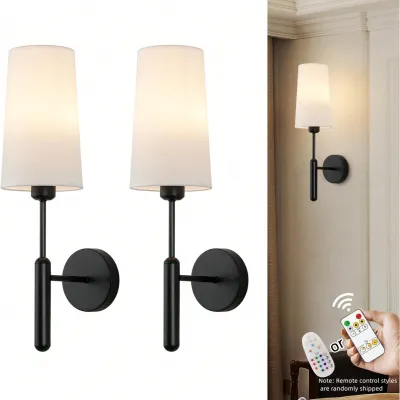
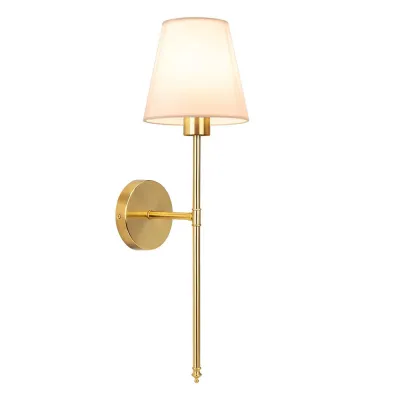
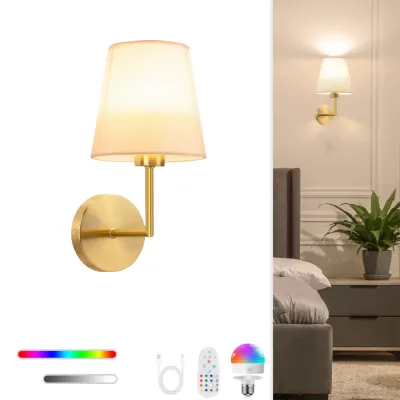
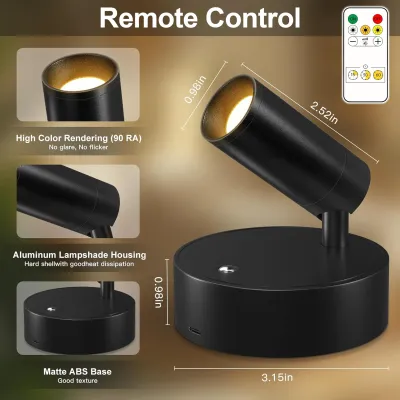
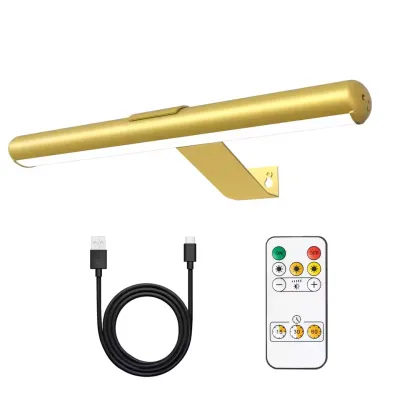
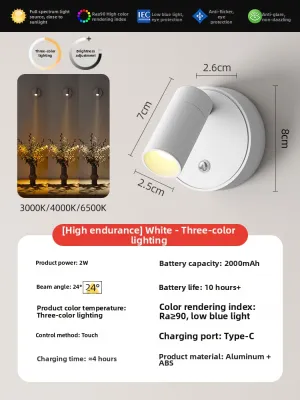
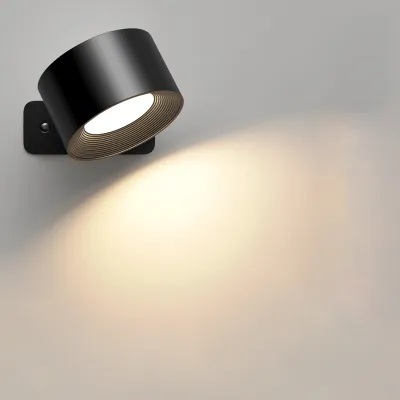
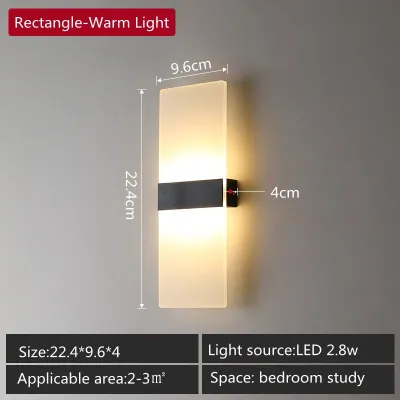
Prices are valid at publication and may change. Please refer to the product page for the latest price.
Matching Brightness and Beam Spread to Corridor Length
Corridor lighting should guide your steps safely without blinding you in the middle of the night. Because hallways are transitional zones rather than active workspaces, high-intensity spotlights are rarely suitable. Instead, look for fixtures that offer a soft, diffused glow. Checking the manufacturer’s lumen specifications is essential; a range of 100 to 150 lumens is generally sufficient to illuminate a typical residential walkway without creating uncomfortable glare.

The direction of the light beam plays a massive role in visual comfort. Downward-directed beams or wall-washing sconces direct light toward the floor where it is needed most, keeping the source out of your direct line of sight as you walk. For color temperature, warm white (around 2700K to 3000K) creates a cozy, welcoming ambiance, while neutral white (around 4000K) offers a cleaner, modern look. In tropical climates, neutral tones can sometimes feel visually cooler and crisper in enclosed, unventilated passages. Many modern wireless sconces feature adjustable brightness levels or dimming capabilities, allowing you to set a lower, energy-saving brightness level for overnight use and a brighter setting for evening transitions.
Power, Battery, and Control Features for Hallways
Since wireless wall lamps rely on independent power sources, your choice of battery type directly dictates your long-term maintenance routine. Built-in rechargeable lithium-ion batteries are highly convenient, allowing you to detach the lamp body—often via a magnetic mount—to recharge it using a standard USB cable. On the other hand, fixtures powered by replaceable alkaline batteries (such as AA or AAA cells) eliminate charging downtime but require a steady supply of replacements, which can increase operating costs over time. When choosing a rechargeable model, verify the charging interface and cable compatibility; standard USB-C ports are highly recommended as they match most modern smartphone chargers.
To maximize battery life in high-traffic transitional areas, motion-activated sensors are incredibly practical. When evaluating motion-sensing models, check the manufacturer’s specified detection angle and range. In a narrow corridor, a sensor with a highly sensitive, wide-angle field might trigger unnecessarily from adjacent rooms; look for models with a focused 100-to-120-degree detection arc. Additionally, manual override switches or built-in dusk-to-dawn sensors ensure the light only activates when the hallway is actually dark, preserving battery power during bright daylight hours.
Installation and Safety Checks for Wall Sconces
Installing fixtures in Filipino homes often requires adapting to solid concrete walls, which make traditional drilling and screw mounting a labor-intensive task. Many wireless sconces feature adhesive magnetic bases that stick directly to the wall. While adhesive mounting is convenient, you must verify your wall’s surface finish first. Smooth drywall or semi-gloss painted surfaces hold adhesive well, but textured concrete, moisture-prone plaster, or delicate wallpaper can cause the adhesive to fail, leading to falling hazards.
For humid tropical environments, high humidity can weaken standard double-sided tapes over time. Always check the fixture’s weight against the adhesive’s rated capacity, and consider using heavy-duty, moisture-resistant mounting strips if the manufacturer’s included tape seems insufficient. Before applying any adhesive, clean the wall surface thoroughly with rubbing alcohol to remove dust, oils, and moisture. Allowing the surface to dry completely before pressing the adhesive mount firmly for at least thirty seconds will significantly improve the bond strength and prevent unexpected falls. If the lamp is relatively heavy or if you are mounting it in a high-traffic zone where it might get bumped, utilizing the included screw-mount option is the safest route to ensure long-term stability.
Building Your Corridor Lighting Shortlist
To find the perfect match for your home, organize your options by comparing your corridor’s physical limits with the lamp’s specifications. Start by measuring your hallway’s clear width and subtracting the space needed for comfortable passage; this gives you your absolute maximum fixture depth. Next, align your daily traffic patterns with the power and control features that make the most sense for your household’s routine.
Use this quick decision framework to guide your search:
- For narrow passages (under 100 cm wide): Select flush-mount or ultra-slim LED bars with a depth under 5 centimeters, paired with downward-directed beams.
- For high-traffic family hallways: Prioritize motion-activated sensors with USB-rechargeable batteries to minimize manual switching and battery replacement costs.
- For concrete walls without drilling: Choose lightweight fixtures (under 300 grams) equipped with high-quality adhesive magnetic mounts, ensuring the wall surface is thoroughly cleaned before application.
Frequently Asked Questions (FAQ)
How many wireless wall lamps do I need for a long corridor?
The number of fixtures depends on the length of your hallway and the beam spread of the lamps. To avoid dark spots and create a safe, continuous path of light, aim to space the fixtures so that their light pools slightly overlap. For a standard corridor, placing a low-profile sconce every 1.5 to 2 meters is generally effective. Check the manufacturer’s estimated beam angle to calculate how wide the light spreads at floor level before finalizing your purchase.
Will a motion sensor wall lamp drain its battery too quickly in a busy hallway?
Frequent foot traffic will naturally deplete the battery faster due to constant triggering. To prevent rapid drain, look for fixtures that feature adjustable auto-shutoff timers, which turn the light off after 15 to 30 seconds of inactivity. Selecting a model with a dusk-to-dawn sensor also ensures the lamp remains off during the day, significantly extending the time between charges even in active households.

Community discussion
Share your experience or ask a question. Comments are reviewed before publication.