
Choosing a wall lamp with an integrated switch is one of the most effective ways to reclaim valuable space in a compact bedroom. When a traditional nightstand is too large for a tight layout, mounting your light source directly onto the wall eliminates the need for bulky tabletop furniture while keeping your sleeping area highly functional. A suitable bedside fixture must deliver focused, glare-free illumination directly onto your reading material without spilling excess light across the entire room or disturbing anyone sleeping nearby. By integrating the control switch directly onto the fixture itself, you also eliminate the inconvenience of reaching for distant wall switches or fumbling with cords in the dark.
Core Requirements for Bedside Reading in Compact Rooms
In small bedrooms, every square centimeter of floor and tabletop space is at a premium. Traditional bedside setups require a nightstand to support a table lamp, which often forces homeowners to compromise on bed size or walk space. Wall-mounted fixtures solve this spatial dilemma by utilizing vertical surfaces, allowing you to position your bed flush against adjacent walls or fit a larger mattress into a tight room. This layout flexibility is particularly beneficial in urban condominiums and compact townhouses where bedroom footprints are highly restricted.
Beyond saving physical space, a dedicated bedside reading light must meet specific optical requirements. General ambient lighting from a central ceiling fixture is often too bright for nighttime reading and can strain your eyes as you try to wind down. A proper reading light must provide directional, localized illumination that targets your book, tablet, or e-reader. This focused beam ensures that the text is clearly legible while the rest of the room remains relatively dark, creating a soothing environment that signals your body it is time to sleep.
Products mentioned in this guide
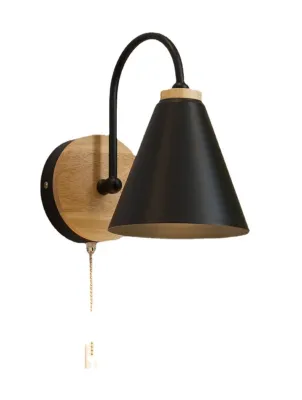
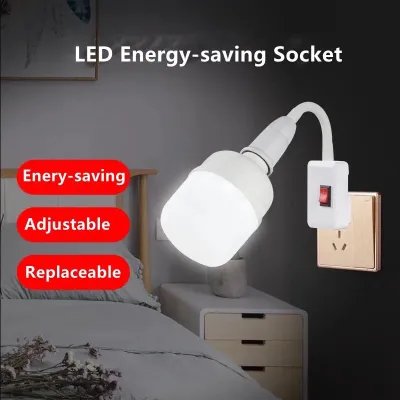
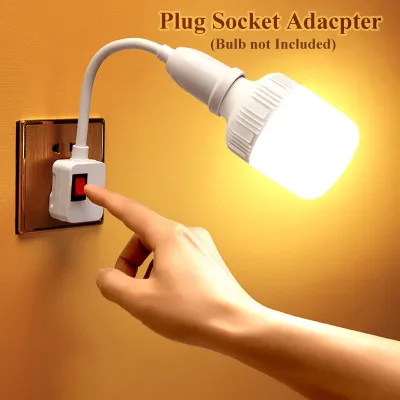
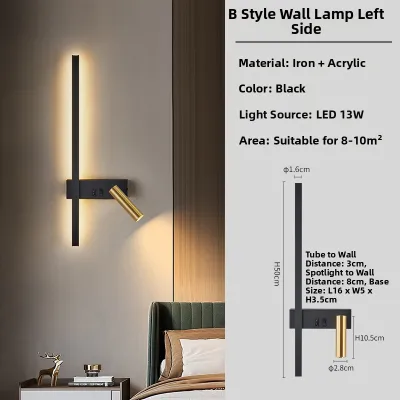
Prices are valid at publication and may change. Please refer to the product page for the latest price.
The presence of an integrated switch is a critical convenience factor that directly impacts your nightly routine. If a wall lamp relies solely on a wall switch located near the bedroom entrance, you are forced to get out of bed to turn off the light when you are ready to sleep. Similarly, inline cord switches can easily slip behind the bed or mattress, leading to frustrating searches in the dark. An on-fixture switch—whether it is a toggle, push-button, rotary dial, or pull chain—ensures that you can control your lighting instantly from a comfortable, resting position.
Key Specifications to Check Before Purchasing
When shopping for a wall lamp with a switch, evaluating the physical mechanism of the switch is your first priority. The switch must be robust, easy to operate with one hand, and positioned where you can reach it without straining your back or shoulders. Toggle and push-button switches offer simple, tactile operation, while rotary switches often allow for dimming capabilities if paired with a compatible dimmable bulb. Pull chains provide a classic look and are highly accessible from a lying position, though they require a sturdy mounting bracket to withstand repeated downward tugs over time.

Adjustability is another essential feature that separates a mediocre reading light from an excellent one. Fixed sconces with static shades project light in a single direction, which may not align with your preferred reading posture. Look for fixtures featuring flexible goosenecks, swing arms, or articulating joints that allow you to tilt and rotate the lamp head. This adjustability lets you direct the light precisely onto your page and away from your eyes, and it allows you to fold the fixture flat against the wall when it is not in use to maximize open space.
Before purchasing any fixture, you must verify its electrical compatibility and physical limitations by checking the manufacturer’s specification label. Pay close attention to the maximum wattage rating, which dictates the safest limit for heat dissipation within the lamp head. Exceeding this limit can damage the fixture, degrade the wiring insulation, or pose a fire hazard. Additionally, identify the required bulb base type—such as E27, E14, or GU10—to ensure you can easily source replacement bulbs that fit the socket securely.
The quality of light emitted by your chosen bulb significantly influences your reading comfort and sleep hygiene. For evening reading, look for bulbs that emit a warm color temperature, typically between 2700K and 3000K. Warm light mimics the soft glow of sunset, which helps promote melatonin production and prepares your mind for rest. Avoid cool white or daylight bulbs above 4000K for bedside use, as their high blue-light content can interfere with your natural sleep cycle and cause noticeable eye strain during prolonged reading sessions.
Installation Options and Electrical Safety Limits
Bedside wall lamps generally fall into two installation categories: plug-in and hardwired. Plug-in models are highly popular for rental properties and quick DIY projects because they mount directly to the wall surface and plug into a standard nearby outlet. The primary trade-off is the visibility of the power cord hanging down the wall, which can look cluttered in a minimalist room unless concealed with a decorative cord cover. Hardwired models, on the other hand, offer a clean, seamless appearance with all wiring hidden behind the drywall or plaster, but they require a dedicated electrical junction box behind the fixture.
Electrical safety must be your absolute priority during any installation process. Before touching any wires or mounting plates, you must turn off the power supply at the main circuit breaker or fuse box. Never rely solely on the wall switch to isolate the electricity, as the circuit may still carry a live current. If you encounter damaged, ungrounded, or outdated wiring inside your wall box, or if you are unsure how to safely connect the hot, neutral, and ground wires, stop immediately and consult a licensed electrician to prevent electrical shocks or short circuits.
The physical mounting surface must also be evaluated to ensure it can support the weight of the fixture over years of daily use. In homes with hollow drywall or plasterboard, lightweight fixtures can be secured using heavy-duty toggle bolts or threaded drywall anchors. However, heavier swing-arm lamps require direct mounting into a wooden wall stud or the use of specialized masonry anchors if you are installing onto solid concrete or brick walls. A loose mount can cause the fixture to sag, pull away from the wall, or eventually fall, damaging your wall and the lamp itself.
Finally, always verify that the fixture’s rated voltage matches your home’s electrical supply. In the Philippines, the standard residential voltage is 220V at a frequency of 60Hz. Importing a fixture designed exclusively for 110V systems without a compatible transformer or an appropriate multi-voltage driver can lead to immediate product failure, overheating, or permanent electrical damage. Always check the product packaging or the manufacturer’s specification sheet to confirm that the unit is rated for 220V operation before completing your purchase.
Determining the Right Mounting Height and Position
Calculating the correct mounting height is essential to ensure your wall lamp provides comfortable illumination without casting harsh shadows or shining directly into your eyes. As a general rule of thumb, the bottom of the lamp shade should sit approximately at your eye level when you are sitting upright against your headboard. For most standard mattress heights and average sitting postures, this places the mounting point between 75 and 90 centimeters above the top surface of the mattress. This height ensures the light beam projects downward onto your book rather than straight into your face.
Horizontal placement is equally important for maintaining physical comfort and easy access to the integrated switch. The fixture should be mounted approximately 20 to 30 centimeters to the side of your headboard or the edge of your mattress. This offset prevents you from accidentally bumping your head against the lamp when sitting up or turning over in bed. It also positions the switch within an easy arm’s reach, allowing you to turn the light on or off with a simple, natural movement of your hand without having to sit up or stretch uncomfortably.
In a compact bedroom, the visual weight and physical profile of the wall lamp must be carefully balanced to avoid making the space feel cramped. Large, bulky sconces with wide fabric shades can overwhelm a small wall and physically obstruct your movement around the bed. Opt for slim, low-profile designs, such as cylindrical metal spotlights, compact goosenecks, or fixtures with folding accordion arms. These streamlined shapes provide excellent functional lighting while maintaining a clean, uncluttered aesthetic that helps a small bedroom feel more open and airy.
Frequently Asked Questions (FAQ)
Can I install a hardwired wall lamp myself?
Replacing an existing, code-compliant hardwired wall lamp with a new model is generally a straightforward task that you can complete yourself, provided you turn off the power at the main circuit breaker first. You must carefully match the hot, neutral, and ground wires of the new fixture to the corresponding wires in your wall’s junction box using approved wire connectors. However, if your bedroom does not have an existing wall box, or if you need to run new electrical cables through the wall, you must hire a licensed electrician. Running new wiring requires a deep understanding of local building codes, load calculations, and safe routing practices to prevent fire hazards.
What type of bulb is best for reading in bed?
An excellent choice for bedside reading is a warm-white LED bulb with a color temperature of 2700K to 3000K and a frosted or diffused finish. LED bulbs are highly recommended because they produce minimal heat, which is crucial for fixtures positioned close to your head and bedding. The frosted coating is essential because it diffuses the light evenly, eliminating harsh glare and sharp shadows on your book or screen. Before purchasing a bulb, always check the fixture’s maximum wattage rating and enclosed-space compatibility labels to ensure the bulb operates safely within the physical limits of the lamp shade.

Community discussion
Share your experience or ask a question. Comments are reviewed before publication.