
Choosing the right LED pin lights (commonly known as recessed downlights) for your ceiling requires looking closely at technical specifications to ensure they fit your space, match your electrical setup, and provide the right amount of light. In the Philippines, where tropical humidity and varied ceiling structures—such as concrete slabs or suspended gypsum boards—are common, selecting the correct physical and electrical specifications prevents costly installation mistakes and safety hazards. By checking key details like cutout size, lumens, color temperature, and voltage compatibility, you can confidently select fixtures that will perform reliably for years.
Understanding Cutout Size and Physical Dimensions
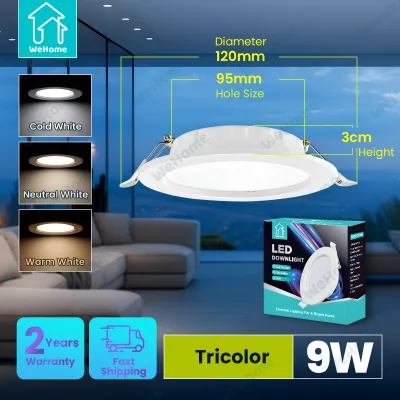
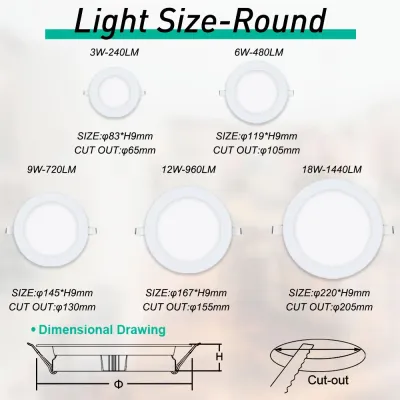
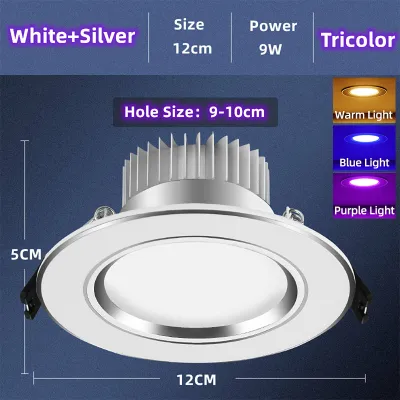
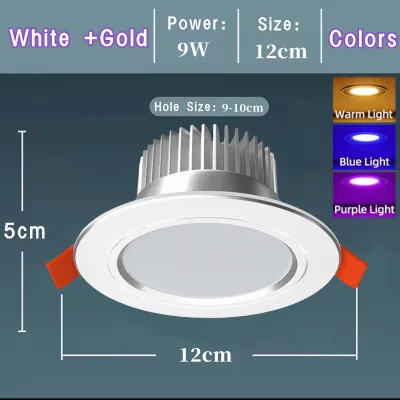
Before purchasing any LED pin light, you must distinguish between the overall trim diameter and the ceiling cutout size. The trim diameter is the outer flange that sits flush against the finished ceiling, covering the edge of the hole. The cutout size is the actual diameter of the hole you need to cut in your gypsum or acoustic board ceiling. Checking the manufacturer’s specification sheet for the exact cutout dimension is critical, as even a few millimeters of discrepancy can result in a loose fit or a hole too small for the fixture housing.
If you are replacing existing pin lights, measure the existing ceiling holes carefully before shopping. For new installations, map out your ceiling layout to ensure the planned cutouts do not clash with wooden or metal ceiling joists. You can use a stud finder to locate these structural supports before cutting.
Products mentioned in this guide
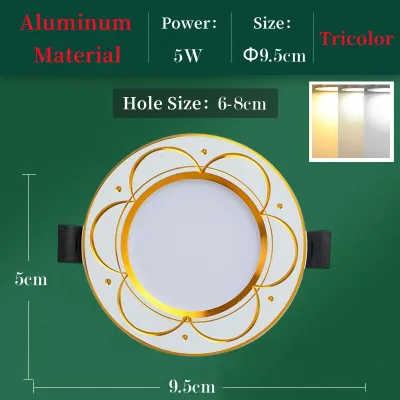
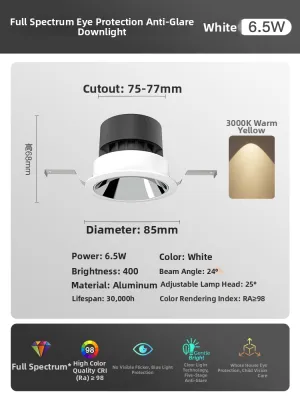
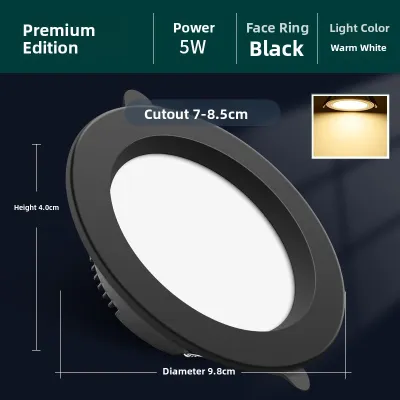
Prices are valid at publication and may change. Please refer to the product page for the latest price.
Additionally, verify the ceiling cavity depth, which is the vertical space available behind the ceiling board. Some LED pin lights feature integrated drivers or deep heat sinks that require significant clearance. Ensure the fixture’s height fits comfortably within your ceiling cavity without pressing against concrete slabs, electrical conduits, or structural beams, as restricted airflow can cause heat buildup.
Decoding Wattage, Lumens, and Efficacy
When evaluating brightness, focus on lumens rather than wattage. Wattage indicates how much electrical power the fixture consumes, whereas lumens measure the actual amount of visible light emitted. Because modern LED technology is highly efficient, a low-wattage LED pin light can produce the same brightness as an old, power-hungry halogen bulb, helping you save on monthly electricity bills.

To estimate your lighting needs, consider the room’s purpose, size, and ceiling height. For general ambient lighting in a living room or bedroom, a lower lumen output per fixture is usually sufficient when spaced evenly. For task-oriented areas like kitchens, home offices, or study corners, you will want higher-lumen fixtures to ensure clear visibility.
To find the most energy-efficient options, check the luminous efficacy, which is expressed as lumens per watt (lm/W). A higher efficacy rating means the fixture delivers more light for every watt of electricity it draws. Comparing this ratio across different models allows you to maximize brightness while keeping energy consumption to a minimum.
Choosing Color Temperature and Beam Angle
Color temperature, measured in Kelvin (K), determines the warmth or coolness of the light and heavily influences the mood of a room. Warm white (typically 2700K to 3000K) creates a cozy, relaxing atmosphere suitable for bedrooms and living areas. Cool white or daylight (ranging from 5000K to 6500K) provides a crisp, energizing light that enhances focus, making it ideal for kitchens, bathrooms, and utility spaces. Neutral white (around 4000K) offers a balanced, natural appearance that works well in corridors and study rooms.
The beam angle determines how the light spreads across the room. A narrow beam angle (15 to 30 degrees) creates a concentrated spotlight, perfect for highlighting artwork, architectural features, or specific work surfaces. A wide beam angle (60 degrees or more) distributes light broadly, making it the preferred choice for general, uniform illumination across an entire room.
When planning open-concept spaces, such as a combined living and dining area, maintain consistency by choosing fixtures with the same color temperature. Mixing different Kelvin ratings in the same visual field can create a jarring, uncoordinated look that disrupts visual comfort.
Verifying Electrical Compatibility and Safety Ratings
Electrical safety is paramount when installing ceiling fixtures, especially in humid tropical climates where moisture can affect electrical connections. Always verify the voltage requirements of the LED pin lights. Most residential installations in the Philippines use direct mains voltage (typically 220V to 240V AC), but some low-voltage systems operate on 12V or 24V DC and require a compatible external driver or transformer. Connecting a low-voltage fixture directly to mains power will permanently damage the unit and pose a severe safety hazard.
If you plan to use dimmer switches to adjust the ambiance, you must verify that both the LED pin light and its driver are explicitly labeled as dimmable. Standard LEDs paired with incompatible dimmers often suffer from annoying flickering, buzzing, or premature failure. Check the manufacturer’s compatibility list to ensure your dimmer switch matches the LED driver’s dimming method, such as trailing-edge or leading-edge dimming.
Always look for recognized electrical safety certification marks on the product packaging or housing to ensure the fixture meets national and international safety standards. Because installing fixed ceiling wiring involves working with live electricity and potential fire hazards, always isolate the power at the main circuit breaker before handling any wires. If you are unsure about wiring configurations, load limits, or mounting safety, consult a licensed electrician to perform the installation.
Frequently Asked Questions (FAQ)
Can I directly replace old halogen pin lights with LED versions?
Direct replacement depends on the physical size, base type, and voltage of your existing setup. If your old halogens run on a low-voltage system with an older magnetic transformer, you may need to remove the transformer and upgrade to an LED-compatible driver to prevent flickering and ensure stable operation. Always check the existing socket type and voltage before purchasing LED replacements.
What does an IC rating mean for recessed LED pin lights?
An IC (Insulation Contact) rating indicates that a recessed light fixture is safety-tested and approved to be in direct contact with ceiling insulation. If your ceiling has thermal insulation, using an IC-rated pin light prevents the fixture from overheating and reduces fire risks. If you use non-IC-rated fixtures, you must maintain the manufacturer-specified clearance zones around the housing to allow heat to dissipate safely.

Community discussion
Share your experience or ask a question. Comments are reviewed before publication.