
Finding a reliable solar UFO light for outdoor spaces in the Philippines requires balancing high-intensity tropical sunlight with heavy seasonal rainfall and high humidity. These circular, disk-shaped fixtures offer a practical solution for illuminating wide areas like driveways, gardens, and perimeter walls without adding to your monthly electricity bill. To secure a durable unit, you must look beyond flashy online marketing and focus on verifiable specifications such as battery chemistry, ingress protection ratings, and housing materials.
By understanding how these fixtures operate and what technical details to verify, you can make an informed purchase that withstands local weather conditions. This guide provides a comprehensive framework to help you evaluate product listings, understand installation requirements, and build a shortlist of dependable solar UFO lights.
Understanding Solar UFO Lights and Their Outdoor Applications
Solar UFO lights get their name from their distinctive circular, disk-like shape, which resembles a classic flying saucer. This design is highly functional, allowing light-emitting diodes (LEDs) to be arranged in a continuous ring or radial pattern around the perimeter of the fixture. This arrangement produces a 360-degree or wide-angle beam pattern, distributing light evenly in all directions from a single central point.
Products mentioned in this guide
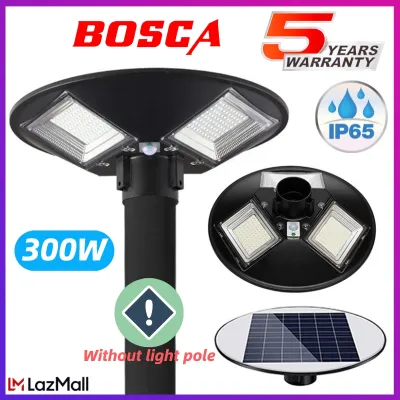
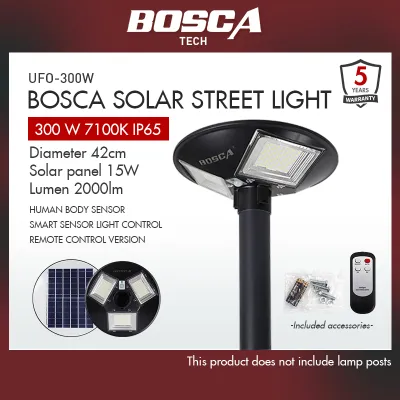
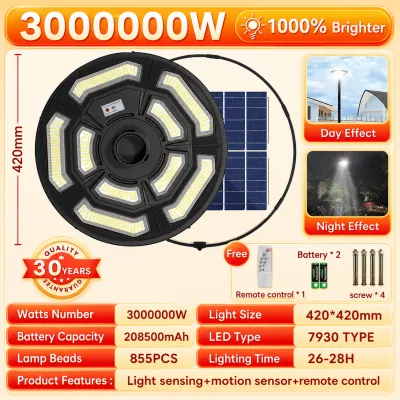
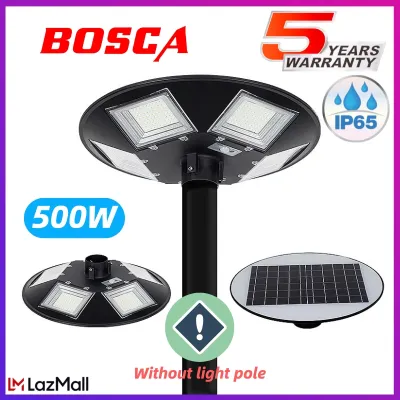
![[Free shipping]500000W UFO solar street light outdoor waterproof IP67 heavy duty Outdoor Lighting garden Led lamp with motion sensor led light solar lights with solar panel](https://img.lazcdn.com/g/p/44cfe23a59423aa8929ee904103063ef.jpg_400x400q80.jpg_.webp)
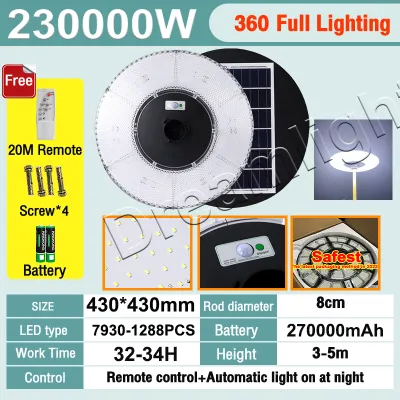
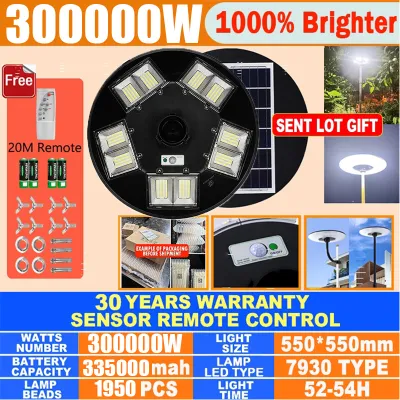
Prices are valid at publication and may change. Please refer to the product page for the latest price.
Unlike standard solar floodlights or spotlights, which project a concentrated, directional beam of light to highlight a specific wall or gate, UFO lights are designed for general area illumination. A directional floodlight often creates harsh shadows and leaves adjacent areas in complete darkness, which can compromise security. In contrast, a solar UFO light casts a broad, uniform pool of light downward and outward, making it highly effective for open spaces where comprehensive visibility is required.
This wide-angle light spread makes UFO-style fixtures exceptionally well-suited for specific outdoor zones. Driveways benefit immensely from this illumination pattern, as a single centrally mounted light can cover the entire width of the driveway, reducing blind spots for vehicles maneuvering at night. Garden pathways, open yards, and outdoor seating areas also gain consistent, glare-free lighting that enhances safety and security. By mounting these fixtures at strategic intervals, you can illuminate large expanses of property with fewer total fixtures than would be required when using traditional directional lights.
Key Specifications to Check Before Buying
When browsing online marketplaces for solar UFO lights, you will encounter a wide array of technical specifications. Understanding how to interpret these metrics is crucial for selecting a fixture that delivers adequate brightness and reliable performance throughout the night.

First, evaluate the light output, which is measured in lumens rather than wattage. Many product listings prominently display high wattage ratings, such as 500W or 1000W. In the context of solar lighting, these numbers are often equivalent ratings compared to old incandescent bulbs or are simply marketing exaggerations rather than actual power consumption. Instead, look for the verified lumen output in the technical specification sheet. For general security and pathway visibility, a light output of 1,000 to 3,000 lumens is typically sufficient, while larger open yards or commercial driveways may require higher outputs.
Second, examine the battery capacity and chemistry, which directly determine how long the light can operate after a full day of charging. Most modern solar UFO lights use either Lithium Iron Phosphate (LiFePO4) or standard Lithium-ion (Li-ion) batteries. LiFePO4 batteries are highly suitable for the tropical climate of the Philippines. They offer superior thermal stability, allowing them to handle high ambient temperatures without degrading, and they typically have a much longer cycle life—often lasting up to five times longer than standard Li-ion batteries. Verify the battery capacity, usually stated in milliampere-hours (mAh) or watt-hours (Wh), and ensure it is paired with a compatible voltage rating (such as 3.2V or 3.7V) to support the fixture’s power demands.
Third, assess the solar panel type and its charging efficiency. Solar UFO lights feature integrated solar panels on their top surface, which must capture enough sunlight during the day to recharge the internal battery. Monocrystalline solar panels are more efficient than polycrystalline panels, particularly in converting sunlight into electricity under overcast or hazy skies. This efficiency is a critical factor during the rainy season when direct sunlight is limited. Check the solar panel’s wattage rating to ensure it is powerful enough to fully charge the battery within 6 to 8 hours of daylight.
Finally, consider the light color temperature, which is measured in Kelvin (K). This is a matter of conditional preference rather than a universal performance metric. Cool white light (6000K to 6500K) provides high-contrast, bright illumination that is excellent for security-focused areas like driveways and perimeter walls, as it makes details easier to see. Warm white light (3000K), on the other hand, creates a softer, more relaxing ambiance that is ideal for garden pathways, patios, and landscaping. Some advanced fixtures offer adjustable color temperatures or dimming methods via a remote control, allowing you to customize the spatial effect based on your immediate needs.
When evaluating these fixtures, always verify the operating voltage, base or mounting interface, wattage limits, physical dimensions, dimming methods, and electrical certifications to ensure compatibility with your installation environment.
Evaluating Durability and Weather Resistance
Outdoor lighting fixtures in the Philippines must endure intense heat, high humidity, salt air in coastal regions, and torrential rains during the typhoon season. Evaluating the durability and weather resistance of a solar UFO light before purchasing is essential to prevent premature failure.
The primary indicator of water and dust resistance is the Ingress Protection (IP) rating. This rating consists of two digits: the first represents protection against solid objects like dust, and the second represents protection against liquids. For outdoor solar UFO lights, an IP65 rating is the standard requirement, indicating that the fixture is completely dust-tight and protected against water jets from any direction. If you live in an area prone to severe storms or flooding, look for an IP67 rating, which signifies that the light can withstand temporary submersion in water. Avoid fixtures that do not specify an IP rating or only claim to be ‘waterproof’ without official certification.
The materials used in the housing also play a critical role in long-term durability. Many budget-friendly solar UFO lights use ABS (Acrylonitrile Butadiene Styrene) plastic. While ABS is lightweight and corrosion-resistant, it must be treated with UV-stabilizing additives to prevent it from becoming brittle, cracking, or yellowing under constant exposure to intense tropical sunlight. Higher-end fixtures often feature die-cast aluminum housings. Aluminum provides effective heat dissipation, which helps keep the internal LEDs and battery cool, thereby extending their lifespan. However, ensure the aluminum is powder-coated or treated to resist corrosion, especially if you live near the coast where salty air can accelerate metal degradation.
Additionally, check the manufacturer’s specified operating temperature range. High ambient temperatures can cause batteries to overheat during charging, leading to reduced capacity or permanent damage. A well-designed solar UFO light will have built-in thermal protection or a housing design that allows heat to dissipate away from the battery compartment. Be cautious of product descriptions that lack detailed material specifications or rely solely on generic promotional images, as these are often warning signs of lower-quality construction.
Installation and Placement Guidelines
Proper installation and strategic placement are vital to maximize the performance and lifespan of your solar UFO light. Because these fixtures rely entirely on solar energy, their positioning directly affects how well they charge and how effectively they illuminate your property.
When planning the installation, calculate the optimal mounting height and location. Solar UFO lights are designed to be mounted overhead, typically at a height of 3 to 6 meters, depending on the fixture’s lumen output and beam angle. Mounting the light too low restricts the illumination radius, while mounting it too high can result in dim, ineffective light on the ground. Ensure the installation site receives at least 6 to 8 hours of unshaded, direct sunlight daily. Avoid placing the fixture under overhanging tree branches, roof eaves, or near taller structures that cast shadows during peak sunlight hours, as even partial shading can drastically reduce solar charging efficiency.
Consider the structural requirements for mounting. Solar UFO lights can be mounted on a dedicated pole or directly onto an exterior wall using specialized brackets. If you choose pole mounting, ensure the pole is made of a sturdy, rust-resistant material, such as galvanized steel or heavy-duty iron, and is anchored securely in a concrete base. This structural stability is crucial for withstanding the high winds associated with tropical storms. For wall mounting, use heavy-duty expansion bolts suitable for concrete or masonry walls to prevent the fixture from loosening over time.
Safety is a primary consideration during installation. Working at heights to mount heavy fixtures poses inherent risks. Always use a stable, properly secured ladder or scaffolding, and have a second person assist you to hold tools and secure the base. If your solar UFO light includes an auxiliary AC backup line or requires any fixed electrical wiring, always isolate the power source at the main breaker before handling the connections. For complex installations, high mounting heights, or setups involving fixed electrical wiring, it is highly recommended to hire a qualified professional to ensure compliance with local electrical and safety standards.
Once installed, establish a routine maintenance schedule to keep the fixture operating at peak efficiency. Dust, pollen, bird droppings, and salt residue can accumulate on the top-facing solar panel, blocking sunlight and reducing charging efficiency by up to 30%. Clean the solar panel every few months using a soft, damp cloth and mild, non-abrasive soap. Avoid using harsh chemicals or abrasive scrubbing pads, which can scratch the panel’s surface. Additionally, inspect the mounting hardware annually for signs of rust or loosening, and check the light cover for any dirt accumulation that could dim the LED output.
Building Your Shortlist: What to Look for on Product Pages
Navigating online marketplaces to find a reliable solar UFO light can be challenging due to the sheer volume of listings and varying product quality. To build a dependable shortlist, you must look for specific indicators of quality and seller credibility on product pages.
Begin by verifying that the product listing includes a comprehensive specification sheet rather than just promotional graphics and lifestyle images. A trustworthy listing will clearly state the exact dimensions of the fixture, the battery chemistry and capacity, the solar panel wattage, the lumen output, and the IP rating. If these details are missing, vague, or inconsistent across the description, it is best to look elsewhere. Look for listings that display electrical certifications, such as CE, RoHS, or local quality marks, which indicate the product has undergone safety and performance testing.
Next, evaluate the warranty and customer support options provided by the seller. A reputable manufacturer or distributor should offer at least a 1-year warranty on the fixture and battery. Check if the seller has an established customer support channel or a physical service center in the Philippines. Having local support makes it significantly easier to handle warranty claims, ask technical questions, or source replacement parts if needed. Avoid sellers who offer no warranty or only provide short, unverified return windows.
User reviews can provide valuable insights into the real-world performance and durability of a solar UFO light. When reading reviews, filter for feedback that mentions long-term performance, such as how the light holds up after six months of use or how it performs during consecutive rainy days. Look for user-uploaded photos and videos to verify the actual build quality and brightness, as these often provide a more accurate representation than the manufacturer’s polished marketing photos. Be skeptical of listings with exclusively five-star reviews that lack detailed written feedback, as these can sometimes be artificial.
Finally, compare the package inclusions across different listings. Some solar UFO lights are sold as complete kits, including the mounting pole, brackets, expansion bolts, a remote control, and batteries. Other listings may only include the light fixture itself, requiring you to purchase the mounting hardware separately. Whether you are budgeting ₱1,500 or ₱5,000 per fixture, verifying these inclusions beforehand prevents unexpected delays during installation and helps you accurately compare the total cost of different options.
Frequently Asked Questions (FAQ)
Do solar UFO lights work during the rainy season?
Yes, solar UFO lights continue to function during the rainy season, but their charging efficiency is significantly reduced due to persistent cloud cover. Because solar panels rely on daylight to generate electricity, overcast skies mean the battery will not receive a full charge. To mitigate this, look for fixtures equipped with monocrystalline solar panels, which are more efficient at capturing diffused light on cloudy days. Additionally, choose a light that features an intelligent power management system or a motion sensor mode. These modes keep the light at a low, energy-saving brightness level and only increase to full brightness when motion is detected, preserving the battery’s charge so the light can operate through consecutive rainy nights.
Can I replace the battery in a solar UFO light?
Whether you can replace the battery depends entirely on the design of the specific solar UFO light fixture. Many high-quality models are designed with sustainability in mind and feature an accessible battery compartment secured by screws. This design allows you to open the compartment and replace the degraded battery cells after several years of use, extending the overall lifespan of the fixture. When sourcing a replacement battery, you must match the exact voltage, capacity, and chemistry (such as 3.2V LiFePO4) specified by the manufacturer. However, some budget-friendly or completely sealed models are glued shut to achieve a high waterproof rating. Attempting to open these sealed units can permanently damage the housing and compromise the waterproof seal, meaning you will need to replace the entire fixture once the battery reaches the end of its useful life.
How far apart should I space solar UFO lights along a driveway?
The optimal spacing for solar UFO lights along a driveway depends on the mounting height of the fixtures and their specific beam angle. As a general guideline, when lights are mounted at a standard height of 4 meters, spacing them approximately 8 to 12 meters apart will provide a continuous path of light with a safe, comfortable overlap. This spacing ensures there are no dark zones between the fixtures, enhancing safety for driving and walking. If your primary goal is high-security lighting, you may want to reduce the spacing to 6 to 8 meters to create a brighter, high-contrast environment. Conversely, if you prefer a more decorative or ambient effect, wider spacing of 12 to 15 meters can be used to create an alternating pattern of light and shadow, which highlights specific landscaping features without over-illuminating the entire driveway. Always consider the proximity of neighboring properties to avoid casting unwanted glare into their windows.

Community discussion
Share your experience or ask a question. Comments are reviewed before publication.