
Decorating an outdoor garden for the holiday season in the Philippines brings unique opportunities and challenges. With the festive season starting as early as September, outdoor decorations must endure months of tropical sun, high humidity, sudden afternoon downpours, and occasional strong winds. Transitioning to solar-powered Christmas lights offers an energy-efficient, cord-free way to illuminate your landscape without spiking your monthly electricity bill. However, finding the right balance between brightness, durability, and battery performance requires looking closely at technical specifications rather than relying on visual appeal alone.
To select the best solar Christmas lights for your garden, you must evaluate how well the solar panels, batteries, and light fixtures can withstand the local climate. A successful setup relies on matching the physical style of the lights to your garden’s layout while ensuring the solar panels receive adequate daily sunlight. By understanding key specifications, installation best practices, and pre-purchase verification steps, you can create a reliable, brilliant holiday display that lasts throughout the festive season and beyond.
Key Specifications for Outdoor Solar Christmas Lights
When shopping for solar Christmas lights, technical specifications dictate how bright the lights will shine and how long they will remain lit after sunset. Unlike indoor plug-in lights, solar-powered options rely entirely on self-contained electrical systems, making component quality critical.
Products mentioned in this guide
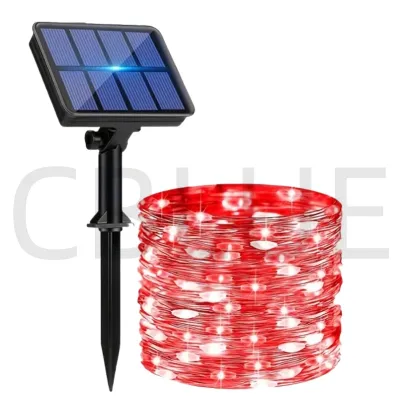
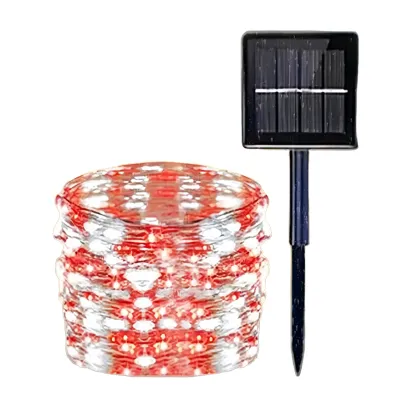
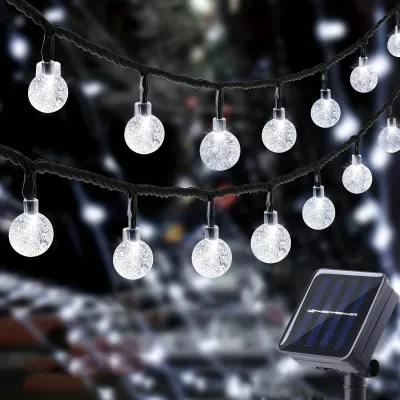
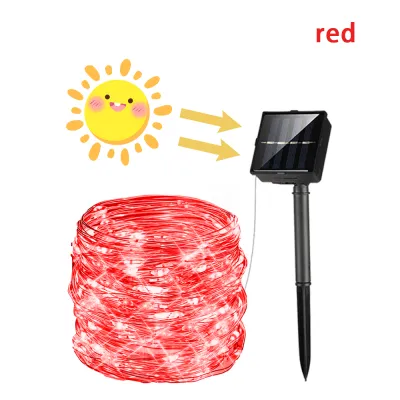
Prices are valid at publication and may change. Please refer to the product page for the latest price.
Lumens, Color Temperature, and LED Density
Lumens measure the total amount of visible light emitted by a source. For decorative garden lighting, high brightness is rarely the goal; instead, you want a soft, festive glow that accents your plants without causing harsh glare. Fairy lights and decorative string lights typically offer low lumen outputs per bulb—often between 2 to 10 lumens—which is ideal for creating a warm, ambient atmosphere. Pathway stake lights or spotlights intended to highlight specific garden features require higher outputs, ranging from 50 to 200 lumens.
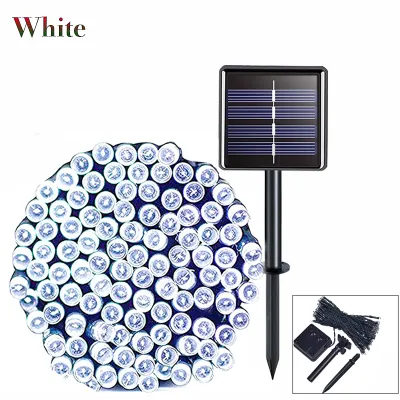
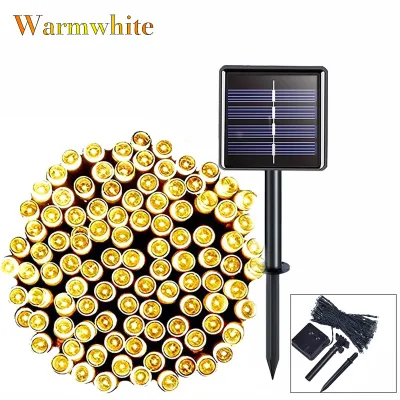
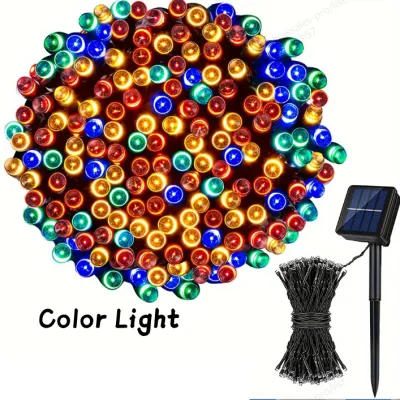
Color temperature is a conditional preference that shapes the spatial effect of your garden. Warm white lights (typically 2700K to 3000K) create a cozy, traditional holiday feel that complements natural wood, brick, and foliage. Cool white lights (5000K to 6500K) offer a modern, crisp look that mimics ice or snow, which can make green leaves stand out sharply. Multi-color LED strings provide a vibrant, playful atmosphere. When planning your layout, maintain consistency by avoiding mixing different color temperatures on the same tree or structure unless you are intentionally designing a contrasting pattern.
LED density—the number of bulbs per meter of wire—directly affects the visual fullness of your display. High-density strings provide a continuous line of light, which is excellent for wrapping columns or framing windows. Low-density strings are better suited for draping loosely over large shrubs or weaving through expansive tree canopies where a sparse, starry effect is desired.
Ingress Protection (IP) Ratings and Materials
Because your lights will remain outdoors in tropical conditions, water and dust resistance are non-negotiable. The Ingress Protection (IP) rating indicates how well the fixture prevents solids and liquids from entering its internal housing. The rating consists of two digits: the first measures protection against solids (0 to 6), and the second measures protection against liquids (0 to 9).
For outdoor garden decorations in the Philippines, an IP44 rating is the absolute minimum, protecting the light from splashing water from any direction. However, for ground-level installations, garden beds, or areas exposed to heavy monsoon rains, look for IP65 or IP67 ratings. An IP65-rated light is completely dust-tight and can withstand low-pressure water jets, while an IP67-rated fixture can survive temporary submersion in shallow water, making it ideal for low-lying garden zones prone to temporary pooling.
Material quality determines whether your lights will survive the intense tropical sun. Look for heavy-duty, UV-resistant plastics like ABS or polycarbonate for solar panel casings and stakes. For the wiring, choose thick, insulated copper wires coated in weather-resistant PVC or dark green rubber, which blends naturally into foliage while protecting the electrical conductors from moisture intrusion and UV degradation.
Solar Panel Efficiency and Battery Capacity
Solar lights convert sunlight into electrical energy using photovoltaic panels, which is then stored in rechargeable batteries. The efficiency of this conversion depends heavily on the type of solar panel used. Monocrystalline silicon panels are the most efficient option, converting a higher percentage of sunlight into energy even on partially cloudy days. Polycrystalline panels are less expensive but require more direct sunlight and a larger surface area to achieve the same power output.
Battery capacity is measured in milliampere-hours (mAh) and determines how much energy the system can store for nighttime use. Common battery types include Nickel-Metal Hydride (Ni-MH) and Lithium-ion (Li-ion) or Lithium Iron Phosphate (LiFePO4). Li-ion and LiFePO4 batteries generally offer faster charging times, longer lifespans, and higher energy density than older Ni-MH cells. Ensure the battery capacity matches the power draw of the LED string; a standard 100-LED string typically requires a battery capacity of at least 1200mAh to run consistently for 6 to 8 hours on a full charge.
Because solar Christmas lights operate on low-voltage direct current (typically 1.2V to 3.7V), they are inherently safer to handle in wet outdoor environments than 220V mains-powered lights. However, if your solar kit includes an optional mains-powered backup adapter for indoor use or covered patios, verify that the adapter carries recognized electrical safety certifications before plugging it into a household outlet.
Choosing the Right Light Style for Your Garden Layout
Matching the physical style of your solar lights to your garden’s structural features ensures a cohesive design and simplifies the installation process.

String Lights and Fairy Lights
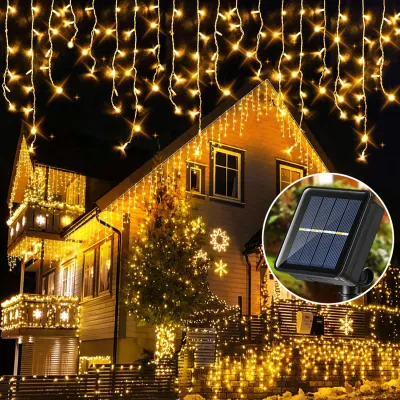
String and fairy lights are the most versatile options for holiday decorating. They consist of individual LEDs spaced along a flexible wire, making them perfect for wrapping around tree trunks, winding up pergolas, or draping along balcony railings. When wrapping trees, start from the base of the trunk and work your way up, keeping the wire taut but not overly stretched. For palm trees, wrapping the trunk tightly highlights their unique texture, while draping the lights loosely through the fronds creates a cascading canopy effect.
Stake Lights and Pathway Lights
Stake lights feature integrated solar panels on top of individual decorative fixtures mounted on sharp ground stakes. These are designed to be pushed directly into soft soil, making them ideal for lining walkways, defining garden borders, or accenting flower beds. Because they do not require connecting wires between fixtures, they eliminate tripping hazards along paths. When placing stake lights, space them evenly to create a continuous guiding path, ensuring they are set back far enough from lawn edges to avoid damage from lawnmowers or grass cutters.
Net Lights and Curtain Lights
Net lights consist of a grid-like mesh of wires with LEDs at each intersection, allowing you to cover large areas quickly and evenly. They are designed specifically for draping over manicured shrubs, hedges, or low bushes, providing a uniform blanket of light with minimal effort. Curtain lights feature a main horizontal cable with multiple vertical light strings hanging down, making them excellent for hanging against solid garden walls, fences, or patio backdrops to create a dramatic waterfall effect.
Placement and Installation Considerations
Proper placement of the solar panel is the single most important factor in determining whether your lights will perform reliably throughout the night.
Maximizing Sunlight Exposure
Solar panels require direct, unobstructed sunlight to charge their batteries fully. In the Philippines, positioning the panel to face south or in an open, unshaded area of the garden maximizes daily sun exposure. Avoid placing the solar panel under the deep shade of large tropical trees, roof overhangs, or tall perimeter walls. Even partial shade covering a small portion of the panel can drastically reduce its charging efficiency, leading to dim lights or a short runtime at night.
Be mindful of ambient nighttime lighting. Solar panels feature built-in light sensors that automatically turn the LEDs on when it gets dark. If your solar panel is placed near bright streetlights, security floodlights, or outdoor porch lamps, the sensor may falsely detect that it is still daytime, preventing the Christmas lights from turning on. Position the panel away from these light sources, or use the manual override switch if the unit features one.
Securing Fixtures Against the Elements
Outdoor decorations must be physically secure to withstand sudden weather shifts. Strong winds can easily dislodge loose wires or blow lightweight solar panels out of position. Use UV-resistant nylon zip ties to secure string lights tightly to branches, railings, or hooks. Avoid using metal staples or bare wire ties, which can pinch or cut through the protective PVC insulation over time, leading to short circuits or water entry.
Keep all electrical cables neat and secure. Loose wires running across lawns or pathways present a serious tripping hazard and are highly susceptible to damage from foot traffic, pets, or garden tools. Use plastic cable clips to pin wires along walls or fences, or bury heavy-duty cables slightly beneath mulch or soil in low-traffic garden beds.
Safety and Installation Boundaries
While low-voltage solar lights are safe to handle, installing them still requires basic safety precautions. If your decoration plan involves working at heights—such as hanging lights from tall tree branches or along roof gutters—always use a stable, non-conductive ladder, work with a partner, and keep clear of overhead utility lines. Ensure all light strings and panels are mounted far away from highly flammable materials, such as dry leaves, paper decorations, or outdoor cooking areas.
If you are integrating a larger solar lighting system that connects to fixed outdoor wiring or a hybrid mains-backup system, always isolate the power supply before handling any connections. Follow the manufacturer’s detailed installation instructions carefully. If the installation requires modifying your home’s fixed electrical wiring or mounting heavy suspended loads, consult a qualified professional to ensure compliance with local electrical codes.
Building Your Shortlist: Pre-Purchase Verification
Before finalizing your purchase, perform a systematic check of product specifications to ensure you are buying a reliable, compatible system.
Verifying Product Labels and Specifications
Do not rely solely on marketing photos. Read the product specifications carefully to verify the actual IP rating, battery chemistry, and solar panel type. Look for clear indications of weatherproofing certifications. Check if the battery is user-replaceable; systems that allow you to swap out the rechargeable battery (such as standard AA Ni-MH or 18650 Li-ion cells) are highly preferable, as you can easily refresh the lights next season if the original battery degrades, rather than discarding the entire fixture.
Warranty and Return Policies
Because outdoor seasonal electronics operate in demanding environments, check the manufacturer’s or retailer’s warranty terms. A reliable product should offer a clear warranty period covering manufacturing defects, water intrusion, or early battery failure. Review the return policy of the online marketplace or local home improvement store so you can quickly test and exchange any units that arrive with shipping damage or defective solar cells.
Measuring Coverage and Accessories
Measure your garden layout before purchasing to avoid buying multiple incompatible sets. Pay close attention to two distinct measurements: the lighted length (the distance from the first bulb to the last bulb) and the lead wire length (the unlit wire running from the solar panel to the first bulb). A long lead wire is essential if you plan to place the lights in a shaded area while positioning the solar panel several meters away in direct sunlight. Finally, verify that all necessary mounting accessories—such as ground stakes, wall-mounting brackets, and screws—are included in the package.
Frequently Asked Questions (FAQ)
Do solar Christmas lights work on cloudy or rainy days?
Yes, solar Christmas lights can still charge on cloudy or rainy days, but their efficiency is significantly reduced. Under heavy cloud cover or active rainfall, solar panels receive only diffused sunlight, which typically reduces their charging capacity to about 10% to 25% of their normal output. As a result, the battery will not fully charge, and the lights will run for a much shorter duration at night or appear noticeably dimmer.
To manage this during prolonged rainy periods, look for solar light sets that feature manual override switches. This allows you to turn the lights off manually to conserve whatever battery charge has accumulated, saving the power for specific evenings when you want to display them. Some advanced models also feature a USB charging port on the solar panel controller, allowing you to detach the panel and charge the battery indoors using a standard USB cable during consecutive days of heavy rain.
How do I maintain solar garden lights after the holidays?
Proper post-holiday maintenance and storage are essential to extending the lifespan of your solar lights for future holiday seasons. When taking down your lights, start by wiping the surface of the solar panel with a soft, damp microfiber cloth to remove accumulated dust, pollen, bird droppings, and water spots. A clean panel ensures maximum sunlight absorption next season. Inspect the entire length of the wire for any signs of physical damage, such as cuts, fraying, or chew marks from garden pests.
Before packing the lights away, open the battery compartment if it is accessible. If you plan to store the lights in a closet or garage for several months, remove the rechargeable batteries. Leaving batteries inside stored, uncharged solar units can lead to chemical leakage, which corrodes the metal terminals and permanently ruins the internal circuitry. Store the lights, panels, and mounting accessories in a sturdy, dry container away from extreme heat and moisture, ensuring they are ready to illuminate your garden safely next year.

Community discussion
Share your experience or ask a question. Comments are reviewed before publication.