
Decorating your garden and home exterior for the holidays is a cherished tradition in the Philippines, where Christmas celebrations start early and extend late into the season. However, the tropical climate presents unique challenges, from sudden heavy downpours to intense afternoon heat and high humidity. Choosing the best outdoor Christmas fairy lights requires looking beyond festive brightness to evaluate weatherproofing, power compatibility, and secure installation methods. By selecting lights designed to withstand local environmental conditions, you can create a brilliant, safe, and long-lasting holiday display.
Assessing Your Outdoor Space and Power Options
Before purchasing any lighting, map out your garden, gate, and exterior walls to identify where your power sources are located. In the Philippines, standard household electricity runs at 220V, meaning any plug-in lights must match this voltage or use a compatible, outdoor-rated step-down transformer. If your garden lacks accessible outdoor outlets, you will need to choose between plug-in setups with heavy-duty extension cords, solar-powered units, or battery-operated strings. If you plan to install new permanent outdoor outlets or fixed wiring, always consult a qualified professional to ensure proper grounding and weatherproofing.
Plug-in fairy lights offer consistent, bright illumination but require careful routing. If you rely on extension cords, ensure they are specifically rated for outdoor use and feature thick, weather-resistant insulation. Long cable runs can experience voltage drops, which dim the lights at the end of the line, so keep total lengths within the manufacturer’s recommended limits. Always route cables away from high-traffic walkways to prevent tripping hazards, and secure them flat against the ground or along walls.
Products mentioned in this guide
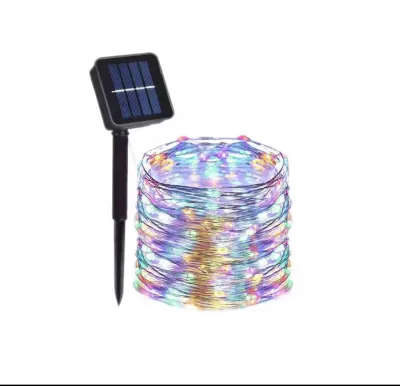
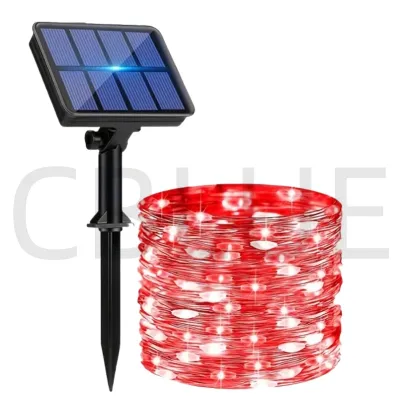
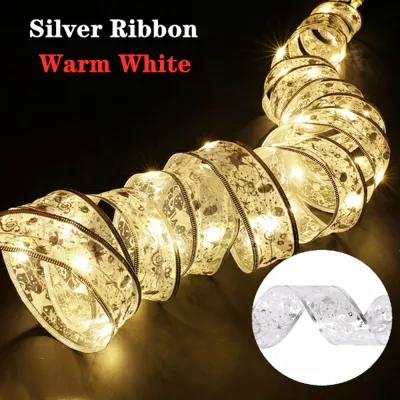
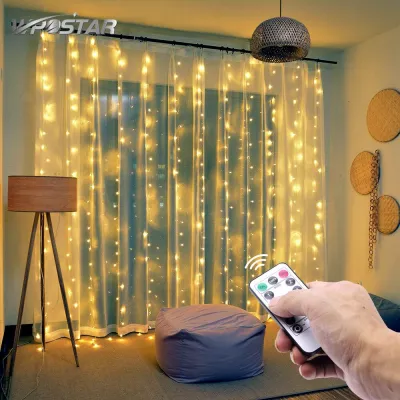
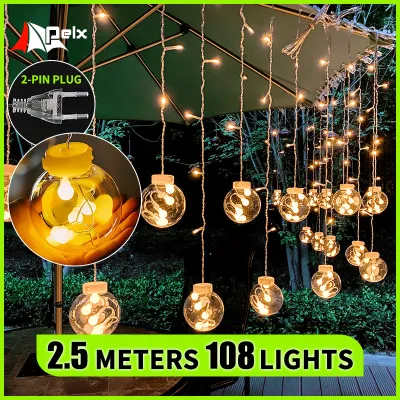
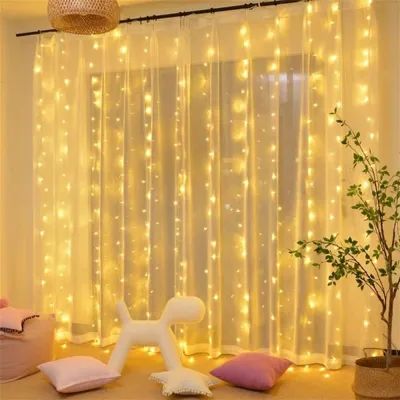
Prices are valid at publication and may change. Please refer to the product page for the latest price.
Solar-powered fairy lights are highly practical for open garden areas, trees, and fences that receive direct sunlight throughout the day. They eliminate the need for trailing cables and do not consume household electricity. However, their performance depends entirely on solar exposure, which can be inconsistent during the rainy tail-end of the year. Battery-operated lights provide excellent flexibility for isolated spots like gates or small bushes, but they require frequent battery replacements if left on for long periods.
Physical obstacles in your yard also dictate your wiring strategy. Thick tree branches, sharp metal gates, and uneven garden paths require different handling. Wrapping lights tightly around growing branches can damage both the tree and the wire insulation, while metal gates can pinch cables or create electrical hazards if the wire becomes exposed. Take precise measurements of these areas, accounting for the extra length needed to wrap around posts or drape over uneven terrain.
Key Specifications for Outdoor Christmas Fairy Lights
When shopping for outdoor lights on any online marketplace or local store, technical specifications on the packaging are your primary defense against electrical failures. The most critical indicator of weather resistance is the Ingress Protection (IP) rating. For outdoor garden use, look for lights rated at least IP44, which protects against splashing water from all directions. If the lights will be fully exposed to heavy tropical downpours without any overhead shelter, opting for an IP65 or higher rating is highly recommended to prevent water entry.

The material of the wire insulation is just as important as the IP rating. Cheap, thin plastic insulation can easily degrade, crack, or melt under the intense Philippine sun, exposing live wires to moisture. Look for heavy-duty rubberized or thick PVC-insulated cables designed specifically for exterior use. LED bulbs are the standard choice for modern holiday displays because they generate minimal heat, consume less power, and resist impact far better than fragile, hot-running traditional incandescent bulbs.
To ensure safety and compliance, always check the product packaging for official national safety certification marks. In the Philippines, imported electrical products should carry valid safety marks indicating they have passed rigorous quality and insulation tests. Avoid unbranded lights that lack clear manufacturer specifications, voltage ratings, or safety labels, as these pose a significant fire and shock hazard in wet outdoor environments.
Convenience features can also prolong the lifespan of your display. Look for fairy lights equipped with built-in automatic timers, which can turn the lights on at dusk and off after a set number of hours. This prevents the lights from running unnecessarily during daylight hours, saving energy and reducing wear. Memory functions are also valuable, as they retain your preferred flashing or steady-on pattern even after the power is cut and restored, eliminating the need to manually reprogram them every evening.
Matching Light Styles to Christmas Decoration Scenarios
Different areas of your home exterior require specific light designs to achieve the best visual effect and structural stability. For garden bushes, shrubs, and delicate tree branches, flexible copper wire or micro LED string lights are highly effective. These lightweight wires can be wrapped gently around thin branches and foliage without weighing them down or causing damage. Because copper wire is highly pliable, it holds its shape well, allowing you to contour the lights precisely around natural garden features.
For larger, flat, or vertical structures like gates, fences, and wide hedges, sturdier cable lights or net lights are much more practical. Net lights are pre-woven grids of fairy lights that you can simply drape over bushes or fences, providing even, symmetrical coverage with minimal effort. When decorating metal gates, choose thick, heavily insulated cable lights. Ensure the cables are secured loosely enough to allow the gate to open and close fully without stretching, pinching, or rubbing the wires against sharp metal edges.
Exterior walls, eaves, and rooflines benefit most from linear string lights or icicle lights. Icicle lights feature main horizontal cables with dangling vertical strands of varying lengths, mimicking dripping ice—a classic festive look that contrasts beautifully with tropical garden backdrops. To mount these along walls or eaves, never use permanent or damaging fasteners. Instead, use non-damaging, weather-resistant mounting clips or adhesive hooks designed specifically for outdoor surfaces, ensuring they can support the weight of the cables during windy conditions.
Installation Safety and Weatherproofing Checks
Safe installation is paramount when dealing with outdoor electricity in a humid, rainy climate. Before hanging your lights, inspect the entire length of each string for frayed wires, cracked sockets, or loose connections. Even if the lights are brand new, a quick visual check can prevent short circuits. When connecting multiple light strings together, ensure the connection points are tightly sealed. Wrap all outdoor plugs, controllers, and connection joints in specialized waterproof junction boxes or heavy-duty electrical tape, keeping them elevated off the wet ground.
How you secure the lights determines both safety and durability. Never use metal nails, staples, or tacks to hang fairy lights, as these can easily pierce the protective wire insulation, leading to electrical shocks or short circuits when exposed to moisture. Instead, use plastic zip ties, insulated cable clips, or specialized outdoor gutter hooks. These fasteners secure the wires firmly without compressing or damaging the insulation, and they can be easily removed at the end of the season.
When the holiday season ends, proper takedown and storage will preserve the waterproof integrity of your lights for the following year. Carefully untangle and remove the lights, avoiding pulling hard on the cables, which can strain internal copper wiring. Wipe down the wires and bulbs with a dry cloth to remove dirt, dust, and moisture. Allow them to air dry completely in a shaded area before packing them. Store the lights in a sealed, dry plastic container away from direct sunlight and pests to prevent the insulation from degrading during the off-season.
Frequently Asked Questions (FAQ)
Can indoor fairy lights be used outside for a short period?
No, indoor fairy lights should never be used outdoors, even for a brief period or during dry weather. Indoor lights lack the necessary water-resistant seals, thick wire insulation, and UV protection required to withstand outdoor elements. Exposure to morning dew, high humidity, or sudden rain can cause water to penetrate the bulb sockets or control box, leading to immediate short circuits, electrical shocks, or fire hazards. Always check the packaging to ensure the product is explicitly labeled for outdoor use.
How do I manage solar-powered fairy lights during extended cloudy weather?
During extended cloudy or rainy periods, solar-powered fairy lights may not receive enough direct sunlight to fully charge their internal batteries, resulting in dim illumination or shorter operating times. To manage this, position the solar panel in the most open, unshaded area of your garden, facing directly upward or toward the brightest part of the sky. Some advanced solar models feature detachable panels with auxiliary USB charging ports, allowing you to bring the panel indoors to charge via a standard power outlet when sunlight is insufficient.

Community discussion
Share your experience or ask a question. Comments are reviewed before publication.