
To find the best solar curtain Christmas lights in the Philippines, you must look beyond flashy online listings and focus on weatherproofing, solar panel efficiency, and physical dimensions that match your home. The tropical climate presents unique challenges, from sudden heavy downpours during the monsoon season to intense afternoon sun. Choosing the right set requires verifying the product’s technical specifications, understanding how to measure your outdoor spaces, and knowing how to filter out low-quality listings on local e-commerce platforms.
By focusing on verifiable product labels and physical construction rather than generic marketing claims, you can secure a holiday display that remains bright and functional throughout the festive season. This guide outlines the essential technical specifications, sizing strategies, platform filtering techniques, and safety practices needed to select and install reliable solar curtain lights for your home.
Key Specifications to Evaluate Before Buying
When shopping for outdoor solar curtain lights, the product label is your primary source of truth. You must verify the Ingress Protection (IP) rating to ensure the lights can withstand tropical weather. Look for separate or unified waterproof certifications on the product packaging. Ideally, both the solar panel and the light string should carry at least an IP65 rating, which indicates protection against dust ingress and low-pressure water jets from any direction. Be cautious of products where only the light string is rated for outdoor use while the solar controller or connection point is restricted to a lower rating like IP44, which only protects against light splashes.
Products mentioned in this guide
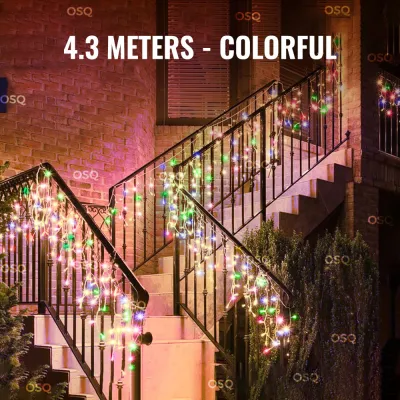
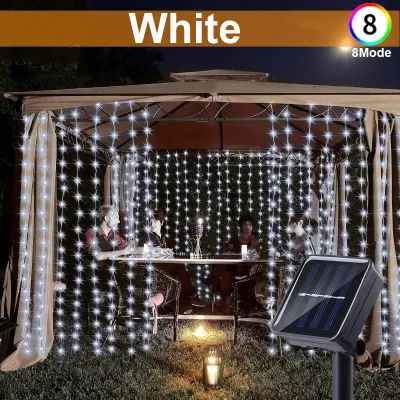
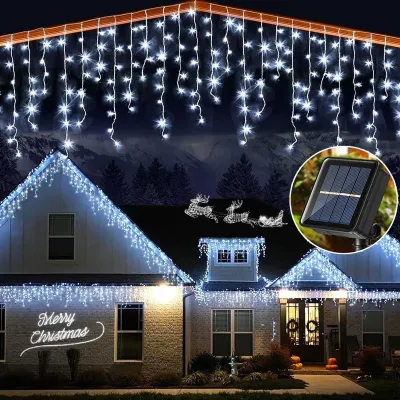
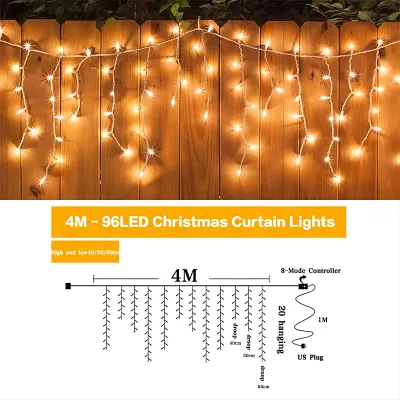
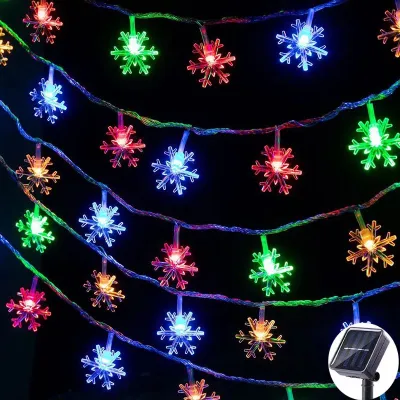
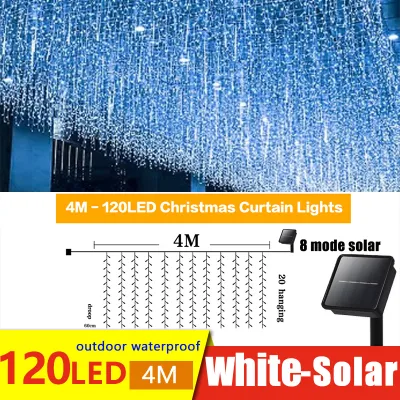
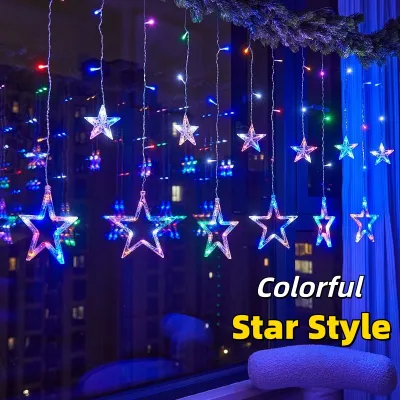
Prices are valid at publication and may change. Please refer to the product page for the latest price.
Solar panel capacity and battery specifications determine how long your curtain lights will stay illuminated after the sun goes down. Avoid relying on generic marketing phrases such as “high brightness” or “ultra-long runtime.” Instead, look for specific battery chemistry and panel wattage indicators on the specification sheet. Lithium-ion (Li-ion) or Lithium Iron Phosphate (LiFePO4) batteries generally offer better charge retention and longer lifespans than older Nickel-Metal Hydride (Ni-MH) batteries. Check the panel’s wattage rating; a larger, high-wattage monocrystalline panel will charge the battery much faster under partial cloud cover than a small, cheap polycrystalline panel.
LED density and wire material directly affect both the visual impact and the physical durability of your holiday display. Curtain lights typically feature either thin copper wires or thicker, PVC-coated wires. Copper wire strings are highly flexible and virtually invisible during the day, making them excellent for delicate displays, but they can tangle easily and may snap under high winds. PVC-insulated wires are much more robust, offering superior resistance to tension and moisture, which is crucial for hanging along rooflines or open balconies. Always confirm the total dimensions, specifically the horizontal width and the vertical drop length, to ensure the wire structure matches your intended installation area.
Finally, verify the electrical interface, voltage, and certification standards of the lighting system. Solar curtain lights operate on low-voltage direct current (typically 1.2V to 5V), making them inherently safer than mains-powered alternatives. However, you should still check for recognized electrical safety certifications, such as CE or RoHS marks, on the product label. Ensure that the connection interface between the solar panel and the light string features a waterproof screw-cap connector with a rubber O-ring to prevent water from seeping into the electrical contacts and causing short circuits.
Matching Light Dimensions to Your Outdoor Spaces
To achieve a balanced and professional-looking holiday display, you must measure your outdoor architectural features before purchasing any lights. Standard residential windows, balcony railings, and roof eaves vary significantly in size. Use a physical measuring tape to record the exact width of the area you wish to cover, as well as the vertical drop distance. If you plan to hang the lights from a second-story balcony, a drop length of 3 meters may be ideal, whereas a standard window might only require a 1-meter or 1.5-meter drop. Buying a set that is too long will result in wires pooling on the ground, where they are vulnerable to moisture and physical damage.

Once you have the physical dimensions of your space, adjust your expectations for light density by calculating the spacing of the LEDs. A product listing might advertise “300 LEDs,” but this count is spread across the entire width and drop of the curtain. Check the specifications for the number of individual vertical strings (drops) and the spacing between them. For example, a 3-meter-wide curtain with 10 drops means the vertical strings are spaced 30 centimeters apart. If the vertical strings are spaced too far apart, the display may look sparse and underwhelming. For a fuller, more vibrant look, search for listings that offer a higher density of vertical drops.
Another critical dimension to evaluate is the length of the lead cable, which is the unlit wire running from the solar panel to the first active LED drop. Because solar curtain lights rely entirely on sunlight, the solar panel must be mounted in an unshaded, sun-exposed location, such as the top of a roof or an open garden stake. If your window or balcony is deeply recessed under an awning or porch roof, a short lead cable (under 2 meters) will force you to mount the solar panel in the shade, severely limiting its ability to charge. Look for products that provide a lead cable of at least 3 to 5 meters to give you the flexibility to position the panel in full sunlight while keeping the curtain lights in your desired decorative spot.
How to Filter and Verify Listings on E-commerce Platforms
Navigating online marketplaces requires a systematic approach to filter out low-quality products and misleading descriptions. Begin by utilizing specific search filters to narrow down your options. Filter for local shipping to ensure faster transit times and to reduce the risk of damage during long-distance international shipping. Prioritize listings from verified sellers, official brand stores, or merchants with high positive feedback ratings. These sellers are more likely to provide accurate product specifications and honor return policies if the item arrives defective.
Do not rely solely on polished studio images, which are often digitally edited to make the lights appear much brighter and denser than they are in reality. Instead, scroll directly to the customer review section and cross-reference user-uploaded photos and videos. Examine these real-world images to verify the actual brightness, the true color temperature (such as warm white versus cool white), and the thickness of the wires. Pay close attention to reviews written during the rainy season, as they often reveal how well the lights perform under overcast skies and whether the solar panels are truly waterproof.
Be highly skeptical of exaggerated claims in product descriptions. If a listing claims a continuous runtime of 24 hours or more from a single day’s charge, or advertises an impossibly high battery capacity (such as 10,000 mAh) on a very small, inexpensive solar panel, it is likely inaccurate. Genuine solar curtain lights typically offer a runtime of 6 to 8 hours under optimal sunlight conditions. Additionally, watch out for unverified waterproof certifications; if a seller claims a product is “100% waterproof” but fails to provide a specific IP rating or shows conflicting information in the text, look for an alternative listing that provides clear, consistent technical specifications.
Safe Installation and Weatherproofing for Holiday Displays
Installing solar curtain lights safely requires careful planning, especially when mounting them in outdoor areas exposed to wind and rain. Start by securing the solar panel in a location that receives direct, unobstructed sunlight for most of the day. Avoid placing the panel under trees, gutters, or architectural overhangs that cast shadows. When mounting the panel, ensure that the cable connection point faces downward to prevent rainwater from pooling around the seal. If the connection point is highly exposed, wrap it with self-amalgamating weatherproofing tape to provide an extra layer of protection against moisture entry.
When hanging the light strings along eaves, gutters, or window frames, use appropriate, non-damaging mounting hardware. Avoid using metal staples, nails, or tacks, which can easily pierce the protective PVC insulation, expose the live copper wires, and cause short circuits or electrical hazards. Instead, opt for plastic zip ties, outdoor-rated adhesive clips, or specialized gutter hooks. Ensure the wires are secured firmly but not stretched too tightly; leave a small amount of slack to accommodate wind movement and thermal expansion, which prevents the wires from fraying or snapping at the connection joints.
Always recognize your physical limits and prioritize safety during installation. If your holiday display requires reaching unsafe heights, climbing onto steep rooflines, or working near overhead power lines, stop and consult a qualified professional. Never attempt to modify your home’s permanent exterior electrical fixtures or run extension cords through windows to power auxiliary devices without professional guidance. If you are integrating solar lights near existing mains-powered outdoor lighting, ensure that those mains circuits are fully isolated and turned off at the breaker panel before you begin working nearby.
Maintenance and Storage for Long-Term Use
To ensure your solar curtain lights last for multiple holiday seasons, establish a simple routine for maintenance and storage. Outdoor solar panels gradually accumulate a layer of dust, pollen, bird droppings, and dried rain residue, all of which block sunlight and reduce charging efficiency. Periodically wipe the surface of the solar panel with a soft, damp microfiber cloth. Avoid using abrasive scrubbing pads or harsh chemical cleaners, which can scratch the protective plastic or glass coating and permanently degrade the panel’s ability to absorb sunlight.
Proper battery care is essential during prolonged periods of overcast weather or when storing the lights after the holidays. If the weather forecast predicts several consecutive days of heavy rain and thick cloud cover, turn the solar panel’s power switch to the “off” position. This prevents the battery from draining completely to a zero-charge state, which can permanently damage the battery cells and reduce their overall capacity. Once the sun returns, turn the switch back on to allow the battery to replenish its charge fully.
When the holiday season ends, take the time to detangle and pack away the lights carefully to prevent internal wire breakage. Avoid pulling or yanking on the strings, as this can sever the delicate connections between the LEDs and the main wire. Wrap the curtain light mesh neatly around a sturdy piece of cardboard or a dedicated plastic light spool to keep the strings organized. Store the entire set, including the solar panel and mounting brackets, in a dry, temperature-stable environment away from direct sunlight, extreme heat, and pests that might chew through the wire insulation.
Frequently Asked Questions (FAQ)
Will the lights stay on during consecutive rainy days?
Solar curtain lights depend entirely on daily sunlight exposure to charge their internal batteries. During consecutive rainy or heavily overcast days, the solar panel will receive significantly less solar radiation, resulting in an incomplete charge. As a result, the lights will either run for a much shorter duration at night or appear noticeably dimmer. To manage this, check the manufacturer’s stated battery capacity and expected runtime under optimal conditions. If continuous, reliable illumination is critical during stormy weather, you should consider keeping a backup battery-powered or mains-powered light set on hand.
Can I replace the built-in battery if it stops holding a charge?
Most outdoor solar curtain lights are designed with sealed, waterproof battery compartments to protect the internal electronics from moisture damage. These sealed units are generally not intended for consumer replacement, and attempting to pry open the compartment will break the waterproof seal, compromising the unit’s outdoor safety and voiding any manufacturer warranty. Always consult the product manual or contact the manufacturer before attempting any modifications. If the battery can no longer hold a charge and the compartment is permanently sealed, the entire solar controller unit will typically need to be replaced.

Community discussion
Share your experience or ask a question. Comments are reviewed before publication.