
Decorating your home’s exterior for the holiday season brings a unique sense of warmth and celebration, but the tropical climate in the Philippines presents distinct challenges for outdoor lighting. High humidity, sudden heavy downpours, and intense afternoon sun can quickly degrade poorly constructed decorations. Transitioning to solar-powered outdoor Christmas lights offers an energy-efficient, cost-effective, and safer alternative to traditional grid-tied lighting, provided you select products built to withstand these demanding environmental conditions.
Finding the right solar lights requires looking beyond festive designs to verify actual weather resistance, battery capacity, and solar panel efficiency. Because specific product models, stock levels, and prices fluctuate constantly across online marketplaces, relying on static product recommendations is rarely effective. Instead, mastering the core technical specifications and installation best practices allows you to evaluate any product on the market and secure a holiday setup that remains bright, safe, and functional throughout the festive season and beyond.
Key Specifications to Evaluate for Outdoor Performance
To ensure your outdoor holiday display survives the elements, you must first understand how to read and verify product specifications. The most critical rating to check on any outdoor light is the Ingress Protection (IP) rating, which defines the level of sealing against solids and liquids. An IP rating consists of two digits: the first measures protection against solid particles like dust, while the second measures protection against water. For outdoor holiday lights exposed to open weather, look for a minimum rating of IP65, which indicates the product is completely dust-tight and protected against water jets from any angle. While IP44-rated lights are common and can handle light splashes, they are highly susceptible to failure during heavy tropical downpours and should only be used in semi-sheltered areas like covered porches or carports.
Products mentioned in this guide
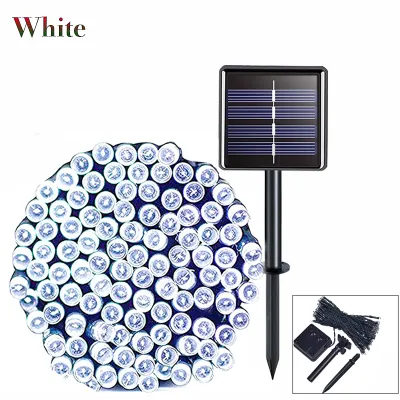
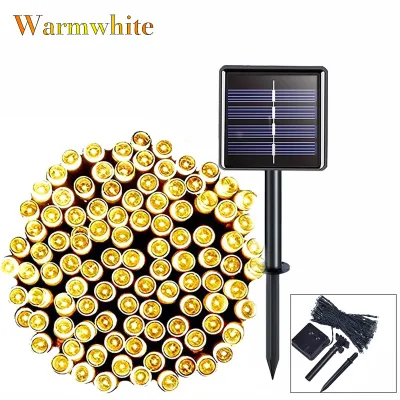
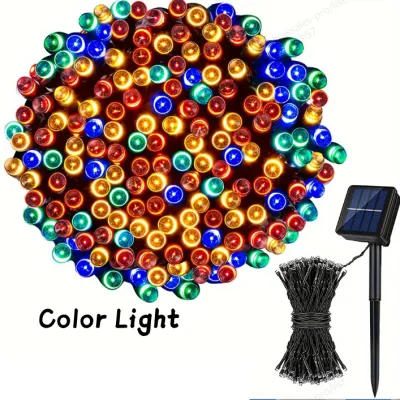
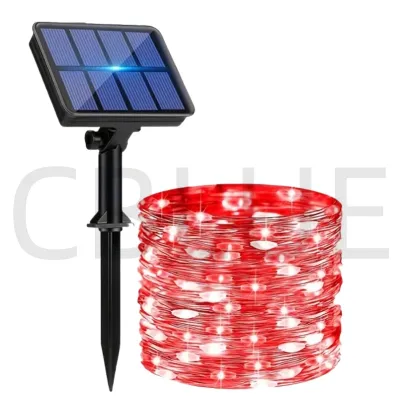
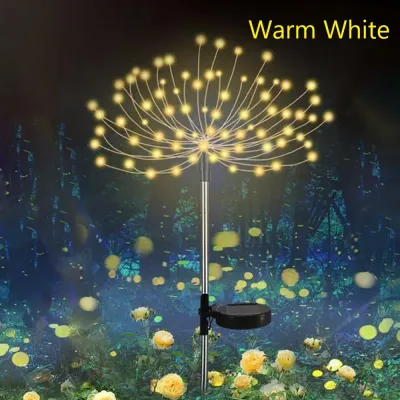
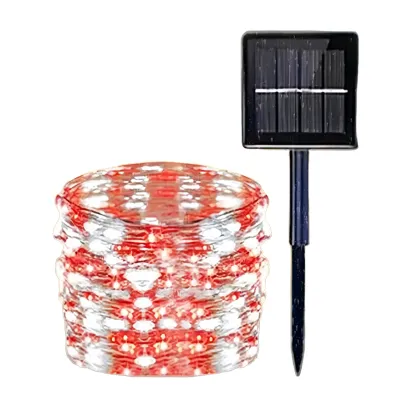
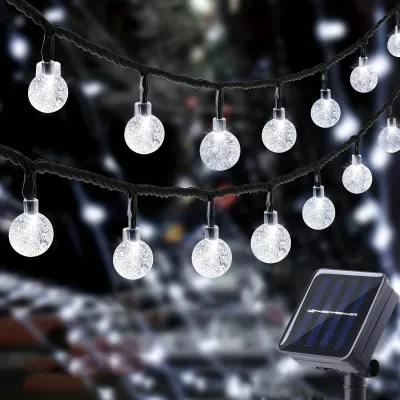
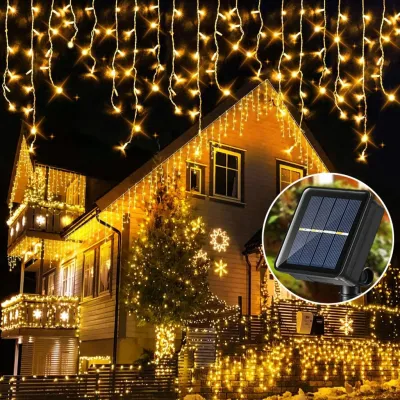
Prices are valid at publication and may change. Please refer to the product page for the latest price.
The efficiency of the solar panel is another crucial factor, especially during the late-year monsoon season when daylight can be overcast and limited. Solar panels generally come in two types: monocrystalline and polycrystalline. Monocrystalline panels are made from a single crystal structure, giving them a higher energy conversion efficiency, typically between 15% and 20%. This allows them to generate more electricity in low-light or cloudy conditions. Polycrystalline panels, recognizable by their speckled blue appearance, are cheaper to produce but less efficient, usually converting only 13% to 16% of sunlight. Opting for monocrystalline panels ensures your lights have a better chance of charging fully even on gloomy December afternoons.
Equally important is the battery capacity, which dictates how long the stored solar energy can power your lights at night. Look for lights equipped with lithium-ion (Li-ion) or lithium iron phosphate (LiFePO4) batteries rather than older nickel-cadmium (NiCd) alternatives. Lithium-based batteries offer superior energy density, handle deep discharge cycles more effectively, and have a longer overall lifespan. Battery capacity is measured in milliampere-hours (mAh); for a standard 100-LED string light to run for six to eight hours, a battery capacity of at least 1200mAh is recommended.
Finally, evaluate the voltage and electrical safety certifications of the lighting system. Solar lights operate on low-voltage direct current (DC), typically ranging from 1.2V to 5V, which eliminates the risk of severe electrical shock if a wire is accidentally cut or exposed to water. However, if you choose a hybrid system that includes an optional alternating current (AC) plug-in adapter for indoor charging, you must verify that the adapter carries recognized electrical safety certifications. Always ensure that any AC-powered components are plugged into a weather-protected outlet equipped with a ground-fault circuit interrupter (GFCI) to prevent electrical hazards.
Choosing the Right Light Style for Your Space
Selecting the physical form factor of your solar Christmas lights is not just an aesthetic choice; it also dictates how the lights must be mounted, secured, and protected from environmental wear. String and fairy lights are the most versatile option, ideal for wrapping around palm trees, balcony railings, and roof eaves. When choosing string lights, pay close attention to the wire construction. Thin, bare copper wire lights are highly flexible and virtually invisible during the day, but they are fragile and can easily snap under the tension of high winds. For exposed outdoor areas, opt for string lights with thick, heavy-duty PVC-insulated wiring, which provides superior physical protection and prevents water from seeping into the electrical connections.

Curtain and net lights offer a convenient way to cover large, flat surfaces such as exterior walls, fences, or wide hedges with a uniform blanket of light. Because these styles cover a significant surface area, they can act like a sail when subjected to strong winds. To prevent the wind from tearing the lights down or damaging your walls, avoid using weak adhesive hooks. Instead, secure curtain and net lights using heavy-duty outdoor mounting clips, screw-in hooks, or UV-resistant zip ties. Ensure the weight of the lights is distributed evenly across multiple anchor points to prevent excessive strain on any single section of the wire.
Pathway and stake lights are designed to line driveways, garden borders, and walkways, adding structure to your holiday display while improving nighttime visibility. When selecting stake lights, verify that the ground stakes are constructed from durable, UV-stabilized ABS plastic or rust-resistant metals like stainless steel or powder-coated aluminum. Cheap, brittle plastics will quickly degrade and crack under the intense tropical sun. Additionally, carefully plan the placement of these lights; avoid low-lying garden beds where rainwater tends to pool, as prolonged submersion can overwhelm even high-quality waterproof seals and ruin the internal circuitry.
Installation and Weatherproofing Guidelines
Proper installation is key to maximizing both the performance and the lifespan of your solar Christmas lights. The solar panel must be positioned where it can receive direct, unobstructed sunlight for at least six to eight hours a day. In the Philippines, the sun’s path shifts slightly throughout the year, but angling the panel southward at roughly a 15-to-30-degree angle generally yields the best energy collection during the holiday season. Ensure the panel is placed far away from roof overhangs, tree branches, and neighboring structures that might cast shadows during peak daylight hours. Even a small amount of shade covering a portion of the panel can drastically reduce its charging efficiency.
Before permanently mounting your lights, conduct a thorough inspection of all physical components. Check the battery compartment on the back of the solar panel to ensure the rubber sealing gasket is seated correctly and free of debris. If the seal appears thin or poorly fitted, you can apply a small bead of outdoor-grade silicone sealant around the edges of the compartment to prevent moisture intrusion. Inspect all wire joints and connection points; if the system uses modular connectors to link multiple light strings, wrap these connections tightly with waterproof electrical tape to keep humidity and rainwater out.
Working at height to install lights along rooflines or high eaves presents serious safety risks that require careful preparation. Always use a sturdy, slip-resistant ladder placed on flat, stable ground, and never work alone—have a family member or friend act as a spotter to secure the base of the ladder. Avoid stretching or leaning far to either side while hanging lights; instead, descend and reposition the ladder as you progress. If your installation area is near overhead utility lines, maintain a safe distance and isolate any nearby household power sources before beginning your work.
Finally, always have a plan for severe weather. The holiday season in the Philippines frequently overlaps with the active typhoon season, which can bring destructive winds and torrential rains. Proactively take down your solar panels and light strings if a tropical storm or typhoon warning is issued for your area. High winds can easily rip solar panels from their mounts, and flying debris can shatter LED bulbs and tear wiring. Store the lights in a dry, safe indoor location until the storm passes, and inspect them thoroughly for any physical damage before reinstalling them.
Smart Shopping and Verification on E-commerce Platforms
Navigating online marketplaces for solar Christmas lights requires a critical eye, as listings are often filled with exaggerated or outright false specifications. It is common to encounter cheap light strings claiming impossible battery capacities, such as tens of thousands of milliampere-hours, or unrealistic waterproof ratings like IP68 (which denotes continuous submersion) for a fraction of the cost of a standard light. To protect your investment, ignore flashy marketing titles and focus on verifying the actual specifications.
The most reliable way to verify a product’s true capabilities is to examine the customer review section for real-world photos and videos. Look for photos of the actual product packaging, the user manual, or the specification label printed on the back of the solar panel. Often, a listing advertised as “IP68 waterproof” will have a user manual that clearly states “IP44 splash-proof.” Pay close attention to reviews written by buyers who have used the lights for several weeks or through heavy rain, as these provide the most accurate assessment of long-term durability and weather resistance.
When evaluating the price-to-specification ratio, remember that quality components have a baseline cost. While basic, low-capacity solar string lights can be found for under ₱200, they are often built with thin wires, low-grade polycrystalline panels, and small batteries that may only last a few weeks. Investing a bit more—typically between ₱500 and ₱1,500—for lights featuring monocrystalline panels, thick PVC-insulated wiring, and genuine IP65-rated housings will save you money in the long run. These higher-quality systems are much more likely to survive multiple holiday seasons, providing reliable, festive illumination year after year.
Frequently Asked Questions (FAQ)
How long do solar Christmas lights typically stay on at night?
On average, a fully charged set of solar Christmas lights will stay illuminated for six to eight hours. This runtime depends heavily on the battery capacity, the efficiency of the solar panel, and the amount of direct sunlight received during the day. Using flashing or blinking modes instead of a steady-on setting can also extend the runtime, as flashing modes consume significantly less battery power.
Is it safe to leave solar lights outside during heavy rain or typhoons?
While high-quality solar lights with an IP65 or higher rating are designed to withstand heavy rain and splashing water, they are not built to survive the extreme winds and flying debris associated with typhoons. To prevent physical damage and electrical failure, always take down and store your solar panels and lights indoors when severe weather warnings are active.
Will solar Christmas lights charge and work on cloudy days?
Yes, solar panels can still charge on cloudy or overcast days by absorbing diffuse sunlight, but the charging efficiency will be significantly reduced. On a heavily overcast day, the solar panel may only generate 10% to 25% of its typical power output, resulting in a much shorter runtime at night. Some advanced models offer hybrid charging options, allowing you to charge the battery via a USB port or AC adapter during prolonged periods of bad weather.

Community discussion
Share your experience or ask a question. Comments are reviewed before publication.