
Finding the perfect full-body mirror for a compact bedroom is a balancing act between functional utility and spatial harmony. In a limited layout, a mirror is not just a tool for checking your outfit; it is a strategic design element that can visually expand your floor area and amplify natural light. To achieve this without making your room feel cramped, the ideal full-body mirror should typically measure at least 120 centimeters to 150 centimeters in height and 30 centimeters to 45 centimeters in width.
Choosing the right size requires understanding how human proportions interact with reflective surfaces. You do not need a massive, floor-to-ceiling sheet of glass to see your entire figure. By selecting a size that matches your physical height while respecting the physical limits of your walls and walkways, you can create an open, airy sanctuary even in a modest condominium or cozy suburban bedroom.
Understanding Proportions: Mirror Size vs. Room Dimensions
To find the right dimensions, it helps to understand the basic physics of reflection. An optical rule of thumb states that a mirror only needs to be half the height of the tallest person using it to show a complete head-to-toe reflection. For example, if you stand 160 centimeters tall, a mirror that is 80 centimeters high can display your entire body, provided it is mounted at the correct height relative to your eyes. However, choosing a slightly taller model, such as 120 centimeters or 140 centimeters, provides a much more comfortable viewing margin and allows multiple household members of varying heights to use it easily.
Products mentioned in this guide

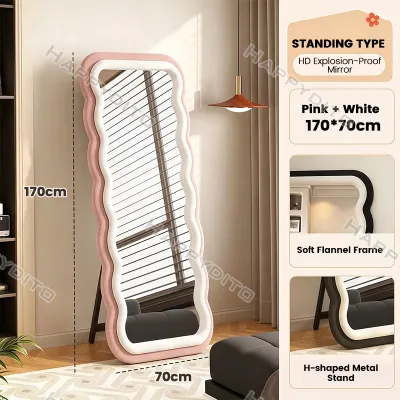



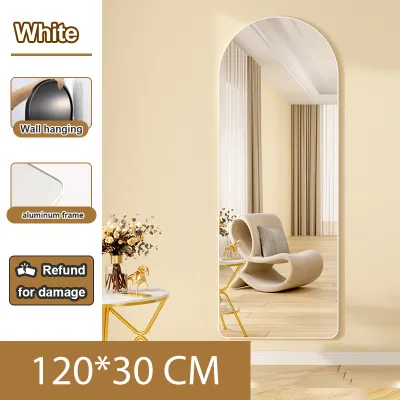
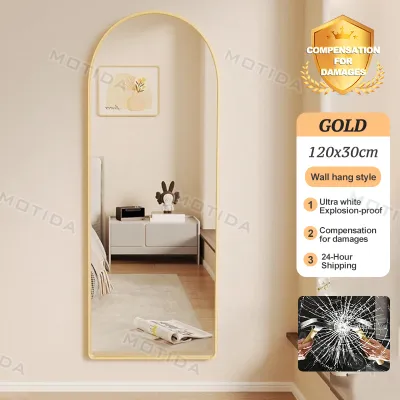
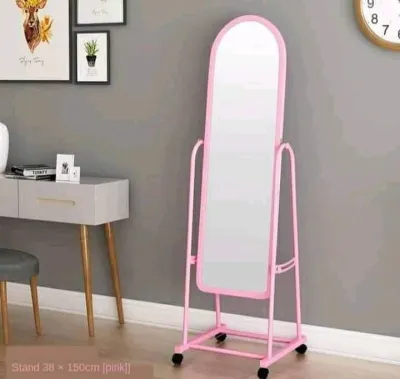
Prices are valid at publication and may change. Please refer to the product page for the latest price.
Width is equally critical when balancing a mirror against narrow bedroom walls. A standard width of 30 to 45 centimeters is highly effective for single-person viewing without dominating the wall space. If you select a mirror that is too wide, say 70 centimeters or more, it can easily overwhelm a compact room, leaving little space for other essential furniture like wardrobes, study desks, or bedside tables. Keeping the width conservative ensures the mirror remains a sleek, integrated feature rather than a disruptive visual obstacle.
Sizing mistakes in small bedrooms often stem from ignoring the surrounding layout. A common error is purchasing an oversized mirror that overlaps with window frames, sits too close to electrical switches, or blocks narrow pathways. When a mirror is disproportionately large, it can make the room feel top-heavy and visually chaotic. By sticking to a streamlined vertical profile, you preserve precious wall real estate while still enjoying a fully functional dressing aid.
Space-Enhancing Placement Strategies for Compact Rooms
Strategic placement is the key to unlocking the space-expanding potential of a full-body mirror. To make a small bedroom feel significantly larger, position your mirror where it can capture and bounce natural light. Placing the mirror on a wall adjacent to a window allows it to catch incoming daylight and disperse it throughout the room, instantly brightening dark corners. This simple positioning trick mimics the effect of an extra window, creating an illusion of depth that makes tight quarters feel much more breathable.

However, you must be mindful of what the mirror will reflect. Placing a mirror directly opposite a cluttered clothes rack, an open closet, or a busy work desk will only double the visual noise, making the room feel twice as messy. It is also wise to consider your line of sight from the bed. Many people find it distracting to see their own reflection or sudden movements in the dark, so positioning the mirror on a lateral wall or inside a wardrobe door can prevent unwanted glare and promote a more restful sleeping environment.
When deciding between floor-standing, wall-mounted, and over-the-door options, evaluate your actual floor area. Floor-standing or leaning mirrors offer a stylish, relaxed aesthetic, but their angled stance requires at least 30 to 40 centimeters of floor clearance at the base, which can restrict movement in tight layouts. Wall-mounted mirrors are the ultimate space-savers, keeping the floor completely clear and allowing for seamless integration. Over-the-door mirrors are excellent for ultra-compact rooms or rental units where drilling is restricted, though they must be securely fastened to prevent rattling when the door opens.
Measuring and Preparing Your Wall or Floor Space
Before purchasing your salamin whole body, precise measurements are essential to avoid installation headaches. Begin by measuring the height and width of the target wall area, taking note of permanent fixtures. You must account for baseboards at the bottom of the wall, as well as the location of electrical outlets, light switches, and wall-mounted air conditioning units. Forgetting to factor in these elements can result in a mirror that partially covers a switch or sits awkwardly off-center.
Next, assess the clearance required for daily movement and furniture operation. Open your wardrobe doors, dresser drawers, and bedroom doors completely to ensure they will not swing into the mirror’s path. There should be a comfortable walking pathway of at least 60 centimeters between the mirror and any adjacent furniture. This prevents accidental bumps and ensures you can stand back far enough—usually about one to two meters—to view your full reflection comfortably.
Finally, verify the structural integrity of your wall. In many residential buildings and condominiums, walls are constructed from concrete, hollow blocks, or drywall over metal studs. Heavy glass mirrors require sturdy support, and mounting them securely depends entirely on matching the hardware to the wall material. If you are unsure of your wall type, tapping the surface or using a stud finder can help you determine whether you need heavy-duty masonry plugs or specialized drywall anchors.
Frame Styles and Visual Weight in Small Bedrooms
The frame of your mirror plays a major role in how heavy or light it feels within a small room. For a minimalist, airy aesthetic, frameless mirrors or those with ultra-thin metal frames are highly recommended. A thin black, white, or metallic frame provides a clean border without drawing too much attention to the mirror’s physical boundaries. This allows the glass to blend smoothly with the wall color, maximizing the illusion of an open, continuous space.
If you prefer a statement frame, such as a rustic wooden design or an ornate metallic finish, it must be chosen with intention. A thick, decorative frame acts as a strong visual anchor, which can work beautifully if it is treated as the primary decor piece on that wall. To keep the room from feeling cluttered, avoid surrounding a bold frame with multiple small picture frames or busy wall art. Let the mirror stand alone so its visual weight feels balanced rather than overwhelming.
When selecting frame materials and colors, look to your existing bedroom decor for cues. Matching the frame finish to your light fixtures, cabinet hardware, or bed frame creates a cohesive design thread. For instance, if your room features warm wood tones and brass accents, a mirror with a thin brass or natural wood frame will tie the space together beautifully. This level of coordination ensures the mirror feels like an organic part of the room rather than an afterthought.
Installation Safety and Maintenance for Wall Mirrors
Hanging a large full-body mirror requires careful attention to safety, especially in a bedroom where you sleep and move around daily. Always select high-quality mounting hardware that is explicitly rated for the weight of your mirror. Standard picture hooks or adhesive strips are rarely sufficient for heavy glass and can fail over time, leading to dangerous breaks. For wall-mounted designs, utilizing heavy-duty wall anchors, French cleats, or sturdy brackets screwed directly into wall studs or solid concrete is the safest approach.
If your mirror is exceptionally heavy, features integrated LED lighting that requires fixed electrical wiring, or needs to be mounted high on a hard concrete wall, do not hesitate to hire a qualified professional. Working at heights or drilling into tough masonry requires specialized tools and expertise to ensure the installation is perfectly level and structurally secure. Prioritizing professional help prevents costly damage to your walls and eliminates the risk of a falling hazard.
Maintaining your mirror in a tropical, humid climate requires specific care to prevent damage. High humidity can lead to moisture seeping behind the glass, causing “black edge” or desilvering, which ruins the reflective backing. To protect your investment, clean the mirror using a soft, slightly damp microfiber cloth, and dry it immediately with a separate dry cloth. Avoid spraying liquid glass cleaners directly onto the edges of the mirror, as the liquid can pool in the frame and slowly degrade the silver backing over time.
Frequently Asked Questions (FAQ)
Can a mirror be too big for a small bedroom?
Yes, a mirror can easily become too large for a compact bedroom. If a mirror dominates an entire wall, it can create a disorienting double-image effect that makes the room feel visually chaotic rather than spacious. Additionally, oversized mirrors are incredibly heavy, posing safety risks if your walls cannot support the load, and they can physically block essential pathways or door swings in tight layouts.
What is the best shape for a full-body mirror in a narrow room?
A tall, narrow rectangular or arched mirror is the most effective shape for a narrow bedroom. The vertical orientation draws the eye upward, emphasizing the height of the room and creating an elongating effect. Arched tops are particularly popular because their soft, curved upper edges break up the rigid, straight lines of compact furniture and tight corners, adding a touch of softness to the overall decor.

Community discussion
Share your experience or ask a question. Comments are reviewed before publication.