
Creating a cozy, inviting atmosphere in your home often comes down to the subtle glow of accent lighting. In the Philippines, where warm evenings and humid afternoons shape our indoor living, finding the right balance of light can transform a standard bedroom or living room into a relaxing sanctuary. USB-powered fairy lights equipped with remote controls offer a highly flexible, low-voltage solution for adding this ambient charm. To choose the most suitable set, you must evaluate how the lights will be used in your specific space, verify key technical specifications like cord length and connector types, and ensure your power source matches the product’s electrical requirements. By focusing on these practical details, you can avoid common pitfalls like purchasing strings that are too short, buying incompatible power configurations, or selecting color temperatures that clash with your existing decor.
Setting the Mood: Bedroom vs. Living Room Ambiance
The lighting requirements for a bedroom differ significantly from those of a living room, primarily because these spaces serve distinct daily functions. In a bedroom, the goal is typically to promote relaxation, wind down after a long day, and prepare for restful sleep. For this environment, warm white tones—often ranging between 2700K and 3000K—are highly suitable. These softer, golden hues mimic the natural warmth of sunset, helping to signal to your body that it is time to rest. Dimmable options are particularly valuable in the bedroom, allowing you to lower the brightness to a faint glow as you transition to sleep. When browsing online marketplaces, look for listings that explicitly state “warm white” or “dimmable” in the specifications, rather than relying on edited product photos which can often appear warmer or brighter than the actual product.
In contrast, a living room is a multi-functional space where you might host guests, watch movies, read, or spend time with family. This versatility demands a lighting setup that can adapt to different activities. While warm white is still excellent for cozy movie nights, you might also appreciate dynamic lighting modes or even color-changing RGB options for social gatherings or holiday celebrations. A living room setup benefits from a wider range of brightness levels and more active transition modes, such as slow fades or gentle chases. Because living rooms are generally larger than bedrooms, the ambient light needs to be bright enough to be visible alongside other light sources, such as television screens or floor lamps, without causing distracting glare.
Products mentioned in this guide
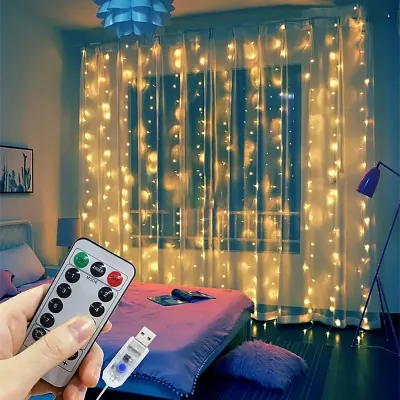
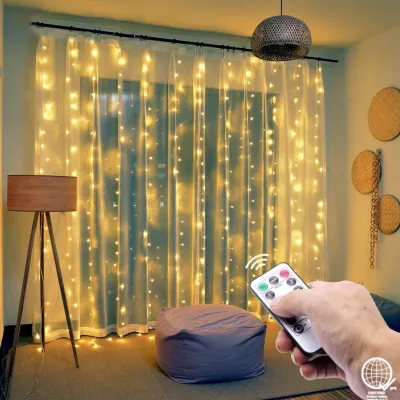
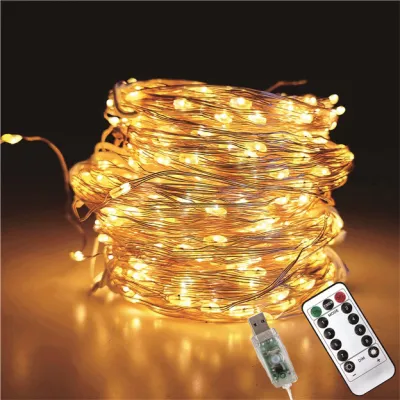
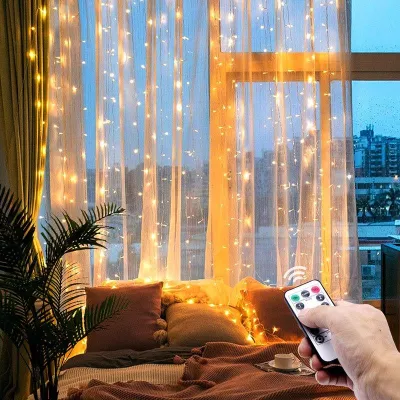
Prices are valid at publication and may change. Please refer to the product page for the latest price.
Before making a purchase on any ecommerce platform, it is crucial to identify your primary use case and preferred color tones. Do not rely solely on highly stylized, edited listing images, which frequently use digital filters to enhance the color saturation or brightness of the lights. Instead, carefully read the product descriptions, technical specifications, and customer feedback sections to verify the actual color temperature terms. Look for terms like “warm white,” “cool white,” “neutral white,” or “RGB color-changing.” Understanding these terms ensures that the physical product you receive matches your aesthetic expectations and blends seamlessly with the existing light fixtures in your home.
Key Specifications to Check Before You Buy
When evaluating different USB fairy light options, a detailed checklist of technical and functional specifications will help you make an informed decision. The first physical dimension to assess is the overall cord length and the corresponding LED density. LED density refers to how closely the individual light bulbs are spaced along the wire. A string with high LED density will provide a continuous, brilliant line of light, which is highly suitable for outlining architectural features or wrapping tightly around small objects. Conversely, a lower density string, where the bulbs are spaced further apart, offers a more delicate, scattered effect that works well for draping loosely over large areas. Always measure the furniture or wall space you plan to decorate beforehand to ensure the cord length is sufficient to cover the area without stretching the wire taut.

The remote control is another critical component that dictates how convenient your lighting setup will be to use on a daily basis. Standard remotes for USB fairy lights typically offer several key functionalities, including multi-hour timers (such as six hours on and eighteen hours off), dimming controls to adjust brightness levels, and mode-switching buttons to cycle through patterns like flashing, fading, or steady glow. When comparing products, check the product details to see if the remote control operates via Infrared (IR) or Radio Frequency (RF). IR remotes require a direct line of sight to the USB receiver to function, meaning you cannot hide the USB plug completely behind a heavy cabinet or wall. RF remotes, on the other hand, can often penetrate basic obstacles, offering more flexibility in where you position the plug. Additionally, verify whether the remote battery is included in the package or if you need to purchase a separate button-cell battery (commonly CR2025 or CR2032) to operate it.
Another essential technical detail is the USB connector type. While the vast majority of budget-friendly fairy lights still utilize the standard USB Type-A connector, some newer models are transitioning to USB Type-C. You must ensure that the connector type matches your existing power sources, whether you plan to plug the lights into a spare phone charger, a laptop port, a multi-port wall adapter, or a portable power bank. In the Philippines, where temporary power interruptions or brownouts can occur during the typhoon season, having a USB-powered light source that is compatible with standard portable power banks is highly advantageous, providing both cozy ambiance and emergency backup lighting when the main power grid goes offline.
Matching Light Styles to Your Furniture and Layout
To achieve a polished, cohesive look, you should match the physical style of the fairy lights to the specific furniture and layout of your room. For instance, if you are decorating a bedroom, draping lights along a wooden bed frame or wrapping them around a headboard requires a highly flexible wire that can hold its shape. Flexible copper wire lights, often referred to as micro fairy lights, are excellent for this application. The thin, bendable wire virtually disappears against furniture surfaces, leaving only the tiny, glowing LED droplets visible. This style allows you to wrap the lights tightly around posts or weave them through intricate headboard designs without needing bulky adhesives or clips.
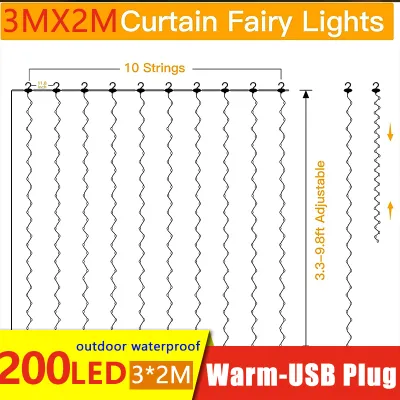
For living room applications, such as outlining bookshelves, framing window casings, or integrating lights into sheer curtains, other styles may be more suitable. Curtain-style fairy lights feature a main horizontal cord with multiple vertical light strands hanging down, creating a waterfall effect that is well-suited for placing behind sheer drapes. If you prefer a more rustic or textured aesthetic, cotton ball or rope-wrapped fairy lights feature larger, decorative enclosures around each LED. These styles are highly visible even when turned off, serving as a design element during the day. However, they are less flexible than bare copper wire and require sturdier mounting hooks or clips to support their additional weight.
Before purchasing any light string, establish a clear framework for calculating the required wire length. Start by measuring the exact path the lights will follow along your furniture or wall. Once you have this base measurement, always add extra slack—typically an additional one to two meters—to account for natural draping, wrapping around corners, and routing the cord down to the nearest power outlet. Never pull the wire tight, as this puts physical stress on the delicate solder joints connecting the LEDs, which can lead to premature failure or flickering. Additionally, ensure you know the length of the “lead wire”—the unlit portion of the cord between the first LED and the USB plug—so you can comfortably reach your power source without leaving a gap in your light display.
Power Supply and Safe Installation Practices
While USB-powered fairy lights operate on low voltage (typically 5V), maintaining safe installation and power practices is still essential to protect your home and prolong the lifespan of your lights. Always check the power adapter’s output limits and compare them with the input requirements printed on the fairy light’s USB connector or packaging. Using an adapter with an incorrect voltage or an unstable current can cause the lights to flicker, run excessively hot, or suffer permanent damage. Avoid plugging multiple high-draw USB devices into a single, unrated multi-port adapter, as this can lead to overloading and potential overheating of the wall plug.
Safe physical routing of the delicate wires is equally important, especially in active household environments. Avoid pinching the thin copper wires under heavy furniture legs, running them through doorways where they can be stepped on, or bending them at sharp, repeated ninety-degree angles. In tropical climates like the Philippines, indoor humidity can be high, and homes often utilize electric fans, air conditioners, or humidifiers. Ensure that your fairy lights and their USB connections are kept completely dry and positioned away from the direct path of humidifiers or open windows where rain might splash inside. If you plan to hang lights near curtains or bedding, ensure the LEDs are rated as “cool to the touch” to prevent any localized heat buildup against flammable fabrics.
Finally, it is important to recognize the limitations of these decorative products. USB fairy lights are designed strictly for low-voltage, temporary ambient lighting and are not a substitute for permanent household wiring. If you are considering more complex, high-voltage architectural lighting modifications—such as installing recessed ceiling fixtures, hardwired track lighting, or permanent outdoor wall sconces—always consult a qualified professional electrician. Attempting to modify low-voltage USB lights to connect directly to your home’s 220V mains power is extremely dangerous and will void any product warranties while posing a severe fire and electrical hazard.
Frequently Asked Questions (FAQ)
Can I use a standard phone charger to power USB fairy lights?
Yes, you can generally use a standard USB phone charger to power your fairy lights, provided the charger’s output matches the input requirements specified on the light’s product label. Most USB fairy lights require a standard 5V output, which is the default for almost all standard phone chargers. However, you should check the amperage rating; most lights run safely on a 1A or 2A adapter. Avoid using high-wattage fast chargers (such as those designed for rapid laptop or flagship phone charging) if the fairy light’s USB controller lacks built-in voltage regulation, as this can sometimes cause the controller to overheat. When in doubt, a basic, low-output USB wall adapter or a standard portable power bank is the safest and most reliable choice.
Why is my fairy light remote not responding or pairing?
If your fairy light remote is not responding, the most common issue is a simple physical barrier. First, check if you have removed the thin, protective plastic battery tab that slide-out trays often have to prevent power drain during shipping. Next, determine if your remote is Infrared (IR). If it is, you must have a clear, unobstructed line of sight between the remote and the USB receiver plug; hiding the USB plug behind a solid wooden TV stand or metal bed frame will block the signal. Finally, try replacing the button-cell battery inside the remote, as these can drain over time even when not in use. If the remote remains completely unresponsive after these physical checks, contact the seller or manufacturer to inquire about a replacement remote or receiver.

Community discussion
Share your experience or ask a question. Comments are reviewed before publication.