
Finding the right long lamp shade requires a balance of precise physical measurements and visual proportions. A shade that is too small exposes the harsh glare of the bulb and the utility of the socket, while an oversized shade can make your entire lighting fixture look top-heavy and unstable. By measuring your lamp base’s height, width, and hardware configuration, you can select a replacement shade that fits securely and enhances your room’s overall aesthetic. Whether you are updating an old table lamp or customizing a new fixture, taking these steps ensures your lighting remains both functional and beautiful.
Gather Your Measuring Tools
Before you begin, gather a few basic household tools to ensure your measurements are accurate. A flexible sewing tape measure is highly recommended, especially if your lamp base has a curved, ginger-jar, or irregular sculptural shape. Unlike a rigid metal tape measure, a flexible tape easily wraps around contours to capture the true width of the base. You will also need a notepad or a digital device to record each dimension as you go, preventing any confusion when you browse local home decor stores or online marketplaces.
To get unobstructed access, safely unplug the fixture, unscrew the decorative finial, and lift off the existing lampshade. If your lamp uses a detachable metal wire support known as a harp, gently squeeze its bottom prongs to release it from the saddle below the socket. Removing these components allows you to measure the bare base and hardware without any interference, giving you a clean starting point for your calculations.
Products mentioned in this guide
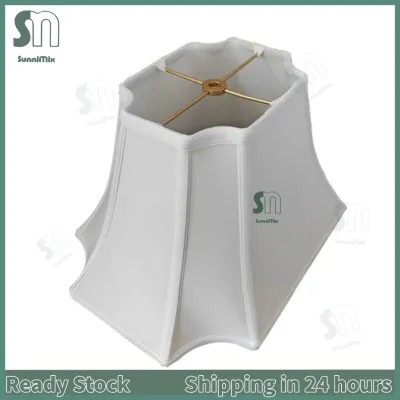
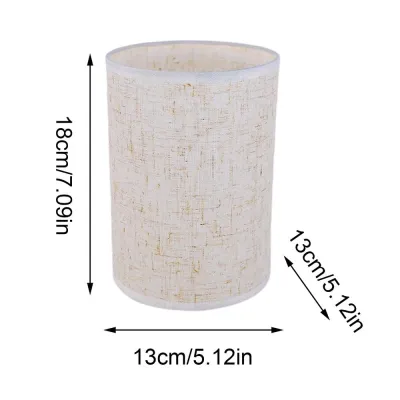
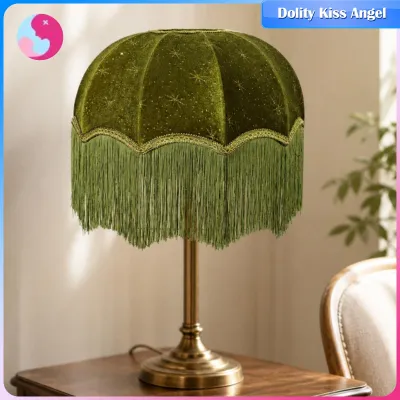
Prices are valid at publication and may change. Please refer to the product page for the latest price.
Measure the Lamp Base Dimensions
The physical footprint and height of your lamp base establish the foundation for all subsequent shade proportions. Place the bare lamp base on a flat, level surface and use your measuring tape to find the total height of the base. Measure from the very bottom of the lamp’s stand up to the bottom edge of the electrical socket. Do not include the socket itself, the lightbulb, or the harp in this vertical measurement, as these components will be housed inside the new shade.

Next, determine the widest point of the lamp base. For a standard round or square base, this is simply the diameter or width at the bottom. If your lamp features an urn, teardrop, or abstract shape, the widest point might be near the middle or top of the column. Wrap your flexible measuring tape around this widest section to find its circumference, then divide by 3.14 to calculate the diameter, or simply hold a ruler flat behind the widest section to estimate the straight-line width. Recording this dimension is crucial because the bottom of your new long lamp shade must be wide enough to balance this visual weight.
Finally, take note of the overall shape and profile of the base. A sleek, modern column base has very different visual requirements than a heavy, ornate ceramic base. Sleek columns often pair beautifully with long, narrow drum shades, whereas wider, more substantial bases require a shade with a broader bottom opening to maintain physical and visual equilibrium. Understanding these geometric relationships helps you narrow down the style of shade that will look most natural on your specific fixture.
Calculate the Ideal Long Lampshade Height
Determining the vertical length of your new shade is a critical step in achieving proper proportions. As a general guideline for standard table lamps, the height of the lampshade should be approximately two-thirds of the height of the lamp base. However, when you are specifically choosing a long lamp shade, such as a tall cylinder or an elongated drum, this proportion can shift. Long shades are designed to cover more vertical space, often making up half or slightly more of the total height of the entire fixture.
To find a suitable height range, multiply your base height by 0.60 and 0.70; for a 30-centimeter base, this yields a baseline of 18 to 21 centimeters. For a distinctively long lamp shade look, you might extend this range slightly upward, provided the shade does not overwhelm the base. The key is to ensure that the bottom of the shade rests low enough to completely hide the neck of the lamp, the socket, and the harp saddle from normal viewing angles.
While covering the hardware is essential, you must also consider any decorative elements on the lamp base itself. If your lamp features intricate brass detailing, carved wood, or hand-painted ceramic patterns near the top of the column, a shade that is too long might obscure these features. Adjust your calculated height so that the bottom edge of the shade sits just a few millimeters below the socket, preserving the visibility of the base’s unique design elements while still concealing the utilitarian electrical parts.
Determine the Correct Top and Bottom Widths
The top and bottom diameters of your shade dictate its overall silhouette and how it interacts with the surrounding room. To maintain visual stability and prevent a top-heavy appearance, the bottom width of the shade should generally be equal to or slightly wider than the height of the lamp base. If your base is 30 centimeters tall, look for a shade with a bottom width of at least 30 centimeters. This guideline ensures that the lamp looks grounded and physically stable, reducing the risk of accidental tip-overs.
You must also decide between a straight drum profile and a tapered profile. A straight drum shade has identical top and bottom widths, creating a clean, contemporary column of light. This style works exceptionally well with modern, minimalist bases but requires careful placement because of its consistent width. A tapered shade, such as an empire or coolie shape, has a narrower top and a wider bottom. Tapered shades direct more light downward, making them excellent for reading nicks, and they often feel more traditional or transitional in style.
Before finalizing these dimensions, measure the tabletop surface to ensure the bottom edge of the shade does not overhang the furniture. An overhanging shade is highly susceptible to being bumped by passing family members or caught on curtains, which can damage the shade or knock the lamp over entirely. Ensure there is a safety buffer of at least 5 to 10 centimeters between the outer edge of the shade and the edge of the table surface.
Check the Fitter Type and Harp Height
Even a perfectly proportioned shade is useless if it cannot mount securely to your lamp. You must identify the specific fitter type your lamp requires by examining the existing hardware. The most common style is the spider fitter, which features metal spokes radiating from a central ring. This ring sits on top of a metal wire support called a harp and is secured in place with a screw-on finial. If your lamp has a harp, you will need a shade with a spider fitter.
Another common style is the uno fitter, which is built directly into the shade’s frame. Uno fitters feature a threaded ring that screws directly onto the socket itself, holding the shade from below the bulb. These are frequently found on smaller bedside lamps or downward-pointing floor lamps. Additionally, clip-on fitters attach directly to the glass of a standard lightbulb using spring-loaded wire loops. Clip-on shades are generally reserved for smaller, lightweight accent lamps because they cannot support the weight of a large, long lamp shade.
If your lamp uses a spider fitter, you must measure the height of the harp and understand the “fitter drop.” The fitter drop is the vertical distance from the top rim of the lampshade down to the central fitter ring. A deep drop means the shade will sit lower on the lamp, while a shallow drop makes it sit higher. If your new shade has a deeper drop than your old one, you may need to purchase a shorter harp to prevent the shade from sitting too low and touching the lamp base. Conversely, a shallow drop might require a taller harp to prevent the lightbulb from peeking out from beneath the bottom edge of the shade. Replacement harps are widely available at local hardware stores, typically costing between ₱150 and ₱400, allowing you to easily customize the mounting height.
Verify Clearances and Safety Limits
Before making your final purchase, perform a few spatial and safety checks to ensure your new long lamp shade operates safely in its intended environment. In tropical climates where homes often utilize ceiling fans or open windows for ventilation, a large or lightweight shade can catch drafts easily. Ensure the lamp is positioned away from direct air currents and has ample clearance from nearby walls, indoor plants, or flowing window curtains. A minimum clearance of 10 centimeters from any wall or vertical surface is recommended to prevent crowding and allow air to circulate freely.
Electrical safety is paramount when selecting a new shade. Locate the safety label printed on your lamp’s socket to verify the maximum wattage limit. The material and size of your new shade must allow heat from the lightbulb to dissipate safely. Tight, narrow cylinder shades trap heat more easily than wide, open drum shades. If you plan to use a traditional incandescent bulb, ensure there is at least 5 to 8 centimeters of space between the bulb and the inner wall of the shade to prevent scorching or fire hazards. Transitioning to modern LED bulbs is highly recommended, as they emit significantly less heat and are much safer for enclosed or long shade designs.
If you are planning to install an exceptionally large, heavy, or custom-designed shade, or if your lamp involves fixed wall wiring or damp outdoor patio environments, standard DIY guidelines may not apply. For suspended ceiling fixtures, heavy glass shades, or damp-rated installations, always prioritize safety by consulting the manufacturer’s instructions or hiring a qualified professional electrician. Taking these precautions ensures your beautiful new lighting setup remains safe, stable, and functional for years to come.
Frequently Asked Questions (FAQ)
What if my lamp base is unusually thin or thick?
If your lamp base is exceptionally thin, such as a slender candlestick style, a standard-width shade can make the entire fixture look top-heavy and unstable. To balance a thin base, opt for a long, narrow cylinder or a highly tapered shade that mimics the slender profile of the column. For thick, heavy ceramic or wooden bases, avoid small or overly narrow shades that make the lamp look squat and unfinished. Instead, choose a substantial drum shade with a bottom width that matches the widest part of the base, relying on visual weight and physical stability tests rather than strict mathematical formulas to find a pleasing balance.
Can I use a long drum shade on a standard table lamp?
Yes, a long drum shade can work beautifully on a standard table lamp, giving it a clean, modern update. However, you must ensure the shade’s diameter is not so wide that it makes the lamp physically unstable or causes it to overhang your tabletop. Because long drum shades often feature a deeper fitter drop than traditional tapered shades, you will likely need to measure and potentially replace your existing harp. Swapping to a shorter or taller harp allows you to adjust exactly where the shade sits, ensuring the lightbulb remains hidden while keeping the overall proportions balanced.

Community discussion
Share your experience or ask a question. Comments are reviewed before publication.