
To create an inviting and professional storefront, pairing a barber signage light with complementary wall sconces requires a deliberate balance of visual hierarchy, material harmony, and technical compatibility. The primary goal is to let your iconic barber signage light—whether it is a classic rotating pole or a custom backlit emblem—serve as the undisputed focal point, while the surrounding wall sconces provide supportive ambient illumination. By aligning design eras, coordinating color temperatures, and planning the physical layout, you can transform a chaotic exterior into a cohesive, high-end facade that naturally draws in clients.
Understanding Your Storefront Lighting Goals
A successful commercial exterior must balance two distinct lighting roles: high-visibility branding and functional ambient illumination. Your barber signage light is the primary beacon, designed to capture the attention of passing pedestrians and drivers from a distance. If this light is forced to compete with overly bright, flashing, or poorly positioned wall sconces, the storefront quickly becomes a confusing wash of glare. Instead, the wall sconces should play a supporting role, gently illuminating the architectural features of your shop and guiding clients safely to your door.
Identifying the architectural style of your building facade is the first step in establishing this visual hierarchy. A heritage-style storefront with exposed brick or classic moldings demands a different lighting approach than a sleek, modern concrete facade. Choosing fixtures that respect and enhance these existing structural elements ensures that your lighting feels integrated rather than tacked on as an afterthought.
Products mentioned in this guide
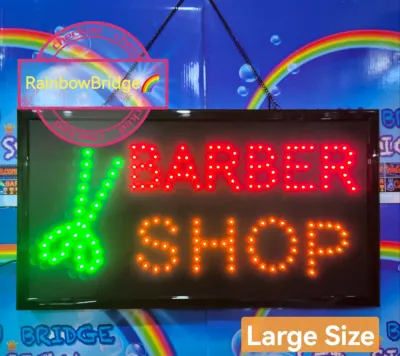
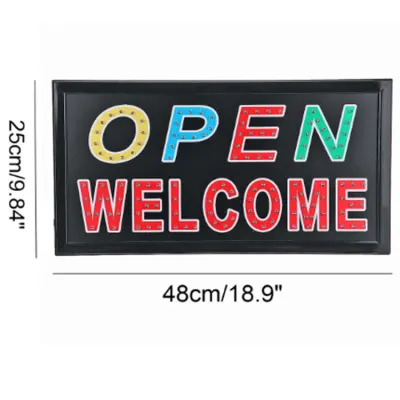
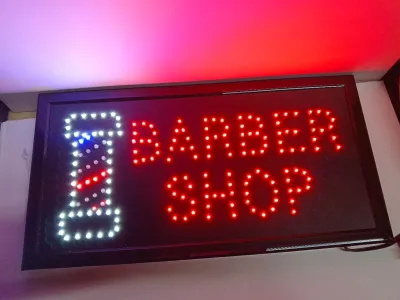
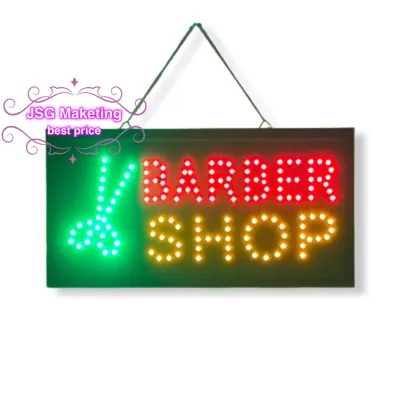
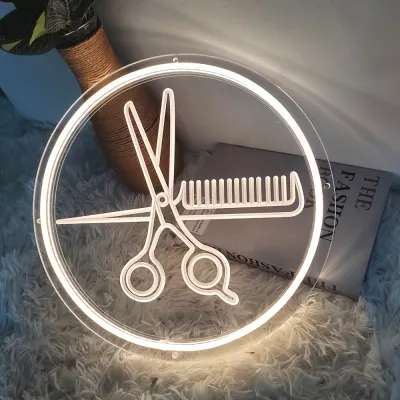
Prices are valid at publication and may change. Please refer to the product page for the latest price.
Furthermore, you must carefully evaluate the required brightness levels for your specific location. In busy, well-lit commercial districts in the Philippines, your exterior lights need enough presence to stand out against streetlights and neighboring shops. In quieter suburban or residential streets, a softer, more subdued approach is necessary to prevent light pollution while still maintaining pedestrian safety and a welcoming nighttime ambiance.
Key Design Dimensions for Cohesive Pairing
Achieving a unified look across different lighting fixtures comes down to coordinating key design dimensions, starting with finishes and materials. While you do not necessarily need identical fixtures, matching the metal tones—such as pairing a matte black barber pole bracket with matte black gooseneck sconces—creates an instant visual connection. If your signage light features antique brass accents, selecting wall sconces with similar warm metallic details helps tie the entire facade together.

Aligning design eras is equally critical for a professional presentation. A vintage-inspired barber shop featuring traditional leather chairs and classic grooming services benefits from industrial or retro-style sconces, such as cage lights or classic barn lights. Conversely, a contemporary, high-concept salon focusing on modern styling should opt for minimalist, geometric sconces that mirror the clean lines of the main signage.
Color temperature coordination is perhaps the most influential factor in establishing a cohesive nighttime atmosphere. Mixing cool daylight bulbs with warm white fixtures creates a jarring, disjointed appearance that can make a business look unpolished. For a classic, inviting barber shop feel, a consistent warm white color temperature (typically between 2700K and 3000K) across all exterior bulbs is generally preferred, as it highlights wood tones and brickwork beautifully.
Finally, consider the proportion and scale of your fixtures relative to the storefront’s overall dimensions. A massive, heavy-duty barber pole paired with tiny, delicate sconces will look unbalanced and awkward. Measure your available wall space, entryway height, and the dimensions of your main signage to ensure that the sconces are large enough to hold their own visually without crowding the facade.
Strategic Placement and Layering Techniques
The physical arrangement of your exterior fixtures dictates how clients perceive your shop from the street. To establish a clear visual hierarchy, position your wall sconces to frame the entrance or flank the main signage light rather than placing them in direct competition. For instance, mounting a pair of matching sconces on either side of the front door creates a symmetrical, welcoming frame, while the barber signage light can be mounted slightly higher or to one side to signal your business type.
Using sconces to wash the walls with light is an excellent way to add depth and highlight architectural textures like stone, brick, or textured plaster. Downward-facing sconces can illuminate pathways and steps, ensuring safe footing for clients entering and leaving the shop after dark. Meanwhile, the signage light remains the primary focal point, positioned at an optimal height to be visible to both foot traffic and passing vehicles.
Adjusting mounting heights and beam angles is crucial to avoid harsh shadows and dark spots on your facade. Sconces should generally be mounted at eye level—typically around 1.5 to 1.7 meters from the ground—to provide comfortable illumination without casting deep shadows on faces. Ensure that the light beams from your sconces do not directly intersect or wash out the illumination from your barber signage light, keeping the two layers distinct yet complementary.
Technical Compatibility and Installation Boundaries
Beyond aesthetics, outdoor commercial lighting in the Philippines requires strict adherence to technical and safety standards. Because exterior fixtures are constantly exposed to high humidity, intense tropical heat, and heavy monsoon rains, verifying their weather resistance is paramount. Look for fixtures with an appropriate Ingress Protection (IP) rating, such as IP44 for general damp areas or IP65 for areas directly exposed to heavy downpours, to ensure long-term durability and prevent electrical shorts.
Before purchasing or mounting any fixtures, verify the voltage requirements and electrical compatibility. Standard commercial properties in the Philippines operate on a 220V electrical system, so importing fixtures designed solely for 110V systems without a transformer can lead to immediate equipment failure or safety hazards. Additionally, check the load-bearing capacity of your exterior wall materials; heavy metal brackets and rotating barber poles require secure anchoring into solid concrete, hollow blocks, or reinforced framing rather than simple drywall or thin cladding.
Because exterior commercial lighting involves fixed wiring, conduit routing, and working at heights, safety must always come first. Always isolate the power supply at the main breaker before attempting any installation or maintenance. If your project requires running new electrical lines through concrete walls, installing weather-proof junction boxes, or mounting heavy fixtures high above the sidewalk, halt any DIY efforts and hire a licensed electrician to ensure compliance with the Philippine Electrical Code and local building regulations.
Common Pairing Mistakes to Avoid
One of the most frequent design errors is mixing conflicting color temperatures across the storefront. Installing a cool white (6000K) LED bulb in your barber signage light while using warm amber (2200K) Edison bulbs in your flanking sconces creates a harsh visual clash that looks unprofessional. To avoid this, purchase bulbs from the same manufacturer or verify that the Kelvin ratings match precisely before installation.
Another common pitfall is overcrowding the facade with too many high-lumen fixtures. While a well-lit storefront is essential for security and visibility, an excessively bright exterior can cause blinding glare for pedestrians and drivers, potentially violating local light pollution ordinances. Focus on strategic placement and moderate brightness levels rather than trying to flood every square inch of the wall with light.
Lastly, do not ignore the long-term maintenance and weathering patterns of your chosen materials. The high humidity and coastal salt air common in many parts of the Philippines can rapidly corrode low-quality metals. Opt for marine-grade finishes, powder-coated aluminum, or solid brass that can withstand the elements, and establish a regular cleaning schedule to wipe away dust, insects, and salt residue that can accumulate on the glass and metal surfaces.
Frequently Asked Questions (FAQ)
Can I mix different metal finishes on my storefront exterior?
Yes, you can mix metal finishes, but it must be done intentionally to avoid a cluttered, disorganized look. A good rule of thumb is to choose one dominant metal finish—such as matte black—for 70% of your exterior fixtures, and use a secondary finish—like brushed brass or copper—as a 30% accent. This approach adds visual interest and depth to your storefront without overwhelming the design. Avoid mixing more than two different metal finishes, as this can make the facade look like a collection of mismatched spare parts rather than a curated design.
Do the wall sconces need to be on the same switch as the signage light?
It is highly recommended to keep your wall sconces and your barber signage light on separate electrical switches or zones. This separation provides greater operational flexibility and energy efficiency for your business. For example, you may want to keep your main signage light on a dedicated timer or smart switch so it remains illuminated late into the night for branding purposes, while your wall sconces can be controlled by a photocell (dusk-to-dawn sensor) or motion sensors to save electricity when the shop is closed. Separate zoning also simplifies maintenance, allowing you to service one fixture without turning off the entire exterior lighting system.

Community discussion
Share your experience or ask a question. Comments are reviewed before publication.