
To select a high-quality, original amethyst stone garden ornament in the Philippines, you must prioritize mineral authenticity, evaluate structural durability against tropical weather, and plan your placement to avoid direct sunlight. While these striking purple quartz formations make breathtaking outdoor focal points, their longevity depends on understanding how natural stone behaves under intense heat, high humidity, and heavy seasonal rains.
Integrating raw gemstones into outdoor landscapes requires a shift from indoor display habits. Unlike polished indoor crystals, garden ornaments are subjected to environmental stressors that can dull their color, weaken their mounts, or damage their structural integrity. By focusing on observable physical characteristics and asking the right questions before purchasing, you can secure a beautiful, lasting investment for your outdoor space.
Quick Checklist for Buying Amethyst Garden Decor
Before finalizing any purchase of an amethyst stone original, use this rapid evaluation framework to verify its authenticity and outdoor suitability:
Products mentioned in this guide
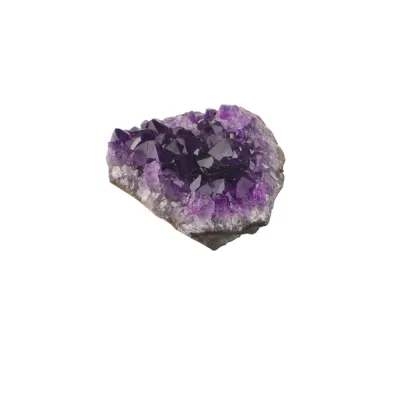
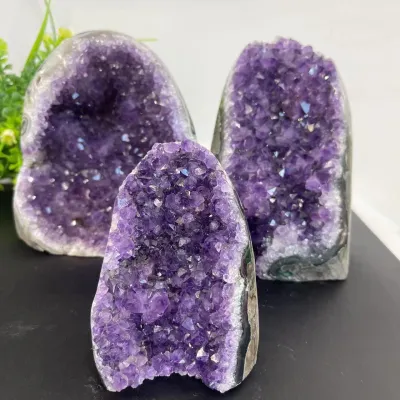
Prices are valid at publication and may change. Please refer to the product page for the latest price.
- Authenticity Check: Look for natural color zoning, irregular crystal growth, and a cool-to-the-touch surface temperature. Avoid stones with perfectly uniform purple hues or visible air bubbles.
- Sunlight Warning: Confirm that your intended display area is fully shaded. Direct UV exposure will permanently fade natural amethyst to a dull gray or white over time.
- Base and Mount Inspection: Verify that the stand or mounting bracket is made of rust-resistant materials, such as powder-coated steel or treated stone, rather than raw iron or untreated wood.
- Seller Verification: Ask the seller for raw, unedited video footage of the stone in natural daylight, and request the exact weight in kilograms rather than vague dimensions.
- Adhesive and Sealant Check: Inquire if the adhesive used to secure the stone to its base is rated for outdoor use and high-temperature exposure.
Verifying Authenticity: Natural Amethyst vs. Imitations
Identifying a genuine amethyst stone original requires a close inspection of its physical and optical properties. Because amethyst is a highly sought-after variety of quartz, the market often contains imitations made of dyed glass, synthetic resins, or dyed quartz. Knowing what to look for under natural light will save you from purchasing a low-quality counterfeit.

Visual Inspection and Color Zoning
Natural amethyst rarely exhibits a perfectly uniform purple color throughout its structure. Instead, genuine specimens display what mineralogists call color zoning. This means you will observe distinct bands or patches of varying intensity, ranging from deep royal purple to pale lavender, white, or clear quartz.
If you look closely at the individual crystal points, the color is typically concentrated at the tips of the crystals rather than deep within the base matrix. Glass imitations, by contrast, feature a completely homogeneous color with no variation. Additionally, look for natural inclusions such as tiny needles of goethite, iron staining, or internal fractures that reflect light. Perfect clarity without any internal imperfections is highly unusual for large garden-grade specimens.
Temperature and Weight Differences
Natural quartz has high thermal conductivity, meaning it draws heat away from your skin quickly. When you touch a genuine amethyst stone, it should feel distinctly cold, even in a warm tropical climate. Glass and plastic imitations warm up rapidly to match the ambient room temperature and will feel lukewarm by comparison.
Weight is another critical indicator of authenticity. Amethyst has a specific gravity of approximately 2.65. When you lift a genuine geode or cluster, it should feel surprisingly heavy and dense. Resin or hollow glass replicas will feel significantly lighter than their size suggests.
Detecting Artificial Dyes and Coatings
Some sellers attempt to enhance low-grade, pale quartz by applying purple dyes or surface coatings. To detect dyed stones, inspect the microscopic cracks and crevices along the crystal faces. If the stone has been artificially dyed, you will notice dark purple concentrations where the liquid dye has pooled inside the fractures.
Surface coatings can sometimes be identified by looking at the stone from an angle under bright light. If you notice an unnatural metallic sheen or a rainbow-like film that does not align with the internal crystal structure, the stone may have been treated with a synthetic coating. These coatings degrade rapidly when exposed to outdoor humidity and rain.
Sunlight Exposure and Color Fading Risks
One of the most critical aspects of maintaining amethyst outdoors is managing its exposure to sunlight. While quartz is a highly durable mineral, its purple coloration is chemically sensitive to ultraviolet (UV) radiation.
The Science of UV-Induced Fading
Amethyst owes its purple hue to natural irradiation, trace amounts of iron impurities, and specific transitions in the crystal lattice. When exposed to the intense UV rays of the tropical sun, this delicate chemical balance is disrupted. Over time, the iron ions return to their ground state, causing the vibrant purple color to fade permanently into a dull gray, yellow, or clear white.
In the Philippines, where the solar index is consistently high, an amethyst stone placed in direct sunlight can lose its color within a single dry season. Once this fading occurs, it cannot be reversed, ruining the aesthetic value of your garden ornament.
Strategic Garden Placement
To preserve the rich purple tones of your ornament, place it in areas that receive consistent shade throughout the day. Ideal locations include:
- Deep Lanais and Covered Patios: These spaces offer complete protection from overhead sunlight while allowing ambient light to illuminate the crystals.
- Under Dense Tree Canopies: Placing the stone beneath broad-leafed tropical trees, such as mango or talisay trees, filters the sunlight and creates a natural, dappled lighting effect.
- North-Facing Garden Walls: Positioning the ornament against a high wall that blocks the harsh midday and afternoon sun helps minimize UV exposure.
Evaluating Seller Claims About Fade Resistance
Be highly skeptical of sellers who claim their natural amethyst stones are “UV-treated,” “baked,” or “completely fade-proof.” There is no scientific treatment that makes natural purple quartz immune to solar fading. If a seller makes these claims, they are either misinformed or selling synthetic materials. Always plan your garden layout under the assumption that the stone will fade if exposed to direct sunlight.
Evaluating Craftsmanship and Outdoor Durability
An amethyst garden ornament is only as durable as its supporting structure. Because these stones are heavy and often top-heavy, the craftsmanship of the base and the quality of the mounting materials are paramount for outdoor safety.
Base Materials for Humid Environments
The high humidity and heavy rainfall characteristic of the local climate can quickly destroy poorly constructed bases. Avoid raw iron stands, which will rust and stain your garden tiles or soil with orange streaks. Similarly, untreated wood bases will rot, attract termites, and compromise the stability of the stone.
Instead, look for bases made of powder-coated steel, marine-grade stainless steel, or natural basalt stone. If wood is used, verify with the seller that it is a highly durable tropical hardwood, such as ipil or yakal, and that it has been thoroughly sealed with an outdoor-grade polyurethane coating.
Inspecting Adhesives and Joints
Many amethyst clusters are secured to their metal or wood stands using industrial adhesives. Inquire about the specific type of adhesive used. Standard indoor epoxies can soften and fail when exposed to high outdoor temperatures, causing the heavy stone to detach and fall.
Ensure the seller has used weather-resistant, construction-grade polyurethane adhesives or mechanical brackets to secure the stone. Inspect the joint areas yourself; there should be no visible gaps, peeling adhesive, or loose connections between the stone and the stand.
Porosity and Moisture Management
While the amethyst crystals themselves are non-porous, the backing matrix—which is often composed of volcanic basalt or green celadonite—can be highly porous. If water pools in the crevices of the matrix during the rainy season, it can lead to the growth of moss, algae, or mold, which can gradually weaken the stone’s structure.
Check if the backing of the geode has been sealed with a breathable, outdoor stone sealer. This prevents water from penetrating the porous backing while allowing any trapped moisture to evaporate safely.
Sizing, Proportions, and Garden Placement
Integrating a heavy gemstone into your landscape design requires careful consideration of scale, visual contrast, and physical safety.
Matching Scale to the Setting
A small amethyst cluster will easily get lost among lush tropical foliage. For open garden beds or rock gardens, larger specimens weighing at least 10 to 20 kilograms are necessary to make a visual impact. Smaller geodes or clusters are better suited for elevated display on patio tables, within sheltered alcoves, or nestled inside large, structured planters.
Creating Visual Contrast
The deep purple hues of amethyst contrast beautifully with the vibrant greens of tropical plants. Position your stone near broad-leafed green foliage, such as bird’s nest ferns, monsteras, or philodendrons, to make the purple colors pop. Avoid placing the stone directly against dark, muddy soil or dark gray gravel, as the rich colors of the amethyst may blend in and lose their visual prominence; instead, use light-colored river stones or white pebbles as a contrasting ground cover.
Weight Distribution and Safety
Because large amethyst geodes are exceptionally heavy, they present a tipping hazard if not installed correctly. Never place a heavy stone ornament on soft, uneven soil or unstable pedestals.
If you plan to elevate the stone, ensure the pedestal is rated for the specific weight of the geode and is anchored securely to a concrete pad. In households with pets or young children, keep heavy stone ornaments at ground level or within secure, low-profile garden beds to prevent accidental tipping.
Integrating Garden Lighting Safely
To highlight the crystal points at night, many homeowners install outdoor spotlighting. If you choose to add electrical lighting to showcase your amethyst ornament, you must prioritize safety.
Always use weather-rated fixtures with an IP65 or higher waterproof rating. Any fixed outdoor wiring must be connected to a circuit protected by a Ground Fault Circuit Interrupter (GFCI). For safety, ensure the power-isolation switch is easily accessible, and have all electrical installations performed by a qualified professional.
Evaluating Sellers and Shipping for Heavy Stone Decor
Buying heavy stone decor requires a different approach than purchasing standard garden ornaments. Because of the weight and fragility of natural crystals, vetting the seller and understanding the logistics of transport are crucial steps in the buying process.
Identifying Red Flags in Listings
When browsing online marketplaces or local specialty shops, watch out for these common warning signs:
- Vague Terminology: Listings that use terms like "natural style crystal" or "amethyst-colored stone" without explicitly stating "100% natural amethyst" often indicate synthetic or dyed materials.
- No Weight Specifications: Genuine stone sellers always list the exact weight of the piece, as weight directly correlates with market value and shipping costs.
- Stock Photos: If a seller uses the exact same photo for multiple listings, they are not selling the unique piece shown. Always demand photos and videos of the specific stone you will receive.
Essential Questions for the Seller
Before committing to a purchase, send a direct inquiry to the seller with the following questions:
- "Has this amethyst stone original undergone any color enhancement, dyeing, or heat treatment?"
- "What specific material is the base made of, and has it been treated for outdoor rust and moisture resistance?"
- "Can you provide a high-definition video of the stone taken outdoors in indirect daylight so I can see the true color zoning?"
- "What is your return or replacement policy if the stone fractures during transit?"
Shipping and Handling Protocols
Amethyst geodes are fragile; they can easily crack or shatter along natural cleavage planes if subjected to rough handling during transit. Shipping a heavy stone within the Philippines requires specialized packaging.
Verify that the seller uses custom-built wooden crates for transit, rather than standard cardboard boxes. The stone should be wrapped in multiple layers of heavy-duty foam or bubble wrap to absorb shocks. Because shipping fees for items weighing over 15 kilograms can range from several hundred to several thousand ₱, confirm the total shipping cost and ensure the shipment includes comprehensive transit insurance to protect your investment.
Frequently Asked Questions (FAQ)
Can I leave amethyst outside during the rainy season?
Yes, the amethyst quartz itself is highly water-resistant and will not be damaged by heavy tropical rains. However, the supporting base, mounting brackets, and adhesives are highly vulnerable to moisture. Continuous exposure to wet conditions can rust metal stands, rot wooden bases, and degrade low-quality adhesives. To prevent damage, ensure your ornament is mounted on a weather-treated stand, has excellent drainage to prevent water from pooling around the base, and is placed in a sheltered area during severe typhoons.
How do I clean outdoor amethyst without damaging it?
To clean your outdoor amethyst, use plain water and a soft-bristled nylon brush to gently scrub away dirt, dust, and organic debris. Avoid using harsh household chemicals, acidic cleaners, vinegar, or bleach, as these substances can dull the polish of the crystals or erode the surrounding host rock matrix. Never use a high-pressure washer, as the intense force of the water can shatter delicate crystal points or dislodge the stone from its adhesive mount.
Is it normal for natural amethyst to have white or clear sections?
Yes, it is entirely normal and is actually a strong indicator of an original amethyst stone. Natural amethyst grows on a matrix of clear quartz, agate, or basalt. As the crystals grow, fluctuations in temperature and mineral concentration create natural color zoning, resulting in white, gray, or completely clear sections near the base of the purple crystals. These variations are unique geological signatures rather than manufacturing defects.

Community discussion
Share your experience or ask a question. Comments are reviewed before publication.