
To find the right size recessed LED panel light for your bedroom, you must balance the physical dimensions of the fixture with the light output required for your space. For most residential bedrooms, compact round or square recessed panels measuring 4 inches to 6 inches in diameter are the most practical choice. Larger commercial-style panels, such as 2-foot by 2-foot grids, are typically too intense and visually dominant for a cozy sleeping environment. The ideal setup relies on calculating your room’s square footage, verifying your ceiling’s depth, and spacing the fixtures to ensure even, glare-free illumination.
Assessing Your Bedroom's Lighting Requirements
To establish a baseline for your lighting project, start by measuring the length and width of your bedroom to calculate the total floor area. In lighting design, we focus on lumens—the measure of visible light output—rather than wattage, which only measures electrical power consumed. Modern LED technology produces significantly more light per watt than older incandescent bulbs, making wattage an unreliable metric for determining brightness.
A standard bedroom typically requires a gentle ambient light level of about 100 to 200 lumens per square meter. For instance, a medium-sized bedroom of 12 square meters might require a total of 1,200 to 2,400 lumens of ambient light. This baseline ensures the room is bright enough for daily activities like folding clothes or tidying up without feeling clinical.
Products mentioned in this guide
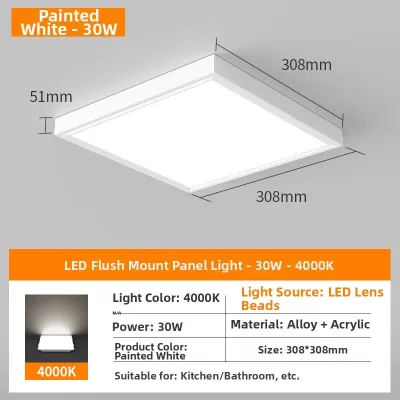
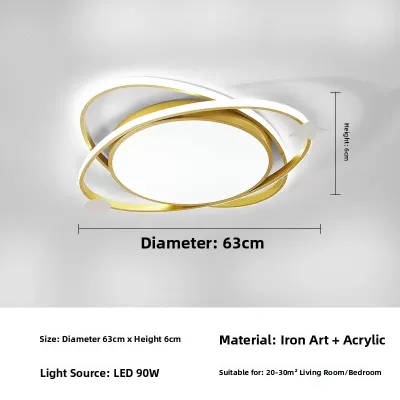
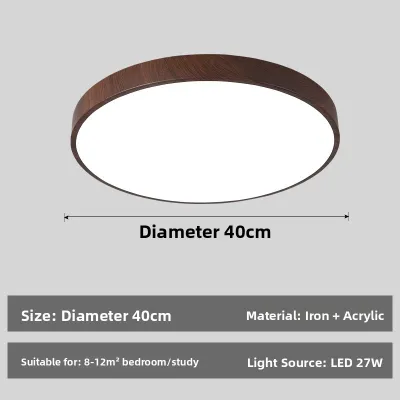
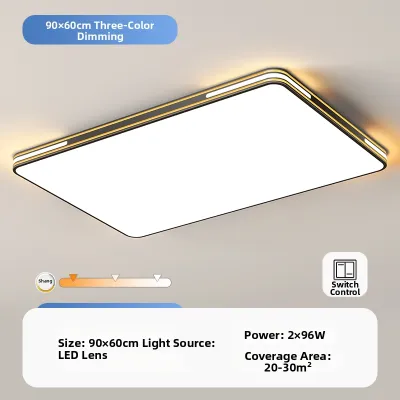
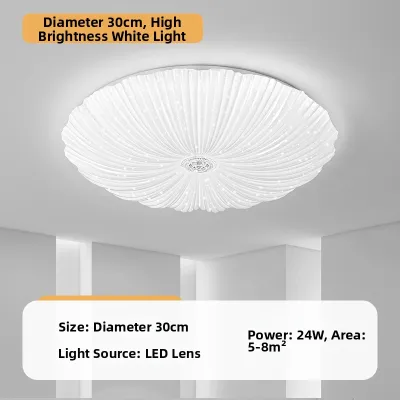
Prices are valid at publication and may change. Please refer to the product page for the latest price.
Several environmental factors can alter these baseline calculations. If your bedroom features dark accent walls, heavy drapes, or deep wood finishes, these surfaces will absorb more light, requiring you to aim for the higher end of the lumen range. Similarly, high ceilings or limited natural light during the day can make a room feel dimmer, necessitating additional light output.
Always verify the actual lumen output by checking the manufacturer’s specification sheet or product packaging. Do not assume two panels of the same physical size or wattage will emit the same amount of light, as efficiency varies widely between different LED chips and driver designs.
Selecting Panel Dimensions and Shapes
When browsing options on an online marketplace or at a local home improvement store, you will encounter various physical shapes and sizes. Large rectangular or square panels, such as 2×2 feet or 2×4 feet, are designed primarily for suspended T-bar grids in commercial offices. Installing these in a residential bedroom can disrupt the cozy, intimate aesthetic and make the ceiling look cluttered or overly industrial.

Instead, residential bedrooms benefit from smaller, low-profile recessed LED downlights or ultra-thin mini-panels, typically ranging from 3 inches to 6 inches. These smaller fixtures blend seamlessly into the plasterboard, providing a clean, modern look that keeps the focus on your bedroom decor.
Before purchasing any fixtures, you must verify the available depth in your ceiling cavity. Traditional recessed “can” lights require several inches of vertical clearance to accommodate the housing. If your ceiling cavity is shallow or obstructed by structural framing, ultra-thin recessed LED panels—often called wafer lights—are an excellent alternative. These fixtures feature an integrated LED board that is less than an inch thick, with a remote driver box that tucks neatly into the ceiling space.
Visual proportion is another key design consideration. A small bedroom with a low ceiling can feel cramped if fitted with large, bright fixtures. Smaller 4-inch panels offer a discreet look that preserves the perceived height of the room. Always review the exact cut-out dimensions specified in the product manual before making any modifications to your ceiling, as the physical outer trim of the light is always larger than the hole required for installation.
Calculating Fixture Quantity and Spacing
Once you have determined your total lumen requirement and selected a panel size, you can calculate how many fixtures you need. Divide the total required lumens for the room by the lumen output of a single chosen panel to find the baseline quantity. For example, if your bedroom requires 1,600 lumens and you have chosen 4-inch panels that emit 400 lumens each, you will need a baseline of four fixtures.
Proper spacing is crucial to avoid creating harsh shadows or a “spotlight” effect. A reliable rule of thumb is to space your recessed lights at a distance equal to half the height of your ceiling. If your ceiling is 2.4 meters high, space the lights approximately 1.2 meters apart. Keep the fixtures at least 0.6 meters away from the walls to prevent intense, distracting cones of light—known as scalloping—which can highlight minor imperfections in your wall paint.
In a bedroom, strategic placement is essential for comfort. Avoid positioning recessed panels directly over the head of the bed or where you rest your pillows, as looking directly up into an LED source can cause uncomfortable glare. Similarly, map out your layout to prevent light from reflecting directly onto television screens, computer monitors, or vanity mirrors.
Remember that recessed panels are meant for general ambient lighting. To create a functional and relaxing environment, plan for layered lighting by combining your ceiling panels with bedside reading lamps, wall sconces, or wardrobe accent lights. This allows you to turn off the overhead panels when winding down for sleep while keeping functional light exactly where you need it.
Installation Clearances and Electrical Safety
Installing recessed ceiling fixtures requires careful attention to physical and electrical safety. Before cutting any holes in your ceiling, use a stud finder to locate ceiling joists, and check for hidden plumbing pipes, electrical conduits, or HVAC ducts. In tropical climates like the Philippines, where high humidity is constant, selecting fixtures with robust heat dissipation and moisture resistance is particularly important, especially if the bedroom has an attached bathroom.
If your bedroom ceiling cavity contains thermal insulation, you must verify the fixture’s insulation rating. Look for an Insulation Contact (IC) rating on the product label. IC-rated fixtures are designed to be in direct contact with insulation without posing a fire hazard, whereas non-IC-rated fixtures require a clear safety gap of at least 3 inches around the housing to dissipate heat.
Electrical safety must be your top priority during installation. Always isolate the power supply by turning off the corresponding circuit breaker at your main electrical panel. Use a non-contact voltage tester to verify that the wires are completely dead before touching them. In the Philippines, the standard residential voltage is 220V at 60Hz; ensure any recessed LED panel you purchase is rated for this voltage and carries local safety certifications, such as the Philippine Standard (PS) mark or Import Commodity Clearance (ICC) sticker.
While mounting a simple plug-and-play wafer light into an existing cut-out can be a straightforward task, recognize the limits of DIY work. If your project involves running new electrical circuits, modifying structural ceiling joists, or working with complex multi-way switching, stop and consult a licensed electrician to ensure a safe and certified installation.
Frequently Asked Questions (FAQ)
Is it better to use warm or cool light for bedroom panels?
For a bedroom, warm white light (typically between 2700K and 3000K on the Kelvin scale) is highly recommended. Warm light mimics the soft glow of sunset, helping your body wind down and prepare for sleep. Cool white light (4000K to 6500K) contains more blue wavelengths, which can suppress melatonin production and disrupt your sleep cycle. However, cool light can be useful in specific task areas like walk-in closets or vanity spaces. To get the best of both worlds, consider choosing adjustable or tunable white LED panels that allow you to switch from cool light during the day to warm light in the evening.
Do recessed LED panels require special dimmer switches?
Yes, recessed LED panels require compatible dimmer switches to function smoothly. Standard legacy dimmers designed for older incandescent bulbs operate on different electrical principles and can cause LED panels to flicker, buzz, or fail prematurely. When purchasing your panels, check the manufacturer’s specifications to ensure they are labeled as dimmable, and verify which dimming protocols (such as TRIAC or 0-10V) their drivers support. Always pair dimmable LED panels with a modern LED-compatible dimmer switch to ensure smooth, flicker-free light control from bright morning prep to low-light evening relaxation.

Community discussion
Share your experience or ask a question. Comments are reviewed before publication.