
Finding the ideal balance of light for late-night reading requires looking beyond simple aesthetics. A rechargeable wireless wall lamp offers the great convenience of cordless installation, but its effectiveness depends on selecting the right brightness and color temperature. To read comfortably without straining your eyes or waking up a sleeping partner, you need a light source that delivers targeted illumination, adjustable warmth, and reliable battery performance.
How to Gauge Brightness Without Disturbing Your Partner
When reading in bed, the goal is to illuminate your book or e-reader clearly while keeping the rest of the bedroom dark. Total light output, measured in lumens, is often confused with directed illumination, measured in lux. For bedside reading, a lamp that produces around 100 to 200 lumens is generally sufficient, provided that light is directed precisely where you need it.
To prevent light from spilling across the bed and disturbing your partner, look for a fixture with a focused beam angle or a physical shade. A narrow beam of 30 to 60 degrees ensures the light pool remains confined to your side of the bed. This directional design allows you to enjoy your book in a bright, clear pocket of light while your partner rests in comfortable darkness.
Products mentioned in this guide
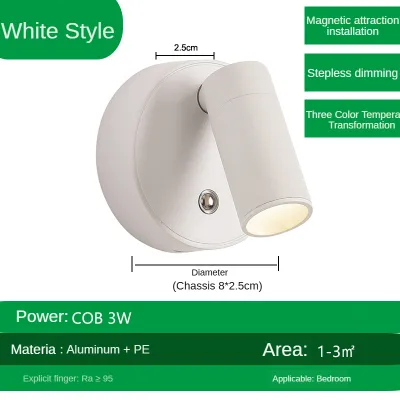
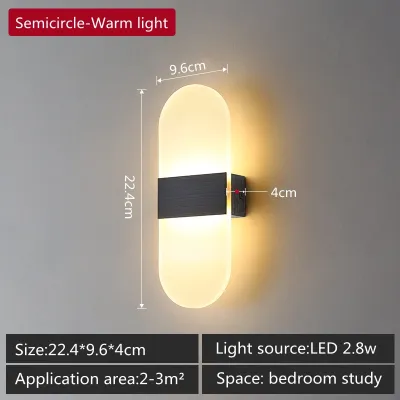
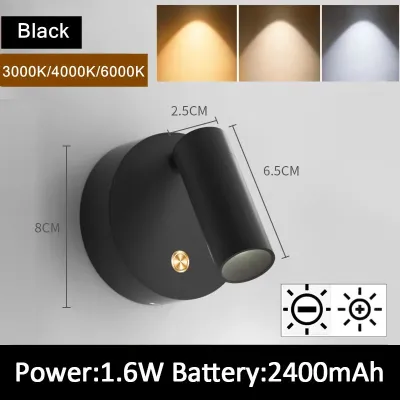

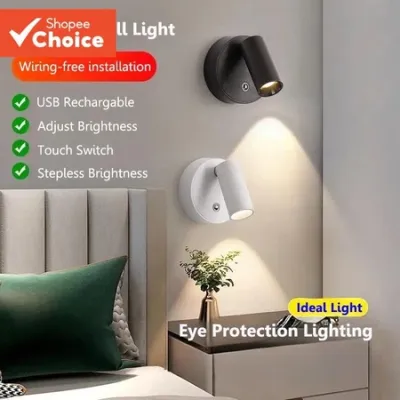
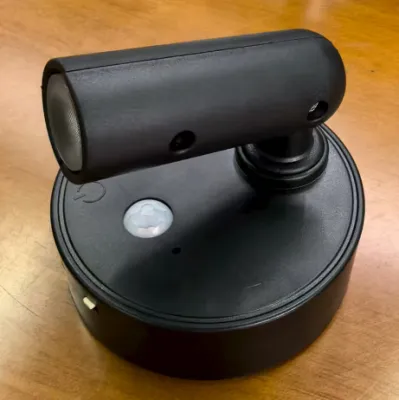
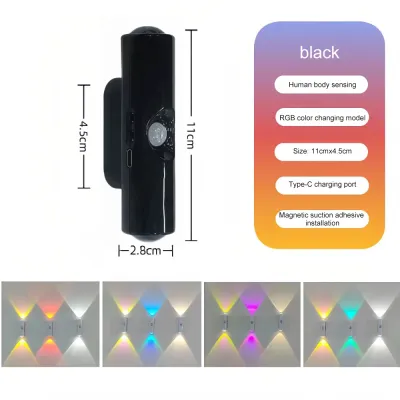
Prices are valid at publication and may change. Please refer to the product page for the latest price.
The distance between the light source and your reading material also plays a critical role in how bright the light feels. A lamp mounted too high will require a higher lumen output to illuminate the pages, which increases the risk of light spilling onto your partner’s side of the bed. Mounting the lamp closer to your shoulder level allows you to use a lower, more energy-efficient brightness setting.
Different reading mediums also interact with light in unique ways. High-contrast white paperbacks reflect a significant amount of light, which can cause glare if the lamp is too bright. Conversely, older books with yellowed pages or matte e-reader screens require slightly more illumination to maintain comfortable contrast.
Stepless dimming is another essential feature for bedside fixtures. Unlike fixed brightness levels, stepless dimming allows you to fine-tune the light output to match the ambient darkness and the reflectivity of your reading material. A smooth dimming control lets you make these micro-adjustments effortlessly, ensuring your eyes never have to struggle against harsh glare or insufficient light.
Selecting the Ideal Color Temperature for Sleep and Clarity
Color temperature, measured in Kelvin (K), directly influences both eye strain and your body’s natural sleep cycle. For evening reading, the ideal range lies between 2700K and 3000K, which produces a warm, amber-toned white light. This warm white mimics traditional incandescent bulbs, creating a cozy atmosphere that signals to your brain that it is time to wind down.

In contrast, cool white light above 4000K contains higher levels of blue light, which can suppress the production of melatonin, the hormone responsible for sleep. While neutral white light around 3500K offers excellent text clarity, it is better reserved for daytime tasks or early evening study sessions. For late-night reading, sticking to warmer tones helps protect your sleep quality.
In tropical climates like the Philippines, where bedrooms are often cooled by air conditioning or electric fans, dry eyes can be a common issue during nighttime reading. Harsh, cool light can exacerbate eye fatigue and dryness. Soft, warm light is gentler on the eyes, reducing the blink rate reduction that typically occurs when focusing on text.
Many modern rechargeable fixtures feature adjustable color temperature settings, allowing you to switch between warm, neutral, and cool modes. This versatility is highly beneficial for multi-use spaces. You can use a clearer neutral light for organizing your bedside table, and then transition to a soft, warm amber glow when you are ready to settle in with a book.
Having the ability to transition between these modes also helps establish a healthy bedtime routine. By shifting the light from a crisp neutral white during your evening preparation to a warm amber hue just before reading, you mentally prepare your mind and body for deep, restful sleep.
Managing Battery Life Against Brightness and Color Settings
Operating a wireless wall lamp in a warm, humid environment requires some attention to battery efficiency and heat management. High brightness settings and cooler color temperatures draw more power, which accelerates battery drain. If you frequently read at maximum brightness, you will find yourself recharging the fixture much more often than if you use a dimmed, warm setting.
When shopping for a rechargeable wireless wall lamp, check the manufacturer’s specified battery capacity, usually listed in milliampere-hours (mAh). A larger capacity generally translates to longer runtimes between charges, but your actual usage habits will dictate how often it needs to be plugged in. For nightly readers, choosing a lamp that can sustain several hours of operation at your preferred reading brightness is key to avoiding mid-chapter blackouts.
Lithium-ion batteries, which power most wireless lamps, are sensitive to extreme temperatures and high humidity. To prolong the lifespan of your lamp’s battery, avoid mounting the fixture directly in the path of hot air currents or in areas with poor ventilation. Charging the device using a certified charger that matches the manufacturer’s voltage specifications also prevents overheating and preserves battery health.
Consider the charging mechanism of the lamp to ensure it fits seamlessly into your bedtime routine. Some models feature magnetic mounts that allow you to easily detach the entire light body for charging, while others use removable battery packs or long USB-C cables. Ensure the charging port is easily accessible and that the fixture can be safely recharged without damaging your wall paint or headboard materials.
If you prefer not to detach the lamp frequently, look for models that support pass-through charging, which allows the light to function while plugged into a power bank or wall outlet. This feature is particularly useful if you forget to charge the device during the day and need immediate light for your nightly reading session.
Mounting and Ergonomic Checks for Bedside Placement
The physical placement of your rechargeable wireless wall lamp determines both your physical comfort and the longevity of the installation. Before mounting the fixture, evaluate your wall texture or headboard material. Many wireless lamps use adhesive pads for tool-free installation, which work well on smooth, non-porous surfaces but may fail on textured plaster, wallpaper, or fabric headboards in humid environments.
In humid tropical climates, adhesive backings can lose their grip over time due to moisture in the air. If you are mounting the lamp on a painted concrete wall or a textured wooden headboard, using screws or wall anchors is often a more secure and permanent solution. This prevents the lamp from falling unexpectedly in the middle of the night.
To protect your eyes from direct glare while lying down, look for lamps with anti-glare design features. Recessed LED beads, frosted diffusers, or adjustable heads allow you to direct the light downward onto your pages rather than directly into your eyes. Positioning the lamp slightly above and behind your shoulder is often a highly comfortable setup for reading.
The angle of the light should be easily adjustable so you can redirect the beam if you change your reading position. A magnetic ball joint mount is highly effective for this, allowing you to tilt and rotate the lamp head smoothly with one hand. This flexibility ensures the light always hits your book at the perfect angle.
Finally, verify the accessibility of the lamp’s controls before finalizing its position. Whether you are looking at premium models or budget-friendly options under ₱1,500, verifying these control features is essential. You should be able to turn the light off, adjust the brightness, or change the color temperature without stretching or getting out of bed. Features like touch-sensitive panels, remote controls, or a built-in memory function that remembers your last-used settings make the nightly reading experience much more seamless.
Frequently Asked Questions (FAQ)
Is a focused beam or wide floodlight better for reading in bed?
A focused beam is highly effective for bedside reading because it concentrates the light directly onto your book or e-reader. A wide floodlight disperses light across the entire room, which can cause glare, strain your eyes in a dark room, and easily wake up anyone sleeping next to you.
Do rechargeable wall lamps remember the last brightness and color setting?
Many high-quality rechargeable wall lamps include a built-in memory function, but this feature is not universal. It is important to check the product specifications before purchasing to ensure the lamp will automatically return to your preferred warmth and brightness level when turned back on.

Community discussion
Share your experience or ask a question. Comments are reviewed before publication.