
A Powerhouse flood light can successfully withstand year-round Philippine balcony conditions, but its long-term survival depends entirely on verifying its specific weatherproofing ratings and executing a safe installation. While these robust fixtures are designed to illuminate outdoor spaces, the extreme combination of tropical heat, high humidity, and torrential monsoon rains presents a severe challenge for any electrical device. To ensure your balcony lighting remains safe and functional, you must evaluate the exact exposure level of your mounting spot and match it with the fixture’s certified specifications.
Understanding Balcony Exposure and Lighting Requirements
Condo balconies in the Philippines experience some of the most punishing weather conditions in Southeast Asia. During the dry season, intense ultraviolet (UV) radiation beats down on exposed surfaces for hours, which can rapidly degrade low-quality plastics and bake rubber seals until they crack. When the monsoon season arrives, these same areas are subjected to driving rain and high-velocity winds that force water into the tiniest structural gaps.
High relative humidity is another silent threat that persists throughout the year, even on dry days. This constant moisture in the air accelerates the oxidation of exposed metal components, leading to rapid rust and corrosion. For condos located near coastal areas, such as those along Manila Bay, the air carries a high concentration of salt, which dramatically accelerates the degradation of metal brackets and screws. If moisture penetrates the outer housing of an electrical fixture, it can cause internal short circuits, trip your condo’s circuit breakers, or even pose a fire hazard.
Products mentioned in this guide

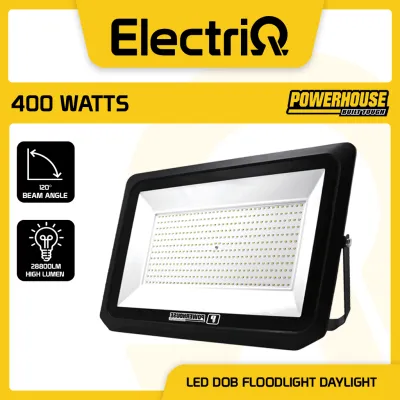
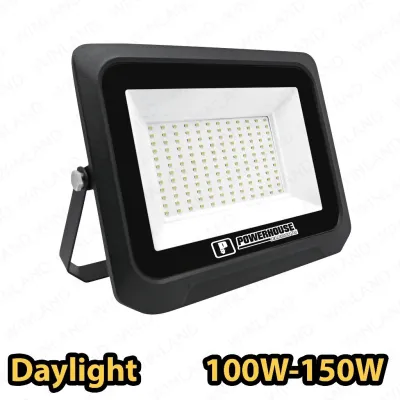
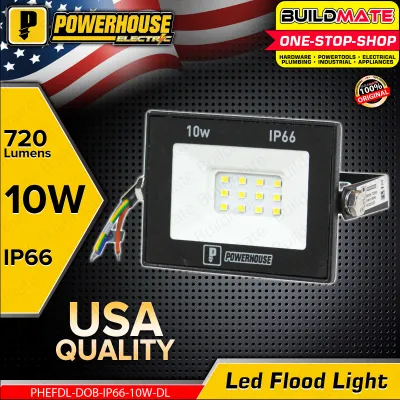
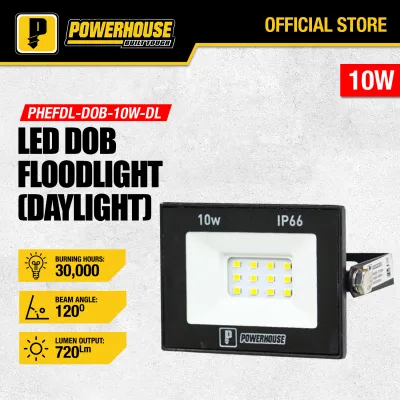
Prices are valid at publication and may change. Please refer to the product page for the latest price.
To assess the risk to your lighting setup, you must distinguish between different zones of your balcony. A covered balcony recess offers significant protection from direct downpours and midday sun, allowing for more flexible lighting choices. In contrast, mounting a fixture directly onto an exposed railing or an outer concrete wall leaves it completely vulnerable to the elements, demanding the highest level of weatherproofing.
Key Specifications to Check on Your Powerhouse Flood Light
Before mounting any Powerhouse flood light on an exposed balcony, you must verify its physical specifications using the product label and the manufacturer’s manual. The most critical indicator of weather resistance is the Ingress Protection (IP) rating, which is typically printed directly on the fixture’s housing or packaging. This two-digit code tells you exactly how well the unit prevents dust and water from entering its electrical compartments.

For a fully exposed balcony, look for an IP rating of at least IP65, which indicates the fixture is completely dust-tight and protected against water jets from any angle. If your balcony is partially covered and shielded from direct driving rain, an IP54 rating may suffice, though higher protection is always safer for outdoor environments. Avoid using any fixture that lacks an explicit IP rating on its label, as standard indoor lights will quickly fail when exposed to outdoor moisture.
Next, examine the housing materials specified in the product documentation. High-quality outdoor flood lights utilize UV-stabilized polycarbonate or powder-coated die-cast aluminum to resist both sun damage and rust. Check the mounting bracket and screws as well; these should ideally be made of stainless steel or treated with a corrosion-resistant coating to prevent unsightly rust stains from running down your balcony walls.
You must also verify the operating temperature limits and cable specifications. The tropical sun can easily heat outdoor surfaces well above ambient temperatures, so ensure the fixture is rated to operate safely in high-temperature environments. Finally, inspect the power cable; it must be constructed from heavy-duty, UV-resistant rubber rather than thin, indoor-grade plastic.
Safe Installation Practices for Condo Balconies
Installing a flood light on a high-rise balcony requires careful planning to comply with building regulations and ensure physical safety. Before purchasing hardware or drilling into walls, consult your condominium corporation’s house rules. Many property management offices strictly prohibit drilling into exterior structural concrete, altering the building’s facade, or installing high-intensity lights that cause light pollution for neighboring units.
Electrical safety is paramount when dealing with outdoor wiring in wet environments. If your balcony has an existing outdoor outlet, it must be protected by a weatherproof, in-use cover that keeps the plug dry even when a cord is plugged in. All permanent wire connections must be housed inside an outdoor-rated, sealed junction box to prevent moisture from reaching the wire splices.
For any installation that requires hardwiring into your condo’s electrical system or drilling into structural concrete, you should hire a licensed electrician. Professional installers understand local electrical codes and can ensure the circuit is protected by a Ground Fault Circuit Interrupter (GFCI), which instantly cuts power if a current leak is detected. Budgeting for professional installation fees of several thousand pesos ₱ is a worthwhile investment to guarantee the safety of your home.
Additionally, you must secure the fixture against the extreme winds associated with tropical typhoons. During typhoon season, wind speeds can exceed 150 kilometers per hour, creating immense drag on any object mounted to your balcony railing. Ensure that the mounting bracket is not just screwed into place, but bolted securely with lock washers to prevent the vibrations from loosening the fixture over time.
Year-Round Maintenance and Inspection Routine
A proactive maintenance routine is essential to preserve the integrity of your outdoor lighting across both the wet and dry seasons. At least twice a year—ideally right before the onset of the rainy season and again after it ends—perform a thorough visual inspection of the fixture. Look closely at the protective glass or polycarbonate lens for any hairline cracks that could allow water to seep inside.
The transition between the scorching dry season and the wet monsoon season is the most critical time for your lighting fixtures. The rapid temperature swings can cause materials to expand and contract, which puts immense stress on the adhesive seals holding the glass lens to the metal frame. Inspect the rubber gaskets that seal the housing joints and cable entry points; over time, exposure to intense heat can cause these gaskets to dry out, shrink, or lose their elasticity.
When cleaning your flood light, always unplug or isolate the power supply first. Wipe down the housing and lens with a soft, damp microfiber cloth to remove accumulated dust, salt residue, and grime. Avoid using abrasive scrubbing pads or harsh chemical cleaners, as these can strip away protective UV coatings and degrade the rubber seals.
During your inspection, check all mounting hardware and brackets for stability. Tighten any loose screws and look for early signs of rust on the metal components. If you observe any critical safety hazards, such as a cracked housing, exposed internal wiring, or a frayed power cable, unplug the unit immediately and do not turn it back on until the component is replaced.
When to Replace or Seek Professional Help
Knowing when to retire a compromised flood light is crucial for maintaining a safe balcony environment. Some signs of wear are irreversible and indicate that the fixture is no longer safe to operate. If you find severe corrosion on the internal electrical contacts, a warped or melted housing, or persistent internal condensation that does not clear up, the unit must be replaced.
Attempting to repair a compromised outdoor fixture with aftermarket silicone sealants or electrical tape is highly discouraged. These temporary fixes rarely withstand the intense pressure of driving monsoon rains and can trap moisture inside, accelerating corrosion and increasing the risk of an electrical short. Replacing a damaged unit is always the safest and most cost-effective decision in the long run.
If you experience recurring issues, such as the flood light repeatedly tripping your home’s circuit breaker, do not attempt to diagnose the problem yourself. If you notice your balcony light flickering during heavy downpours, this is an immediate warning sign that water has bridged an electrical path. Do not touch the fixture or the switch with wet hands; instead, locate your condo’s main breaker panel and shut off the circuit dedicated to the balcony outlets before calling a qualified electrician to inspect the system.
Frequently Asked Questions (FAQ)
Can I use an indoor extension cord for my balcony flood light?
No, you must never use an indoor extension cord for an outdoor balcony light. Indoor cords lack the heavy-duty insulation and UV protection required to withstand sun exposure and moisture, which can cause the plastic jacket to degrade rapidly. Always use a dedicated, outdoor-rated extension cord with a grounded three-prong plug, and ensure all connections are housed in a weatherproof safety cover.
Does a higher wattage flood light generate too much heat for a small balcony?
High-wattage fixtures can generate significant heat, which may pose a safety risk if mounted close to combustible materials like balcony curtains, wooden furniture, or plastic plants. To prevent heat buildup, check the manufacturer’s manual for minimum clearance guidelines and consider choosing energy-efficient LED flood lights. LEDs produce far less heat per lumen than traditional halogen alternatives, making them much safer and more practical for confined condo balconies.

Community discussion
Share your experience or ask a question. Comments are reviewed before publication.