
Evaluating whether the wall e led light v3 is a suitable choice for your home requires looking closely at your specific spatial dimensions and daily habits. While its modern aesthetic is appealing, its functional success in narrow corridors and bedside settings depends entirely on verifying physical and optical specifications rather than relying on the product name alone.
In typical Filipino households, where urban condominiums in Metro Manila or modern townhouses often feature compact layouts, space optimization is crucial. Hallways are frequently narrow, and bedrooms must often balance rest with active study or work. To make a safe and effective purchase, you must check the manufacturer’s spec sheet for exact physical dimensions, lumen output, color temperature, and beam angles before mounting any fixture to your walls.
Space and Safety: Using the Wall E LED Light V3 in Narrow Corridors
In narrow corridors, physical clearance is your primary safety priority. Standard residential hallways in the Philippines often measure between 90 and 120 centimeters in width, leaving little room for bulky fixtures. If a wall light protrudes too far, it becomes an immediate physical hazard, prone to being bumped by passing family members or snagging laundry baskets and clothing. When evaluating the wall e led light v3, check the manufacturer’s physical specifications for its exact depth; for tight passageways, a low-profile design that extends no more than 10 centimeters from the wall is highly recommended to maintain a clear, unobstructed path.
Products mentioned in this guide
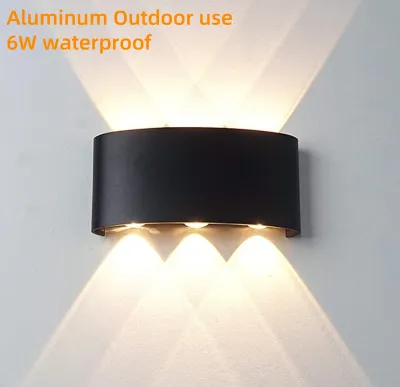
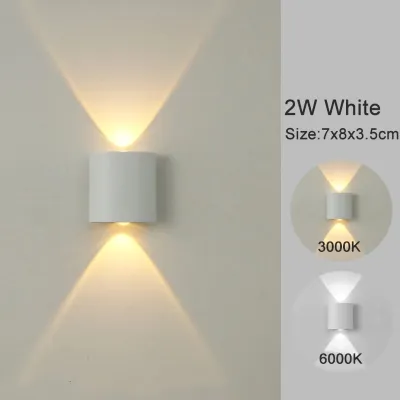
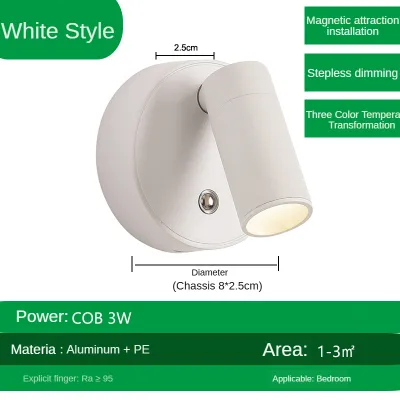
Prices are valid at publication and may change. Please refer to the product page for the latest price.
The direction and distribution of light also dictate how safe and comfortable your corridor feels. Direct, forward-facing light in a tight hallway can cause intense, uncomfortable glare that temporarily blinds anyone walking toward the fixture. An upward and downward wall-wash design is far more suitable, as it bounces light off the wall and ceiling surfaces to create soft, indirect illumination. This technique lights your pathway evenly without exposing your eyes to a harsh, unshielded light source.
Thermal management is another critical factor, particularly in the tropical climate of the Philippines, where un-airconditioned hallways can trap heat and humidity. LED fixtures generate heat at their base, and poorly designed housings can become hot to the touch, posing a minor burn risk in tight spaces where accidental contact is likely. You should verify that the wall e led light v3 features a high-quality aluminum housing or an integrated heat sink that dissipates thermal energy safely, keeping the external surfaces cool.
Finally, proper mounting height is essential to maximize light spread and prevent physical collisions. In most residential hallways, mounting the fixture at a height of 1.8 to 2 meters from the finished floor line is ideal. This placement keeps the light source safely above average eye level, aligns the fixtures visually with standard door frames, and ensures that the downward light beam effectively illuminates the floor to prevent trips and slips. Always check for local electrical certification marks, such as the Philippine Standard (PS) mark or Import Clearance Certificate (ICC), to verify that the fixture’s housing and wiring meet national safety standards.
Task Lighting: Is the V3 Comfortable for Bedside Reading?
Bedside reading requires focused task lighting that provides clear visibility without causing eye strain or disrupting your body’s natural sleep-wake cycle. For comfortable reading of printed books, you generally need a light output of 200 to 400 lumens. The color temperature of the light should fall within a warm range of 2700K to 3000K. Avoid cool daylight temperatures above 5000K in the bedroom, as blue-rich light suppresses melatonin production and can make it difficult to fall asleep after reading.

You must also verify the light’s base and interface type, along with any wattage limits. If the wall e led light v3 uses an integrated LED module, confirm that its built-in color temperature matches your reading preference, as integrated systems cannot easily be swapped out. If the fixture features a standard bulb socket, such as an E27 or GU10 base, check the manufacturer’s maximum wattage limit to ensure you do not install a bulb that exceeds the fixture’s thermal and electrical capacity.
The beam angle and adjustability of the fixture will determine how effectively the light reaches your book. A fixed wall sconce that projects a wide, static wash of light requires highly precise mounting calculations so that the light pool falls over your shoulder rather than shining directly into your eyes. If the wall e led light v3 features an adjustable reading arm or a directional spotlight, it offers a significant advantage, allowing you to direct a narrow beam of 15 to 30 degrees exactly onto your page.
Control convenience and partner comfort are the final elements of a great bedside setup. A reading light should be easy to turn off from a lying position without requiring you to stand up. Check if the fixture includes a built-in switch, such as a toggle, touch sensor, or pull chain, or if it is compatible with external dimming methods and smart home systems. Furthermore, a highly focused or asymmetric beam angle ensures that the light remains confined to your side of the bed, allowing you to read comfortably without disturbing a sleeping partner.
Cross-Scene Compatibility: Can One Fixture Serve Both Purposes?
Using the same fixture model throughout your home can create a highly cohesive, modern aesthetic, but it often requires balancing design preferences with functional performance. A wall light that is perfectly optimized for corridors—such as a wide-angle, low-profile wall wash—may struggle to deliver the focused, adjustable task lighting needed at your bedside. If you choose to use the wall e led light v3 in both spaces, you must accept that its performance may be better suited to one application than the other.
Even if you install the same fixture model in both areas, the physical installation parameters must be customized for each environment. In hallways, fixtures are mounted high and spaced evenly to provide safe, general navigation light. For bedside use, the fixtures must be mounted lower and positioned symmetrically relative to your headboard, typically at a height of 1.2 to 1.4 meters above the floor, depending on your mattress height. This lower placement ensures the light is close enough to serve as an effective reading source.
If your evaluation shows that the wall e led light v3 lacks the adjustability or dimming capabilities required for comfortable reading, it is best to avoid a single-fixture approach. Instead, prioritize the primary function of each room by installing the V3 in your corridors where its low profile shines, and selecting a dedicated, adjustable reading sconce for your bedroom. This functional separation prevents eye strain and ensures that both spaces are illuminated safely and comfortably.
Electrical and Installation Checks for Philippine Homes
Electrical compatibility is critical to prevent premature fixture failure and home electrical hazards. The Philippine electrical grid operates on a standard voltage of 220V at a frequency of 60Hz. Because many imported fixtures are manufactured for 50Hz grids, you must verify that the driver of the wall e led light v3 is explicitly rated for 60Hz operation. Running a 50Hz driver on a 60Hz system can cause persistent flickering, excessive heat generation, and a drastically shortened lifespan for the LED components.
The construction materials of your walls will dictate the tools and hardware required for a secure installation. Most homes in the Philippines feature walls made of concrete hollow blocks (CHB) finished with plaster, while some interior partitions use gypsum drywall over metal studs. Mounting a fixture to concrete requires a masonry drill bit and heavy-duty plastic wall anchors (tox plugs) to handle the weight of the fixture safely. For drywall installations, you must use specialized toggle bolts or expansion anchors to prevent the screws from pulling out of the wall over time.
Safe installation practices are essential whenever you are dealing with fixed electrical wiring. Before beginning any installation, always isolate the power by turning off the main circuit breaker at your home’s electrical panel. If your project involves routing new wires behind walls, installing new junction boxes, or mounting fixtures in damp transition areas—such as corridors near open-air windows or en-suite bathroom doors—you must hire a qualified professional. A licensed electrician will ensure that all wiring, grounding, and connections comply with the Philippine Electrical Code, keeping your home safe from electrical shocks and fire risks.
Frequently Asked Questions (FAQ)
Can I install the wall LED light V3 without an existing wall junction box?
If the wall e led light v3 is designed strictly for hardwired installation, mounting it safely and complying with electrical codes requires a recessed junction box. Cutting into solid concrete walls to install a junction box and conduit is a labor-intensive process, but it is necessary for a flush, professional finish. If you cannot cut into your walls, such as in a rental property, you can convert the fixture into a plug-in model by wiring a flexible cord with an inline switch and a standard plug to the fixture’s input terminals. You can then run the cord along the wall surface to the nearest outlet, covering it with plastic cable molding for a neater look.
Will the V3 fixture cause glare if mounted opposite a bedroom window or mirror?
Yes, placing any direct light source opposite highly reflective surfaces like glass windows or mirrors will create distracting, harsh glare. To minimize this effect, ensure that your wall e led light v3 features a frosted glass or acrylic diffuser to soften the light output, or select a directional version that allows you to angle the beam away from reflective surfaces. Before drilling permanent mounting holes, it is highly recommended to temporarily hold the powered fixture in place at night to test how the light interacts with your room’s mirrors and windows.

Community discussion
Share your experience or ask a question. Comments are reviewed before publication.