
A dedicated reading corner offers a personal sanctuary, but its comfort depends heavily on the quality of your light. While general ambient lighting illuminates an entire room, it often falls short when you need to focus on the fine print of a physical book or the screen of an e-reader. Without targeted illumination, your eyes must work much harder to distinguish text, leading to squinting, physical strain, and premature eye fatigue during extended reading sessions.
To transform a simple corner into a functional reading nook, your lighting must achieve three primary goals: reducing harsh glare, supporting a comfortable and natural posture, and establishing a cozy, inviting atmosphere. A standard overhead light or a distant table lamp rarely meets these needs, as they often cast shadows across your page or shine directly into your eyes. A dedicated standing floor lamp solves these issues by bringing adjustable, diffused light directly to your seating area.
Essential Adjustability for Comfortable Reading
When selecting a standing floor lamp, physical flexibility is paramount to accommodate your preferred seating positions. Readers rarely sit perfectly still; you might lean back, sit upright, or curl up with a book over the course of an evening. A lamp with an adjustable arm, a flexible gooseneck, or a multi-jointed cantilever design allows you to direct the light beam precisely onto your reading material without moving the entire fixture.
Products mentioned in this guide
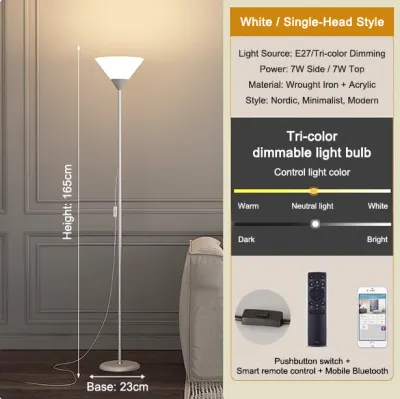
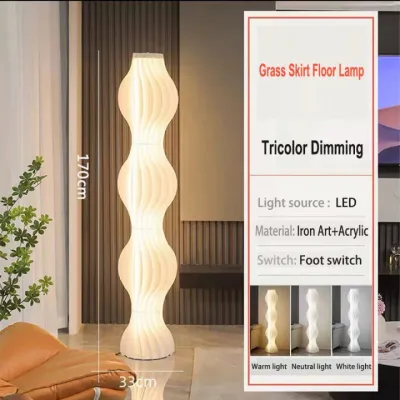
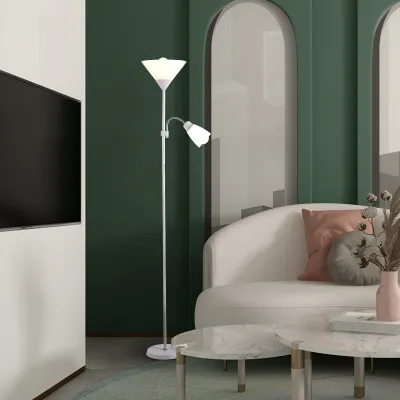
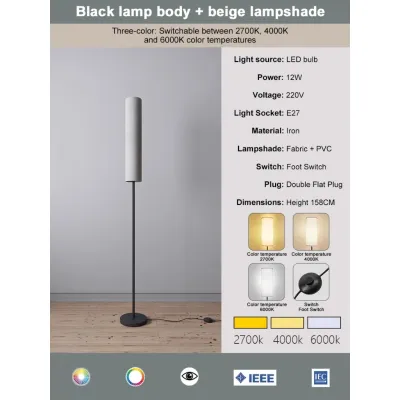
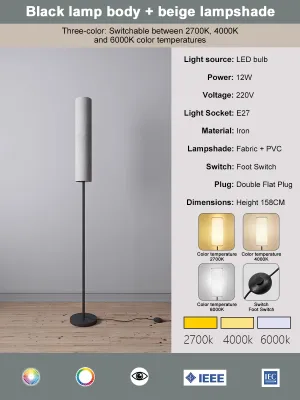
Prices are valid at publication and may change. Please refer to the product page for the latest price.
Height adjustability is another critical feature to evaluate before making a purchase. Ideally, the light source should be positioned slightly above your shoulder level when you are seated in your favorite armchair or sofa. If the lamp is too low, your body or the book itself may cast frustrating shadows; if it is too high, the light may spread too widely and lose its focused intensity. Choosing a model with an adjustable pole ensures you can customize the height to match the specific dimensions of your furniture.
Furthermore, you should carefully examine the tilt and rotation range of the lamp head. A highly maneuverable shade allows you to angle the light downward and away from your face, preventing the bulb from shining directly into your eyes. This adjustment is especially important if you switch between reading physical books, which require direct downward light, and reading reflective tablet screens, which benefit from angled light that minimizes screen reflections.
Brightness and Color Temperature Controls
The ability to control light output is essential for adapting your reading corner to different times of day and varying ambient light levels. During the bright afternoon, you may only need a subtle hint of fill light to balance shadows cast by nearby windows. At night, however, you require a stronger, more focused beam. Look for standing floor lamps equipped with built-in dimmers or step-less brightness controls, which allow you to fine-tune the intensity to your exact comfort level.

Color temperature, measured in Kelvins (K), significantly influences both eye comfort and your body’s natural sleep cycles. When browsing options, verify the color temperature specifications on the product packaging or manufacturer labels. Warm light (around 2700K to 3000K) creates a relaxing, cozy atmosphere that is perfect for winding down before bed, while cool white light (around 4000K) provides high contrast and clarity for detailed reading or studying. Many modern LED floor lamps offer adjustable color temperature settings, allowing you to switch between these modes depending on your task.
If you select a multi-functional lamp, such as a mother-daughter design that features both an upward-facing ambient light (uplight) and a downward-pointing reading light, ensure they have independent controls. Separate switches allow you to use the soft uplight to gently illuminate the room while keeping the focused reading light turned off, or vice versa. This independence prevents unnecessary energy use and gives you complete control over the spatial effect in your reading nook.
Glare Reduction and Light Diffusion
Direct exposure to a bare light bulb can cause immediate discomfort and long-term eye strain. To prevent this, pay close attention to the design of the lamp shade and the materials used to diffuse the light. Shades made from dense fabrics, frosted glass, or opaque metals help soften the light, ensuring that the illumination spreading into your reading space is even and free of harsh hot spots.
When evaluating a lamp, check whether the bulb sits deep within the shade or if the fixture includes a built-in frosted diffuser. A recessed bulb design ensures that the light source remains hidden from your direct line of sight, even when you look up from your book. Frosted diffusers scatter the light rays in multiple directions, which eliminates sharp shadows on your pages and reduces the reflective glare on glossy paper or electronic screens.
The beam angle of the lamp also plays a vital role in maintaining a comfortable environment. A narrow, focused beam angle concentrates the light directly onto your book, which is ideal if you share a room and do not want to disturb others. Conversely, a slightly wider beam angle provides a broader pool of light that covers both your reading material and a small side table, making it easier to reach for a cup of tea or your glasses without searching in the dark.
Stability, Footprint, and Power Cord Management
A reading corner is often a compact space, making the physical footprint and stability of your floor lamp crucial practical considerations. In tropical climates where open windows and ceiling fans are common, a lamp must be sturdy enough to resist sudden drafts. Verify the weight and construction of the lamp base; a heavy, low-profile base lowers the center of gravity, significantly reducing the risk of the lamp tipping over if it is accidentally bumped by children, pets, or a passing breeze.
Before purchasing, measure the available floor space beside your reading chair or sofa. The base of the lamp should fit comfortably within this footprint without protruding into walkways or blocking the natural flow of the room. If space is exceptionally tight, look for flat, low-profile bases that can slide partially underneath the edge of your sofa or armchair, allowing you to position the light source close to your shoulder without sacrificing valuable floor space.
Power cord management is another key safety and aesthetic factor to consider. Check the length of the power cord to ensure it can reach your nearest wall outlet without being stretched taut across the floor, which creates a dangerous tripping hazard. Many high-quality standing lamps feature integrated cord clips or hollow poles that route the wire cleanly down to the base, keeping your reading nook looking tidy and preventing accidental snags when you move around the chair.
Quick Checklist for Evaluating Standing Floor Lamps
To help you compare different models during your search, use this practical checklist to evaluate each option against your specific needs:
- Adjustability: Does the lamp feature a flexible gooseneck, adjustable joints, or a height-adjustable pole to direct light precisely?
- Brightness and Tone: Are there built-in dimming controls, and does the light source support your preferred color temperature (warm 2700K–3000K or cool 4000K)?
- Glare Control: Is the bulb recessed within the shade, or does the fixture include a frosted diffuser to soften the light?
- Stability and Size: Is the base heavy enough to prevent tipping under ceiling fan drafts, and will the footprint fit your designated space?
- Electrical Compatibility: Does the lamp match your local household voltage (typically 220V), and does it feature recognized safety certification marks on the label?
- Bulb Specifications: What is the maximum wattage limit of the socket, and is it compatible with energy-efficient LED bulbs?
Always inspect the physical condition of the power cord and plug before assembling your new lamp, and follow the manufacturer’s instructions carefully during setup to ensure safe operation.
Frequently Asked Questions (FAQ)
Can I use a smart bulb in a standard standing floor lamp for reading?
Yes, you can use a smart bulb in most standard standing floor lamps, provided you verify that the bulb’s base type (such as E27 or E14) matches the lamp’s socket. You must also ensure that the smart bulb’s wattage does not exceed the maximum wattage rating specified on the lamp’s safety label.
If your floor lamp has a built-in physical dimmer switch, using a standard smart bulb can cause flickering or connectivity issues. To avoid this, keep the physical switch set to its maximum output and use the smart bulb’s dedicated mobile application or remote control to adjust the brightness and color temperature. This setup allows you to easily transition from a bright, cool light for daytime reading to a soft, warm glow for nighttime relaxation.
What is the ideal height for a reading floor lamp?
The ideal height for a reading floor lamp depends on the height of your seating, but a general rule of thumb is that the bottom of the lamp shade should align with or sit slightly above your shoulder level when you are seated. This positioning ensures that the light shines directly onto your book or tablet without casting shadows from your head or shoulders, while also keeping the bright bulb out of your direct line of sight.
Before choosing a fixed-height lamp, measure the distance from the floor to your shoulder while sitting in your favorite reading chair. If multiple family members of different heights use the same reading corner, selecting an adjustable-height floor lamp is the most practical choice to ensure everyone can read comfortably.

Community discussion
Share your experience or ask a question. Comments are reviewed before publication.