
Selecting the right recessed LED panel ceiling light for your home involves more than just picking a size that looks appealing. In tropical climates like the Philippines, where high ambient temperatures and humidity can influence the performance and lifespan of electronic components, understanding technical specifications is essential. By focusing on key metrics such as light output, color quality, physical dimensions, and electrical safety, you can ensure your new fixtures provide comfortable illumination while operating safely and efficiently.
Brightness and Efficiency: Decoding Lumens and Wattage
When shopping for modern ceiling lights, many homeowners still rely on wattage to estimate brightness. However, wattage only measures how much electrical power a fixture consumes, not how much light it emits. To determine the actual brightness of a recessed LED panel, you must look at its lumen rating. Lumens represent the total amount of visible light produced by the source, making it the primary specification for evaluating brightness.
To assess how efficiently a panel converts electricity into light, compare the lumen-per-watt (lm/W) efficacy. A higher efficacy rating indicates that the fixture delivers more light while consuming less energy, which can help manage your monthly electricity bills and save ₱ on your utility costs. When comparing different models on an online marketplace or at a local hardware store, checking this ratio allows you to identify energy-efficient options.
Products mentioned in this guide
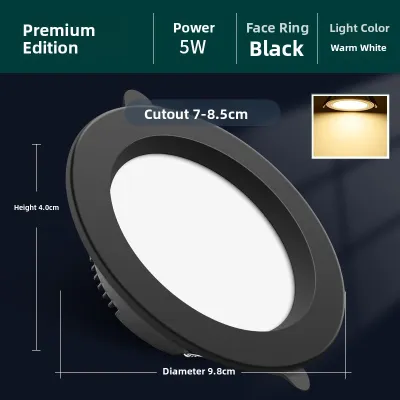
Prices are valid at publication and may change. Please refer to the product page for the latest price.
Rather than relying on generic rules of thumb, it is best to match the lumen output to your specific room size, ceiling height, and intended activities. High ceilings or task-heavy areas like kitchens generally require higher overall lumens than cozy bedrooms. Always consult the manufacturer’s guidelines and product specifications to determine the recommended light output for your space’s layout.
Ambiance and Accuracy: Choosing Color Temperature and CRI
The atmosphere of a room is heavily influenced by its Correlated Color Temperature (CCT), which is measured in Kelvin (K). Lower Kelvin ratings, such as 2700K to 3000K, produce a warm, yellowish glow that mimics traditional incandescent bulbs, making them ideal for living rooms and bedrooms. Higher ratings, such as 5000K to 6500K, deliver a cool, daylight-like blue-white light that enhances alertness in workspaces, home offices, and utility areas.

Color accuracy is another critical specification, measured by the Color Rendering Index (CRI). CRI indicates how realistically a light source reveals the true colors of objects compared to natural sunlight, on a scale up to 100. For spaces where visual precision is important—such as kitchens, vanity areas, or art studios—look for fixtures with a high CRI rating, typically 80 or above, to avoid a dull or distorted color appearance.
Because color temperature can dramatically alter how your interior design looks, verify your preferences against the room’s existing paint colors, wood tones, and furnishings. Cool light can make warm paint colors look gray, while warm light can dull cool blues and greens. Testing a single bulb or checking the manufacturer’s color samples under your room’s specific conditions before purchasing a full set of panels is a practical way to avoid mismatched lighting.
Light Spread and Physical Fit: Beam Angle and Dimensions
The beam angle of a recessed LED panel determines how widely the light spreads across the room. Panels with a wide beam angle, often 110 degrees or more, distribute light evenly over a broad area, which helps minimize harsh shadows and reduces glare in rooms with standard or low ceiling heights. Conversely, narrower beam angles concentrate light downward, which is useful for accent lighting but may create hot spots if used as general ambient lighting.
Physical compatibility is just as important as light quality. Before purchasing any recessed fixture, measure the exact ceiling cutout or grid dimensions of your existing ceiling structure. Recessed panels are designed to fit specific cutout sizes, and even a few millimeters of discrepancy can prevent a seamless fit or require costly ceiling repairs.
Additionally, check the fixture’s housing depth and compare it to the available ceiling plenum or joist space. In many residential buildings, the space behind the drywall or concrete ceiling slab is limited. Ensuring the panel and its external driver can fit comfortably within this cavity without bending wires or touching structural obstructions is vital for a clean and safe installation.
Electrical Compatibility and Safe Installation
Electrical safety must be a primary consideration when selecting and installing ceiling lights. In the Philippines, the standard residential electrical supply is typically 220V at 60Hz. You must verify that the recessed LED panel and its accompanying LED driver are fully rated for this local voltage to prevent premature component failure, flickering, or electrical hazards.
Before performing any inspection, removal of old fixtures, or installation of new panels, always turn off the main power supply at the circuit breaker. Never rely solely on the wall switch to isolate the electrical current, as wiring configurations can sometimes leave live wires active even when the switch is in the off position.
For fixed wiring modifications, structural ceiling alterations, or complex driver connections, always consult a licensed electrician. Professional installation ensures compliance with local electrical codes and safety standards, protecting your home from potential electrical fires and ensuring the long-term reliability of your lighting system.
Frequently Asked Questions (FAQ)
Can I use a dimmable recessed LED panel with any standard wall switch?
No, dimmable recessed LED panels generally cannot be dimmed using a standard on/off wall switch. To adjust the brightness, you must install a compatible dimmer switch specifically designed to handle low-wattage LED loads. Using an incompatible or older dimmer can lead to issues such as flickering, buzzing, or a significantly reduced lifespan for the LED driver. Always consult the manufacturer’s compatibility list to find approved dimmer models for your specific panel.
Do recessed LED panel lights require special ceiling insulation clearance?
Yes, insulation clearance requirements depend on the fixture’s thermal rating. Some recessed LED panels are IC-rated (Insulation Contact), meaning they are designed to be in direct contact with ceiling insulation without risking overheating. Non-IC rated panels require a specific clearance space around the fixture to allow heat to dissipate safely. You must strictly verify the fixture’s safety labels and installation manual before covering or surrounding it with any insulation materials.

Community discussion
Share your experience or ask a question. Comments are reviewed before publication.