
Selecting the right led light for garage ceiling installations in the Philippines requires a careful balance of durability, brightness, and environmental resilience. Unlike standard indoor living areas, a residential garage is exposed to intense ambient heat, high humidity, seasonal dust, and insects. To achieve a bright, safe, and functional workspace, you must look beyond basic residential fixtures and focus on technical specifications tailored to these demanding conditions.
The ideal LED panel light for a Philippine garage ceiling must deliver high lumen output to overcome elevated ceilings, feature a robust ingress protection rating to keep out dust and tropical pests, and operate safely on the local 220V/60Hz electrical grid. By focusing on these core performance metrics, you can ensure your garage remains well-illuminated for vehicle maintenance, DIY projects, or secure parking for years to come.
Why Garage Ceilings Require Specialized LED Panel Features
Standard indoor spaces in Philippine homes, such as living rooms or bedrooms, enjoy relatively stable conditions, often sheltered from the elements and assisted by air conditioning. In contrast, a typical garage or carport is a semi-open or unconditioned environment. It is directly exposed to the country’s tropical climate, characterized by high relative humidity, ambient temperatures that regularly exceed 30°C, and heavy dust accumulation from nearby roads and vehicle exhaust.
Products mentioned in this guide
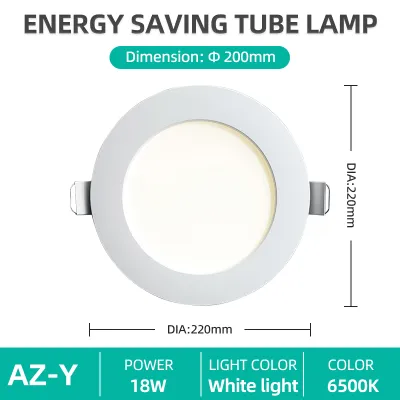
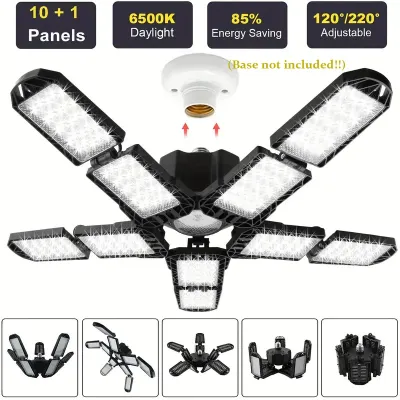
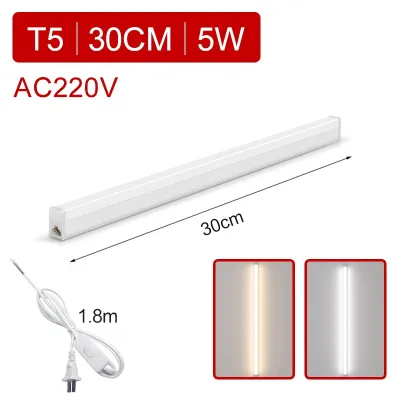
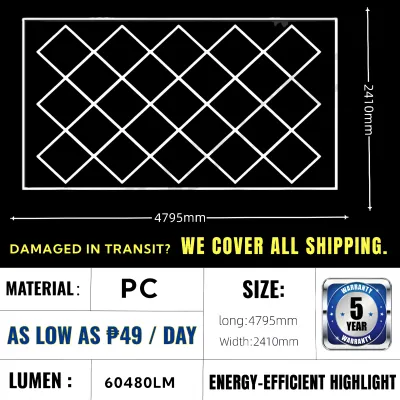
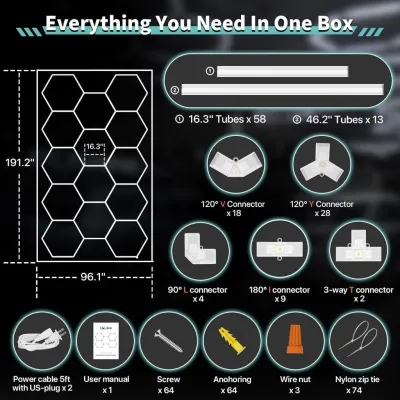
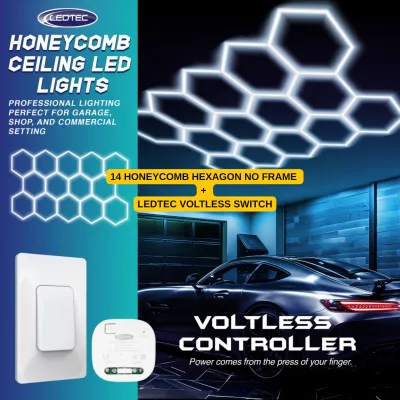
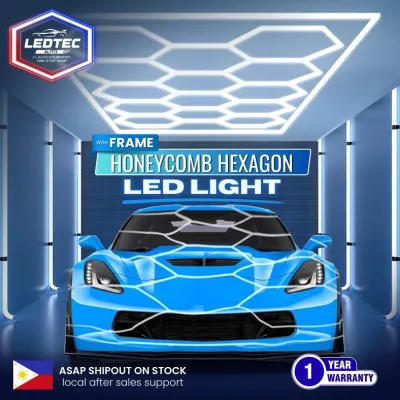
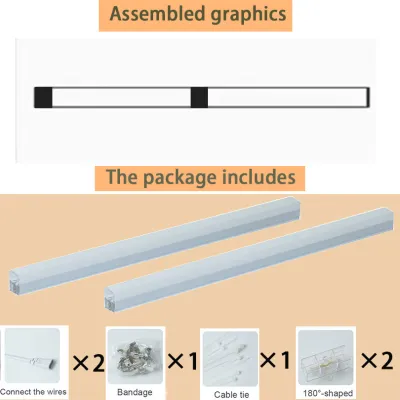
Prices are valid at publication and may change. Please refer to the product page for the latest price.
Installing standard office-grade or basic residential recessed panels in these spaces often leads to premature failure. Standard panels typically lack adequate sealing, allowing fine dust, moisture, and small insects—such as moths or termites during the rainy season—to penetrate the fixture. Once inside, debris can settle on the diffuser, creating unsightly dark spots, blocking light output, and trapping heat around the sensitive LED chips and internal drivers, which drastically shortens their operating lifespan.
The primary lighting goals for a garage are significantly different from those of a soft, decorative indoor space. You need to achieve high, uniform lux levels on the floor to safely navigate around vehicles, perform intricate mechanical repairs, or handle tools. This requires fixtures that can project light efficiently from high ceilings, resist environmental degradation, and distribute light evenly across a wide area to eliminate deep, hazardous shadows around your vehicle.
Essential Specifications for Garage LED Panel Lights
To find a fixture that can withstand the rigors of a garage environment, you must evaluate specific technical parameters. Choosing a light based on aesthetic appeal alone can result in inadequate brightness or frequent replacements.

Lumen Output and Efficacy for High Ceilings
The height of your garage ceiling is the primary factor determining how much light output you require. Many residential garages and carports in the Philippines feature high ceilings—often ranging from 2.7 to over 3.5 meters—to accommodate larger vehicles like SUVs or utility vans. Because light intensity decreases over distance, you need panels with high initial lumen output, typically ranging from 4,000 to 8,000 lumens per fixture, to maintain adequate visibility at ground level.
Luminous efficacy, measured in lumens per watt (lm/W), is equally critical. Given the relatively high electricity rates in the Philippines, opting for highly efficient panels is essential for keeping operating costs manageable. Look for LED panels that offer an efficacy of at least 100 lm/W to 120 lm/W, which ensures you receive maximum brightness without drawing excessive wattage that could overload your local garage circuits.
Additionally, always check the manufacturer’s specifications for lumen maintenance and thermal management. High-output panels generate considerable heat internally. If a fixture lacks a robust aluminum heat sink or is installed in a poorly ventilated ceiling cavity, the heat will accelerate lumen depreciation, causing the light to dim prematurely long before its rated lifetime is reached.
Ingress Protection (IP) Ratings for Dust and Moisture
In a semi-outdoor or dusty garage, the Ingress Protection (IP) rating of your LED panel is your primary defense against premature failure. An IP rating consists of two digits: the first indicates protection against solid particles like dust (scaled 0 to 6), while the second indicates protection against liquids (scaled 0 to 9).
For a fully enclosed, indoor garage, a rating of IP44 may suffice to keep out larger insects and minor moisture splashes. However, for open-sided carports, dusty driveways, or garages that double as active workshops, upgrading to fixtures with an IP54 or IP65 rating is highly recommended. These ratings ensure the housing is sealed tightly enough to prevent fine dust and wind-blown moisture from compromising the internal electronics.
Fully sealed panels also prevent the common tropical issue of insects crawling inside the diffuser. When insects are attracted to the light, they can die inside unsealed fixtures, creating black silhouettes on the panel and trapping heat. A sealed IP-rated housing keeps the optical chamber clean, preserving both the aesthetic look and the thermal efficiency of the driver.
Color Temperature and Diffuser Quality
The visual demands of a garage require a color temperature that promotes alertness and high contrast. Warm white lighting (2700K to 3000K) is generally unsuitable for these spaces as it softens details and can make task work difficult. Instead, opt for cool white (4000K) or daylight (6000K to 6500K) spectrums, which mimic natural light, enhance depth perception, and make it easier to spot oil leaks, wire colors, or surface imperfections on your vehicle.
However, bright light from high ceilings can cause intense glare, especially when you are lying on a creeper working underneath a car. This is where diffuser quality becomes vital. Avoid cheap polystyrene (PS) diffusers, which degrade and turn yellow rapidly under tropical heat and UV exposure. Instead, look for panels equipped with PMMA (acrylic) or polycarbonate diffusers featuring a frosted or micro-prismatic finish. These materials distribute light evenly, reduce glare, and resist yellowing over time.
Planning the Layout and Size for Wide-Area Garage Lighting
Achieving uniform illumination across a multi-car garage requires strategic planning regarding fixture size, placement, and mounting compatibility. Simply hanging a single bright light in the center of the ceiling will result in heavy shadows along the sides of your vehicle where you need light the most.
Common LED panel dimensions include 600×600 mm (approximately 2×2 feet) and 600×1200 mm (approximately 2×4 feet). For standard two-car residential garages in the Philippines, which typically span about 30 to 36 square meters, a layout of four 600×600 mm panels or two to three 600×1200 mm panels is often ideal. The rectangular 600×1200 mm panels work exceptionally well when aligned parallel to the length of the parking bays, casting light along the sides of the vehicles.
To estimate your specific needs, aim for a target illuminance of 300 to 500 lux for active garage workspaces, or 100 to 150 lux for general parking and storage. You can calculate the total lumens required by multiplying your garage’s square footage or square meterage by your target lux level. Spacing the fixtures symmetrically—such as placing them over the walking paths between parked cars rather than directly over the car roofs—ensures that light reaches the ground and engine bays without obstruction.
Before purchasing, you must also verify your ceiling’s structural compatibility. If your garage has a suspended T-bar grid ceiling, standard recessed panels can lay directly into the frame. However, many Philippine homes use fixed gypsum or Hardiflex (fiber cement) ceilings. For these setups, you will need to choose panels compatible with spring-clip recessed mounting, or opt for surface-mounting frames or suspension cable kits. Always measure your ceiling joist spacing to ensure there is adequate clearance for any recessed housings or drivers.
Safe Installation Practices for High Garage Ceilings
Working at heights to install heavy ceiling fixtures carries inherent physical risks. Safety must remain your top priority throughout the preparation, mounting, and wiring phases of the project.
Before beginning any work, always isolate the electrical power by turning off the dedicated circuit breaker at your home’s main distribution panel. Never rely solely on a wall switch to cut the power, as neutral wires can still carry residual voltage. Use a reliable voltage tester to verify that the wires are completely dead before handling them.
Because high garage ceilings require working several meters off the ground, always use stable, slip-resistant A-frame ladders or properly assembled scaffolding. Avoid overreaching while on a ladder; instead, move the ladder as you progress to maintain your balance. If you are mounting large 600×1200 mm panels, have a second person assist you to support the weight of the fixture while you secure the mounting brackets.
In the Philippines, the standard residential electrical supply is 220V to 240V AC at 60Hz. It is critical to verify that the LED driver supplied with your panel light is rated for 60Hz operation and carries official safety certifications, such as the Philippine Standard (PS) mark or an Import Commodity Clearance (ICC) sticker. Using uncertified drivers or those designed exclusively for 50Hz grids can result in severe flickering, overheating, or premature electrical failure.
Ensure that the ceiling material itself—whether drywall, plywood, or concrete—is structurally sound and capable of supporting the combined weight of the panels and mounting hardware over time. For heavy suspended loads, use manufacturer-approved expansion bolts or anchor screws driven directly into structural wood joists or concrete slabs. If your installation involves fixed wiring, complex circuit extensions, or high-altitude mounting, always hire a licensed electrician to perform the work in compliance with the Philippine Electrical Code (PEC) to prevent fire hazards and electrical shock.
Frequently Asked Questions (FAQ)
Can I use standard office LED panels in my garage?
While standard office LED panels may physically fit into your garage ceiling grid, they are not recommended for this environment. Office panels typically carry an IP20 rating, meaning they offer no protection against dust, fine particles, or humidity. In a typical semi-open or unconditioned Philippine garage, dust and insects will quickly find their way inside the diffuser, reducing light output and trapping heat. Additionally, office panels are designed for lower ceiling heights and may not provide the concentrated lumen output or wide beam angles needed to illuminate a garage floor effectively.
How should I clean and maintain LED panels in a dusty garage?
To clean your garage LED panels safely, first turn off the power at the circuit breaker and allow the fixtures to cool down completely. Use a soft, dry microfiber cloth or an extendable static duster to gently sweep away surface dust, cobwebs, and debris from the outside of the diffuser and frame. Avoid using harsh chemical solvents, abrasive scrubbing pads, or spraying water directly onto the fixture, as these can degrade the protective seals, scratch the optical diffuser, or cause moisture to bypass the IP-rated housing and damage the internal electronics.

Community discussion
Share your experience or ask a question. Comments are reviewed before publication.