
In many homes, the bathroom is the smallest room, yet it carries heavy daily demands. When space is tight, every bottle of shampoo, tube of toothpaste, and spare towel left on display can make the walls feel like they are closing in. Traditional storage solutions often worsen this issue by protruding into the room, cutting off physical space and blocking light.
A rotating mirror cabinet offers a clever way to break free from these spatial limitations. Unlike a standard flat mirror that only reflects what is directly in front of it, a rotating cabinet combines a mirror with hidden shelving tucked neatly behind. By turning the cabinet, you can instantly conceal daily clutter while redirecting light to brighten up shadowed corners. This simple movement changes how light and depth work in your bathroom, making even the most compact layout feel significantly more open and comfortable.
Understanding Why Small Bathrooms Feel Cramped
Visual clutter is one of the primary reasons a small bathroom feels restrictive. When toiletries, skincare products, and hair styling tools accumulate on open shelves or around the sink basin, they break up the visual plane. The eye constantly stops at these small items, which prevents you from perceiving the room as a single, continuous space. This constant visual interruption makes the walls feel closer than they actually are.
Products mentioned in this guide
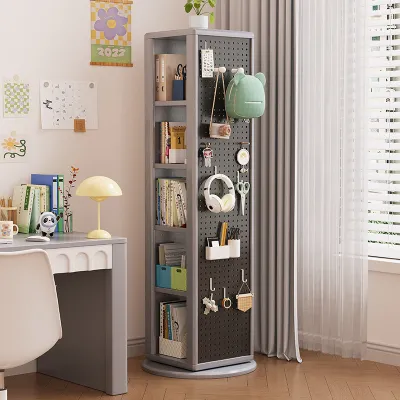

Prices are valid at publication and may change. Please refer to the product page for the latest price.
Poor light distribution also plays a major role in making a space feel small. Many compact bathrooms lack large windows, relying instead on a single overhead light fixture that casts harsh shadows. These dark corners shrink the room’s perceived boundaries, making the ceiling feel lower and the corners feel narrower. Without a way to bounce light into these shadowed areas, the room remains visually flat.
Standard flat mirrors offer a partial solution by reflecting light, but their fixed position limits their effectiveness. A fixed mirror can only reflect a single, unchanging view, which often includes the very clutter you want to hide. It cannot be adjusted to catch natural light from an adjacent window or to redirect artificial light into a dark corner. This lack of flexibility means the mirror’s potential to expand the room is only partially utilized.
A rotating mirror cabinet addresses these issues simultaneously by combining dynamic reflection with concealed storage. By placing your daily essentials inside the hidden shelves, you instantly clear the visual field. When you rotate the mirror, you can catch light from different angles and bounce it deep into the room, effectively erasing shadows and creating a sense of depth that a static mirror simply cannot replicate.
Strategic Placement to Expand Visual Depth
To get the most out of a rotating mirror cabinet, place it where it can interact with light sources. Positioning the cabinet opposite or adjacent to a window allows the mirror to capture natural light. As the sun moves, you can rotate the cabinet to track the light and project it across the bathroom, keeping the space bright without relying on electricity.

If your bathroom lacks natural light, align the mirror to reflect artificial sources. Placing the cabinet where it can catch the glow from vanity lights or wall sconces helps distribute illumination. Angling the mirror to bounce this light toward the floor or ceiling softens harsh shadows and makes the room feel taller.
Another strategy is to align the mirror to reflect the longest unbroken sightline in the room. Placing the cabinet where it reflects an open doorway or a clear stretch of wall creates an illusion of continuity. Your eyes perceive a continuation of the space rather than a solid barrier, which instantly doubles the room’s visual depth.
However, avoid reflecting high-clutter zones. If your mirror constantly reflects a crowded towel rack or an open laundry basket, it will double the visual noise. This unintended reflection makes the bathroom feel twice as cluttered. Always aim the mirror toward clean, simple surfaces or light-colored walls to maintain a clean aesthetic.
Before finalizing the installation spot, evaluate the cabinet’s swing radius. Because a rotating cabinet pivots, it requires a clear path to spin freely. Measure the distance between the cabinet and adjacent fixtures like the sink faucet, shower door, or toilet to ensure there is enough clearance to prevent physical damage.
Adjusting Angles and Rotation for Dynamic Space Perception
The primary benefit of a rotating mirror cabinet lies in its ability to change angles on demand. By tilting or rotating the mirror panels toward your primary light sources, you can actively redirect illumination into windowless corners. This dynamic adjustment brightens areas that would otherwise remain in shadow, making the entire perimeter of the bathroom feel more expansive.
This adjustability also makes the bathroom more functional for household members of different heights. Instead of forcing everyone to adapt to a single, fixed mirror height, you can rotate or tilt the cabinet to provide a suitable viewing angle. When the mirror is not in active use, return it to a neutral, space-maximizing angle that keeps the room looking balanced.
Managing glare is another benefit of a rotating system. In small bathrooms, bright vanity bulbs can create harsh reflections that strain the eyes. By slightly offsetting the mirror’s angle from direct light paths, you can eliminate uncomfortable glare while still enjoying a bright, well-lit space. This subtle adjustment keeps the room comfortable and visually soft.
Furthermore, the physical depth of the cabinet itself can enhance the room’s architecture. While a flat mirror sits flush against the wall, a rotating cabinet protrudes slightly, breaking up flat wall planes. This three-dimensional layer adds architectural interest and depth, drawing the eye upward and distracting from the limited floor space.
Installation Checks and Safety Boundaries
Installing a rotating mirror cabinet requires careful planning, especially in a compact bathroom where walls may carry hidden plumbing or electrical lines. Before mounting the unit, verify the wall’s structure and load-bearing capacity. A rotating cabinet is significantly heavier than a standard mirror, and this weight increases when the shelves are fully loaded. You must locate the wall studs to ensure a secure anchor, as mounting a heavy, moving object solely into drywall can lead to structural failure.
Moisture resistance is another critical factor to consider, particularly in humid tropical climates like the Philippines. High humidity and steam from hot showers can quickly damage unsuitable materials, leading to warping, rust, or mold. Check the manufacturer’s specifications to ensure the cabinet is rated for wet or damp environments, looking for materials like treated wood, stainless steel, or high-grade aluminum.
If your chosen cabinet model includes integrated LED lighting or defogging features, you will need to handle electrical wiring. Working with electricity in a wet environment carries serious safety risks. If you are not experienced with electrical installations, stop and consult a qualified professional. A certified electrician can ensure that all wiring is safely routed, insulated, and compliant with local electrical codes.
Finally, double-check the physical clearance around the rotation mechanism. The cabinet should spin smoothly without scraping against adjacent tiles, walls, or glass shower enclosures. Even a minor misalignment can cause the cabinet to chip tiles or crack glass over time. Measuring and testing the rotation path before securing the final mounts will protect your bathroom fixtures and ensure smooth operation.
Maintenance for Clear Reflections and Smooth Rotation
To keep your rotating mirror cabinet looking and functioning optimally, regular maintenance is essential. In a humid bathroom environment, mirrors are prone to edge desilvering—the dark spots that appear around the edges when moisture penetrates the backing. To prevent this, avoid using harsh, ammonia-based glass cleaners or abrasive scrubbing pads. Instead, use a soft microfiber cloth dampened with warm water or a mild, pH-neutral glass cleaner, and always wipe the edges completely dry.
The rotating joints, hinges, and pivot points also require special attention, especially in humid climates where soap scum, dust, and hard water minerals can accumulate. If these moving parts are left damp, they can rust or become stiff. Make it a habit to wipe down the hinges and rotating mechanism with a dry cloth after hot showers to prevent moisture from sitting on the metal surfaces.
Over time, the frequent movement of rotating the cabinet can cause mounting brackets and screws to loosen slightly. Periodically inspect the mounting hardware to ensure everything remains tightly secured to the wall. If you notice any wobbling or resistance when turning the cabinet, gently tighten the screws and check that the unit is still level.
If the rotation mechanism begins to squeak or feel stiff, refer to the manufacturer’s guidelines for lubrication. Some manufacturers recommend applying a small drop of silicone-based lubricant to the moving joints to keep them spinning smoothly. Avoid using heavy oils or WD-40 unless specifically approved by the manufacturer, as these can attract dust and grime, eventually clogging the mechanism.
Frequently Asked Questions (FAQ)
Can a rotating mirror cabinet be installed on any bathroom wall?
A rotating mirror cabinet cannot be safely installed on just any wall surface without proper preparation. Solid masonry or concrete walls provide reliable support, but drywall or plasterboard walls require careful handling. Because the cabinet is heavy and experiences dynamic forces when rotated, it must be anchored directly into wall studs. If a stud is not available in your desired location, you must use heavy-duty toggle bolts or hollow-wall anchors rated for the cabinet’s fully loaded weight to prevent the unit from pulling away from the wall.
How do I prevent the rotating mechanism from rusting in a humid bathroom?
Preventing rust on the rotating mechanism requires consistent moisture control and proper ventilation. Always run your bathroom exhaust fan during and after showers to reduce humidity levels, or keep windows open to encourage airflow. After a hot shower, take a moment to wipe down the cabinet’s hinges and pivot points with a dry microfiber cloth to remove condensation. Additionally, check the manufacturer’s instructions to see if applying a light, moisture-resistant lubricant is recommended to protect the metal components from damp air.
Is it better to choose a frameless or framed rotating cabinet for a small space?
For a small bathroom, a frameless rotating mirror cabinet is often a practical choice for maximizing the illusion of space. Frameless mirrors have clean, uninterrupted edges that blend seamlessly with the surrounding walls, reducing visual weight and making the room feel larger. Framed options can add decorative style and match other fixtures, but the frame creates a distinct visual border that can make the mirror feel self-contained and slightly bulky in a very tight layout.

Community discussion
Share your experience or ask a question. Comments are reviewed before publication.