
Choosing the right study lamp is one of the most practical decisions a student can make to safeguard eye health and maintain focus during long study sessions. In the Philippines, where late-night study sessions are common and electricity costs are a constant consideration, finding a balance between upfront cost and long-term performance is essential. The Omni study lamp has established itself as a household name, frequently compared against other local and international lighting brands. However, determining which reading light offers the best value requires looking beyond brand popularity and examining the technical specifications, build quality, and operational features that directly impact your daily study habits.
To find the true value of a study lamp, you must evaluate how well it illuminates your workspace, how long it will last under daily use, and whether its features justify its price tag. A cheap lamp that causes eye strain or breaks within a few months is a poor investment, while an overly expensive smart lamp might offer features you never use. By comparing key metrics such as illuminance, color temperature adjustability, material durability, and warranty support, you can make an informed decision that fits both your desk setup and your budget.
Core Lighting Metrics to Compare
When comparing an Omni study lamp to alternative brands, the technical specifications listed on the product packaging or official product listings serve as your primary guide. The first metric to evaluate is illuminance, which is measured in Lux. While lumens indicate the total amount of light emitted by the source, Lux measures the intensity of light falling on a specific surface, such as your textbook or notebook. For comfortable reading and writing, a standard desk surface requires an illuminance of approximately 300 to 500 Lux at the working distance. It is equally important to check for light uniformity; a high-quality study lamp distributes light evenly across the desk, preventing the sharp contrast between bright hotspots and dark shadows that forces your eyes to constantly adjust and fatigue.
Products mentioned in this guide
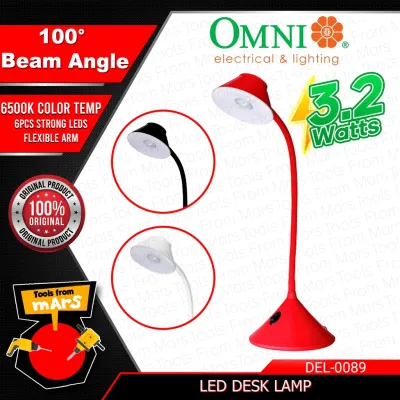
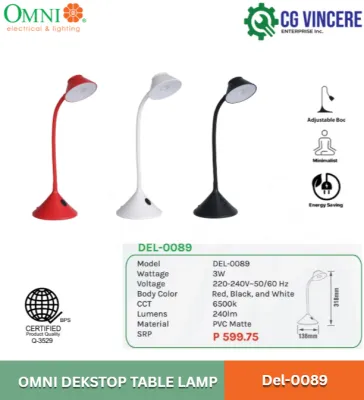
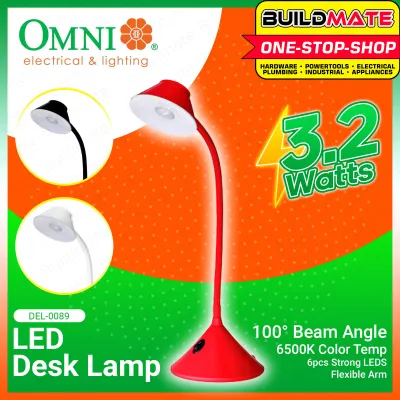
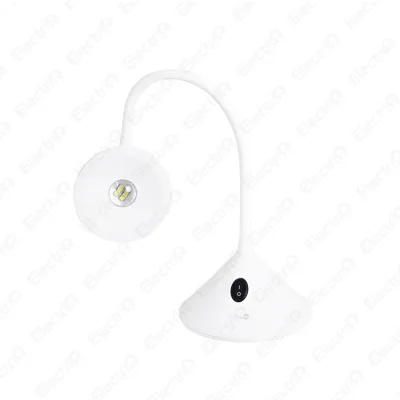
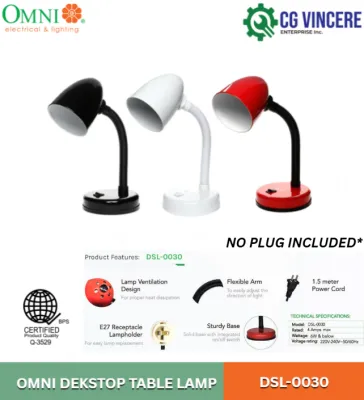
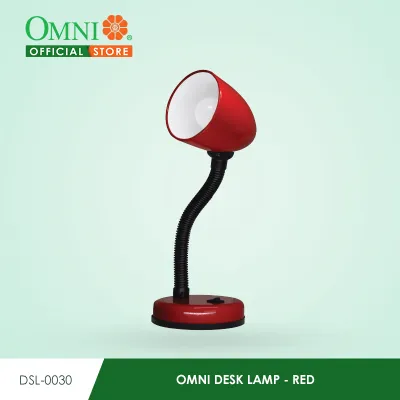
Prices are valid at publication and may change. Please refer to the product page for the latest price.
Color temperature, measured in Kelvin (K), is another critical factor that influences focus and sleep hygiene. Cooler light, ranging from 5000K to 6500K, mimics natural daylight and helps stimulate alertness, making it ideal for intense daytime study sessions or complex problem-solving. Conversely, warmer light, between 2700K and 3000K, creates a relaxing atmosphere that is gentler on the eyes during late-night reviews and does not disrupt your natural sleep cycle. When comparing brands, look for lamps that offer adjustable color temperature settings, allowing you to transition seamlessly from high-focus daylight modes to warm, relaxing evening tones.
The Color Rendering Index (CRI), denoted as Ra, measures how accurately a light source reveals the true colors of objects compared to natural sunlight. For students, particularly those studying design, architecture, medicine, or any field requiring color accuracy, a high CRI is indispensable. A lamp with a CRI of 80 or higher ensures that text is crisp and colors are vivid and true to life. When evaluating Omni and other brands, check the specifications for the CRI rating, as lower-quality lamps often produce a dull, grayish cast that makes reading small print more difficult over extended periods.
Finally, pay close attention to flicker-free claims and anti-glare design features. Invisible high-frequency flickering, common in low-grade LED lamps, can cause headaches, eye strain, and general fatigue even if you cannot consciously perceive it. High-quality reading lights incorporate advanced drivers to deliver a steady, continuous current to the LEDs. Additionally, look for physical design elements such as frosted diffusers, honeycomb filters, or asymmetric optical designs that direct light away from your eyes and onto the desk surface, minimizing direct glare and reflections from glossy textbook pages or laptop screens.
Build Quality and Ergonomic Features
The physical construction of a study lamp determines its durability, safety, and ease of use over years of academic work. One of the most important material considerations is how the lamp manages heat. LEDs generate heat during operation, and if this heat is not dissipated efficiently, the lifespan of the light source will degrade rapidly. Lamps constructed with aluminum alloy components generally offer superior heat dissipation compared to those made entirely of standard plastics. In the warm and humid tropical climate of the Philippines, efficient heat management is even more critical to prevent internal components from overheating and failing prematurely.

Ergonomics and stability are equally vital when adjusting the lamp to suit different tasks. A well-designed study lamp should feature robust arm articulation and reliable joint tension. Whether the lamp uses a flexible gooseneck or a multi-jointed folding arm, the joints must hold their position securely without drooping over time. The weight of the base must also be sufficient to anchor the lamp; a lightweight, poorly balanced base can easily tip over when the arm is fully extended across a large desk. When comparing brands, look for models that specify a weighted base or offer a sturdy clamp option that secures directly to the edge of your desk, saving valuable workspace.
The control interface of the lamp affects your daily interaction with the device. Touch-sensitive control panels offer a sleek, modern aesthetic and often allow for smooth, step-less dimming by sliding a finger across the sensor. However, in humid environments, touch panels can sometimes become less responsive or register false touches if moisture accumulates on the surface. Physical buttons or rotary dials, while more traditional, provide tactile feedback and are highly reliable under various environmental conditions. Some premium competing brands also offer smart app integrations or voice control, which can be convenient if you want to schedule your lighting or integrate it into a wider smart-home ecosystem, though this typically increases the initial purchase price.
Price Tiers and Value Assessment
To determine which study lamp offers the best value, you must map the available features against their respective price brackets. Entry-level lamps are generally budget-friendly and offer basic functionality, such as a single color temperature, simple on/off switches, and plastic construction. These are highly accessible for students on a tight budget but may lack the adjustability needed for long-term eye comfort. Mid-range and premium lamps justify their higher price tags by offering robust aluminum builds, adjustable color temperatures, step-less dimming, high CRI ratings, and certified eye-protection technologies.
When shopping in the Philippines, it is crucial to verify current pricing, warranty terms, and after-sales support in ₱ through official brand stores or authorized e-commerce platforms. Purchasing from unauthorized sellers might save a small amount upfront, but it often leaves you without a valid warranty if the lamp malfunctions. A reliable manufacturer warranty, typically ranging from six months to a year, provides peace of mind and ensures you can obtain a replacement or repair without additional costs. Always check the seller’s reputation and look for official brand seals to guarantee you are purchasing a genuine product.
Additionally, consider potential hidden long-term costs before making your final decision. Many modern study lamps utilize integrated LED modules, meaning the light source cannot be replaced once it reaches the end of its lifespan. While LEDs are designed to last for tens of thousands of hours, a failure in the internal driver can render the entire lamp useless. Another factor to check is the power supply; some lamps use proprietary power adapters that are expensive and difficult to replace if lost or damaged. Lamps that power via standard USB-C cables or use standard, replaceable bulb bases (such as E27) often offer better long-term value because replacement parts are cheap and widely available.
Decision Framework: Which Brand Fits Your Study Setup?
Choosing between an Omni study lamp and alternative brands ultimately depends on aligning their verified specifications with your specific study habits, desk constraints, and budget. An Omni study lamp is often the ideal choice if you prioritize local availability, straightforward functionality, and reliable performance at an accessible price point in ₱. Their designs are tailored to meet the practical needs of typical Filipino student households, offering a balance of energy efficiency and dependable light output without unnecessary, costly gimmicks.
On the other hand, you may want to consider competing brands if your academic work demands specialized features. For instance, if you require official optical certifications (such as low blue light hazard ratings from international testing bodies) or need a lamp that integrates seamlessly with smart-home systems like Google Home or Apple HomeKit, premium alternative brands may be worth the extra investment. Similarly, if you have an exceptionally large desk or a dual-monitor setup, you might need a lamp with an extra-long architectural arm or an asymmetric monitor light bar rather than a traditional desk lamp.
Before completing your purchase, perform a few essential compatibility checks on your physical workspace. Measure your desk depth to ensure the lamp’s base or clamp will fit securely without crowding your study materials. Check the proximity of your nearest power outlet and verify the lamp’s power cord length. Most importantly, ensure the lamp’s voltage rating is compatible with the standard 220V electrical supply in the Philippines to prevent electrical hazards or damage to the device.
Frequently Asked Questions (FAQ)
Is a higher wattage always better for a study lamp?
No, a higher wattage does not automatically mean a lamp is better for studying. Wattage measures the amount of electrical power the lamp consumes, not the amount of light it produces. Modern LED technology is highly energy-efficient, producing significant brightness (lumens) while consuming very little power. When comparing lamps, look at the manufacturer’s official Lux ratings at a standard reading distance rather than the wattage, as this tells you how much actual light will reach your desk.
How do I verify if a study lamp is truly flicker-free?
You can perform a quick preliminary check by opening your smartphone camera and pointing it at the light source; if you see dark, moving bands or rapid strobing on your screen, the lamp may have a high level of flicker. However, this method is not entirely foolproof due to camera shutter speeds. The only definitive way to verify a flicker-free claim is to check the product packaging or manufacturer specifications for recognized electrical or optical safety certifications from independent testing organizations.

Community discussion
Share your experience or ask a question. Comments are reviewed before publication.