
Choosing between an omni table lamp and a standard bedside lamp for reading in bed depends on how much control you need over where the light falls. An omni table lamp, characterized by its adjustable joints and directional head, allows you to guide light precisely onto your book or tablet, minimizing glare and keeping the rest of the room dark. In contrast, a standard bedside lamp provides a fixed, ambient glow that illuminates a wider area but offers limited physical adjustment, which can sometimes spill light onto a sleeping partner.
To make the right choice for your bedroom, you must evaluate how each lamp handles light distribution, physical adjustability, and spatial constraints. This guide breaks down the practical differences between these two lighting options so you can maintain a comfortable reading routine without disrupting your household.
Understanding Light Spread and Adjustability
An omni table lamp is engineered primarily for task-oriented illumination. Its design typically features a multi-directional head supported by an adjustable arm, allowing you to position the light source exactly where you need it. This targeted light distribution pattern ensures that the beam remains concentrated on your reading material rather than scattering across the entire room.
Products mentioned in this guide
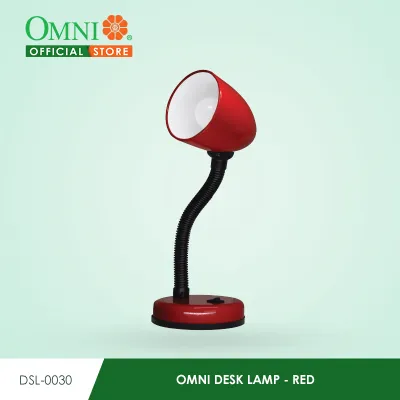
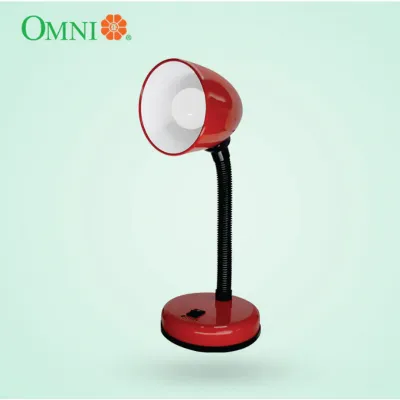
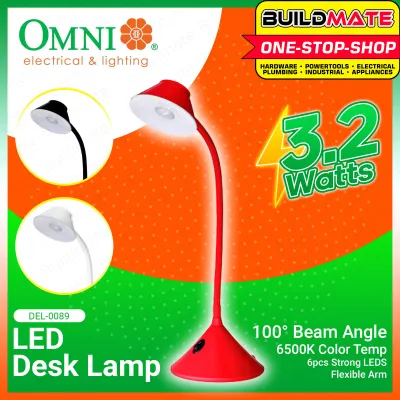

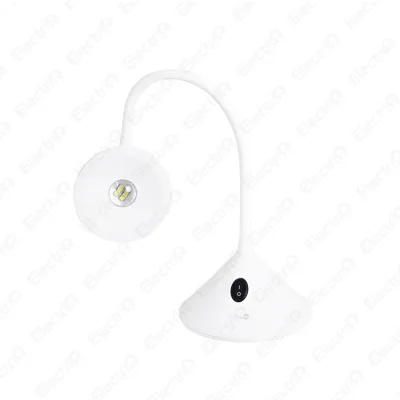
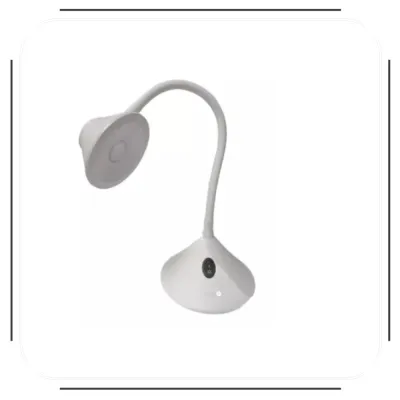
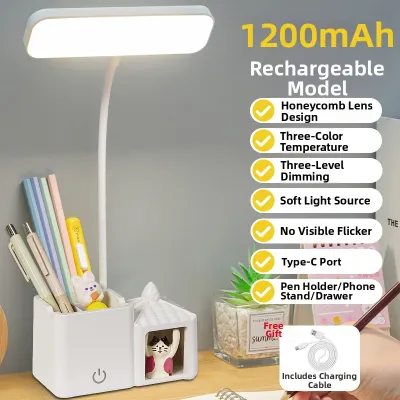
Prices are valid at publication and may change. Please refer to the product page for the latest price.
Standard bedside lamps rely on a static shade design that distributes light in a fixed pattern. Most of these lamps cast a soft, ambient glow upward and downward, creating a warm atmosphere but offering very little control over the direction of the beam. Because the shade remains in a permanent position, you cannot adjust the angle of the light to match your posture as you shift in bed.
When evaluating an omni table lamp, you should inspect the physical adjustability features listed on the product packaging or manufacturer specification sheet. Look for terms like “gooseneck flexibility,” “articulated arms,” or “swivel heads” to confirm how many points of movement the lamp offers. High-quality joints should feel firm yet smooth, allowing you to reposition the lamp head without the arm drooping over time.
In tropical environments where humidity levels are consistently high, the materials used in these adjustable joints require careful consideration. Metal components that lack rust-resistant coatings can stiffen or corrode, while low-grade plastic joints may become brittle. Checking the product specifications for powder-coated steel, anodized aluminum, or brass hardware can help ensure the lamp remains easy to adjust throughout its lifespan.
Reading Comfort and Partner Disturbance
Reading comfort relies heavily on reducing eye strain and eliminating harsh shadows on your page. An omni table lamp excels at shadow reduction because you can position the light source directly above or slightly behind your shoulder. This precise positioning prevents your hands, head, or the book itself from casting dark spots across the text, allowing for a more relaxed reading experience.

For those who share a bed, managing light spill is essential to avoid waking a sleeping partner. A standard bedside lamp with a translucent fabric or glass shade diffuses light in all directions, which often floods the entire bed area with brightness. An omni table lamp allows you to tilt the shade downward and away from your partner, keeping the light beam confined strictly to your side of the mattress.
To optimize your nighttime comfort, you must verify bulb compatibility and shade opacity before making a purchase. If you prefer a standard bedside lamp, choosing an opaque or dark-colored shade can help restrict lateral light spill, directing the glow solely downward onto your nightstand. For either lamp type, look for models that support dimmable bulbs or feature built-in step dimming, which allows you to lower the brightness as your eyes adjust to the dark.
When selecting a bulb for reading, pay close attention to the color temperature and lumen output. A warm white light between 2700K and 3000K is generally gentler on the eyes before sleep compared to cool blue light. Ensure that the bulb you choose does not exceed the maximum wattage limit printed on the lamp’s safety label, as overloading the socket can create a fire hazard.
Bedside Space and Setup Constraints
Before purchasing any lamp, you must assess the physical layout of your nightstand and bedroom. Adjustable omni lamps often require a heavier, wider base to counterbalance the weight of the extended arm when it is fully stretched. If you have a narrow or crowded nightstand, you must measure the table surface to ensure the lamp base can sit securely without risk of tipping over.
Standard bedside lamps typically have a more compact, symmetrical footprint, making them easier to place on small bedside tables. However, because they cannot extend outward, you must position the entire lamp closer to your pillow to get adequate light for reading. This can limit the remaining space on your nightstand for other nighttime essentials like water glasses, phones, or books.
Cord management is another practical factor to consider during setup. Because omni lamps are designed to move, their power cords must have enough slack to accommodate adjustments without pulling on the wall outlet. Measure the distance from your nightstand to the nearest electrical outlet to confirm if the lamp’s integrated cord is long enough, avoiding the use of daisy-chained extension cords which can pose safety risks.
Electrical safety standards must always be verified on the lamp’s specification plate before installation. In the Philippines, the standard household voltage is 220V at 60Hz. Ensure that any lamp you purchase is rated for this voltage and features a compatible plug type (typically flat two-pin Type A or grounded Type B). If you are installing a lamp that requires fixed wiring or wall mounting, always isolate the power at the circuit breaker and consult a qualified professional to handle the installation.
Decision Framework: Which Lamp Fits Your Routine?
To finalize your decision, compare your personal sleeping habits, reading posture, and bedroom layout against the following practical scenarios.
Choose an omni table lamp if:
- You frequently change your reading position, shifting from sitting upright to reclining on your side.
- You read physical books, tablets, and e-readers at varying angles and require targeted, glare-free illumination.
- You share a bed with a partner who is highly sensitive to light and you need to minimize lateral light spill.
- You want a versatile task light that can also be used for hobbies, writing, or bedside work.
Choose a standard bedside lamp if:
- You primarily read in a fixed, upright position supported by pillows and do not need to adjust the light angle.
- You prefer soft, ambient room lighting over focused task lighting to help you wind down before sleep.
- You have a very narrow nightstand that cannot accommodate the wider, heavier base of an adjustable arm lamp.
- Your bedroom decor prioritizes a traditional, symmetrical aesthetic with matching decorative shades.
- You sleep alone or have a partner who is not easily disturbed by ambient room light.
Verify first if:
- The height of your bed mattress aligns with your nightstand; a lamp that sits too low or too high can cause direct glare to shine into your eyes.
- Your headboard or wall art leaves enough clearance for the moving parts of an adjustable omni lamp.
- Your existing wall switches or smart home setups are compatible with the dimming technology built into the lamp you plan to buy.
Frequently Asked Questions (FAQ)
Does an omni table lamp require a special bulb for reading?
No, an omni table lamp does not require a proprietary bulb, but you must select one that matches the lamp’s physical and electrical specifications. Always check the manufacturer’s label inside the socket or on the base to identify the correct base type, such as E27 or E14, and the maximum allowed wattage. For reading comfort, look for a LED bulb with a warm color temperature (2700K to 3000K) and a brightness level of approximately 450 to 800 lumens, ensuring it operates safely within the lamp’s rated limits.
Can I use a smart bulb in a standard bedside lamp to reduce partner disturbance?
Yes, you can install a smart bulb in a standard bedside lamp as long as the bulb’s base type and wattage do not exceed the lamp’s rated limits. A smart bulb allows you to dim the light to very low levels or change the color temperature to a warm amber hue, which can help reduce overall brightness in the room. However, a smart bulb cannot change the physical shape of the lamp’s shade or stop light from spilling sideways, meaning physical glare control will still be limited compared to an adjustable omni lamp.

Community discussion
Share your experience or ask a question. Comments are reviewed before publication.