
Quick Answer: Core Differences for Bedside and Living Room Lamps
Choosing between a rattan table lamp for your bedside and one for your living room comes down to balancing focused task lighting with broad ambient diffusion. For bedside reading, your primary goal is visual comfort. You need a lamp that directs light downward onto your pages while shielding your eyes from direct bulb glare. This setup typically requires a compact lamp with a tighter weave, an integrated inner diffuser, and an easily accessible switch.
In contrast, a living room rattan lamp serves as a decorative statement and an ambient light source. Here, the goal is to cast a warm, welcoming glow across a larger area. Living room lamps benefit from larger dimensions, open-weave patterns that project beautiful shadow designs onto the walls, and a style that complements your overall seating arrangement. Matching the lamp’s physical structure and light output to these distinct activities ensures your space remains both functional and visually inviting.
Choosing a Rattan Lamp for Bedside Reading
When selecting a rattan table lamp for your bedside table, glare control should be your top priority. Reading in bed requires a concentrated pool of light on your book or tablet, but looking directly at an exposed bulb can cause immediate eye strain. To prevent this, look for rattan shades that feature a solid fabric lining, a frosted glass insert, or an internal paper diffuser. These elements soften the light output, allowing you to read comfortably without harsh glare interrupting your winding-down routine.
Products mentioned in this guide
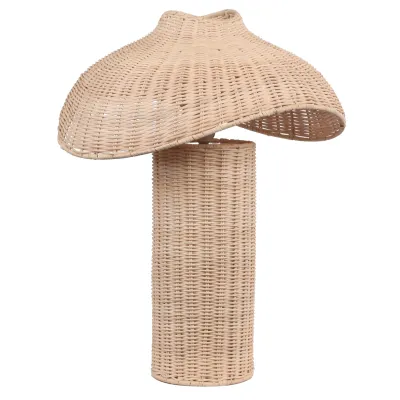
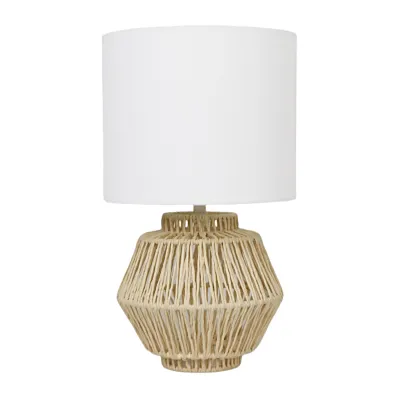
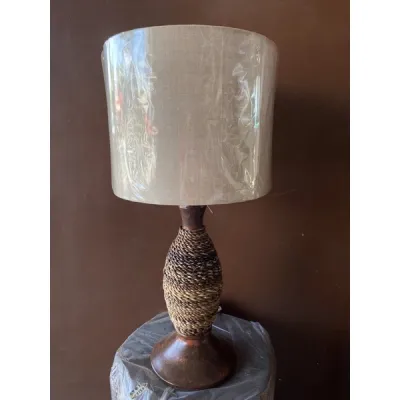
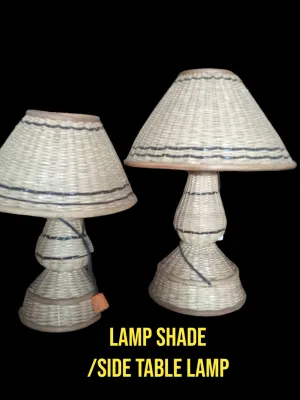
Prices are valid at publication and may change. Please refer to the product page for the latest price.

Proportion and scale are equally critical when placing a lamp on a nightstand. Bedside tables often hold multiple essentials, such as a phone, a glass of water, and personal items. A lamp with an oversized base or an excessively wide shade can clutter this limited surface area. Measure your nightstand before purchasing, and aim for a lamp base that occupies no more than one-third of the table’s surface.
The height of the lamp also dictates how effectively it illuminates your reading material. Ideally, when you are sitting up against your headboard, the bottom of the lamp shade should align roughly with your eye level. If the lamp is too tall, the bulb will shine directly into your eyes; if it is too short, the light will not cast wide enough to cover your book.
Finally, consider how easily you can operate the lamp from a reclining position. Reaching out of bed to fumble for a switch on a floor-level cord is inconvenient and disruptive to sleep. Opt for lamps with an in-line cord switch positioned close to the lamp base, or a built-in base switch that you can easily toggle with a simple reach. If you prefer smart home integration, verify that the lamp fixture is compatible with smart bulbs so you can control the light using your phone or voice commands.
Choosing a Rattan Lamp for Living Room Ambience
In the living room, table lamps are less about focused tasks and more about creating a warm, layered atmosphere. A rattan lamp in this space should diffuse light gently outward, softening the overall look of the room and eliminating dark corners. Instead of directing all light downward, a living room fixture should allow light to escape through the sides of the shade, highlighting the natural texture of the woven material and adding warmth to the entire seating area.
Scale plays a major role in how a lamp integrates into your living room decor. Because living rooms feature larger furniture pieces like sofas, sectionals, and entertainment consoles, a small bedside-sized lamp will easily get lost visually. Look for statement-sized rattan lamps with substantial height and visual weight. Placing a taller, sculptural lamp on a side table or a console behind the sofa creates an eye-catching focal point that anchors the room’s design.
When coordinating textures, consider the color tone of the rattan. Natural, light-colored rattan brings a breezy, tropical feel that pairs beautifully with indoor plants, linen textiles, and light wood finishes. If your living room features darker wood furniture or a more industrial aesthetic, look for stained or painted rattan lamps in deep brown, charcoal, or black tones to create a cohesive look.
You must also think about how the lamp interacts with other light sources in the room. Ambient lighting works best when it is layered. Position your rattan lamp at a medium height to bridge the gap between low-level floor lighting and high-level ceiling fixtures. This positioning helps eliminate harsh shadows and creates a balanced, inviting environment for hosting guests or relaxing with family.
How Rattan Weave Density Affects Light and Shadows
The density of the rattan weave is the single most important factor determining how light behaves once the lamp is turned on. Tight weave patterns, where the rattan strands are closely packed together, act similarly to solid fabric or paper shades. They block most of the lateral light, directing the illumination upward toward the ceiling and downward onto the tabletop. This concentrated light path makes tight-weave lamps highly suitable for bedside reading, as they minimize ambient glare in the rest of the bedroom.
Open weave patterns, such as loose basket weaves, lattice designs, or wide geometric webs, allow light to pass freely through the gaps. This style projects dramatic, intricate shadow patterns onto nearby walls and ceilings, transforming the lamp into an active design element. While these shadows add incredible visual texture and a cozy mood to a living room, they can be highly distracting and cause eye strain if you try to read or perform detailed tasks under them.
If you want the aesthetic of an open-weave rattan lamp but still require functional light, inspect the shade for an inner lining. Many modern designs include a thin, translucent fabric or plastic cylinder inside the rattan exterior. This inner sleeve diffuses the light, preventing harsh glare and reducing the sharpness of the cast shadows while still showcasing the beautiful outer weave.
Before making a final decision, it is highly recommended to observe the lamp illuminated. If you are shopping in a physical store, ask to plug the lamp in so you can see the shadow pattern firsthand. When purchasing from an online marketplace, browse the customer review section to find verified user photos showing the lamp turned on in a dark room. This step ensures the light pattern matches your aesthetic preferences and functional needs.
Electrical Specifications and Safety Checks
Safety and compatibility should always guide your lighting purchases, especially when dealing with fixtures made from natural materials. First, verify the voltage compatibility of the lamp. In the Philippines, the standard household electrical system operates at 220V and 60Hz. Ensure the lamp’s plug and internal wiring are rated for this standard to prevent electrical malfunctions or short circuits.
Next, locate the manufacturer’s product label to check the maximum wattage limit and the required bulb base type, such as E27 or E14. Natural rattan fibers can dry out, become brittle, or even scorch if exposed to excessive heat over long periods. Never exceed the maximum wattage rating specified by the manufacturer, as doing so poses a serious fire hazard.
To minimize heat buildup, pair your rattan lamp with an LED bulb. LEDs emit very little heat compared to traditional incandescent bulbs, making them much safer to use inside enclosed or tightly woven natural shades. Additionally, LED bulbs are highly energy-efficient and have a longer lifespan, which helps reduce household energy costs.
If you plan to use a dimming feature to adjust the light level between reading and sleeping, verify that both the lamp fixture and the bulb support dimming. Standard LED bulbs will flicker or fail to light up if used with a dimmer switch that is not specifically designed for LED compatibility. Check the product packaging or consult the manufacturer’s specifications to ensure all components are compatible.
Finally, always prioritize safety during installation and maintenance. Before screwing in a new bulb, cleaning the shade, or moving the lamp to a different room, isolate the power supply by unplugging the cord from the wall outlet. If you notice any frayed wires, loose sockets, or damaged plugs, discontinue use immediately and consult a qualified electrical professional to repair the fixture.
Frequently Asked Questions (FAQ)
Can I use the same rattan table lamp for both the bedroom and living room?
Yes, you can use the same lamp model in both rooms, provided you select a versatile, mid-sized design with a medium-density weave. A medium weave offers a balanced compromise, providing enough downward light for reading while allowing a soft glow to diffuse through the sides for ambient warmth.
To tailor the lamp to each specific space, simply adjust the bulb you install. For the bedroom, choose a lower-wattage LED bulb with a warm color temperature (around 2700K) to promote relaxation. For the living room, opt for a slightly brighter, dimmable LED bulb that allows you to turn up the brightness when hosting guests or dim it down for movie nights.
How do I clean and maintain a rattan lamp shade?
Keeping your rattan lamp clean prevents dust buildup from dulling the light and preserves the natural beauty of the fibers. For regular maintenance, use a dry, soft-bristled brush, a microfiber cloth, or a vacuum cleaner equipped with a soft brush attachment. Gently sweep along the direction of the weave to dislodge dust from the crevices.
Avoid using wet cloths, water, or liquid chemical cleaners on natural rattan. In humid tropical environments, excess moisture can trap dampness within the fibers, leading to mold growth, warping, or structural weakening. Always check the manufacturer’s care label before applying any cleaning products. If the shade suffers from deep staining, mold, or broken weaves, stop DIY cleaning and consult a professional restoration service to avoid causing further damage.

Community discussion
Share your experience or ask a question. Comments are reviewed before publication.