
Quick Answer: Which Strip Light Fits Your Condo Ambiance?
Choosing between RGB and warm white strip lights for your condo comes down to a fundamental trade-off: dynamic color flexibility versus consistent, relaxing illumination. If you want to shift your room’s mood instantly for movie nights, gaming, or social gatherings, RGB strip lights offer a spectrum of vibrant colors. Conversely, if your goal is to create a cozy, sophisticated, and consistently relaxing sanctuary to wind down after a long day in the city, warm white strip lights provide that classic, soft glow.
The ideal choice depends entirely on how you use each zone in your condo, your daily routines, and your personal aesthetic preferences. Many modern condo layouts benefit from a hybrid approach, where both lighting types coexist in different areas to serve distinct purposes. For instance, you might prefer the clean, calming effect of warm white in your sleeping area while reserving the playful versatility of RGB for your entertainment console.
Core Differences in Light Quality and Daily Control
Understanding how these two lighting options produce light is essential for setting the right expectations. Warm white LED strips utilize dedicated diodes designed to emit a single, consistent color temperature, typically ranging from 2700K to 3000K. This range mimics the soft, golden glow of traditional incandescent bulbs, highlighting natural wood textures and warm paint tones beautifully. Because the light is emitted from uniform diodes, the output is exceptionally smooth and visually cohesive.
Products mentioned in this guide
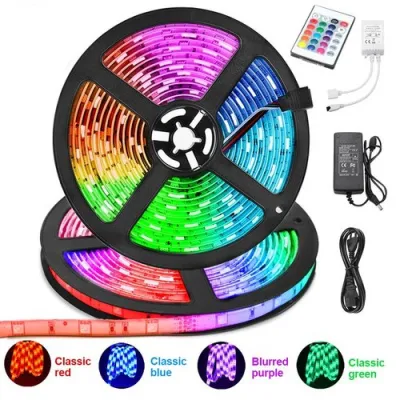
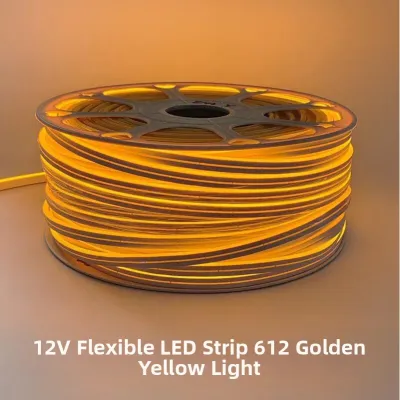
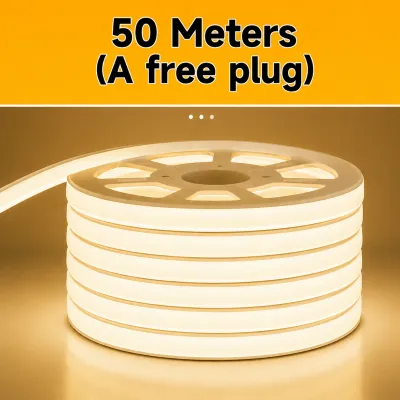

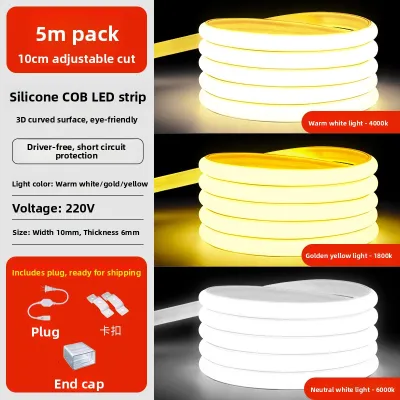

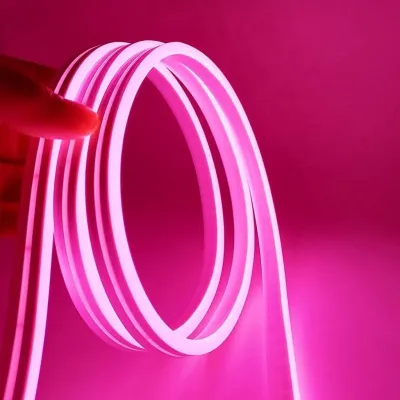
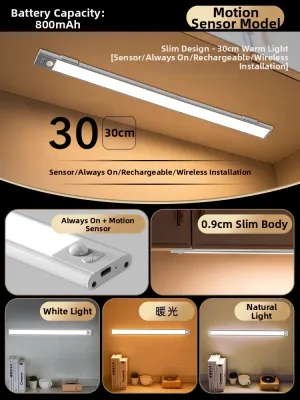
Prices are valid at publication and may change. Please refer to the product page for the latest price.

RGB strip lights, on the other hand, rely on red, green, and blue diodes placed closely together. By mixing the intensity of these three primary colors, the strip can produce thousands of different hues, including a simulated white light. However, this mixed white light often carries a slightly cool, blue, or purple undertone, which may feel less cozy than a dedicated warm white diode. If you want the best of both worlds, you might look for RGBW strips, which include a dedicated white diode alongside the colored ones, though these require verifying the product specifications on the packaging before purchasing.
Control mechanisms also differ significantly between the two types, impacting your daily interaction with your home’s lighting. Warm white strips are highly straightforward, often operating via a simple physical wall switch, an inline toggle, or a standard rotary dimmer. This simplicity makes them highly reliable and easy for anyone in the household to operate without a learning curve.
In contrast, RGB strips require more sophisticated control systems to navigate their color options and brightness levels. Most models come with an infrared remote control, a dedicated smartphone app, or compatibility with smart home hubs. While this allows for incredible customization, such as scheduling color changes or syncing lights with music, it introduces dependency on your local Wi-Fi network and app stability.
Power consumption and heat dissipation are practical variables that require careful verification on the product label. While LED technology is highly efficient, RGB strips running at full brightness can draw more power and generate more heat than single-color warm white strips. In tropical climates where ambient humidity and temperatures are already high, ensuring your LED strips are mounted on heat-dissipating surfaces, such as aluminum profiles, can prolong their lifespan. Always check the manufacturer’s wattage ratings and power supply requirements before finalizing your setup.
Room-by-Room Guide: Mapping Light Types to Condo Spaces
Applying the right light to the right room can dramatically improve both the functionality and the visual spaciousness of a compact condo. In multi-functional living rooms, warm white cove lighting creates an inviting baseline. Placing strips inside ceiling coves washes the walls with a soft glow, making the room feel larger without the glare of overhead fixtures.
For bedrooms, warm white is the preferred choice to support natural sleep-wake cycles. The soft, low-temperature light signals to your body that it is time to wind down, making it perfect for under-bed lighting or behind-the-headboard accents. If you do choose RGB for the bedroom, it is wise to program it to warm, amber tones during the evening hours to avoid exposure to cool blue light, which can disrupt your rest.
Entertainment zones and gaming setups are where RGB strip lights truly shine. Mounting an RGB strip behind your television console creates a striking bias light that reduces eye strain. Many smart RGB systems can sync with your screen’s colors, expanding the visual action beyond the borders of your display and immersing you deeper into your favorite media. This dynamic setup adds a modern, high-tech energy that is perfect for hosting friends or enjoying weekend gaming sessions.
Kitchens and dedicated workspaces demand a different approach, as ambient lighting is rarely sufficient for detailed tasks. While warm white strips under kitchen cabinets can provide excellent counter illumination, you must verify that the lumen output is high enough for safe food preparation. RGB strips are generally not recommended as primary task lighting in kitchens or over desks, as their color rendering index is often lower, making it difficult to see colors accurately. For these areas, treat strip lights as secondary accents and rely on dedicated overhead task fixtures for focused work.
Installation and Power Checks Before You Install
Performing a physical and electrical audit of your condo is crucial before purchasing any lighting equipment. First, verify the voltage requirements of your chosen strip lights against your local 220V wall outlets. Most LED strips operate on low-voltage direct current, requiring a compatible 12V or 24V power adapter. Connecting a low-voltage strip directly to mains power without the correct transformer will instantly destroy the LEDs and pose a severe electrical hazard.
Adhesive performance is another critical factor, especially in humid tropical environments where moisture can cause standard tape to peel over time. Before applying the adhesive backing, thoroughly clean the mounting surface with rubbing alcohol to remove dust and moisture. If you are renting your condo, verify that the adhesive is surface-safe and will not tear away paint or drywall finishes when removed. For a more secure and professional look, consider mounting the strips inside lightweight aluminum channels, which also protect the LEDs from dust and assist with heat dissipation.
Smart home integration requires its own set of checks, particularly for app-controlled RGB strips. Most smart lighting controllers operate exclusively on the 2.4 GHz Wi-Fi band. You must confirm that your condo’s router supports dual-band broadcasting and that your smart device is configured correctly during setup. Additionally, measure the exact physical length of the area you plan to light, as cutting LED strips at incorrect points can permanently damage the circuit; always look for the designated cut marks indicated by a tiny scissor icon on the strip.
While many low-voltage plug-and-play strip light installations are perfectly safe for a DIY approach, certain scenarios require professional assistance. If your condo design involves hardwiring the power supplies directly into your wall switches, running cables behind concrete walls, or installing heavy fixtures at a height, you must stop and consult a qualified electrician. Always isolate the power at the main circuit breaker before touching any exposed wiring, and ensure all components carry recognized electrical safety certifications suitable for your region.
Choose RGB If… / Choose Warm White If…
To finalize your lighting plan, use this straightforward decision framework to match your lifestyle and condo layout to the right product.
Choose RGB if:
- You want the flexibility to change your room's color scheme instantly to match your mood, holidays, or social gatherings.
- Your primary goal is to enhance a dedicated gaming station, home theater, or media entertainment console.
- You enjoy integrating smart home routines, voice controls, and automated schedules into your daily lifestyle.
- You are willing to manage smartphone apps, remote controls, and wireless network configurations.
Choose Warm White if:
- You prefer a classic, elegant, and timeless aesthetic that seamlessly complements natural wood, stone, and warm fabric textures.
- Your main priority is creating a calm, cozy, and glare-free environment for reading, resting, and winding down.
- You want a simple, highly reliable lighting system that operates with a standard physical switch or a basic dimmer.
- You prefer a cost-effective setup with minimal maintenance and no dependence on Wi-Fi connectivity.
Verify first if:
- Your condo association or landlord has specific guidelines regarding visible exterior window lighting or modifications to electrical fixtures.
- The total wattage of your planned strip light run does not exceed the maximum capacity of your power adapter or wall outlet circuit.
- The mounting surface is completely dry, smooth, and free of dust to ensure the adhesive backing holds up against local humidity.
- The product packaging displays valid electrical safety certifications and clearly states the voltage, lumen output, and dimming compatibility.
Frequently Asked Questions (FAQ)
Can I use both RGB and warm white strip lights in the same room?
Yes, you can absolutely combine both lighting types in a single room by using a thoughtful zoning strategy. The key to success is separating their functions so they do not compete or create visual clutter. For example, you can install warm white strip lights inside your ceiling coves to provide a soft, elegant baseline illumination for daily living. At the same time, you can place RGB strips behind your television console or under low shelving to serve as accent lighting for movie nights. Keeping their control systems organized, such as using a single smart home app to manage both zones, allows you to transition smoothly between functional daytime lighting and colorful evening scenes.
Do RGB strip lights provide enough brightness for reading?
Generally, standard RGB strip lights are not ideal as a primary light source for reading or other detailed tasks. Because RGB strips create white light by mixing red, green, and blue wavelengths, the resulting light often lacks the full spectrum and high color rendering index needed for comfortable reading. This can lead to eye strain over time. If you plan to use a strip light for reading in bed or at a desk, it is highly recommended to choose a dedicated warm white strip or an RGBW strip that features independent, high-quality white LEDs. Always check the product label for the lumen output and ensure it provides sufficient brightness for task-oriented activities.

Community discussion
Share your experience or ask a question. Comments are reviewed before publication.