
The best music-sync Christmas lights for year-round condo ambient lighting are those that offer highly customizable color spectrums, adjustable microphone sensitivity, and a physical form factor that blends seamlessly into your daily decor. Instead of choosing rigid, holiday-specific designs with fixed red-and-green patterns, look for flexible, app-controlled smart lights that can transition to warm whites or soft pastels. This allows you to enjoy dynamic, audio-reactive lighting during weekend gatherings or quiet evenings without making your bedroom or living room feel like a permanent December holiday display.
Condo living in urban areas often means dealing with compact spaces where every design element must serve multiple purposes. A single strand of lights needs to function as festive holiday decor, a relaxing reading light, and an audio-responsive backdrop for entertainment. Balancing these roles requires looking beyond basic retail holiday lights and focusing on technical specifications like control interfaces, physical wire materials, and sound-detection methods.
To find the right fit, you must evaluate how the lights handle color customization, how they detect and process sound, and how their physical shape matches your furniture and walls. This guide breaks down these critical factors to help you select a lighting setup that enhances your home year-round.
Products mentioned in this guide
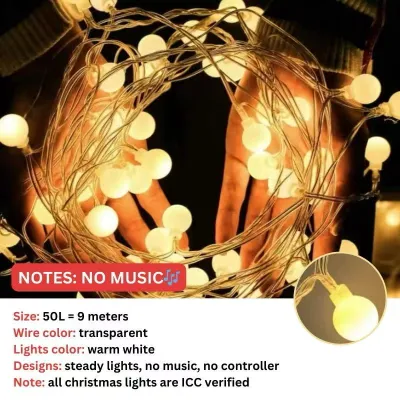
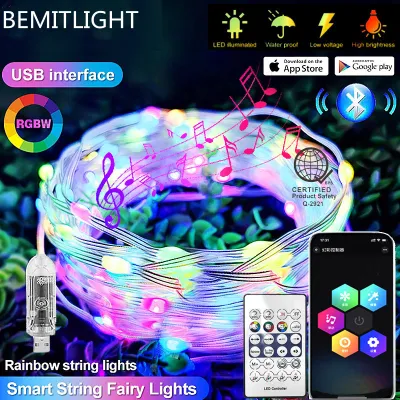
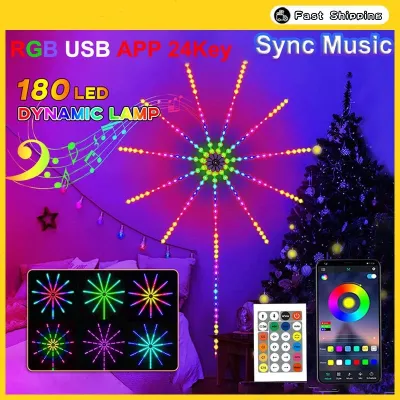
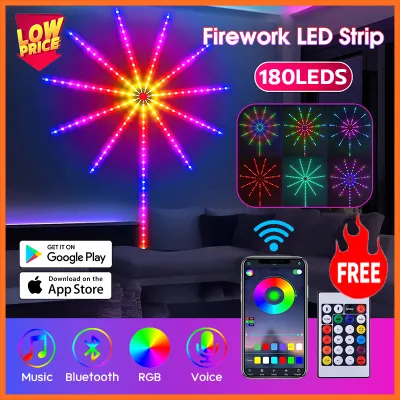

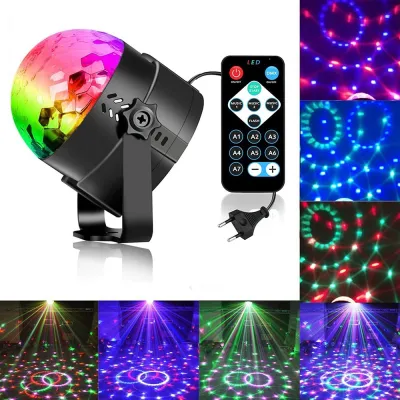
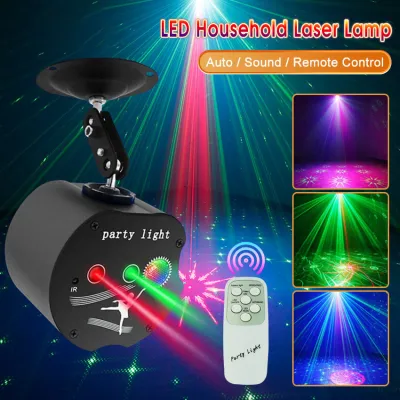
Prices are valid at publication and may change. Please refer to the product page for the latest price.
Adapting Holiday Lights for Everyday Ambient Use
Standard RGB lights change color as an entire strand, whereas RGBIC (Independent Control) allows multiple colors to display on a single line simultaneously. This technology is crucial for creating smooth, gradient transitions that mimic natural light or soft sunset hues rather than harsh, flashing holiday patterns.
Look for systems that offer a full color wheel and tunable white options. During the holiday season, you can easily select classic crimson and pine green. For the rest of the year, you can shift the spectrum to a cozy 2700K warm white or a calming lavender to help you wind down after a long day.
Avoid lights with permanently attached physical ornaments like plastic Santas, snowflakes, or bulky novelty bulbs. These shapes immediately scream holiday decor and look out of place by February. Instead, opt for bare micro-LEDs, diffused pixel dots, or frosted covers that look like minimalist design accents even when turned off.
Check if the companion app allows you to save custom scenes or profiles. This feature lets you program specific color palettes and brightness levels for different times of day. For instance, you can schedule a bright, energizing daylight tone for morning routines and a dim, warm glow for late-night relaxation, completely bypassing the default holiday presets.
Evaluating Music Sync Features for Small Spaces
Many music-sync lights rely on a small microphone built directly into the physical controller box, while others use your smartphone’s microphone via a companion app. A built-in microphone is highly convenient because it operates independently of your phone, but it must be placed near your speakers to function accurately.

In a compact condo, sound bounces off concrete walls easily, and ambient noises like a spinning electric fan, an air conditioning unit, or casual conversation can trigger the lights. Ensure the system you choose features adjustable microphone sensitivity within its app or physical controller. This allows you to fine-tune the threshold so the lights only react to the beat of your music rather than every background murmur.
A common issue with lower-end music lights is that the brightness of the flash is tied directly to the volume of the audio. In a small bedroom, a loud volume is rarely desirable, yet you still want a visible light reaction. Verify that the lighting system allows you to adjust the light brightness independently of the audio volume, or provides a simple toggle to disable the music-sync feature entirely when you prefer a static, quiet ambiance.
High latency—the delay between a beat dropping and the lights flashing—can quickly become distracting and cause eye strain in a small room. While manufacturers rarely publish exact millisecond latency figures, you can check user manuals or product specifications for local Bluetooth or Wi-Fi direct connection protocols, which generally offer faster processing speeds than cloud-dependent sync methods.
Choosing the Right Light Form Factor for Condos
Condo layouts often feature limited floor space, meaning vertical surfaces, ceilings, and furniture undersides are prime real estate for ambient lighting. Choosing the wrong physical format can lead to cluttered wires, awkward hanging points, or uneven light distribution.
By understanding the distinct characteristics of fairy strings, vertical curtains, and architectural pixel strips, you can select a form factor that complements your interior architecture rather than cluttering it. Each type serves a specific spatial purpose, from localized accenting to broad wall washes.
Fairy String Lights for Flexible Draping
Fairy string lights, particularly those built on thin copper or silver wire, are excellent for adding delicate points of light to specific furniture pieces. You can easily wrap them around a wooden headboard, weave them through the leaves of a potted indoor plant, or line the edges of floating wall shelves to create a soft, localized glow.
When shopping, inspect the wire gauge and material. High-quality copper or silver-coated wires bend easily and retain their shape without snapping, allowing for precise installation. Additionally, look for wires with a matte or dark finish that matches your furniture, preventing harsh metallic reflections when the lights are switched off during the day.
Pay close attention to LED spacing along the strand. For small-scale draping in a bedroom, a tighter bulb spacing (such as 5 to 10 centimeters apart) ensures a continuous, cohesive glow without leaving awkward dark gaps that disrupt the ambient effect.
Curtain and Canopy Lights for Feature Walls
Curtain lights consist of a main horizontal cable with multiple vertical strands dropping down, making them ideal for creating a dramatic backdrop. In a condo living room, they can be hung behind sheer window curtains to produce a diffused, glowing wall, or placed behind a bed to serve as an illuminated headboard alternative.
Before purchasing, measure the exact width and drop length of your target wall. Standard curtain lights often come in large dimensions designed for outdoor houses; hanging these indoors without measuring can result in excess wire pooling on your floor, creating a tripping hazard and collecting dust.
Ensure the top horizontal support bar of the curtain light is lightweight yet rigid enough to hang straight. In a rental condo where drilling is often restricted, you will likely rely on adhesive hooks; a heavy or poorly balanced cable will pull these hooks off the drywall, potentially damaging your paint.
Smart Pixel Strips for Architectural Accents
Smart pixel strips offer a highly modern, integrated look because they are designed to be hidden from direct view. They are best installed as cove lighting along ceiling drop-downs, behind TV consoles to provide bias lighting, or underneath bed frames to create a floating furniture effect.
If you plan to place these strips near indoor humidifiers, houseplant misting areas, or open-plan kitchen zones, check the ingress protection (IP) rating. While standard dry-rated strips are perfectly fine for most bedroom and living room applications, areas with elevated moisture benefit from a light silicone coating (such as IP44 or IP65) to protect the circuitry.
Verify that the pixel strip features clear, designated cut marks. Condo dimensions are rarely uniform, and being able to trim the strip to the exact length of your TV cabinet or shelf ensures a clean installation without leaving unsightly, folded, or unlit dead zones at the corners.
Pre-Purchase Checklist for Condo Electrical and App Setup
Before finalizing your purchase on any online marketplace, you must verify the electrical compatibility of the lighting system. In the Philippines, the standard residential electrical supply is 220V at 60Hz. Many imported smart lights are designed for 110V systems; plugging these directly into your wall outlet without a step-down transformer can destroy the controller or pose a fire hazard. Always check the product label or specification sheet to confirm the power adapter explicitly supports 220V/60Hz.
Next, examine the plug type. Philippine outlets typically accept Type A or Type B plugs. If the lights come with a Type G or Type I plug, you will need a safe, high-quality adapter. Ensure the adapter fits snugly into your wall outlet to prevent loose connections, which can cause sparking or intermittent power loss.
Smart light connectivity is another common stumbling block. Most app-controlled music lights require a 2.4 GHz Wi-Fi network for initial setup and control. If your condo router is configured to a single 5 GHz band or uses a combined dual-band SSID without band steering, the lights may fail to connect. Check your router settings beforehand to ensure you can broadcast a dedicated 2.4 GHz signal.
If you plan to cover a large area by linking multiple light strands together, verify the manufacturer’s maximum linkable length. Connecting too many strands in a single chain can exceed the safe wattage limit of the primary power adapter. This overload can cause the adapter to overheat, dim the lights at the end of the chain, or cause the music-sync controller to malfunction. Always calculate the total wattage of your linked strands and compare it to the adapter’s rated output.
For safety during installation, always isolate the power supply by unplugging the adapter before hanging, adjusting, or linking your light strands. If you are mounting lights near high ceiling areas or installing fixed wiring extensions, consult a qualified professional to ensure compliance with local electrical safety standards.
Frequently Asked Questions (FAQ)
Can I use music-sync lights without the holiday color presets?
Yes, provided you select a smart, app-controlled model. Through the companion app, you can bypass the flashing red-and-green holiday defaults and access a full digital color wheel, custom DIY scene builders, or dedicated warm-white modes. This allows you to set a static, calming tone for everyday use. However, be cautious of basic, budget-friendly models that rely solely on a physical remote control; these often feature hardcoded holiday patterns that cannot be customized, making them unsuitable for year-round ambient lighting.
Do music-sync lights drain condo electricity significantly?
No, modern LED-based music-sync lights are highly energy-efficient. Compared to traditional incandescent holiday bulbs, LEDs draw very little power, typically ranging from 5 to 15 Watts per strand depending on the length and brightness level. This minimal draw means running them for several hours a day will add only a few ₱ to your monthly electricity bill. To find the exact consumption, check the output rating printed on the power adapter’s label, and utilize the companion app’s built-in scheduling, timer, or sleep-mode features to automatically turn off the lights when not in use.

Community discussion
Share your experience or ask a question. Comments are reviewed before publication.