
Finding the best heavy-duty solar street lights in the Philippines requires looking beyond high-wattage marketing claims and focusing on structural resilience, battery chemistry, and weatherproofing. In a market flooded with cheap, residential-grade plastic lights, identifying a true commercial-grade fixture is the key to ensuring long-term reliability. These systems must withstand intense tropical heat, high humidity, salt air in coastal areas, and the severe wind loads of the annual typhoon season.
To secure a lighting system that performs consistently year after year, buyers must evaluate physical build quality, battery capacity, solar panel efficiency, and mounting safety. This guide provides a practical framework for verifying manufacturer specifications, understanding structural requirements, and selecting a durable solar street light tailored to local environmental demands.
Defining "Heavy-Duty" for Solar Street Lights
A genuine heavy-duty solar street light is engineered to endure harsh outdoor environments without structural or electrical failure. The most immediate indicator of this quality is the housing material. Commercial-grade fixtures utilize die-cast aluminum housings, which offer superior structural integrity and excellent thermal conductivity compared to standard ABS plastic enclosures. Plastic housings degrade rapidly under intense tropical ultraviolet radiation, leading to cracking, color fading, and eventual water ingress.
Products mentioned in this guide
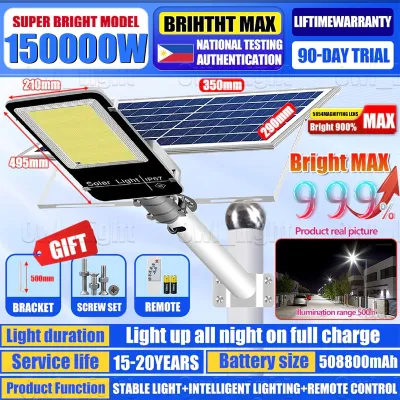
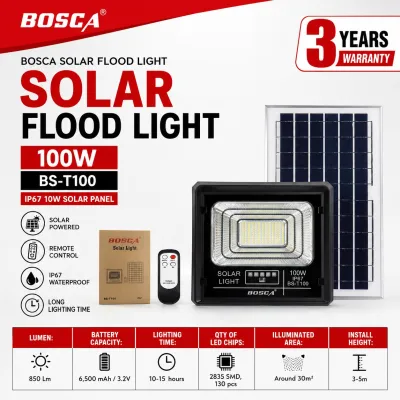
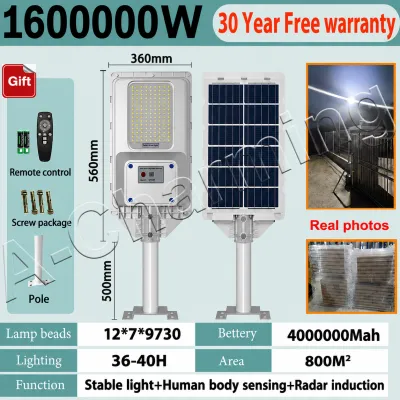
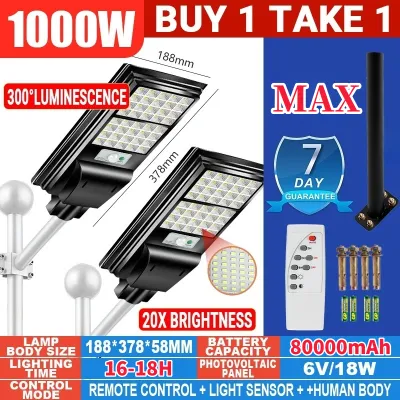
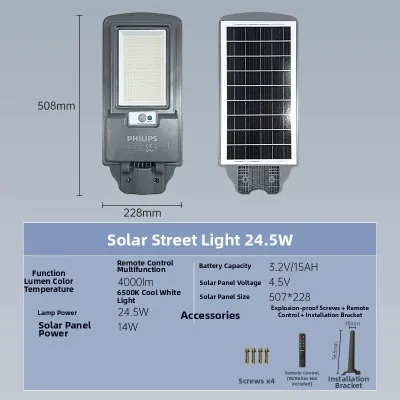
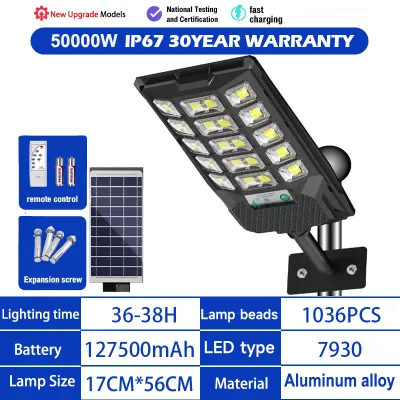
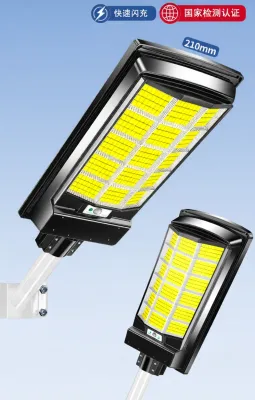
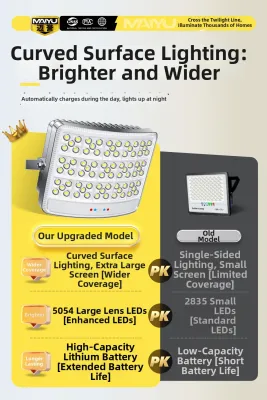
Prices are valid at publication and may change. Please refer to the product page for the latest price.
Beyond material composition, heavy-duty fixtures are rated for impact resistance and wind load capacity. Impact resistance is measured by the IK rating system, with IK08 or IK10 ratings indicating that the fixture can withstand significant physical impacts from debris, vandalism, or falling branches. This level of protection is essential for public roads, barangay pathways, school campuses, and high-traffic commercial properties where physical vulnerability is high.
Wind load capacity is another critical benchmark for heavy-duty classification. In regions prone to severe weather, a street light must be aerodynamically designed and structurally certified to resist high wind velocities. This requires robust mounting brackets, reinforced pole connection collars, and thick-walled metal casings that do not flex or shear under extreme pressure. When evaluating products, buyers should request documentation confirming that the fixture and its integrated bracket have been tested against high wind speeds.
Ultimately, a “heavy-duty” label is only as reliable as the environmental stressors it is rated to handle. A fixture installed in a coastal barangay requires marine-grade anti-corrosion coatings to prevent salt-air degradation, while a unit installed in an inland urban area may prioritize high impact resistance and advanced dust protection. Matching the physical build of the light to the specific challenges of the installation site is the first step in securing a long-lasting lighting solution.
Core Performance Metrics to Verify Before Buying
Evaluating the performance of a solar street light requires looking past the advertised wattage, which is often an inflated or theoretical number representing the maximum capacity of the LED chips rather than the actual power draw. Instead, buyers must focus on luminous flux, measured in lumens. Lumens indicate the actual brightness emitted by the fixture. To estimate the required lumens for a project, consider the road width and mounting height: a standard narrow residential street typically requires 3,000 to 5,000 lumens, while wider public roads or commercial perimeters may require 10,000 lumens or more to achieve safe illumination levels.

Battery chemistry is the heart of any solar lighting system and directly dictates its operational lifespan. Heavy-duty solar street lights should utilize Lithium Iron Phosphate (LiFePO4) batteries rather than standard Lithium-ion (Li-ion) or lead-acid alternatives. LiFePO4 batteries offer exceptional thermal stability, which is crucial in hot climates where internal fixture temperatures can soar. They also boast a significantly longer cycle life, often delivering 2,000 to 3,000 charge-discharge cycles at a high depth of discharge before capacity begins to degrade, compared to just 500 to 1,000 cycles for standard Li-ion batteries.
To verify the battery capacity, buyers must check the manufacturer specification sheets for ratings in Watt-hours (Wh) or milliampere-hours (mAh) at a specific voltage. A reliable heavy-duty system must have a battery capacity large enough to power the LEDs through the night, with additional reserve capacity to handle consecutive rainy or overcast days. To calculate Watt-hours, multiply the battery voltage (V) by its Ampere-hour (Ah) rating. This figure provides a standardized metric to compare different models accurately.
Solar panel efficiency and physical size must align with the battery capacity to ensure complete charging during daylight hours. Monocrystalline solar panels are preferred for heavy-duty applications because they offer higher energy conversion efficiency (typically 19% to 22%) compared to polycrystalline panels (15% to 17%). This higher efficiency is vital during the rainy season when daylight is limited and overcast skies reduce solar radiation. The physical surface area of the panel must be large enough to generate sufficient power to fully charge the battery within five to six hours of peak sunlight.
Weather Resistance and Durability Checks for Tropical Climates
Tropical climates present unique challenges to outdoor electronic devices, making robust weatherproofing a non-negotiable requirement. The primary standard for evaluating water and dust protection is the Ingress Protection (IP) rating. A heavy-duty solar street light must carry a minimum rating of IP65, which indicates that the housing is completely dust-tight and protected against water jets from any angle. For areas experiencing torrential monsoon rains and flooding, IP66 or IP67 ratings provide even greater security against high-pressure water streams and temporary submersion.
Typhoon resistance requires careful inspection of the physical mounting hardware and structural connections. The mounting bracket must be constructed from heavy-gauge steel or high-strength aluminum, with a hot-dip galvanized finish to prevent rust. The connection mechanism between the light fixture, the solar panel bracket, and the pole must utilize high-tensile locking bolts and double-nutting systems to prevent loosening caused by continuous wind vibration. Buyers should verify that the mounting collar matches the outer diameter of the intended pole to ensure a seamless, secure fit.
Thermal management is another critical factor that directly impacts the longevity of both the LEDs and the battery. High ambient temperatures, combined with the heat generated by operating LEDs, can accelerate lumen depreciation and shorten battery life. Heavy-duty fixtures feature advanced heat sink designs, characterized by deep, integrated cooling fins on the exterior of the aluminum housing. These fins maximize the surface area available for convective cooling, drawing heat away from the sensitive internal electronics and maintaining safe operating temperatures even during hot tropical nights.
Installation Requirements and Safety Boundaries
Installing heavy-duty solar street lights involves handling heavy components at significant heights, which introduces specific structural and safety requirements. Before mounting a fixture, the load-bearing capacity of the pole and its foundation must be carefully assessed. Because heavy-duty lights integrate a large solar panel, a high-capacity battery, and a robust metal housing, the total weight can easily exceed 15 to 25 kilograms. This weight, combined with the wind surface area of the solar panel, exerts substantial leverage on the pole and its base.
For ground-mounted installations, a concrete foundation is typically required to secure the pole. The depth and diameter of the concrete footing must be calculated based on the pole height, the total weight of the fixture, and local soil conditions. Standard installations often require a foundation depth of at least one meter, reinforced with steel rebar. The pole itself should be constructed from seamless galvanized steel with a wall thickness sufficient to prevent bending under maximum wind loads, as specified in the product manual.
Safety boundaries must be strictly maintained during the installation process. Working at heights of four to eight meters requires appropriate equipment, such as stable scaffolding, scissor lifts, or boom trucks, along with mandatory personal protective equipment including safety harnesses, hard hats, and steel-toed boots. If the installation site is located near existing public power grids or overhead electrical lines, strict power-isolation protocols must be followed, and safe clearance distances must be maintained to prevent accidental contact.
DIY installation should be halted, and a qualified structural engineer or licensed electrical professional must be consulted under the following conditions:
- The mounting height exceeds six meters.
- The installation site features unstable, sandy, or waterlogged soil that cannot support a standard concrete foundation.
- The fixture must be mounted on a pole that also carries active electrical utility lines.
- The local wind load requirements demand custom structural calculations.
Building and Verifying Your Product Shortlist
To build a reliable shortlist of heavy-duty solar street lights, buyers must learn to identify and filter out exaggerated specifications commonly found on online marketplaces. A frequent trap is the inflation of battery capacities and LED wattages. For example, a listing claiming a “1000W” light with a “100,000 mAh” battery in a compact, lightweight housing is physically impossible. To spot these discrepancies, compare the physical dimensions of the battery compartment and solar panel with industry-standard sizes for those capacities.
Begin the verification process by requesting official manufacturer specification sheets and testing certificates. Recognized international standards, such as CE, RoHS, and IEC certifications, indicate that the product has undergone independent testing for safety, environmental compliance, and performance. A reputable supplier should be able to provide these documents upon request. If a seller cannot provide official spec sheets or certification records, it is best to exclude that product from your shortlist.
Evaluate the warranty terms and the availability of spare parts before making a final decision. A true heavy-duty solar street light should come with a comprehensive warranty of at least two to five years, covering the LED module, the solar panel, and the battery. Because batteries and LED drivers are wear items that will eventually require replacement, verify that the manufacturer offers compatible spare parts and that the internal components are designed for easy access and replacement. Ensure that after-sales support, technical assistance, and warranty claims can be processed locally in ₱ to avoid costly international shipping and communication delays.
Frequently Asked Questions (FAQ)
How long do heavy-duty solar street light batteries typically last?
The lifespan of a heavy-duty solar street light battery depends primarily on its chemical composition, depth of discharge, and operating temperature. High-quality Lithium Iron Phosphate (LiFePO4) batteries typically last between five and eight years, delivering 2,000 to 3,000 charge cycles before their capacity drops to 80% of its original rating. Standard Lithium-ion (Li-ion) batteries generally last two to three years under similar conditions. Observable signs that a battery is reaching the end of its useful life include a significantly reduced runtime at night, dimming shortly after sunset, or a complete failure to hold a charge after consecutive cloudy days.
Can I install a heavy-duty solar street light on an existing wooden post?
Mounting a heavy-duty solar street light on an existing wooden post is generally not recommended unless the post undergoes a rigorous structural inspection. Wooden posts are susceptible to internal rot, termite damage, and weathering, which can severely compromise their load-bearing capacity over time. Because heavy-duty solar fixtures carry significant weight and present a large surface area to high winds, any structural weakness in the post can lead to catastrophic failure during a storm. If the wooden post shows any signs of decay, cracking, or instability, the installation must be halted, and the system should be mounted on a dedicated, galvanized steel pole with a secure concrete foundation.

Community discussion
Share your experience or ask a question. Comments are reviewed before publication.