
Selecting the right Wellmax solar light for your garden pathways and courtyards involves matching your outdoor layout with the specific functional designs in their product lineup. Because the tropical climate of the Philippines brings intense sunlight alongside heavy seasonal downpours and high humidity, choosing outdoor lighting requires looking beyond aesthetics. You must evaluate how much direct sunlight your yard receives, identify the primary zones that need illumination, and verify the technical specifications printed on the product packaging. By focusing on practical factors like ingress protection (IP) ratings, battery capacities, and physical mounting requirements, you can establish a reliable, energy-efficient lighting system that enhances both safety and nighttime appeal.
Assessing Your Garden and Courtyard Lighting Needs
Before purchasing any solar fixtures, map out your outdoor space to understand its unique layout and lighting requirements. Courtyards and gardens in local residential properties often feature a mix of open concrete areas, grassy lawns, narrow side walkways, and dense tropical foliage. Each of these zones serves a different purpose and demands a distinct approach to illumination. Walkways and main pathways require clear, downward-facing light to guide footsteps safely and prevent tripping hazards. Meanwhile, seating areas or patios benefit from softer, indirect ambient lighting that encourages relaxation without causing uncomfortable glare.
To determine the quantity and type of fixtures you need, physically measure the lengths of your pathways and the total square footage of your courtyard. For instance, a long, winding garden path will require multiple low-intensity stake lights spaced at regular intervals to create a continuous guiding line. If you have dark perimeter corners or high-walled fences, these areas may require wall-mounted fixtures to improve security and define the boundaries of your property. Additionally, take note of any specific architectural features, such as stone pillars, water features, or ornamental trees, which might benefit from targeted accent lighting.
Products mentioned in this guide
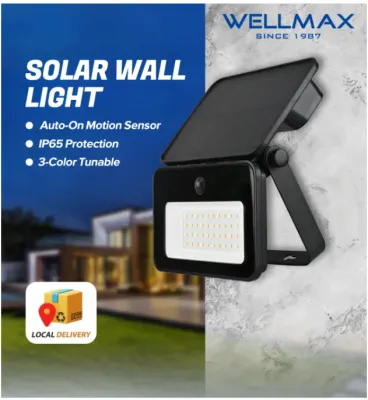
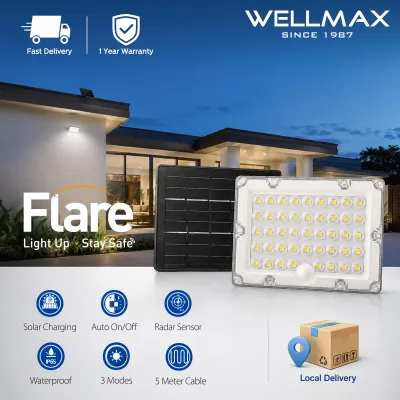
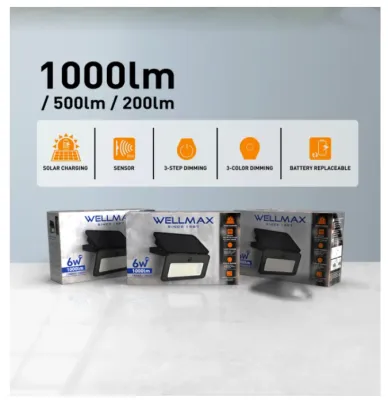
Prices are valid at publication and may change. Please refer to the product page for the latest price.
Another critical factor to observe during your assessment is the daily sun pattern across your yard. Because solar lights rely entirely on their built-in photovoltaic panels to charge, any shade from roof overhangs, large trees, or neighboring structures will directly impact their performance. Walkways situated on the eastern or western sides of a house may receive excellent sunlight for only half the day, while central courtyards might enjoy unobstructed exposure. Documenting these sun and shade patterns helps you identify where solar panels can charge effectively and where alternative lighting solutions might be necessary.
Matching Wellmax Solar Light Categories to Your Layout
Once you have mapped out your garden zones, you can begin matching them to the primary categories of Wellmax solar lights. Rather than searching for specific, unverified model numbers that may change across retail batches, it is more practical to select fixtures based on their structural design and intended mounting method. Wellmax offers several distinct categories of solar-powered products, each engineered to address specific outdoor lighting challenges. Understanding the functional differences between these categories ensures that you do not install a fixture in an environment for which it was not designed.

Pathway and stake lights are the most common choice for lining walkways, flower beds, and garden borders. These fixtures typically feature an integrated solar panel on top of the light head and a pointed stake at the base that pushes directly into soft soil or turf. When evaluating these lights, look for designs that direct their output downward toward the ground rather than outward in all directions. Downward distribution ensures that the path is brightly lit while keeping the light source below eye level, which prevents blinding glare as you walk through the garden.
Wall and fence lights are designed to be mounted on vertical surfaces, making them ideal for courtyard perimeters, gates, exterior house walls, and wooden or concrete fences. These fixtures help define the vertical boundaries of your property and can cast a wide, downward pool of light over patios or entryways. Before purchasing, verify the mounting surface compatibility and the type of brackets or screws included in the package. Mounting a light on a concrete firewall, for example, requires appropriate masonry wall plugs and drilling tools, whereas mounting on a wooden fence post is much simpler.
Spotlights and floodlights serve as the heavy-duty options for illuminating larger courtyard gathering areas or highlighting specific landscape features. Solar spotlights usually feature an adjustable head and a separate or integrated solar panel, allowing you to aim the beam precisely at a tree canopy, a statue, or a decorative wall texture. Solar floodlights, on the other hand, provide a broad, high-intensity beam designed to cover wide open spaces for security or outdoor activities. When choosing these high-output fixtures, pay close attention to the beam angle and the adjustability of the mounting brackets to ensure you can direct the light exactly where it is needed.
Crucial Specifications to Verify on Product Labels
To ensure your selected Wellmax solar lights can withstand local environmental conditions and perform reliably, you must carefully verify the technical specifications printed on the product packaging or user manuals. Because solar technology relies on delicate electronic components housed outdoors, relying on brand names alone is not enough to guarantee longevity. You must act as an active checker of specifications, comparing the manufacturer’s stated ratings against the actual demands of your installation environment.
The first specification to check is the brightness, measured in lumens, and the color temperature, measured in Kelvin (K). For pathway safety and general navigation, look for fixtures that offer clear, functional brightness levels without being excessively harsh. Color temperature is a matter of personal preference but significantly affects the atmosphere of your garden. Warm white light, typically rated between 2700K and 3000K, creates a cozy, inviting ambiance suitable for seating areas and decorative garden beds. Cool white light, ranging from 5000K to 6500K, provides a crisp, high-contrast illumination that is highly effective for security lighting along dark perimeters.
Next, examine the battery capacity and the manufacturer’s stated runtime. Solar lights store energy in internal rechargeable batteries, usually lithium-ion or lithium iron phosphate (LiFePO4) cells. Look for the battery capacity stated in milliampere-hours (mAh) or watt-hours (Wh), and verify the estimated working hours on a full charge. In tropical regions where rainy days or overcast skies can limit daytime charging, a larger battery capacity helps sustain the light through consecutive low-sunlight days. Additionally, check the product manual to confirm if the internal battery is user-replaceable, as being able to swap out a degraded battery after a few years extends the overall lifespan of the fixture.
Weather resistance is perhaps the most critical factor for outdoor installations in the Philippines, where heavy monsoon rains and high humidity are common. You must locate the official Ingress Protection (IP) rating on the product box. An IP rating consists of two digits: the first represents protection against solid particles like dust, and the second represents protection against liquids. For general garden use, a minimum rating of IP44 is required to protect against splashing water from any direction. For exposed pathways, open courtyards, or areas close to ground level where water might pool, look for a higher rating such as IP65 or IP66, which indicates protection against heavy rain and water jets.
Finally, evaluate the solar panel efficiency and type. Most modern solar lights use either monocrystalline or polycrystalline silicon panels. Monocrystalline panels generally offer higher conversion efficiency, meaning they can generate more electricity in a smaller surface area and perform better under partial shade or overcast skies. Check the product specifications for the recommended charging time, which is typically expressed as the number of hours of direct sunlight required to fully charge the battery. Ensure that your chosen installation spots can realistically provide this amount of unobstructed sunlight daily.
Additionally, if you are considering hybrid models that connect to your home’s electrical grid as a backup, you must verify the voltage compatibility, base or interface types, wattage limits, and official electrical certifications (such as the Philippine Standard or ICC mark) on the product label. Never assume a fixture is safe for damp environments or high-heat areas based on its category name alone; always confirm the certified installation environment in the official documentation.
Placement and Installation Rules for Maximum Efficiency
Proper placement and installation are vital to maximizing the efficiency and lifespan of your Wellmax solar lights. Even the highest-quality solar fixture will fail to perform if it is installed in a permanent shadow or mounted incorrectly. When planning your installation, prioritize solar panel exposure above all else. The solar panels must be positioned where they can receive direct, unshaded sunlight for the majority of the day. Avoid placing fixtures directly under thick tree canopies, wide roof eaves, or in the deep shadows cast by neighboring walls and buildings.
When installing pathway and stake lights, maintaining consistent spacing is key to achieving a balanced visual effect and ensuring safety. Spacing that is too wide creates dark, unlit gaps along the walkway, which can lead to tripping hazards. Conversely, placing the lights too close together results in overlapping pools of light that cause visual clutter and waste energy. A good rule of thumb is to space the fixtures so that the outer edges of their light pools gently touch or slightly overlap. This creates a continuous, smooth path of light that guides the eye naturally through the garden.
For wall-mounted and fence lights, safety and structural integrity must be your primary concerns. Before drilling into any exterior wall or fence post, ensure there are no hidden utility lines, such as electrical conduits or water pipes, running behind the surface. Always follow the manufacturer’s installation instructions regarding mounting heights and weight limits. If you are planning to install heavy floodlights, fixtures that require complex structural brackets, work at height, or any system that integrates with your home’s fixed electrical wiring for backup power, always isolate the power source first, follow the step-by-step installation instructions, and consult a qualified professional to handle the installation safely.
Routine Maintenance and Basic Troubleshooting
To keep your Wellmax solar lights operating at peak performance year-round, you must establish a simple routine maintenance schedule. Because these fixtures are constantly exposed to the elements, dirt, dust, and organic debris will inevitably accumulate on their surfaces. A dirty solar panel cannot absorb sunlight efficiently, which leads to reduced battery charging and shorter runtimes at night. Regularly wiping the solar panel surface with a soft, damp microfiber cloth is usually sufficient to remove accumulated grime, pollen, and bird droppings. Avoid using abrasive scrubbers or harsh chemical cleaners, as these can scratch or degrade the protective coating on the panel.
In addition to cleaning the panels, you should periodically monitor the performance of the internal batteries. If you notice that a light’s runtime has significantly decreased—such as turning off after only one or two hours of darkness despite a sunny day—the rechargeable battery may be reaching the end of its useful life. Refer to the manufacturer’s instructions to safely open the battery compartment, verify the battery type, and replace it with a compatible rechargeable cell. Never attempt to use standard, non-rechargeable alkaline batteries in a solar light, as this can cause permanent damage or pose a safety hazard.
Seasonal changes in plant growth and sun angles also require minor adjustments to your lighting setup. Over several months, nearby garden plants, shrubs, or tree branches may grow tall enough to cast shadows over previously sunny solar panels. Periodically inspect your garden and trim back any overhanging foliage that blocks the light. For stake lights, you can easily pull them out of the ground and reposition them slightly to keep them in sunny areas as the sun’s path shifts across the sky throughout the year.
Frequently Asked Questions (FAQ)
Can I leave solar pathway lights outside during heavy rain?
Yes, you can leave solar pathway lights outside during heavy rain, provided they carry an appropriate weather-resistance rating. You must check the specific IP (Ingress Protection) rating printed on the product packaging or listed in the user manual before exposing the lights to wet conditions. For standard outdoor use, a rating of at least IP44 is necessary to protect against rain splashes, while a rating of IP65 or higher is recommended for areas exposed to heavy downpours or tropical storms. If a fixture lacks an official IP rating or is only rated for indoor use, it must be brought indoors during wet weather to prevent water damage and electrical failure.
Why is my solar light not turning on at night?
If your solar light fails to turn on at night, you should follow a basic diagnostic sequence to identify the cause before assuming the fixture is broken. First, inspect the solar panel surface for physical obstructions like fallen leaves, dirt, or thick dust that might be blocking sunlight or covering the ambient light sensor. Next, verify that the manual on/off switch, usually located on the underside of the light head or inside the battery compartment, is set to the ON position. Finally, check if the rechargeable battery has degraded or lost its connection; if the light still fails to operate after a full day of direct sunlight, replacing the internal battery according to the manufacturer’s instructions will often resolve the issue.

Community discussion
Share your experience or ask a question. Comments are reviewed before publication.