
Choosing the right bedside lighting involves balancing functional utility with spatial comfort. While both options utilize modern LED technology, a smart LED reading lamp and a bedside ambient lamp serve fundamentally different purposes in your bedroom. A smart LED reading lamp is engineered to deliver focused, high-clarity, and glare-free illumination directly onto a book or e-reader, minimizing eye strain during prolonged tasks. In contrast, a bedside ambient lamp is designed to cast a soft, diffused, and often color-tunable glow across the room, prioritizing relaxation, sleep preparation, and atmospheric comfort.
In tropical climates like the Philippines, where warm and humid evenings make bedroom comfort a priority, selecting the correct light source also affects the perceived temperature and overall mood of your personal sanctuary. Cool, bright lights can make a space feel clinical, while overly warm, dim lights might fail to support your nightly reading habits. Understanding the technical and physical distinctions between these two categories ensures you invest in a smart lamp led light that aligns with your evening routine, nightstand space, and smart home ecosystem.
Core Lighting Performance: Task Focus vs. Room Mood
The primary differentiator between these two lighting types lies in how they distribute light and render colors. A smart LED reading lamp functions as a task light, utilizing a narrow beam angle—typically between 15 and 45 degrees—to concentrate illumination onto a specific surface. This directional beam ensures that the text is highly legible while preventing light from spilling across the entire bed, which is particularly useful if you share your room with a sleeping partner.
Products mentioned in this guide
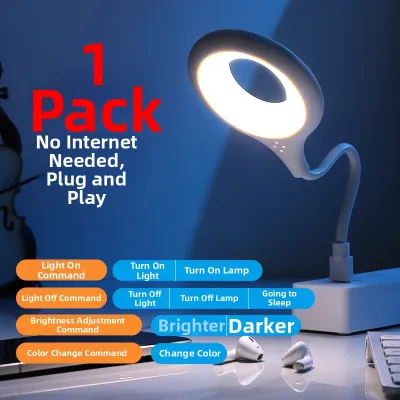
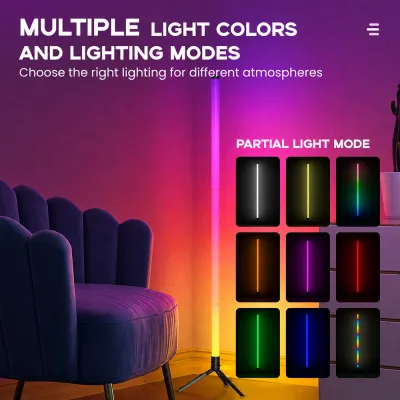
Prices are valid at publication and may change. Please refer to the product page for the latest price.
Conversely, a bedside ambient lamp is designed for wide-angle distribution, often spreading light in a 360-degree pattern. This wide wash of light bounces off walls and ceilings, reducing harsh shadows and creating a gentle, uniform glow throughout the room. Because the light is diffused through frosted glass, fabric, or textured plastics, it lacks the concentrated intensity required to read small print comfortably without causing your eyes to work harder to resolve details.
When evaluating a smart lamp led light for reading, color rendering and brightness are critical specifications to verify on the product packaging. Look for a high Color Rendering Index (CRI) of 90 or above, which ensures that colors and text contrasts appear sharp and true to life. For reading, a brightness level of 300 to 500 lumens is generally recommended to prevent squinting. Ambient lamps, on the other hand, often operate comfortably at lower brightness levels, sometimes starting as low as 50 lumens, where the focus is on visual comfort rather than high-contrast clarity.
Glare control is another essential factor to consider before making a purchase. Reading lamps often feature recessed light sources, physical louvers, or specialized lenses that direct light downward and away from your direct line of sight. Ambient lamps rely on diffusion materials to soften the light, but if the shade is too transparent or positioned poorly, it can create uncomfortable glare when you are lying down. Checking the manufacturer’s specifications for glare-reduction technology or physical shielding is a practical step to protect your eyes.
Physical Design and Nightstand Placement
The physical structure of your lamp dictates how well it fits into your bedroom layout and how easily you can direct its light. Smart LED reading lamps are characterized by their adjustable architecture, often featuring articulated arms, flexible goosenecks, or swiveling heads. This physical flexibility allows you to position the light source close to your reading material and adjust the angle as your posture changes, ensuring the light always falls exactly where you need it.

Bedside ambient lamps generally feature a static, sculptural design focused on aesthetic integration with your bedroom decor. They often have a larger, more stable base footprint to support decorative shades made of glass, paper, or fabric. While these materials excel at softening light, the lack of physical adjustability means you cannot redirect the beam if you need targeted illumination. The lamp remains a fixed point of light on your nightstand, illuminating the immediate surrounding area uniformly.
When planning your nightstand layout, measure the available surface area to ensure the lamp base does not crowd other essentials like your phone, water glass, or books. Compact urban bedrooms often feature narrow nightstands, making a lamp with a small, weighted base or a clamp-on design highly advantageous. If you opt for a reading lamp with an adjustable arm, verify that its range of motion does not collide with nearby walls, headboards, or wall-mounted shelving when fully extended.
The material composition of the lamp also plays a role in heat dissipation and durability. High-quality smart reading lamps often utilize aluminum or heat-resistant polymers to dissipate the minor heat generated by high-intensity LEDs. Ambient lamps may prioritize decorative materials like wood, ceramic, or hand-blown glass. Ensure that any material chosen is stable, easy to dust in humid environments, and robust enough to withstand accidental bumps in the dark.
Smart Controls: Task Execution vs. Relaxation
Smart connectivity transforms how you interact with your bedside lighting, but the control features are optimized differently for task work and relaxation. A smart reading lamp relies on precise control presets that allow you to switch instantly to high-contrast configurations. For example, a dedicated “Reading” mode in the companion app might automatically adjust the color temperature to a crisp, neutral white (around 4000 Kelvin) and set the brightness to maximum, optimizing the contrast of printed or digital text.
For an ambient lamp, smart controls focus on gradual transitions and color customization to support your circadian rhythm. Many ambient models offer millions of color options (RGB lighting) alongside a wide range of warm white tones (from a very warm 1700 Kelvin to a cool 6500 Kelvin). Smart features like “Sunset Dimming” or “Sunrise Wake-up” slowly transition the light intensity and color over several minutes, mimicking natural light patterns to help you wind down at night or wake up gently in the morning.
Dimming granularity is another area where these lamps diverge. A high-quality smart lamp led light designed for ambient use should offer deep dimming capabilities, ideally down to 1% or less of its total brightness, allowing it to function as a subtle nightlight. Reading lamps may not require such extreme low-end dimming, but they do benefit from smooth, step-free dimming transitions so you can fine-tune the brightness to match the ambient light levels in your room as the night progresses.
While app and voice assistant integration are standard across both categories, physical control interfaces remain vital for bedside convenience. When waking up in the middle of the night, navigating a smartphone app can be frustrating and the screen glare can disrupt your sleep state. Look for lamps that feature intuitive physical controls, such as a touch-sensitive base, a dedicated rotary dial, or a physical button on the cord, allowing you to turn the light off or dim it instantly without looking.
Side-by-Side Specification Checklist
To help you compare these two categories systematically, the following checklist outlines the typical specifications you will encounter when shopping for a smart lamp led light. Keep in mind that these are general industry patterns; you should always verify the exact manufacturer specifications on the product packaging or official documentation before purchasing.
| Specification Dimension | Smart LED Reading Lamp | Bedside Ambient Lamp |
|---|---|---|
| Primary Beam Angle | Narrow and focused (15° to 45°) | Wide and diffused (180° to 360°) |
| Typical Brightness Range | 300 to 600 lumens | 50 to 400 lumens |
| Color Temperature Range | Typically 2700K to 5000K (focus on neutral/cool white) | Broad range, often 1700K to 6500K + RGB color options |
| Physical Adjustability | High (goosenecks, swivels, adjustable arms) | Low to none (fixed decorative structure) |
| Primary Visual Goal | High contrast, glare reduction, eye comfort | Soft diffusion, color customization, mood creation |
When purchasing any smart lighting product, it is crucial to verify electrical compatibility and safety certifications. Ensure the lamp is rated for the local standard voltage of 220V at 60Hz, as importing a 110V model without a transformer can damage the smart circuitry or pose a fire hazard. Additionally, look for local safety marks such as the Philippine Standard (PS) quality mark or the Import Commodity Clearance (ICC) sticker on the packaging to confirm the device has undergone rigorous electrical safety testing.
Verify the plug type provided with the lamp; most homes utilize Type A (two flat parallel pins) or Type B (two flat pins with a grounding pin) outlets. If the smart lamp utilizes a USB power source, check the required wattage and amperage (e.g., 5V/2A) and ensure you use a certified power adapter. For smart home integration, confirm that the lamp’s wireless protocol (typically 2.4 GHz Wi-Fi or Bluetooth) is compatible with your existing home router and smart assistant ecosystem.
Decision Framework: Which Smart LED Light Fits Your Routine?
Selecting the ideal smart lamp led light depends entirely on your established evening habits and bedroom layout. If your nightly routine consistently involves reading physical books, studying documents, or engaging in detailed handiwork in bed, a smart LED reading lamp is the logical choice. Its focused beam protects your eyes from premature fatigue, while its physical adjustability ensures you can direct the light away from your partner’s eyes, preserving their sleep quality while you finish your chapter.
If your evening routine is centered around winding down, meditating, listening to audiobooks, or creating a relaxing atmosphere to signal your body that it is time to sleep, a bedside ambient lamp is highly suitable. The soft, diffused glow helps lower your alertness levels, and the ability to transition to warm, amber tones supports natural melatonin production. This option is also excellent for children’s bedrooms, where a gentle, color-customizable nightlight can provide comfort throughout the night.
For those who require both functionalities but face space or budget constraints, a hybrid smart lamp or a dual-lamp setup offers a practical compromise. Some modern smart lamps feature dual light sources within a single unit—a directional reading arm combined with a diffused ambient base—allowing you to toggle between tasks and relaxation with a single device. Alternatively, you can pair a budget-friendly ambient lamp with a small, clip-on smart reading light attached directly to your headboard or book, giving you the best of both worlds without cluttering your nightstand.
Before finalizing your decision, evaluate your existing bedroom environment. Consider the height of your mattress relative to your nightstand; if your nightstand is low, an adjustable reading lamp can be raised to the correct height, whereas a short ambient lamp might cast shadows or shine directly into your eyes. By matching the lamp’s optical performance, physical design, and smart features to your specific physical space and daily habits, you can create a bedroom lighting scheme that is both highly functional and deeply relaxing.
Frequently Asked Questions (FAQ)
Can I use a smart ambient lamp for reading in bed?
While you can use a smart ambient lamp for casual, short-term reading, it is not recommended for prolonged reading sessions. Ambient lamps are designed to diffuse light widely, which reduces the concentrated brightness (lumens) reaching your page and can cause eye strain as your eyes struggle to resolve text contrast. If you do use an ambient lamp for reading, ensure you adjust its smart settings to a neutral white color temperature (around 4000 Kelvin) and increase the brightness to its maximum level, while positioning yourself as close to the light source as possible to maximize clarity.
Do smart LED reading lamps consume more electricity than ambient ones?
Power consumption is determined by the actual wattage of the LED bulb and how long it remains turned on, rather than the category of the lamp itself. Because both types utilize highly efficient LED technology, their energy consumption is exceptionally low compared to traditional incandescent bulbs. To optimize your energy use, look for the rated wattage on the product specification sheet and utilize smart scheduling features in your companion app to automatically turn off the lamp if you fall asleep, preventing unnecessary power draw.

Community discussion
Share your experience or ask a question. Comments are reviewed before publication.