
To find the best solar flush mount ceiling lights for low-ceiling condos in the Philippines, you must look for split-panel designs with an ultra-thin profile, a long extension cable to route the solar panel to a sunny balcony or window, and a reliable battery pack. Because typical high-rise units in metropolitan areas feature concrete slab ceilings with limited headroom, traditional hanging fixtures can make spaces feel cramped. Standalone solar ceiling lights with panels offer an energy-efficient, drilling-minimal way to illuminate your living room, kitchen, or bedroom without relying entirely on the main grid. By separating the light fixture from the solar collector, these systems allow you to enjoy clean, renewable energy indoors while keeping your ceiling profile clean and unobstructed.
Understanding Solar Flush Mount Lights for Indoor Condo Use
When shopping for solar ceiling lights with panel systems, the first distinction to understand is the physical configuration of the components. Many outdoor solar lights feature an integrated design where the solar panel is mounted directly on top of the light fixture. For indoor condo use, this design is completely impractical because your ceiling and roof block all incoming sunlight. Instead, you must select a split-panel (or split-type) design. In a split-panel system, the flush mount light fixture is installed inside your condo, while a separate solar panel is mounted outdoors. The two components are connected by a thin, low-voltage DC cable that transmits the harvested solar energy to the light’s internal battery.
Managing expectations for solar charging in a high-rise condo environment is crucial. Unlike suburban homes with open rooftops, condos are limited by their orientation and surrounding structures. If your unit faces a narrow courtyard or is shaded by adjacent towers, your solar panel will receive less direct sunlight. While it is tempting to place the solar panel inside against a window pane to avoid exterior mounting hassles, glass significantly filters out the solar radiation needed for efficient charging. For the best results in the tropical climate of the Philippines, where seasonal monsoons and afternoon cloud cover are common, the solar panel must be placed outdoors—such as on a balcony railing or an exterior window ledge—where it can capture unobstructed daylight.
Products mentioned in this guide
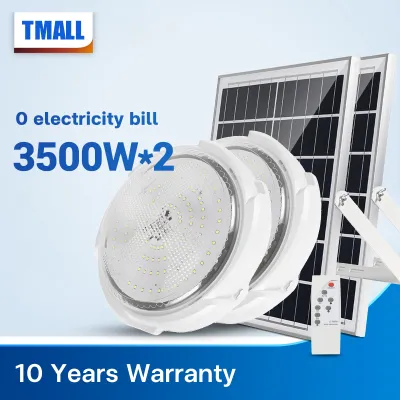
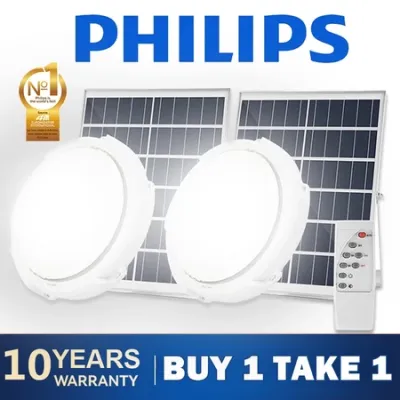
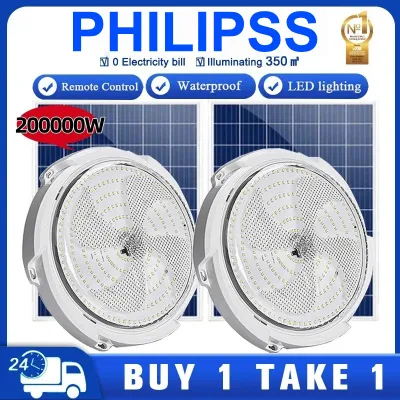
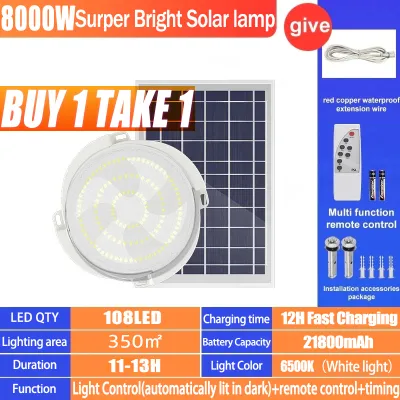
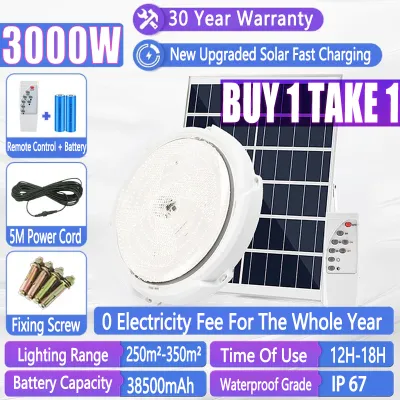
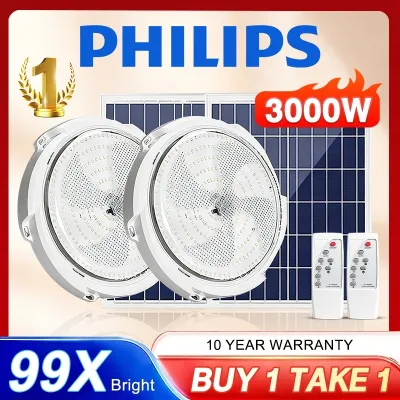
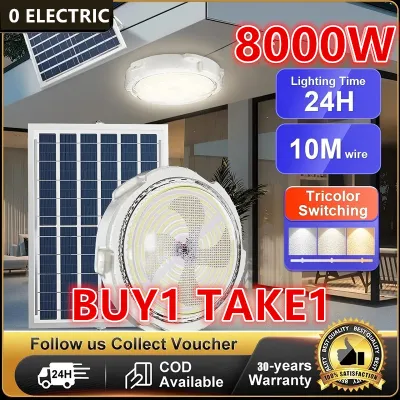
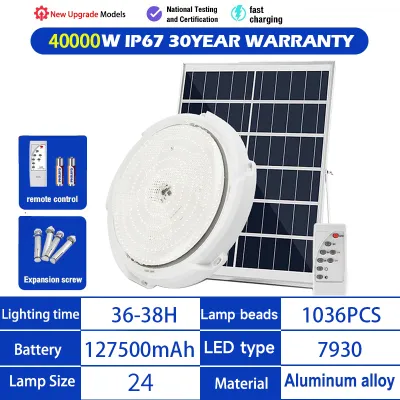
Prices are valid at publication and may change. Please refer to the product page for the latest price.
Headroom preservation is another critical factor in modern condo living. Many residential developments in urban centers feature concrete slab ceilings with a finished height of 2.4 to 2.7 meters. Installing a bulky, protruding light fixture can make the room feel claustrophobic and pose a physical hazard for taller occupants. Flush mount solar lights are specifically designed to sit flat against the ceiling surface, minimizing vertical protrusion. By choosing a fixture with an ultra-thin profile, you can maintain a clean, modern aesthetic while ensuring that your living spaces feel open, bright, and safe for everyday movement.
Key Selection Criteria for Low-Ceiling Spaces
To select the ideal solar flush mount light for a low-ceiling condo, you must evaluate several physical and technical specifications. The most immediate physical constraint is the fixture’s thickness. For spaces with limited headroom, aim for a maximum fixture thickness of 5 centimeters or less. This ultra-thin profile ensures the light blends seamlessly into the ceiling plane, mimicking the look of recessed downlights without requiring deep ceiling cutouts. Before making a purchase, measure the exact distance from your floor to the ceiling and verify that the fixture’s dimensions will leave ample clearance for daily activities, door swings, and furniture movement.

Understanding the relationship between lumen output and wattage is essential for achieving the right brightness level. In the solar lighting market, manufacturers often advertise incredibly high wattage ratings that do not correspond to actual light output. Instead of relying on these inflated wattage claims, focus on the rated lumens, which measure the total amount of visible light emitted by the fixture. For a standard condo bedroom or a small dining area, a light output of 800 to 1,200 lumens is typically sufficient for general illumination. If you are lighting a larger living room or a task-heavy area like a kitchen, look for fixtures that deliver 1,500 lumens or more, and verify that the light source uses high-efficiency LED chips to maximize brightness per watt.
Color temperature is another vital consideration that directly affects the mood and functionality of your condo. Because color temperature is a matter of personal preference and spatial design, you should select a light color that matches the primary use of each room. Warm white light (2700K to 3000K) emits a soft, yellowish glow that is ideal for creating a cozy, relaxing atmosphere in bedrooms or living areas during the evening. Cool white light (5000K to 6500K) or daylight (4000K) provides a crisp, bright illumination that enhances visibility, making it perfect for kitchens, home offices, or utility spaces. Many modern solar flush mounts feature tri-color adjustable LEDs, allowing you to cycle through different color temperatures using a remote control to suit your changing needs throughout the day.
Evaluating the Solar Panel and Battery Setup
The performance of your indoor solar lighting system depends heavily on the placement of the solar panel and the quality of the battery. Because drilling through thick concrete condo walls to route cables is rarely permitted, you must plan your cable path carefully. Look for solar ceiling lights with panel kits that include flat, flexible ribbon cables or thin round cables. These specialized cables can easily pass through the rubber seals of sliding balcony doors or window frames without preventing them from closing securely or compromising your unit’s weatherproofing. Mounting the solar panel on a balcony railing using adjustable brackets or heavy-duty, UV-resistant zip ties is often the most practical, non-invasive solution for high-rise residents.
When evaluating the battery system, pay close attention to the battery chemistry and capacity metrics. Most high-quality solar fixtures utilize Lithium Iron Phosphate (LiFePO4) batteries, which are highly recommended for the warm, humid climate of the Philippines. LiFePO4 batteries offer superior thermal stability, a lower risk of overheating, and a significantly longer lifespan—often lasting over 2,000 charge cycles—compared to standard Lithium-ion alternatives. To estimate the expected runtime of your light, you can use a simple theoretical formula: divide the battery’s capacity in Watt-hours (Wh) by the fixture’s power consumption in Watts (W). For example, a 20Wh battery powering a 5W LED array will theoretically run for 4 hours at full brightness. Keep in mind that actual runtime will vary based on the amount of sunlight harvested during the day and the brightness level selected via the remote control.
Long-term maintenance is another crucial factor that separates high-quality solar lights from cheap, disposable options. Many budget-friendly solar flush mounts feature completely sealed housings with built-in, non-replaceable batteries. When the battery eventually degrades and loses its ability to hold a charge after a few years, the entire fixture must be replaced, leading to unnecessary electronic waste and additional expenses. To avoid this, look for models that feature an accessible battery compartment or a modular design. This allows you to easily swap out the old battery cells for fresh ones when the time comes, ensuring your solar lighting system remains functional for many years to come.
Installation, Safety, and Condo Compliance
Installing any fixture in a condominium requires careful adherence to property management rules and safety guidelines. Before purchasing or mounting an exterior solar panel, always consult your building’s administration office or review the homeowner association guidelines. Many condo developments have strict regulations regarding the building’s exterior appearance, prohibiting residents from mounting visible items on balconies, drilling into structural concrete facades, or installing brackets that could pose a falling hazard during severe weather events like typhoons. Ensuring your installation is secure, non-invasive, and fully compliant with local building policies will prevent costly fines and disputes.
Electrical safety and structural integrity must be prioritized during the installation process. Because standalone solar ceiling lights operate on low-voltage DC power supplied by the battery, they do not carry the high-voltage shock risks associated with standard 220V AC household wiring. However, physical safety remains paramount. When mounting the light fixture to your ceiling, avoid drilling deep into the concrete slab, as you could accidentally strike embedded electrical conduits, water pipes, or post-tension cables. Use lightweight fixtures and high-quality concrete wall plugs or anchors to ensure the light is securely fastened and cannot fall. If you are mounting a heavier fixture, verify the weight limits of your ceiling anchors before proceeding.
Deciding whether to undertake a DIY installation or hire a professional depends on the complexity of the system and your comfort level with basic tools. Standalone, plug-and-play solar ceiling lights that connect directly to the solar panel via a simple DC jack are highly suitable for DIY installation, requiring only basic mounting skills. However, if you choose a hybrid solar light that integrates with your condo’s existing 220V AC electrical box to provide automatic backup power when the solar battery is depleted, the installation becomes more complex. For any work involving fixed electrical wiring, working at heights near balcony edges, or navigating complex structural ceilings, always isolate the main power breaker and hire a licensed electrician to ensure a safe, code-compliant installation.
How to Build Your Shortlist on Online Marketplaces
Finding the right solar ceiling lights with panel systems on online marketplaces requires a strategic approach to searching and filtering. Start by using highly specific search terms such as ‘split type solar ceiling light’, ‘ultra thin solar flush mount’, or ‘indoor solar light with balcony panel’. Avoid broad terms like ‘solar light’ or ‘ceiling lamp,’ which will return thousands of irrelevant results. Filter your search results to show local sellers within the Philippines to ensure faster shipping times, lower delivery fees, and a more straightforward return process if the product arrives damaged or does not match the advertised specifications.
When browsing product listings, learn to identify common red flags in product descriptions. Many low-cost listings feature highly exaggerated claims, such as advertising a ‘500W’ light fixture that actually only draws a fraction of that power, or claiming a battery life of several days on a tiny, low-capacity battery. Cross-reference the physical dimensions of the solar panel provided in the specifications; a small solar panel physically cannot generate enough energy to charge a high-capacity battery in a single day. If the listing lacks detailed technical specifications, such as the exact battery capacity in milliampere-hours (mAh) or Watt-hours (Wh), the lumen output, or the fixture’s physical thickness, it is best to look for alternative options.
Evaluating customer reviews is one of the most effective ways to verify a product’s real-world performance before making a purchase. Scroll past the generic five-star ratings and look for detailed reviews that include actual photos and videos uploaded by buyers. Pay close attention to feedback regarding the physical thickness of the light fixture, the actual length and durability of the connecting cable, and how many hours the light remains bright after a typical day of charging. Reviews that mention how the product performs during rainy or cloudy days in the Philippines will give you a realistic expectation of the system’s reliability in local tropical conditions.
Frequently Asked Questions (FAQ)
Can a solar ceiling light work if the panel is placed indoors?
While a solar panel placed behind a glass window can harvest some energy, its charging efficiency is significantly reduced. Standard window glass, especially the tinted, tempered, or double-glazed glass commonly used in modern high-rise condos, blocks a substantial portion of the solar spectrum required for efficient photovoltaic conversion. Dust, dirt, and window screens further reduce the amount of light reaching the panel. For reliable daily operation and to ensure the battery fully charges, it is highly recommended to route the connecting cable outdoors and mount the solar panel on a balcony railing or an exterior ledge where it can receive direct, unobstructed sunlight.
Do flush mount solar lights require hardwiring into the ceiling?
Most standalone solar flush mount lights operate entirely on a low-voltage DC system powered by their own connected battery, meaning they do not require any hardwiring into your condo’s 220V AC electrical grid. This makes them an excellent, non-invasive option for renters or those looking for a simple DIY installation. However, if you opt for a hybrid AC/DC solar ceiling light—which is designed to automatically switch to grid power when the solar battery runs low—you will need to connect the fixture to an existing ceiling junction box. For any installation involving fixed AC wiring, always turn off the main circuit breaker, verify the voltage with a tester, and consult a licensed professional to ensure safety and compliance with local electrical codes.

Community discussion
Share your experience or ask a question. Comments are reviewed before publication.