
A 10,000 lux rating on a table lamp is not only bright enough for reading—it is actually far brighter than what is comfortable or necessary for standard reading tasks. In typical home environments, such an intense level of illumination is reserved for specialized light therapy devices designed to mimic natural sunlight, rather than everyday task lighting. For reading a book or working on a laptop, exposing your eyes directly to 10,000 lux at close range can lead to severe glare, visual discomfort, and rapid eye strain. Understanding how this specification translates to your desk surface is key to choosing a lamp that protects your vision while providing adequate light.
Decoding the 10,000 Lux Specification
To understand this rating, it is important to distinguish between lumens and lux. Lumens measure the total amount of visible light emitted by a source in all directions. Lux, on the other hand, measures illuminance, which is the amount of light that falls on a specific surface area; one lux equals one lumen per square meter. When a manufacturer labels a lamp as having a 10,000 lux output, this measurement is highly dependent on distance.
A lamp rated at 10,000 lux usually achieves this peak intensity only at an extremely close distance to the light source itself, often just 10 to 15 centimeters away. As you move further from the bulb, the light spreads out over a larger area, and the lux level drops dramatically. If you place the lamp at a typical desk working distance, the actual light hitting your book or keyboard will be a fraction of that initial rating.
Products mentioned in this guide
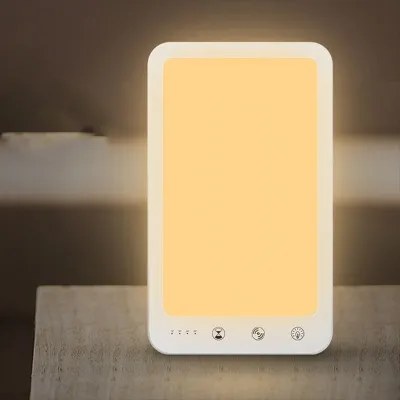
![[rooqs]Light Therapy Lamp 10000 Lux Therapy Light Mood-Lifting SAD Light Therapy Lamp Emotional Wellness Therapy Lamp](https://img.lazcdn.com/g/p/4b1af57932bb14c4079dc993ab1bed11.jpg_400x400q80.jpg_.webp)
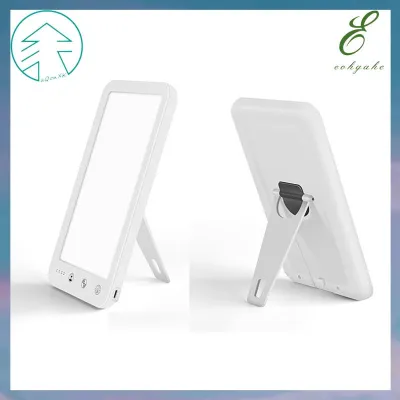
![[vettelen]Simulated Natural Sunlight 10000 Lux Natural Lamp for Bedroom Touch Control Adjustable Time UV-Free Lamp Support Stand](https://img.lazcdn.com/g/p/d50e1b799b36628faa584b4b830793a7.jpg_400x400q80.jpg_.webp)
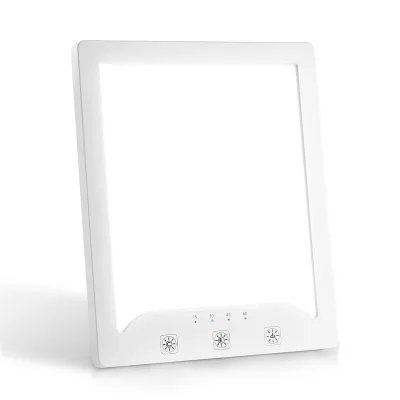
![10000 Lux SAD Light Therapy Lamp LED Light Therapy Lamp for Effective Treatment of Seasonal Affective Disorder with Timer Function Touch Control Suitable for Home/Office [Energy Class A+]](https://img.lazcdn.com/g/p/c0a8ae1913d6458013c9e59e8dea3e89.jpg_400x400q80.jpg_.webp)
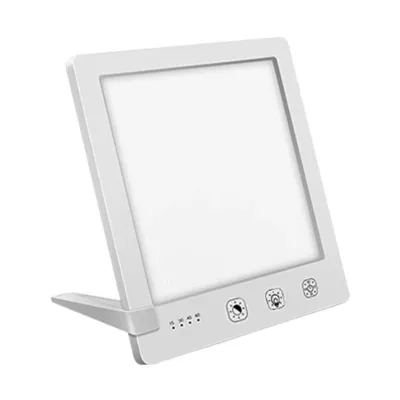
Prices are valid at publication and may change. Please refer to the product page for the latest price.
Furthermore, extremely high lux ratings are typically associated with light therapy lamps rather than standard task lighting. These specialized panels are designed to help regulate circadian rhythms and improve mood by simulating bright outdoor daylight. They are meant for short, indirect morning sessions where you sit near the light without looking directly at it. Using a therapy lamp at full power as a standard reading light can quickly overwhelm your eyes.
Evaluating Brightness for Reading Tasks
For comfortable reading of printed text, a surface illuminance of 300 to 500 lux on the page is generally recommended. Highly detailed tasks, such as technical drawing, sewing, or reading very fine print, might require up to 1,000 lux. Attempting to read under a localized light source that delivers thousands of lux directly onto white paper creates a massive contrast issue.

When your reading material is exceptionally bright while the rest of the room remains dark, your pupils must constantly adjust as your gaze shifts between the page and the surrounding environment. This continuous dilation and constriction leads to rapid visual fatigue. Additionally, high localized brightness on white paper or glossy digital screens reflects light directly into your eyes, causing harsh glare that obscures text and makes reading uncomfortable.
To evaluate if a lamp provides the right amount of light, you can use a simple practical framework at home. Place your reading material at your typical working distance, which is usually 30 to 40 centimeters from the desk surface. Observe whether you need to squint, if the white pages look blindingly bright, or if you can see the texture of the paper clearly without reflection. If the light feels piercing or causes you to blink frequently, the illuminance at that distance is too high or poorly diffused.
Essential Lamp Features Beyond Peak Brightness
Instead of focusing solely on peak brightness, you should prioritize features that allow you to control and customize the light. Stepless dimming or multiple brightness presets are essential for adjusting the light output to match different times of day and varying ambient light conditions. This flexibility ensures you can lower the intensity during late-night reading sessions when your eyes are naturally more sensitive.
Color temperature options also play a significant role in visual comfort. Warm white light, ranging from 2700K to 3000K, is highly recommended for evening reading because it is gentler on the eyes and does not interfere with your sleep cycle. Cool white light, between 4000K and 6500K, can be useful for daytime focus and productivity but can feel harsh and clinical in a relaxed home setting.
Physical adjustability is another critical factor. Look for lamps with flexible goosenecks, rotating heads, or adjustable arms that allow you to control the beam angle. This design lets you direct the light precisely onto your reading material while keeping the bulb hidden from your direct line of sight, effectively minimizing direct glare.
When selecting a table lamp, always verify the electrical specifications to ensure safety and compatibility. Check that the lamp matches the local 220V voltage standard and verify the base interface, wattage limits, and physical dimensions. Look for recognized electrical safety certifications, such as the Philippine Standard (PS) mark or the Import Commodity Clearance (ICC) sticker. In warm and humid tropical environments, choosing certified fixtures ensures that the internal wiring and insulation are robust enough to handle daily use safely. Always place your lamp away from open windows where sudden tropical downpours could expose the electrical components to moisture.
Frequently Asked Questions (FAQ)
Can excessively bright desk lamps cause eye strain?
Yes, excessively bright desk lamps can cause significant eye strain through direct glare and high contrast. When a lamp is too bright relative to the rest of the room, your eyes must work harder to adapt to the extreme difference in light levels, fatiguing the ciliary muscles. To mitigate this, use a built-in dimmer to lower the lamp’s output, adjust the lamp head so the light bounces off a nearby wall or desk surface rather than shining directly into your eyes, and keep a soft ambient light on in the room to balance the overall contrast.
How can I measure the actual illuminance on my desk?
You can estimate the actual illuminance on your desk using a smartphone light meter app as a baseline reference. These apps utilize your phone’s front-facing ambient light sensor to provide a relative lux reading, which is helpful for comparing different spots on your workspace. For precise verification that meets exact task lighting standards, use a dedicated digital lux meter. Place the meter’s sensor flat on your desk exactly where your book or keyboard normally sits to get an accurate measurement of the light reaching your work area.

Community discussion
Share your experience or ask a question. Comments are reviewed before publication.