
Selecting the right outdoor decorations requires balancing aesthetics with safety. When decorating with Christmas light balls in the Philippines, understanding waterproof ratings is the most critical step to ensure your display survives the tropical climate. The holiday season in the country often brings unpredictable weather, ranging from high humidity to sudden, heavy downpours. To protect your home and your investment, you must look for specific Ingress Protection (IP) ratings on product labels. Generally, a minimum rating of IP44 is required for semi-sheltered outdoor spaces like covered porches, while fully exposed areas like lawns, trees, and rooftops demand at least IP65 to withstand intense tropical rains. This guide will break down how to read these ratings, match them to your specific outdoor setup, and install your holiday lighting safely.
Decoding IP Ratings for Outdoor Lighting
Understanding the Ingress Protection (IP) rating system allows you to independently evaluate the durability of outdoor lighting. The IP code is an international standard that classifies the degree of protection provided against mechanical intrusion and water. It consists of the letters “IP” followed by two digits, each representing a specific type of protection.
The first digit, ranging from 0 to 6, indicates protection against solid objects and dust. A rating of 4 means the fixture is protected against solid objects larger than 1 millimeter, such as small wires. A rating of 5 or 6 indicates that the fixture is dust-protected or entirely dust-tight, preventing airborne particles from interfering with the internal electrical components.
Products mentioned in this guide
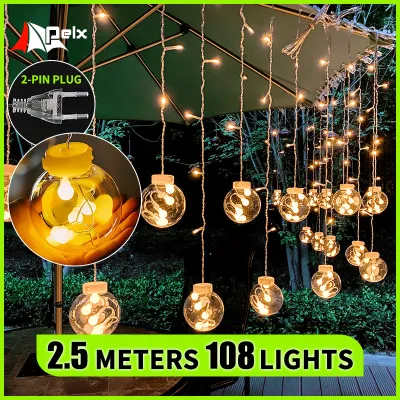
Prices are valid at publication and may change. Please refer to the product page for the latest price.
The second digit, ranging from 0 to 9, measures protection against liquids, which is the most critical factor for outdoor holiday decorations. A liquid protection digit of 4 indicates resistance to water splashing from any direction. A digit of 5 signifies protection against low-pressure water jets, while a digit of 6 indicates the fixture can withstand powerful water jets. Ratings of 7 and 8 are reserved for temporary and continuous immersion, respectively.
When shopping for Christmas light balls, product packaging, manufacturer specification sheets, and official labels are the only reliable sources for confirming these ratings. Generic marketing terms like “waterproof” or “weather-resistant” are not standardized and do not guarantee safety. Always verify the exact IP rating on the product label before making a purchase.
Matching Waterproof Levels to Philippine Weather Conditions
The Philippine climate presents unique challenges for outdoor electrical installations. The holiday season, which traditionally begins early in the country, coincides with the tail end of the rainy season and the peak of the tropical cyclone season. This means outdoor decorations must endure not just light mist, but prolonged, heavy rainfall and high wind speeds that can drive water into the smallest crevices.

For sheltered outdoor areas, such as under a deep roof overhang, a covered veranda, or a carport, Christmas light balls with an IP44 rating are generally acceptable. These areas are shielded from direct, vertical rainfall, but the lights must still cope with high ambient humidity and wind-blown moisture. While decorative style and perceived color temperature are matters of personal preference, maintaining a minimum of IP44 in these semi-sheltered zones is a non-negotiable safety requirement.
For fully exposed locations, such as hanging from tree branches, mounted along fence lines, or placed directly on the lawn, IP65 is the recommended minimum. At this level, the light balls are sealed against dust and can withstand low-pressure water jets from any angle, simulating heavy, driving rain. If you live in coastal regions where strong winds accompany seasonal storms, upgrading to IP66 provides an extra layer of security against powerful, wind-driven waves of rain.
Continuous high humidity can also cause condensation inside poorly sealed fixtures, leading to premature failure. High-quality seals, such as silicone gaskets and tight-fitting threaded connectors, are crucial for preventing moisture accumulation. Refer to the selection matrix below to match your installation environment with the appropriate protection level:
| Installation Location | Exposure Level | Recommended Minimum IP Rating | Key Weather Risk |
|---|---|---|---|
| Covered Patios & Verandas | Low to Moderate | IP44 | High humidity, blowing mist, ambient moisture |
| Open Yards, Trees, & Fences | High | IP65 | Heavy tropical downpours, direct rain exposure |
| Ground-Level Lawns & Pathways | Very High | IP65 or IP66 | Standing water, soil splashing, heavy runoff |
Essential Electrical and Installation Checks for Wet Environments
Beyond the IP rating of the Christmas light balls themselves, the entire electrical circuit must be configured for wet environments. In the Philippines, standard residential power is delivered at 220V. Ensure that any step-down transformers or power adapters used for low-voltage lighting systems are housed in a certified weatherproof enclosure or kept indoors.
Verify that all extension cords, connectors, and plugs are explicitly rated for outdoor use. Look for heavy-duty, round-insulated cables rather than thin, flat cords designed for indoor appliances. All outdoor outlets should be equipped with a Ground Fault Circuit Interrupter (GFCI) to instantly cut power if a current leak is detected, preventing severe electrical shocks.
When installing lights, always follow a strict power-isolation protocol: turn off the circuit breaker or unplug the power source before hanging, adjusting, or handling any fixtures. If you are mounting light balls at heights, such as high up in trees or along rooflines, use secure, non-conductive fiberglass ladders and ensure the fixtures are anchored firmly to withstand strong winds.
Create “drip loops” on all power cords leading to connections. A drip loop is a simple downward curve in the cord before it enters a plug or outlet, ensuring that rainwater runs off the bottom of the loop rather than traveling directly into the electrical connection.
If your holiday display involves complex fixed wiring, tapping directly into your home’s main electrical panel, or suspending heavy structural loads over walkways, do not attempt a DIY installation. Stop and consult a qualified, licensed electrician to ensure compliance with local electrical codes and safety standards.
Maintenance and Storage to Preserve Waterproof Integrity
To preserve the waterproof integrity of your Christmas light balls over multiple seasons, regular maintenance and proper storage are essential. Throughout the holiday season, perform routine visual inspections of your display. Look for signs of physical damage, such as cracked plastic globes, frayed wire insulation, or loose connections. Pay close attention to the seals and gaskets; if you notice internal condensation or water droplets pooling inside a light ball, the seal has failed, and the unit should be disconnected immediately.
When cleaning the light balls, use only a soft, damp cloth and mild water. Avoid using harsh chemical solvents, abrasive cleaners, or high-pressure water sprays, as these can degrade the protective UV coatings on the plastic, weaken rubber gaskets, and compromise the waterproof seals.
At the end of the holiday season, take down the lights carefully to avoid stretching the wires or damaging the connections. Before packing them away, ensure every component is completely dry. Wipe down each light ball and lay them out in a well-ventilated, shaded indoor area for a day or two to evaporate any residual moisture.
Store the dry lights in sturdy, airtight plastic bins rather than cardboard boxes, which can absorb moisture from the air. Placing silica gel packets inside the storage bins will help absorb ambient humidity, preventing mold growth, wire corrosion, and seal degradation during the hot, humid off-season months.
Frequently Asked Questions (FAQ)
Can I use indoor Christmas light balls outdoors if they are under a roof?
No, indoor-rated Christmas light balls should never be used outdoors, even if they are completely sheltered under a roof. Indoor lights are not designed to withstand the high ambient humidity, temperature fluctuations, and wind-driven moisture characteristic of the Philippine climate. They lack the rubberized gaskets, sealed wire entries, and UV-resistant materials found in outdoor-rated fixtures. Using indoor lights in semi-outdoor spaces can lead to rapid insulation breakdown, short circuits, and significant electrical hazards.
What should I do if water gets inside the light ball casing?
If you discover water inside a light ball casing, prioritize safety by immediately isolating the power. Turn off the circuit breaker or unplug the main power cord before touching any part of the display. Once the power is safely disconnected, remove the affected light ball. If the fixture is designed with user-serviceable parts, open it carefully, drain the water, and allow it to dry completely in a warm, dry place. Inspect the rubber gaskets for cracks or wear. If the unit is permanently sealed and has leaked, or if the gaskets are visibly degraded, do not attempt to reuse it; permanently retire the fixture to avoid future safety risks.
Are solar-powered Christmas light balls safer for wet outdoor conditions?
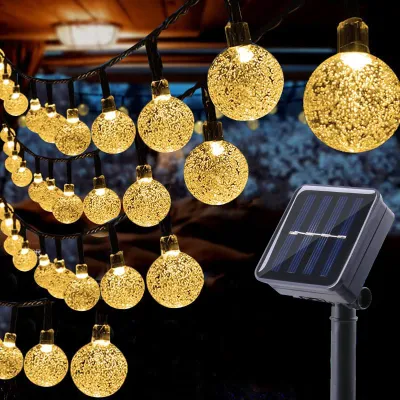
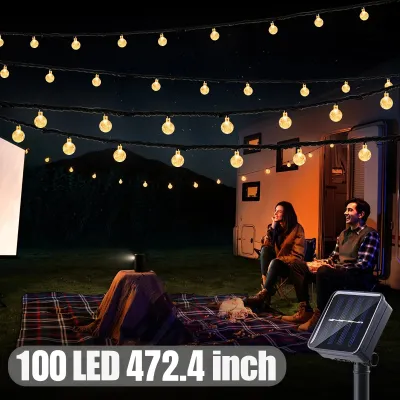
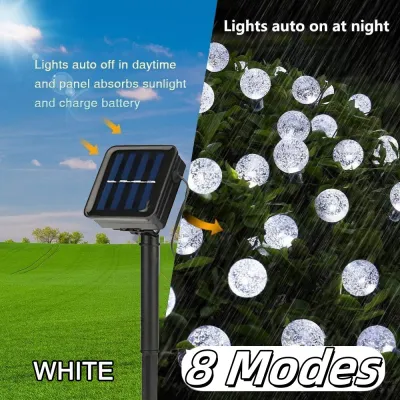
Solar-powered Christmas light balls offer a safety advantage because they operate on low-voltage direct current (DC) supplied by a battery, eliminating the risk of high-voltage electrical shocks associated with 220V mains power. However, they are still susceptible to water damage. The solar panel, battery compartment, and light balls must still have adequate waterproof ratings (such as IP65) to prevent water from corroding the battery terminals, damaging the internal circuit boards, or causing premature system failure during heavy rains.

Community discussion
Share your experience or ask a question. Comments are reviewed before publication.