
Finding the perfect light for your reading corner is more than just a matter of style; it directly impacts your eye comfort and how long you can enjoy your favorite book. When setting up a cozy reading nook in your living room, the choice between an uplight floor lamp and a downlight floor lamp will shape your entire experience. Downlight floor lamps are generally the superior choice for dedicated, high-contrast reading because they cast direct, focused illumination onto your pages. Conversely, uplight floor lamps excel at washing the room in a soft, indirect glow that minimizes harsh shadows and reduces overall eye strain in multi-use spaces. Choosing the right option requires balancing your reading habits, the physical layout of your room, and your existing lighting setup.
How Light Distribution Affects Reading Comfort
To understand how these lamps perform, it helps to look at how light travels from the source to your eyes. Downlighting is a form of direct lighting. The shade of a downlight floor lamp is designed to channel light downward in a concentrated cone. This direct path ensures that a high concentration of lumens reaches your book, newspaper, or tablet. By focusing the light exactly where you need it, downlights make small text easier to read and help prevent the cognitive fatigue associated with squinting in dim environments. However, because the light is highly directional, it can create sharp shadows if your head, hands, or the book itself blocks the beam.
Uplighting, on the other hand, relies on indirect lighting. An uplight floor lamp—often referred to as a torchiere—points its bulb toward the ceiling. The light travels upward, hits the ceiling surface, and bounces back down into the room as a highly diffused, scattered glow. This reflection process softens the light, eliminating the harsh, distinct shadows common with direct light sources. While this creates a relaxing, glare-free ambiance that is perfect for winding down, the bouncing process also absorbs a significant amount of light energy. As a result, the illumination that reaches your reading chair is much weaker and more spread out, which may not provide the crisp contrast needed for comfortable, long-term reading of fine print.
Products mentioned in this guide
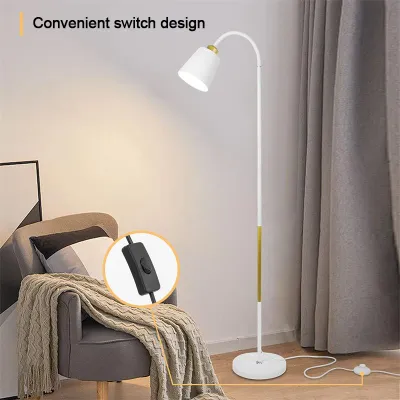
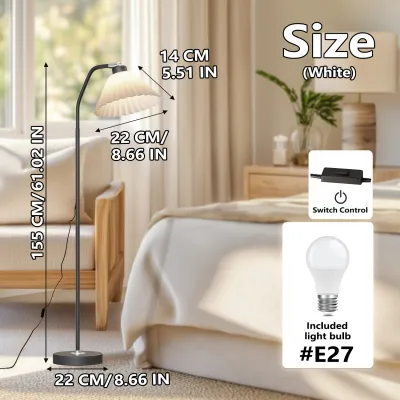
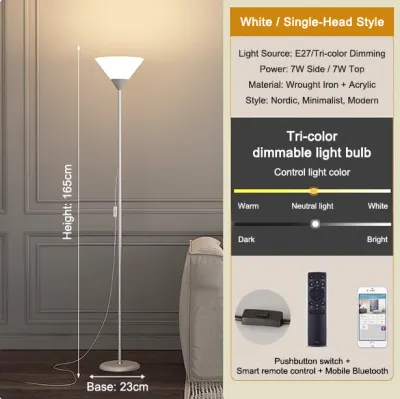
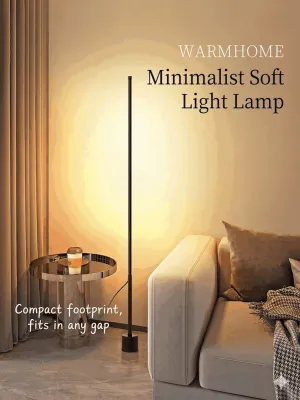
Prices are valid at publication and may change. Please refer to the product page for the latest price.
Positioning also plays a critical role in managing glare and maintaining eye comfort. When using a downlight, placing the lamp slightly behind and to the side of your shoulder allows the light to fall directly onto your page without casting a shadow from your head or body. This position also keeps the bright light source out of your direct line of sight, preventing discomfort glare. With an uplight, the light source is typically positioned higher up, but you must still ensure that the inner bulb is shielded by the lamp’s bowl or shade so that you do not look directly into the hot spot when standing up or sitting down in your reading corner.
Key Dimensions to Compare for Reading Tasks
When evaluating these two lamp types for your reading corner, several physical and optical dimensions should guide your decision. The first is illuminance and beam angle. Downlight floor lamps typically feature narrow beam angles, often ranging from 30 to 60 degrees. This narrow spread concentrates the light output, maximizing the lux (the measure of light intensity on a surface) on your book. Uplight floor lamps feature wide, open bowls that distribute light at angles of 120 degrees or more. This wide spread is excellent for filling a dark corner or brightening an entire living room, but it dilutes the light intensity, making it less effective as a dedicated task light.

Shadow management and contrast are equally important for visual clarity. High contrast between the black ink and the white or off-white page is what allows your brain to process text quickly and with minimal effort. Downlights provide this high contrast by delivering bright, direct light, but they require careful positioning to avoid casting distracting shadows from your hands or the edges of your book. Uplights offer exceptional shadow management by virtually eliminating shadows altogether, but the resulting light is highly diffused, which lowers the contrast on the page and can make reading small print feel like a chore over time.
Spatial constraints and room architecture also dictate which lamp will perform best. Because uplights rely on reflection, they require a flat, light-colored ceiling to function effectively. In homes with high ceilings, dark wooden beams, or textured concrete finishes, an uplight will lose a massive amount of its efficiency as the dark or uneven surfaces absorb the light rather than reflecting it. Downlights are far more versatile in this regard, as their performance is entirely independent of your ceiling’s height, color, or material. However, downlights do require physical clearance around your reading chair; you must ensure the shade or adjustable arm does not interfere with your movement when sitting down or getting up.
Finally, consider adjustability and control. A reading corner is rarely used in the exact same way at all times of day. During the late afternoon, you might only need a subtle boost of light, whereas late-night reading demands full illumination. Downlight floor lamps often feature adjustable goosenecks, counterweighted swing arms, or rotating shades that allow you to fine-tune the light’s direction as you shift your seating posture. Many modern models also include dimming switches, allowing you to transition from a bright task light to a soft accent light. Uplights are generally less physically adjustable, though high-quality models feature multi-stage switches or dimmers to control the overall brightness of the room-filling glow.
Uplight vs. Downlight Floor Lamps Comparison
To help you quickly weigh your options, the table below summarizes the core differences between these two floor lamp styles when used in a reading environment.
| Feature | Uplight Floor Lamp | Downlight Floor Lamp |
|---|---|---|
| Primary Light Direction | Upward (toward the ceiling) | Downward (toward the floor/task) |
| Reading Suitability | Best for casual reading or e-readers | Best for intensive reading and fine print |
| Shadow Control | Excellent (diffuse, shadow-free light) | Moderate (requires careful positioning) |
| Ceiling Requirements | Requires light-colored, flat ceilings | None (independent of ceiling type) |
| Ideal Use Cases | Ambient lighting, reducing screen glare | Focused task lighting, dedicated reading nooks |
When shopping, always verify the specific product labels and manufacturer specifications for exact lumen output, beam angles, and energy consumption. These values vary widely from model to model, and checking the packaging ensures you select a lamp that matches your specific lighting requirements.
The Hybrid Alternative: Torchiere Lamps with Reading Arms
If you find yourself torn between the ambient warmth of an uplight and the practical utility of a downlight, you do not necessarily have to choose one over the other. The lighting market offers a highly practical compromise: the torchiere floor lamp with an integrated reading arm. Often referred to as a “mother-daughter” lamp, this design features a tall, central pole topped with a powerful upward-facing bowl, alongside a smaller, adjustable downlight arm that branches off the pole at mid-height.
This hybrid configuration is incredibly beneficial for multi-purpose living rooms. During the day or when hosting guests, you can turn on the main uplight to brighten the entire room with soft, indirect light. When you want to settle down with a book in your reading corner, you can turn off the main uplight and switch on only the adjustable reading arm. This provides focused, energy-efficient task lighting exactly where you need it, without disturbing others in the room or wasting electricity on full-room illumination.
When selecting a hybrid torchiere, there are several key specifications you should check. First, ensure the lamp features independent switching for the two light sources. Some budget models use a single switch that cycles through both lights, which can be frustrating; look for dual rotary switches, independent pull chains, or separate touch controls. Second, check the flexibility and reach of the reading arm. A fully adjustable gooseneck or a multi-jointed swing arm will give you the freedom to position the downlight at the perfect angle and height relative to your reading chair.
Decision Framework: Which Lamp Fits Your Reading Corner?
To make your final decision, evaluate your reading habits, room layout, and existing decor against this simple decision framework.
Choose a downlight floor lamp if:
- Your primary goal is focused, comfortable reading of physical books, newspapers, or detailed documents for extended periods.
- Your reading corner has a low ceiling, dark-colored paint, or exposed wooden beams that would absorb upward-directed light.
- You want to create an intimate, visually isolated reading nook where the light is concentrated solely on your chair.
Choose an uplight floor lamp if:
- You primarily read on self-illuminated devices like tablets, smartphones, or backlit e-readers, where direct task lighting is not required.
- Your main goal is to reduce screen glare and eye strain by raising the overall ambient light level of the room.
- Your reading corner is part of a larger, open-plan living room that benefits from a soft, welcoming background glow.
Before making any purchase, perform a few quick checks in your home. Locate your nearest wall outlets and plan the physical placement of the lamp to ensure you do not need to run cords across high-traffic walkways. Assess the color and finish of your ceiling; a matte white or light cream ceiling will provide the best reflection for an uplight. Finally, verify the lamp’s electrical specifications, including its voltage compatibility and maximum wattage limits, to ensure it safely integrates with your home’s electrical system.
Safety and Specification Checks Before You Buy
Ensuring your new floor lamp is safe and compatible with your home is just as important as choosing the right style. Start by checking the product label for electrical specifications. In the Philippines, the standard residential voltage is 220V to 240V at 60Hz. Ensure the lamp is rated for this voltage to prevent electrical hazards or premature bulb failure. Additionally, verify the socket type (such as standard E27 screw bases) and the maximum wattage limit. Exceeding the recommended wattage can cause heat buildup within the socket and shade, posing a serious fire hazard, especially if you plan to use traditional incandescent bulbs instead of energy-efficient LEDs.
Physical stability is another crucial safety factor, particularly in active households. Floor lamps are inherently tall and can easily become top-heavy, making them prone to tipping over if bumped. Look for models that feature a heavy, wide, and well-weighted base—often constructed with cast iron, concrete, or heavy stone. If you have pets or young children, test the lamp’s stability in-store if possible, or check user reviews for mentions of base sturdiness. A stable lamp should resist tipping even when the adjustable reading arm is fully extended.
Finally, plan your cord management carefully to maintain a clean and hazard-free reading area. Measure the distance from your reading chair to the nearest wall outlet before buying. The power cord should be long enough to reach the outlet without being stretched taut, which can damage the internal wires and create a tripping hazard. Never run power cords under heavy furniture, rugs, or carpets, as this traps heat and can wear down the protective insulation over time. Instead, secure loose cords along the baseboard using cable clips or low-profile cord covers to keep your reading corner safe and tidy.
Frequently Asked Questions (FAQ)
Can I use an uplight floor lamp as the only light source for reading?
While you can physically read under an uplight floor lamp, it is generally not recommended as your sole light source for prolonged reading sessions. Because the light must travel to the ceiling, bounce off, and scatter down to your chair, its intensity decreases significantly by the time it reaches your page. This low-intensity, highly diffused light reduces text contrast, forcing your eyes to work harder to focus, which often leads to eye strain, headaches, and fatigue. If you prefer the ambient glow of an uplight, consider pairing it with a small, dedicated task light, such as a clip-on book light or a small table lamp, to provide the necessary direct illumination on your reading material.
What color temperature is best for a reading corner?
The best color temperature for a reading corner depends on when you read and your personal comfort preferences. Color temperature is measured in Kelvins (K), and you should check the product packaging or bulb specifications to find this rating. For evening reading and relaxation, a warm white light between 2700K and 3000K is ideal, as it mimics the cozy glow of traditional incandescent bulbs and helps your mind wind down for sleep. If you use your reading corner during the day for study, work, or highly detailed tasks, a cool white light between 4000K and 5000K is better, as it enhances contrast and focus. Avoid extremely blue daylight bulbs (above 6000K) in the evening, as they can disrupt your natural sleep cycle.

Community discussion
Share your experience or ask a question. Comments are reviewed before publication.