
To keep your outdoor lighting display glowing safely through the intense weather of the Philippines, selecting the correct Ingress Protection (IP) rating is non-negotiable. For fully exposed outdoor areas like garden fences, open lawns, and tree branches, you need a fairy light setup with at least an IP65 rating to withstand heavy, wind-driven monsoon rains. If your lights are destined for semi-sheltered spaces like covered patios, balconies, or roof eaves, an IP44 rating can suffice, provided they are protected from direct downpours.
Choosing the wrong rating can lead to short circuits, ruined bulbs, or serious electrical hazards. Given the high humidity and torrential rain typical of the local climate, understanding how these ratings translate to real-world performance will save you both money and frustration.
Decoding IP Ratings: What the Numbers Mean for Your Fairy Lights
The Ingress Protection (IP) rating is an international standard defined by the International Electrotechnical Commission (IEC). It consists of two digits that tell you exactly how well an electrical enclosure can resist solid objects and liquids. When shopping for outdoor lighting, reading these two numbers carefully is your best defense against product failure.
Products mentioned in this guide
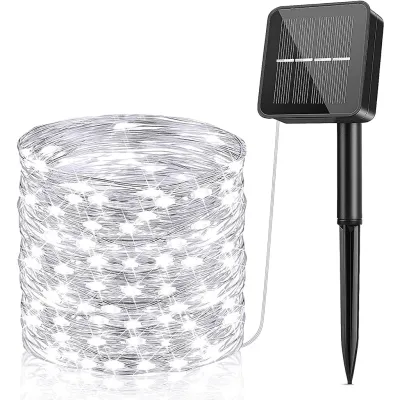
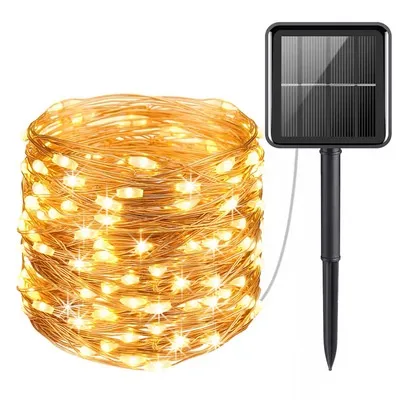
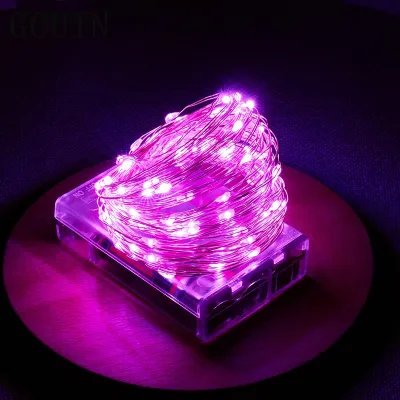
Prices are valid at publication and may change. Please refer to the product page for the latest price.
The first digit, ranging from 0 to 6, measures protection against solid objects like dust, dirt, and accidental contact. A rating of 5 means the fixture is dust-protected, while a rating of 6 means it is completely dust-tight. While dust protection is useful for keeping grit out of your light sockets, it is not the primary indicator of how well your lights will survive a storm.
The second digit, ranging from 0 to 9, is the critical decision factor for wet environments. This digit measures water resistance, and each step up represents a different level of exposure:
- 4 (Splash-proof): Protects against water splashing from any direction, suitable for light drizzle or indirect moisture.
- 5 (Jet-proof): Protects against water projected by a nozzle from any direction, which is necessary for resisting direct rainfall.
- 6 (Powerful jet-proof): Protects against strong jets of water, providing excellent security during intense storms.
- 7 (Temporary immersion): Protects the device even when submerged in water up to 1 meter deep for 30 minutes.
A common marketing trap is assuming that a higher first digit automatically guarantees superior water resistance. For instance, an IP64-rated light string is highly dust-resistant but only splash-proof, meaning it will likely fail if left in an open garden during a heavy downpour. Always look at both digits independently, focusing heavily on the second digit for outdoor installations.
Matching IP Ratings to Your Outdoor Setup in the Philippines
The geographic location and specific placement of your fairy light installation dictate the minimum IP rating required. In the Philippines, where the southwest monsoon (habagat) brings relentless rain and strong winds, outdoor spaces present varying levels of environmental stress. Matching the IP rating to the exact exposure level of your setup ensures safety and longevity.

Fully Exposed Areas
For garden fences, open-air patios, pergolas, and tree canopies, your lights will face the full force of tropical storms. In these fully exposed locations, you should only install fairy lights rated IP65 or higher. An IP65 rating ensures the light string can handle heavy, wind-driven rain from any angle without allowing water to penetrate the seals and short-circuit the LEDs.
Semi-Sheltered Areas
If you plan to hang lights under covered balconies, deep roof eaves, gazebos, or covered terraces, an IP44 rating is generally acceptable. These lights are protected from direct vertical rainfall but can handle the occasional splash. However, you must remain cautious during severe weather, as strong winds can blow rain sideways, bypassing the shelter and soaking the fixtures. If your semi-sheltered area is prone to wind-blown wetness, upgrading to IP65 is a safer choice.
The Humidity Factor
Even if your fairy lights are sealed against direct water droplets, high tropical humidity poses a silent threat. Warm, moist air can seep into low-quality light casings, and as the temperature drops at night, this moisture condenses inside the bulb or wire housing. Over time, internal condensation corrodes the copper wiring and ruins the LED chips. To combat this, prioritize reputable brands that feature high-quality manufacturing, robust rubber gaskets, and tightly sealed end caps.
System-Wide Compatibility
A common mistake is checking only the IP rating of the light string itself while ignoring the rest of the electrical system. A light string might be rated IP65, but its controller box, battery pack, or wall transformer might only be rated IP20 (designed for indoor use). For safe outdoor operation, ensure that every component exposed to the elements—including extension cords, connectors, and power adapters—carries an appropriate outdoor rating. If the power plug or transformer is not outdoor-rated, it must be housed inside a certified weatherproof electrical box.
Beyond Water Resistance: Crucial Specs for Tropical Weather
While the IP rating is a primary safety metric, other material specifications determine whether your fairy light will survive more than one rainy season in a tropical climate. The combination of intense solar heat, high UV exposure, and heavy rain can degrade cheap materials rapidly.
Wire and Bulb Materials
Cheap fairy lights often use thin copper wires coated in low-grade plastic that becomes brittle and cracks under the intense Philippine sun. Once the insulation cracks, water easily penetrates the wire, causing short circuits or shock hazards. Look for light strings that feature thick copper wire insulated with UV-resistant PVC or heavy-duty rubber. Additionally, opt for shatterproof plastic LED bulbs rather than fragile glass bulbs, which can easily break when whipped against walls or branches by strong winds.
Power Source and Voltage Safety
When installing lights in wet outdoor environments, low-voltage systems (typically 12V or 24V) are vastly safer than mains-voltage (220V) systems. Low-voltage fairy lights use a step-down transformer to reduce the electrical current to a level that is highly unlikely to cause a dangerous electric shock if a wire is accidentally damaged. If you choose to run mains-powered 220V lights, you must ensure they are plugged into a registered Ground Fault Circuit Interrupter (GFCI) outlet to instantly cut power if a current leak is detected. Solar-powered fairy lights are another excellent low-voltage alternative, though you must verify that the solar panel and battery housing carry at least an IP65 rating.
Heat Dissipation and Seals
LED bulbs are highly recommended for outdoor installations because they emit very little heat compared to traditional incandescent bulbs. High heat can degrade the rubber waterproof seals over time, causing them to shrink, crack, and lose their sealing capability. LEDs keep the fixture cool, preserving the integrity of the waterproof barriers. Always verify the manufacturer’s stated operating temperature range to ensure the lights can handle both the high midday heat and the wet humidity of the local climate.
Electrical Certification
Before purchasing any lighting product, verify its electrical safety certifications. In the local market, look for the Philippine Standard (PS) mark or the Import Commodity Clearance (ICC) sticker. These certifications prove that the product has undergone rigorous safety testing for voltage stability, insulation quality, and fire hazards, protecting your home from substandard electrical goods.
Installation and Maintenance Tips for the Rainy Season
Proper installation and routine maintenance are just as important as choosing the right IP rating. Taking a few simple precautions before the heavy rains start will keep your outdoor lighting display running safely and beautifully.
Creating Drip Loops
Always create a drip loop in the power cord before it connects to the wall outlet, transformer, or controller box. A drip loop is a simple downward curve or loop in the wire that hangs lower than the connection point. When rainwater runs down the cable, gravity forces it to drip off the bottom of the loop instead of flowing directly into the electrical socket or plug interface.
Sealing Connections and End Caps
Inspect all connections, extension joints, and end caps before hanging your lights. If you are joining multiple light strings together, ensure the male-to-female connectors are tightly screwed and the rubber O-rings are seated correctly. You may use outdoor-rated electrical tape or silicone sealant to reinforce these joints, but only do so if explicitly recommended by the manufacturer’s instructions. If the instructions warn against modifying the connectors, follow their guidance to avoid voiding the warranty or compromising safety.
Routine Checks and Power Isolation
Perform regular visual inspections of your outdoor lighting setup, especially after severe storms or high winds. Look for signs of wear such as cracked wire insulation, loose bulbs, rust around the sockets, or water pooling inside the bulb casings. Always isolate the power supply by turning off the breaker and unplugging the lights before touching the wires or attempting any maintenance.
Safety Boundaries and Professional Help
During severe weather events, such as typhoons or heavy lightning storms, the safest action is to turn off and completely unplug your outdoor lights. Water levels can rise quickly, and high winds can tear down wires. For advanced setups—such as fixed outdoor wiring, installations mounted at significant heights, lights suspended over pathways, or the installation of permanent outdoor GFCI outlets—always hire a licensed, qualified electrician. Never attempt to wire permanent outdoor electrical fixtures yourself, as improper installation in damp areas poses severe fire and shock risks.
Frequently Asked Questions (FAQ)
Can I leave IP44 fairy lights outside during heavy monsoon rains?
No, IP44 fairy lights should not be left fully exposed to heavy monsoon rains. An IP44 rating means the lights are only splash-proof and cannot withstand the high-pressure, wind-driven downpours typical of the Philippine wet season. If you use IP44 lights outdoors, keep them strictly in semi-sheltered areas like covered patios, or bring them indoors during the peak of the rainy season to prevent water damage and short circuits.
Does a higher IP rating guarantee the lights won't rust or degrade?
An IP rating only measures protection against solid and liquid ingress at the time of manufacturing and testing. It does not guarantee long-term resistance to rust, UV degradation, or physical wear. To prevent rust and degradation, you must choose lights made with high-quality materials, such as UV-resistant rubber cables, copper wiring, and corrosion-resistant sockets, and perform regular maintenance.
Are solar-powered fairy lights safer for wet garden installations?
Yes, solar-powered fairy lights are generally safer because they operate on low-voltage direct current (DC), which eliminates the risk of high-voltage (220V) electrical shocks in wet grass or soil. However, the solar panel, control box, and battery compartment must still have a high IP rating (preferably IP65) to prevent water from damaging the internal electronics and rendering the system useless.

Community discussion
Share your experience or ask a question. Comments are reviewed before publication.