
When selecting a rechargeable bar light for your bedside, the ideal choice balances adjustable color temperature, seamless dimming capabilities, a reliable battery life, and a secure mounting system. Unlike traditional bulky table lamps, a modern rechargeable bar light offers cord-free flexibility and a streamlined profile that fits perfectly on compact nightstands. In tropical environments like the Philippines, where space-saving designs are highly valued and occasional power interruptions or brownouts occur, these portable light sources serve as both primary task lights and dependable emergency backups.
To find the perfect model, you must look beyond aesthetic appeal. Evaluating technical specifications—such as battery runtime at realistic brightness levels, the presence of a high-quality diffuser, and intuitive nighttime controls—ensures your light supports both your bedtime reading habits and your natural sleep cycles.
Quick Checklist: Essential Specs for Bedside Bar Lights
Rechargeable bar lights have surged in popularity because they eliminate the clutter of power cords and offer unmatched placement flexibility. On a modern nightstand, which often has to accommodate a smartphone, a glass of water, and a book, a traditional lamp with a wide base and a thick power cord can feel incredibly restrictive. A slim bar light reclaims this surface area, providing clean, directional illumination exactly where you need it.
Products mentioned in this guide
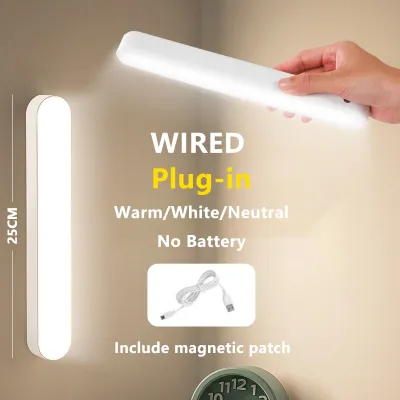
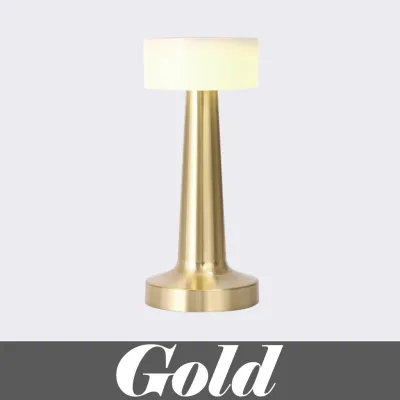

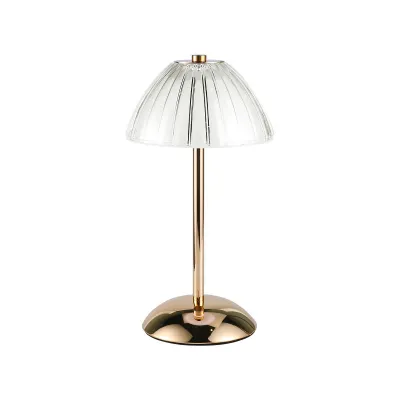
Prices are valid at publication and may change. Please refer to the product page for the latest price.
Before making a purchase, it is highly recommended to verify the technical specifications of the light to ensure safety, compatibility, and performance. Use the following checklist to evaluate candidate models:
- Adjustable Color Temperature (CCT): Look for a range of 2700K (warm white) to 4000K (neutral/cool white) to transition between relaxing and reading.
- Stepless Dimming: Avoid rigid preset brightness levels; stepless dimming allows you to fine-tune the light output to your exact comfort level.
- Anti-Glare Diffuser: Ensure the light features a frosted acrylic cover or a honeycomb louver to prevent harsh, exposed LED hotspots.
- USB-C Charging Interface: Prioritize universal USB-C ports over outdated Micro-USB connections to simplify your cable management.
- Electrical and Safety Certifications: Verify that the device complies with standard low-voltage safety guidelines. For peace of mind, look for products carrying recognized quality marks, such as the Philippine Standard (PS) mark or Import Commodity Clearance (ICC) sticker, which confirm the internal lithium battery and charging circuits have undergone safety testing.
- Input Voltage and Wattage Limits: Ensure the light's input requirements (typically 5V, 1A or 2A) match your existing USB wall adapters to prevent overheating during charging.
Tuning Light Quality for Reading and Sleep Hygiene
Achieving the perfect bedside ambiance is not just about having enough light; it is about controlling the quality and temperature of that light to protect your eyes and support your body’s circadian rhythm.

Brightness and Dimming Control
For comfortable reading, a light source should deliver sufficient brightness directly onto your page without over-illuminating the rest of the room. Look for a rechargeable bar light that offers a wide lumen range. A peak output of 150 to 300 lumens is generally excellent for focused reading, while a low end of 5 to 10 lumens is ideal for a soft, non-disruptive nightlight. Stepless dimming is highly superior to stepped dimming because it lets you adjust the brightness incrementally, preventing sudden, jarring jumps in light intensity that can startle your eyes in a dark room.
Color Temperature and Melatonin Preservation
Color temperature, measured in Kelvin (K), dictates the warmth or coolness of the light. Cool white light (around 4000K to 5000K) enhances contrast and alertness, making it suitable for daytime tasks or highly focused reading. However, exposure to cool blue-toned light in the evening suppresses the production of melatonin, a hormone critical for sleep regulation. For late-night reading and winding down, you should switch the light to a warm white setting (2700K to 3000K). This warm, amber hue mimics candlelight, minimizing eye strain and allowing your mind to transition naturally into sleep.
Anti-Glare and Diffusion Technology
A common flaw in budget-tier bar lights is the “dot effect,” where individual, unshielded LED chips are visible through a thin plastic cover. This creates harsh, high-intensity hotspots that cause immediate glare and double shadows on your book or screen. To prevent this, choose a bar light equipped with a thick, frosted acrylic diffuser or a curved optical lens. These components blend the individual LED beams into a single, uniform sheet of light, casting soft shadows and protecting your eyes when you look toward the lamp.
Color Rendering Index (CRI)
The Color Rendering Index measures how accurately a light source reveals the true colors of objects compared to natural sunlight. A high CRI rating (CRI 80 or above, and ideally CRI 90+) is highly beneficial if you enjoy reading illustrated books, graphic novels, or magazines in bed. Low-CRI lights can make colors look dull, washed out, or muddy, which increases visual fatigue over extended reading sessions.
Battery, Charging, and Night-Friendly Controls
Because a rechargeable bar light operates independently of a continuous wall outlet connection, its daily usability depends heavily on battery management and physical control design.
Battery Capacity and Realistic Runtimes
When evaluating battery specifications, do not rely solely on the milliampere-hour (mAh) rating. A higher capacity battery (such as 4000mAh) provides longer runtimes but also adds significant physical weight to the light bar, which can cause magnetic mounts to sag over time. Instead, look for the manufacturer’s specified runtime at a realistic medium-brightness setting. A quality bedside bar light should offer at least 8 to 12 hours of continuous use at reading brightness, ensuring you only need to charge it once or twice a week under normal usage patterns.
Modern Charging Standards
Always opt for a light that charges via a standard USB-C port. Micro-USB ports are increasingly obsolete, fragile, and prone to breaking if the cable is inserted upside down in the dark. USB-C ports are reversible, highly durable, and allow you to use the same charging cable and wall adapter as your modern smartphone or tablet, keeping your nightstand free of unnecessary cable clutter.
Tactile Nighttime Controls
Operating a light at 2 AM requires controls that are easy to locate and use without looking. While flush touch-sensitive panels look sleek and modern, they can be incredibly frustrating to find by feel in a pitch-black room, often leading to accidental brightness adjustments. Physical buttons with raised, tactile profiles, sliding switches, or rotary dials are much more practical. They allow you to turn the light on, off, or adjust the dimming level instantly through muscle memory alone.
Managing Indicator Light Pollution
Many rechargeable devices feature bright red, green, or blue LED indicator lights that remain illuminated during charging or standby modes. In a dark bedroom, even a tiny, high-intensity status LED can cast a distracting glow across the ceiling and disrupt sensitive sleepers. When choosing a light, check if the charging indicator is designed to turn off automatically once the battery is full, or if it is physically recessed or positioned on the back of the device where it will not shine directly toward your bed.
Sizing and Mounting for Compact Nightstands
The physical form factor of a bar light introduces unique spatial considerations compared to standard round-base table lamps.
Managing Footprint and Overhang
Because of their linear shape, bar lights project outward. If you choose a freestanding model with a desktop base, measure your nightstand’s depth carefully. A light bar that is too long can easily overhang the front or sides of a small table, making it highly vulnerable to being bumped, snagged, or knocked to the floor when you reach for a glass of water or your phone in the middle of the night.
Mounting Flexibility and Space Optimization
One of the greatest design advantages of rechargeable bar lights is their ability to mount to vertical surfaces. Many models feature magnetic backings that snap onto adhesive metal brackets. By mounting the bracket directly to your headboard, a nearby wall shelf, or the wall beside your bed, you can completely free up your nightstand surface.
Safety Warning on Adhesives: In warm, humid tropical climates, standard double-sided adhesive pads can degrade, lose their grip, and cause the light to fall. If you are mounting a light bar above your headboard or sleeping area, ensure you use high-bond, humidity-resistant mounting tapes, or opt for brackets that can be secured mechanically with small mounting screws.
Base Weight and Anti-Slip Stability
If you prefer a freestanding table model, pay close attention to the base construction. The base must be sufficiently weighted to offset the leverage of the protruding light bar, especially if the bar can be tilted or angled. Look for bases equipped with non-slip silicone or rubber pads on the bottom. These pads provide essential grip, preventing the lamp from sliding or tipping over on smooth wooden or glass nightstand surfaces.
Material Finishes and Heat Dissipation
Bedside bar lights are available in a variety of materials, from minimalist matte black aluminum and brushed brass to warm wood-grain veneers. While material choice is largely a matter of personal decorative style, it also serves a functional purpose. Aluminum housings are highly efficient at dissipating the mild heat generated by the LED chips, keeping the internal components cool and extending the overall lifespan of both the LEDs and the lithium battery.
Top Rechargeable Bar Light Profiles for Your Nightstand
The ideal rechargeable bar light depends entirely on your primary bedtime routine. By matching your specific nightly habits to one of these dedicated product profiles, you can ensure your lighting setup perfectly supports your lifestyle.
For the Avid Bedtime Reader
If you spend hours reading physical books or paper documents in bed, you require a light that prioritizes optical precision and physical adjustability.
- Form Factor: Look for a model featuring a heavy, highly stable desktop base with an adjustable gooseneck or a multi-axis tilting head. This allows you to position the light beam directly over your pages, preventing shadows cast by your hands or head.
- Optical Specs: Prioritize a high Color Rendering Index (CRI 90+) and dual physical control knobs. Dedicated knobs allow you to adjust brightness and color temperature independently, letting you fine-tune the light instantly without cycling through confusing single-button menus.
For Small Spaces and Minimalist Setups
For those with exceptionally small nightstands, floating bed frames, or a preference for clean, uncluttered bedroom aesthetics, a wall-mounted magnetic profile is the perfect fit.
- Form Factor: Choose an ultra-slim, lightweight magnetic bar light that snaps onto a low-profile wall bracket. This design keeps your nightstand 100% free of clutter.
- Utility: The magnetic mount allows you to easily detach the light bar from the wall, transforming it into a portable, handheld flashlight. This is incredibly useful for navigating dark hallways at night or finding your way during sudden power outages.
- Controls: These models often feature simplified touch controls or single-button cycling to maintain their sleek profile. Ensure the device has a built-in brightness memory function so it automatically turns on at your last-used dim level, preventing unexpected glare.
For Ambient Relaxation and Wind-Down
If your bedtime routine consists primarily of listening to audiobooks, meditating, scrolling on a tablet, or simply winding down in a cozy atmosphere, you should prioritize soft, warm, indirect lighting.
- Form Factor and Aesthetics: Look for designs that emphasize natural materials, such as wood-grain finishes, fabric-wrapped accents, or frosted globe diffusers that emit a soft, 360-degree ambient glow.
- Specialized Modes: Seek out models that offer a dedicated "candlelight" or slow "breathing" mode, which gently modulates the light intensity to create a deeply calming, meditative environment. Because high-intensity task lighting is not required for this profile, a lower maximum lumen output is perfectly acceptable, allowing for a smaller battery and a lighter, more delicate design.
Frequently Asked Questions (FAQ)
Can I leave my rechargeable bar light plugged in overnight?
Most reputable, modern rechargeable bar lights are equipped with built-in overcharge protection circuits that automatically stop the flow of electricity once the lithium-ion battery reaches 100% capacity. However, keeping any rechargeable device permanently connected to a live charger can cause the battery to remain at maximum voltage and experience elevated temperatures, which can slowly degrade its long-term capacity. To preserve the health and lifespan of the internal battery, it is highly recommended to unplug the light once it is fully charged, or consult the manufacturer’s manual for specific battery care guidelines.
How do I clean the diffuser without damaging the LEDs?
Before performing any maintenance or cleaning, always turn off the light and disconnect it from the charging cable. To clean the frosted acrylic diffuser and the outer housing, use a dry or slightly damp, lint-free microfiber cloth to gently wipe away dust and fingerprints. Never use harsh chemical solvents, glass cleaners, alcohol, or aerosol sprays, as these substances can chemically react with the acrylic, causing it to cloud, crack, or yellow over time. Additionally, ensure that no moisture or dampness enters the USB-C charging port, physical buttons, or seam lines to protect the internal electronic circuitry from short circuits.

Community discussion
Share your experience or ask a question. Comments are reviewed before publication.