
An arch floor lamp is a striking and functional addition to any living room or reading corner, but finding the perfect one requires balancing spatial proportions, lighting specifications, and physical stability. You must ensure the lamp’s physical footprint matches your furniture layout, its lighting output meets your specific task or ambient needs, and its base is heavy enough to prevent tipping. Understanding the precise measurements, electrical standards, and design choices will guide you to the ideal fixture for your home.
Quick Checklist: Key Features to Evaluate
Before browsing designs, establish a clear set of requirements based on how and where you will use the lamp. A quick assessment of your space and lighting goals will save you from buying a fixture that is either too small to clear your sofa or too dim to read by.
- Spatial Proportions: Measure your ceiling height to ensure clearance and determine the horizontal reach needed to position the light source directly over your seating.
- Lighting Output: Decide if you need focused task lighting (requiring higher lumens and cooler color temperatures) or soft ambient light (best achieved with warmer tones and diffusing shades).
- Base Stability: Opt for a heavily weighted base, such as marble or solid concrete, to anchor the cantilevered arm safely, especially in high-traffic zones.
- Electrical Compatibility: Ensure the lamp operates on the local 220V electrical standard and features safe, integrated cord management.
Matching these physical and technical specifications to your furniture layout ensures the lamp serves as a highly functional, safe, and visually balanced centerpiece rather than an awkward obstruction.
Products mentioned in this guide
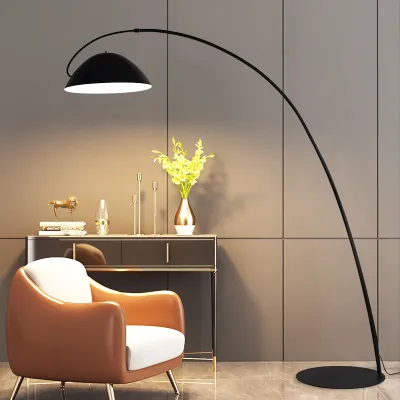
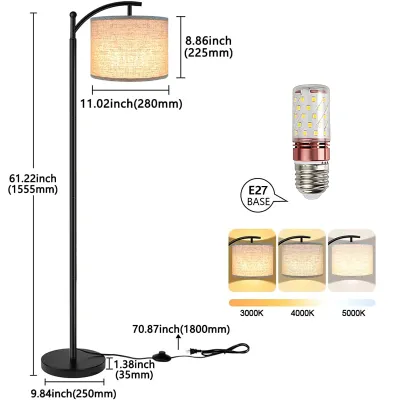
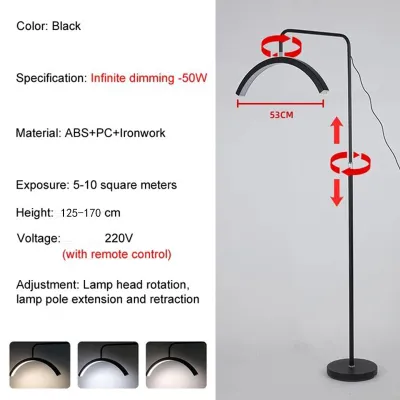
Prices are valid at publication and may change. Please refer to the product page for the latest price.
Sizing the Arch: Height, Reach, and Spatial Proportions
An arch floor lamp relies on a dramatic, sweeping arm to project light over a specific area without requiring ceiling installation. Because of this unique cantilevered design, the lamp occupies both vertical and horizontal planes in a way standard vertical floor lamps do not. Properly measuring your room and furniture is the most critical step to prevent the metal arm from crowding your living space or creating a physical hazard.

Checking Ceiling Height and Arch Clearance
To find an arch lamp that fits comfortably, start by measuring the exact height of your ceiling. Standard arch floor lamps typically stand between 1.8 to 2.4 meters tall, meaning they require sufficient vertical breathing room to avoid looking cramped or touching the ceiling surface. Subtract the lamp’s maximum height from your ceiling measurement to ensure you have at least 15 to 30 centimeters of clearance at the highest point of the curve.
If your living room features low ceilings, a massive, high-arching lamp can overwhelm the space visually and physically. Conversely, in open-plan homes or rooms with double-height ceilings, a small arch lamp will look disproportionately tiny and fail to define the zone. Always check for overhead obstructions such as ceiling fans, low-hanging pendant lights, exposed structural beams, or air conditioning units that could block the path of the sweeping arm.
Calculating the Horizontal Reach for Sofas and Chairs
The horizontal reach, often referred to as the arm span, is the distance measured from the outer edge of the lamp base to the center of the suspended light fixture. To calculate the reach you need, determine exactly where the base will sit—such as tucked behind a corner or alongside the outer armrest of a sofa—and measure from that point to the center of the seating area where you want the light to pool.
If you are pairing the lamp with a deep sectional sofa, a fixed, short-reach lamp will likely suspend the bulb directly over your head or shoulder rather than over the center of the seating area, causing uncomfortable glare. For deep seating arrangements, look for extra-long arches or models with adjustable telescopic arms that allow you to extend or retract the reach as needed. For a single reading armchair, a shorter, more compact arch is generally sufficient to position the light directly over your book.
Lighting Specs: Balancing Task Reading and Living Room Ambiance
The primary function of any lamp is to deliver high-quality light, but the type of light you need depends heavily on whether you are setting up a cozy reading nook or illuminating a large communal living room. Understanding technical specifications like lumens, color temperature, and control interfaces will help you customize the atmosphere.
Lumens, Wattage, and Color Temperature
When selecting a bulb for your arch floor lamp, differentiate between task lighting and ambient lighting. For a dedicated reading corner, look for a bulb that delivers 450 to 800 lumens with a neutral to cool color temperature (around 3000K to 4000K) to reduce eye strain and keep you alert. For general living room ambiance, a softer output of 300 to 500 lumens with a warm, relaxing color temperature (2700K) is ideal for unwinding in the evening.
Always check the lamp’s manufacturer specifications for the maximum wattage limit and the socket type, which is most commonly an E27 screw base in the Philippines. Exceeding the maximum wattage limit can cause overheating, damage the fixture’s internal wiring, or pose a fire hazard. LED bulbs are highly recommended because they produce minimal heat, consume less energy, and are widely available in various brightness levels and color temperatures.
The material of the lamp shade plays a massive role in how this light is distributed throughout your room. An opaque metal shade directs all light downward in a concentrated pool, making it excellent for task reading but limiting its ability to brighten the surrounding space. On the other hand, a translucent shade made of glass, fabric, or paper diffuses light in all directions, softening the overall glow and reducing harsh shadows in your living room.
Dimmers, Switches, and Smart Compatibility
Control mechanisms greatly influence how versatile your arch lamp will be throughout the day. Built-in dimmer switches—whether they are rotary knobs, touch-sensitive pads on the pole, or multi-step foot switches—allow you to transition seamlessly from bright task reading in the afternoon to dim, atmospheric lighting for watching television at night.
If you plan to use energy-efficient LED bulbs, ensure that both the bulb and the lamp’s built-in dimmer switch are explicitly rated as compatible. Installing a standard LED bulb in a dimming fixture that does not support it can cause annoying flickering, buzzing noises, or premature bulb failure. If the lamp features a simple on/off switch, you can still achieve dimming capabilities by pairing it with a smart bulb controlled via a mobile app or remote.
For modern convenience, evaluate the lamp’s compatibility with smart plugs and home automation systems. Lamps with mechanical on/off switches are easily integrated with external smart plugs, allowing you to control them via voice commands or set automated schedules. However, some lamps with digital touch switches reset to an “off” state whenever the power supply is cut, meaning they cannot be turned back on automatically by a smart plug; always verify this behavior in the product specifications.
Base Weight, Stability, and Electrical Safety
Because arch floor lamps feature a heavy light fixture suspended at the end of a long, curved arm, they are inherently top-heavy. Ensuring the physical stability and electrical safety of the lamp is paramount to protecting your household, especially if you have children, pets, or high foot traffic in your living spaces.
Base Materials: Marble, Concrete, and Weighted Metal
To counteract the leverage of the extended arch, these lamps require exceptionally heavy bases. Solid natural marble and cast concrete are premium choices that offer outstanding stability due to their high density, while also serving as sophisticated design elements. However, these materials make the lamp incredibly heavy—often weighing between 15 to 30 kilograms—making them difficult to assemble, reposition, or move during house cleaning.
Weighted metal bases, which typically feature a cast-iron weight hidden beneath a decorative metal cover, offer a more budget-friendly and slightly lighter alternative. When evaluating a metal base, pay close attention to its overall diameter; a wider base is necessary to prevent the lamp from tipping over if the arm is bumped. Avoid lightweight, hollow bases that do not specify a counterweight, as they are highly prone to tipping under the weight of the extended arch.
Because these heavy bases exert significant localized pressure on your flooring, you must take precautions to prevent damage. Sliding a heavy marble or metal base directly across hardwood, laminate, or delicate tile floors can leave deep scratches or scuffs. Always apply heavy-duty felt furniture pads to the bottom of the base before positioning it, or place the entire lamp on a dedicated area rug to distribute the weight safely.
Voltage Compatibility and Cord Management
Before purchasing an imported arch floor lamp online, verify that its electrical system is fully compatible with the standard 220V power supply used in the Philippines. Using a lamp designed strictly for 110V systems without a proper step-down transformer can destroy the socket, ruin your bulbs, or cause an electrical short circuit. Look for clear certification markings or product specifications that confirm 220V compatibility.
Cord management is another vital safety and aesthetic consideration. Because the base of an arch lamp is often placed in a corner or behind furniture, the power cord must be long enough to reach your wall outlet safely. Avoid daisy-chaining multiple extension cords or leaving loose cords draped across open walkways, as this creates a severe tripping hazard and increases the risk of the lamp being pulled down.
To maintain a clean, professional look, prioritize lamps that feature integrated cord channels along the vertical pole or come with discreet cord clips. If the cord must run across a high-traffic area, use a low-profile rubber cord cover that lies flat against the floor. This not only protects the electrical cord from physical wear and tear but also ensures your family can walk safely around the living space.
Design Styles and Shade Materials for Your Space
An arch floor lamp is a highly visible design statement that can anchor the visual aesthetic of your entire living room or reading corner. Selecting a style that complements your existing furniture, wall colors, and decor finishes will create a cohesive, intentional look.
- Mid-Century Modern: This classic archetype often features a sweeping brass or chrome arm paired with a spherical glass globe or a sleek dome shade. It pairs beautifully with warm wood tones, tapered-leg furniture, and retro-inspired decor.
- Industrial: Characterized by matte black metal finishes, exposed hardware, and sometimes wire-cage or clear glass shades that showcase Edison-style LED filament bulbs. This style works well in urban lofts, spaces with brick accents, or minimalist modern interiors.
- Minimalist Modern: Utilizes ultra-thin, brushed steel or matte white poles with simple fabric drum shades or integrated LED strip arches. This style blends seamlessly into contemporary homes, providing clean lines and unobtrusive illumination.
The shape of the shade does more than just look good; it directly dictates how the light behaves. A deep dome shade concentrates the light downward, which is perfect for reading or highlighting a specific coffee table display. A cylinder or drum shade made of fabric allows light to filter out of both the top and bottom, washing the ceiling and floor in a soft, even glow. Globe shades distribute light omnidirectionally, making them excellent for general ambient fill but less ideal for focused reading.
When choosing a finish, look at the existing metal hardware in your room, such as cabinet pulls, door handles, picture frames, or coffee table legs. Matching or carefully coordinating the lamp’s metal finish (such as brushed brass, matte black, or polished chrome) with these elements helps unify the space. Additionally, consider the maintenance required for different materials; while fabric shades add texture and warmth, they attract dust and pet hair, requiring regular vacuuming, whereas metal and glass shades can be easily wiped clean with a dry microfiber cloth.
Assembly, Placement, and Maintenance Tips
Setting up an arch floor lamp requires patience and care, as the heavy base and long, curved poles can be awkward to handle alone. It is highly recommended to have a second person assist you during assembly to hold the heavy base steady while you thread and secure the metal poles.
When assembling multi-piece arch poles, ensure that every joint and screw is tightened completely. Loose connections will cause the arm to wobble, sag, or lean to one side, putting unnecessary stress on the metal threads and increasing the risk of structural failure over time. Once assembled, place the heavy base flush against a wall or tuck it neatly beneath a low-profile sofa or armchair to maximize your floor space and keep the heavy base out of walking paths.
Ongoing maintenance will keep your arch lamp looking pristine and functioning safely. Dust the shade and the curved arm regularly using a soft, dry microfiber cloth to prevent buildup, especially in humid tropical climates where dust can easily stick to surfaces. Periodically check the power cord for any signs of wear, fraying, or pinching under heavy furniture, and gently wiggle the pole to ensure the base connection remains tight and level.
Never use harsh chemical cleaners, abrasive scrubbing pads, or ammonia-based sprays on specialized metal finishes or natural stone bases, as these can strip away protective coatings and cause permanent discoloration or etching. Always refer to the manufacturer’s specific care instructions, and stick to a slightly damp microfiber cloth for stubborn spots, drying the surface immediately afterward.
Frequently Asked Questions (FAQ)
Can an arch floor lamp replace ceiling lighting in a reading corner?
Yes, an arch floor lamp can effectively serve as the primary light source for a specific reading corner or seating arrangement by suspending a high-lumen bulb directly over the area. However, because its light distribution is localized, it cannot fully replace the broad, even ambient fill light provided by overhead ceiling fixtures across an entire room. For the best results, use the arch lamp in combination with other light sources to create a layered, balanced lighting scheme.
How do I protect hard floors from a heavy lamp base?
To protect delicate hardwood, laminate, or tile floors from being scratched by a heavy marble or concrete base, apply heavy-duty felt furniture pads to the bottom of the base before placing it. Alternatively, you can position the lamp base on a small, decorative rug or runner. This not only cushions the floor and distributes the heavy weight more evenly but also adds an extra layer of style to your reading corner or living room layout.

Community discussion
Share your experience or ask a question. Comments are reviewed before publication.