
Decorating an outdoor Christmas tree in the Philippines brings a unique set of challenges, from sudden tropical downpours to intense afternoon heat. To ensure your holiday display remains safe and vibrant throughout the festive season, you must prioritize weather resistance, proper power management, and certified electrical safety. Look for string lights with an Ingress Protection (IP) rating of at least IP44, though IP65 is highly recommended for fully exposed garden areas. Additionally, verify that the products carry official safety certification marks, such as the Import Commodity Clearance (ICC) sticker or the Philippine Standard (PS) mark, to confirm they have undergone rigorous electrical testing. Whether you choose plug-in, solar, or battery-powered lights, matching the specifications to your specific yard layout is the key to a hassle-free and brilliant outdoor display.
Decoding Weather Resistance and Durability Labels
When shopping for outdoor Christmas tree lights, the product packaging is your first line of defense against electrical hazards. The most critical specification to verify is the Ingress Protection (IP) rating, which consists of two digits. The first digit measures protection against solid objects, while the second digit measures resistance to moisture. For outdoor holiday lighting in tropical climates, look for at least an IP44 rating, which indicates protection against splashing water from any direction. If your tree is completely unsheltered and exposed to heavy seasonal rains, upgrading to IP65-rated lights provides higher protection against low-pressure water jets and dust ingress.
Beyond water resistance, the intense tropical sun in the Philippines can rapidly degrade low-quality plastics, causing wires to become brittle and crack. Check the product specifications for UV-resistant insulation materials, such as heavy-duty rubber or thick, outdoor-grade PVC. Thin, fragile wires designed for indoor use will quickly deteriorate under solar exposure, leading to short circuits or exposed copper.
Products mentioned in this guide
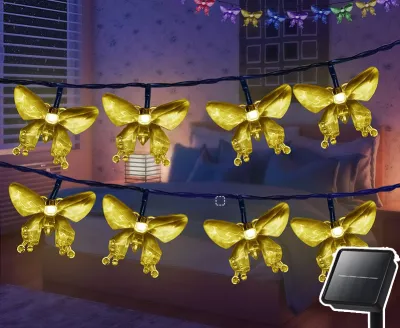
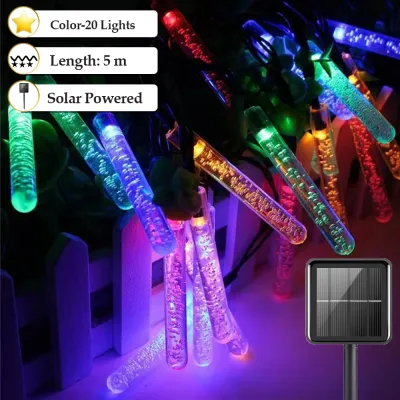
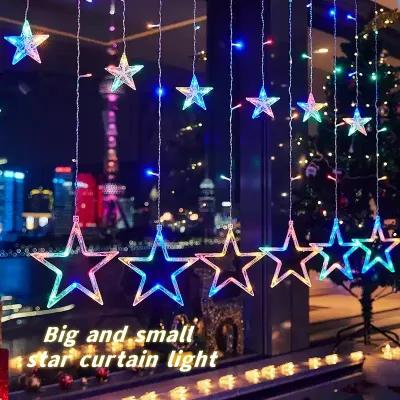
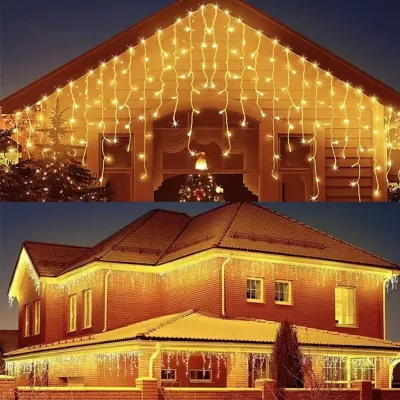
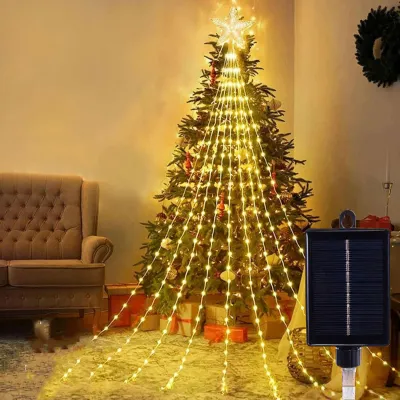
Prices are valid at publication and may change. Please refer to the product page for the latest price.
Always inspect the packaging for official safety certifications before making a purchase. In the local market, legitimate electrical products must display either a Philippine Standard (PS) quality mark or an Import Commodity Clearance (ICC) sticker. These labels indicate that the lights have been tested for voltage stability, insulation quality, and fire safety. Avoid generic, unbranded lights that lack these certifications, as they often feature substandard wiring that cannot handle outdoor moisture or voltage fluctuations.
Choosing the Right Power Source for Your Yard Setup
Selecting the ideal power source depends heavily on where your outdoor Christmas tree is located and how easily you can access electrical outlets. Each power option comes with distinct installation requirements and performance trade-offs that you must evaluate before buying.

Solar-powered string lights are an excellent, energy-efficient choice for trees positioned far from the main house. Because they do not require extension cords, they eliminate a major tripping and electrical hazard in your garden. However, you must ensure the solar panel is positioned in an area that receives direct, unobstructed sunlight for several hours daily. Keep in mind that during the rainy or heavily overcast days common in the tropical holiday season, solar lights may experience reduced brightness or shorter operating times at night due to limited battery charging.
Plug-in string lights offer consistent, bright illumination regardless of the weather, making them the preferred choice for large, dramatic displays. When using plug-in lights, you must verify that your outdoor outlets are equipped with Ground Fault Circuit Interrupter (GFCI) protection to prevent electrical shocks. Always use heavy-duty, outdoor-rated extension cords and keep all electrical connections housed inside weatherproof junction boxes. To prevent water from running along the cord and into the outlet, always form a “drip loop”—a simple downward curve in the wire just before it connects to the plug or socket.
Battery-operated lights provide flexibility for small trees or potted evergreens on covered porches. When choosing this option, carefully inspect the battery compartment to ensure it features a thick rubber gasket and a secure locking mechanism to keep moisture out. Because battery life is limited, look for models equipped with built-in timers that automatically turn the lights off after a set number of hours to conserve power.
Matching Light Styles and Bulb Types to Your Tree
The technology and design of your string lights directly impact both the visual appeal of your tree and the safety of your outdoor space. Modern light-emitting diode (LED) bulbs have largely replaced traditional incandescent bulbs, and for good reason. LEDs consume significantly less electricity, which is a major consideration given local power rates. More importantly, LEDs generate virtually no heat, making them much safer to wrap around living trees, dry foliage, or delicate outdoor decorations where heat buildup could pose a fire risk.
The color and material of the string wire should also match your decorating environment. For natural green trees, select dark green wires that blend seamlessly into the foliage during the day, leaving only the glowing bulbs visible at night. If you are decorating a white artificial tree or a modern metal frame, clear or white wires will provide a much cleaner aesthetic.
Finally, consider the lighting modes available on the controller. While steady-on lights offer a classic look, many outdoor sets feature multi-function controllers that allow you to choose between twinkling, fading, or chasing patterns. If you opt for multi-function lights, verify that the controller box itself is rated for outdoor use. The controller is often the most vulnerable component to water damage, so it must be kept elevated off the ground and shielded from direct rain.
Estimating the Right Length and Coverage
To avoid the frustration of running out of lights halfway through decorating, you must calculate your required length before purchasing. The total length of string lights you need depends on the height of the tree, the width of its canopy, and how densely you plan to wrap the branches.
For a standard wrapping technique where you wrap the lights around the outer circumference of the tree, a reliable guideline is to use approximately 100 to 150 LED bulbs for every vertical foot of the tree. If you have a six-foot outdoor tree, you will want a total of 600 to 900 bulbs, which typically translates to multiple connected light strings. Always check the manufacturer’s instructions to verify the maximum number of light strings that can be safely connected end-to-end to avoid overloading the circuit.
If you plan to wrap individual branches or the main trunk for a more dramatic, architectural look, you will need significantly more length. Measure the circumference of the trunk and the main branches, then estimate the spacing between each wrap. For example, wrapping a trunk with a 1-foot circumference every 3 inches will require 4 feet of light string for every vertical foot of the trunk. Always purchase a string that includes a generous “lead length”—the unlit portion of wire between the plug and the first bulb—so you can comfortably reach your power source without putting physical tension on the active light string.
Safe Installation and Post-Holiday Storage
Installing and maintaining your outdoor holiday lights requires careful attention to detail to protect both your property and the longevity of the equipment. Before hanging any lights, always isolate the power by keeping the strings unplugged. Lay the lights out on a dry surface and inspect the entire length of the cord for any signs of fraying, exposed copper, cracked plastic insulation, or broken bulb sockets. If you detect any damage, discard the string immediately rather than attempting a temporary repair.
When securing the lights to tree branches or outdoor structures, never use metal staples, nails, or tacks, which can easily pierce the protective insulation and create a severe shock or fire hazard. Instead, use plastic zip ties, insulated light clips, or weather-resistant twist ties designed specifically for outdoor holiday decorating. If your installation requires working at heights or near overhead power lines, prioritize safety by using a sturdy, non-conductive fiberglass ladder and working with a partner, or consider hiring a qualified professional to handle the high-altitude setup.
Once the holiday season ends, proper teardown and storage will preserve your investment for years to come. Carefully untangle the lights and wipe down the wires with a dry cloth to remove dirt, moisture, and outdoor debris. Avoid pulling tightly on the wires when removing them from branches, as this can damage the internal copper connections. Wind the light strings loosely around a plastic reel or a sturdy piece of cardboard to prevent tangling. Store the lights in a sealed, airtight plastic bin containing a few silica gel packets to absorb any residual tropical humidity, and keep the bin in a cool, dry indoor space away from direct sunlight and pests.
Frequently Asked Questions (FAQ)
Can I use indoor Christmas lights outside if they are under a covered porch?
No, you should never use indoor-rated Christmas lights in any outdoor setting, even if they are partially protected under a covered porch or patio. High outdoor humidity, wind-driven rain, and morning condensation can easily penetrate the thin insulation of indoor lights, leading to short circuits, electrical shocks, or fire hazards. Outdoor-rated lights are specifically engineered with thicker, weather-resistant insulation and sealed bulb sockets to handle environmental moisture safely. Always check the product label to confirm the lights are explicitly rated for outdoor use before installing them outside.
How do I keep string lights from tangling during storage?
A highly effective way to prevent tangling is to wind your light strings around a dedicated plastic cord reel or a clean piece of heavy-duty cardboard before storing them. Start by securing the plug end of the wire, then wrap the string loosely in neat, parallel rows without twisting the cable. Once wrapped, secure the loose end with a twist tie or a piece of tape. Storing each wrapped string in its own labeled, zip-top plastic bag inside a sturdy storage bin will keep them organized and prevent them from intertwining with other decorations.
Is it safe to leave outdoor LED lights on all night?
While high-quality outdoor LED lights run exceptionally cool and consume very little energy, leaving them on continuously overnight is generally not recommended. Unattended overnight operation increases cumulative wear on the components and exposes the system to unexpected late-night weather shifts or voltage fluctuations without supervision. To maximize safety and extend the lifespan of your lights, connect your outdoor display to an automatic outdoor timer or a smart plug. Program the timer to turn the lights off during late-night hours when no one is awake to enjoy them.

Community discussion
Share your experience or ask a question. Comments are reviewed before publication.