
Transforming a standard room into a personalized sanctuary often comes down to how you play with light. If you are looking to introduce a 3D projector light into your home, the decision between a galaxy, sunset, or starry night effect depends entirely on your room’s layout, existing decor, and the specific mood you want to cultivate. There is no single superior option; instead, the ideal choice is the one that aligns with your aesthetic goals and the physical constraints of your living space.
In modern homes, especially compact urban condominiums where space is at a premium, ambient lighting serves as a powerful tool to visually expand a room. A well-chosen projector can soften harsh concrete walls, draw the eye upward to create the illusion of higher ceilings, or cast a warm, comforting glow that makes a humid evening feel incredibly cozy. By understanding how each projection style interacts with your environment, you can make an informed purchase that elevates your daily living experience.
Galaxy vs. Sunset vs. Starry Night: Aesthetic and Room Pairings
To choose the right projector, it helps to understand how these three distinct styles manipulate light, color, and spatial perception. Galaxy projectors rely on fluid, multi-colored nebula clouds paired with sharp laser points to create a deep, cosmic atmosphere. Sunset lamps focus on intense, warm-toned circular gradients that mimic natural golden hour light, casting a dramatic, stationary halo. Starry night projectors offer a more traditional, uniform field of stars, focusing on gentle, repetitive patterns that encourage relaxation rather than active stimulation.
Products mentioned in this guide
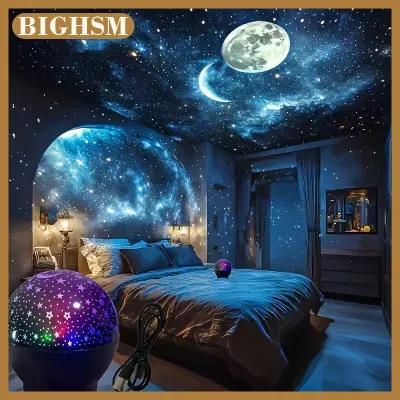
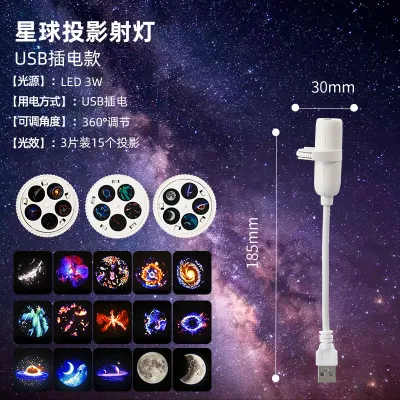
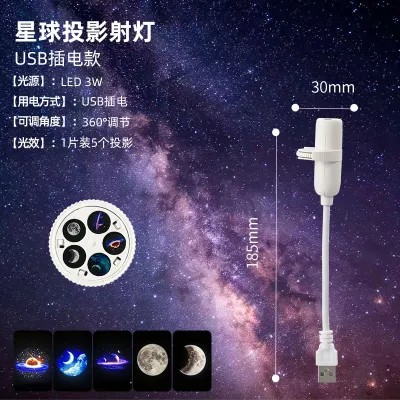
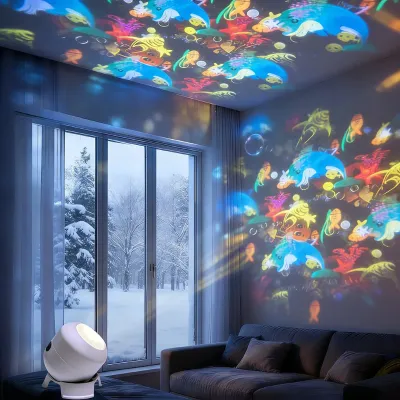
Prices are valid at publication and may change. Please refer to the product page for the latest price.
The success of any 3D projection relies heavily on your room’s physical characteristics. Factors such as the distance between the projector and the wall, the color of your paint, and the amount of ambient light entering from windows or streetlights will directly impact the clarity of the projection. For instance, a bright street lamp outside a window can easily wash out delicate nebula clouds, while a dark, matte-painted wall might absorb the light entirely. Understanding these dynamics ensures you select a style that complements, rather than fights, your room’s natural state.
Galaxy Projector Lights
Galaxy projector lights are highly suited for dynamic, high-energy spaces such as home entertainment centers, gaming setups, or active bedrooms. These devices excel at creating an immersive environment by filling the entire ceiling and upper walls with swirling, multi-hued nebula clouds. If you enjoy hosting movie nights or want to establish an engaging backdrop for gaming sessions, the deep blues, purples, and greens of a galaxy projector can make the room feel infinitely larger, mimicking the vastness of outer space.
The visual impact of a galaxy projector is highly dependent on achieving near-total darkness. Because the 3D illusion relies on the contrast between dark space and bright, colorful gas clouds, any secondary light source will diminish the depth of the effect. In tropical climates where large windows are common for ventilation, investing in quality blackout curtains is often necessary to get the most out of your galaxy projector during daytime or early evening use.
When browsing different models on your preferred online marketplace, pay close attention to the control features listed in the product description. High-quality units, which typically range from ₱500 to over ₱2,000 depending on features, allow you to control the laser stars and the nebula clouds independently. This feature is crucial because it lets you tone down the visual density or turn off the lasers entirely if you find the sharp green or red dots too distracting while trying to wind down.
Sunset Projection Lamps
Sunset projection lamps offer a completely different aesthetic, focusing on warmth, intimacy, and structured geometry. Instead of filling an entire room with light, a sunset lamp projects a concentrated, circular gradient of warm oranges, deep reds, and soft yellows. This makes them exceptionally well-suited for living room reading corners, vanity tables, or cozy dining alcoves where you want to introduce a localized, dramatic accent.
The visual appeal of a sunset lamp lies in its ability to mimic the soothing, natural transition of the golden hour. This warm spectrum of light is highly photogenic, making these lamps a favorite backdrop for video calls, content creation, or simply highlighting specific architectural features, indoor plants, or decorative shelving. The sharp contrast between the bright center of the halo and the fading outer edges adds an instant layer of sophistication to plain plaster or concrete walls.
Before purchasing a sunset lamp, verify the physical adjustability of the fixture. Look for specifications detailing a 180-degree or 360-degree rotating head, which allows you to angle the beam precisely onto your target surface. Additionally, check manufacturer notes regarding the lens quality; some lenses produce a very sharp, defined border, while others offer a softer, more diffused transition that blends seamlessly into the surrounding darkness.
Starry Night Projectors
Starry night projectors are the classic choice for creating a calm, low-distraction environment. Unlike galaxy projectors that feature moving, multi-colored gas clouds, starry night models typically project a uniform field of stars, sometimes accompanied by a subtle, single-color moon or a slow-moving ocean wave effect. This makes them the ideal companion for children’s bedrooms, nursery spaces, or dedicated meditation and yoga corners where mental quietude is the primary goal.
The visual impact of a starry night projector is designed to be soothing rather than stimulating. The slow, rhythmic rotation of a single-color starfield helps lower sensory input, making it easier to transition into sleep or deep relaxation. Because the color palette is usually limited to soft whites, warm yellows, or gentle blues, it does not clash with existing room decor or create the high-contrast visual noise associated with galaxy models.
To ensure a crisp projection, look for starry night models that feature adjustable focus dials or interchangeable film trays. Because ceiling heights vary significantly between older homes and modern high-rise condominiums, a fixed-focus lens might produce sharp stars on a low ceiling but blurry, distorted shapes on a higher surface. An adjustable lens allows you to calibrate the clarity based on the exact distance from your bedside table to the ceiling.
Essential Specifications to Verify Before Purchase
When shopping for a 3D projector light, it is easy to get caught up in beautiful promotional photos. However, because category names and marketing terms do not guarantee compatibility, performance, or safety, you must carefully verify the technical specifications on the product label or retailer page before making a decision.

First and foremost, prioritize electrical safety. Ensure the device is fully compatible with the standard 220V electrical grid used in the Philippines. Many imported projectors are designed for 110V systems and can suffer immediate damage or pose a fire hazard if plugged directly into a local outlet without a proper adapter. Look for recognized safety certification marks on the packaging or product listing, such as the Philippine Standard (PS) mark, the Import Commodity Clearance (ICC) sticker, or international equivalents like CE and RoHS, which indicate the device has undergone basic safety testing.
Next, evaluate the power and connectivity options. Many modern projector lights are powered via USB, which offers great flexibility as they can run off a wall adapter, a laptop, or even a portable power bank during a power outage. If you plan to integrate the projector into a smart home setup, verify that the manufacturer’s claimed smart features are compatible with your existing ecosystem, whether that is Google Home, Amazon Alexa, or a specific mobile application.
Optical and physical limitations are also critical to check. Look for the manufacturer’s stated maximum projection distance to ensure the light can reach your ceiling without losing clarity. Additionally, check user reviews or product specifications for the noise level of the internal rotation motor; a loud, buzzing motor can quickly ruin the peaceful atmosphere of a starry night or galaxy projection. Because these devices generate heat during operation, especially in warm tropical environments, look for models equipped with an auto-shutoff timer (such as 1-hour, 2-hour, or 4-hour settings) to prevent overheating and prolong the lifespan of the internal LEDs and lasers.
Finally, establish clear installation boundaries. If the projector utilizes laser diodes to create stars, place the device in a location where the beams cannot shine directly into anyone’s eyes, including pets. Keep the projector on a stable, flat surface away from high-traffic edges where it could easily be knocked over. Because these are electrical devices, keep them away from open windows where sudden tropical rain showers could introduce moisture, and ensure they are positioned away from flammable materials like curtains or bedding to allow proper heat dissipation.
Decision Framework: Choosing Your Ideal 3D Projector Light
To simplify your decision-making process, consider how your primary room activities and environmental conditions align with each projector type.
You should choose a Galaxy Projector if you want an immersive, highly dynamic visual experience for entertainment, gaming, or social gatherings, and you have the ability to completely darken the room using blackout curtains or blinds.
You should choose a Sunset Projection Lamp if you prefer a warm, localized accent light to create a cozy reading nook, enhance your room’s aesthetic appeal for photography or video calls, or highlight specific decor elements like indoor plants.
You should choose a Starry Night Projector if your main goal is relaxation, stress relief, or establishing a soothing bedtime routine for yourself or your children, requiring a low-distraction, slowly rotating backdrop.
Before finalizing your purchase, take a moment to measure your room and identify an unobstructed wall or ceiling space where the projection can shine clearly. Additionally, always cross-check the online retailer’s return and warranty policies. Since the actual visual effect can vary based on your room’s paint color and ambient light levels, having a reliable return policy ensures you can exchange the unit if the projection does not meet your expectations in your specific home environment.
Frequently Asked Questions (FAQ)
Can I use a 3D projector light as my main room lighting?
No, 3D projector lights are designed strictly for mood, accent, and decorative lighting, and they cannot replace your primary room illumination. These devices project low-intensity, colored light designed to create visual patterns in dark environments, meaning they lack the brightness and color rendering capabilities required for daily tasks. If you attempt to use a projector light as your primary light source for reading, studying, cooking, or other detailed work, you will likely experience severe eye strain and fatigue. Always check the lumen output on the product specifications; you will find that these decorative lamps produce a fraction of the light output of a standard LED ceiling bulb or desk lamp.
Do sunset and galaxy lamps work on textured or colored walls?
The performance of sunset and galaxy lamps is highly dependent on the texture and color of your walls. Heavily textured surfaces, such as rough plaster, exposed brick, or textured wallpaper, will break up the light beams, distorting the 3D illusion and creating harsh, unintended shadows that ruin the smooth gradient effect. Furthermore, dark or strongly colored walls (such as deep blues, greens, or grays) will absorb much of the projected light and alter the colors, often making a vibrant sunset orange look muddy or dim. For the best visual results, it is highly recommended to project onto a flat, smooth, and light-colored surface, such as a white, cream, or light gray wall. If you are unsure how the light will look, test the projector on a small, flat area or a white sheet before finalizing its permanent placement in your room.

Community discussion
Share your experience or ask a question. Comments are reviewed before publication.