
Illuminating your outdoor space in the Philippines requires lighting solutions that can withstand intense tropical heat, high humidity, and heavy monsoon downpours. When looking to upgrade your outdoor pathways or highlight your landscaping, choosing the best Lamo solar light involves matching your garden’s specific layout with the right balance of brightness, battery capacity, and weather resistance. Solar lighting offers an energy-efficient, cost-effective way to secure your property and create a welcoming evening ambiance without the hassle of extensive electrical wiring. By understanding the unique demands of your outdoor zones, you can select fixtures that provide reliable illumination night after night.
Selecting the perfect outdoor lighting setup is not just about aesthetics; it is a practical decision that affects safety, security, and long-term maintenance. In a tropical climate where sunlight is abundant but weather conditions can shift rapidly from scorching heat to torrential rains, solar-powered fixtures must be exceptionally durable. The Lamo product range offers various options designed to meet these diverse needs, from low-intensity decorative accents to high-output security floodlights. Understanding how to evaluate these options against your home’s layout will ensure you invest in a system that remains functional and bright throughout the year.
How to Assess Your Garden and Pathway Lighting Needs
Before purchasing any solar lighting fixtures, you must conduct a thorough assessment of your outdoor space to determine your primary lighting goals. Outdoor lighting generally falls into three main functional categories: task lighting, accent lighting, and ambient lighting. Task lighting is essential for safety, focusing on illuminating pathways, steps, driveways, and entryways to prevent trips and falls. Accent lighting is used to draw attention to specific landscape features, such as a mature palm tree, a water fountain, or architectural stonework. Ambient lighting provides a soft, generalized glow that establishes a relaxing mood for outdoor dining areas, patios, or pergolas.
Products mentioned in this guide
Prices are valid at publication and may change. Please refer to the product page for the latest price.
To begin your assessment, walk through your garden and around your pathways at dusk and during complete darkness. Take note of existing dark spots, high-traffic walkways, and potential hazards like tree roots, steps, or sudden turns in the path. Marking these areas on a simple sketch of your property will help you visualize where light is most critically needed. Pay close attention to areas that transition from indoor spaces to the outdoors, as these zones require consistent light levels to prevent visual strain as your eyes adjust to the darkness.
Once you have mapped out your layout, measure the dimensions of the areas you plan to illuminate. Measuring is crucial for determining the exact quantity of fixtures you need and planning their physical spacing. Over-illuminating an area can cause unpleasant glare and light pollution, which disrupts the natural nighttime environment and can disturb neighbors. Conversely, spacing lights too far apart leaves dangerous dark gaps along your walkways. For standard pathway lights, a spacing of 1.5 to 2.5 meters is typically recommended to ensure a continuous, overlapping path of light without creating an overly bright, sterile runway effect.
Best Lamo Solar Light Types for Different Garden Layouts
Matching the right fixture type to your specific garden layout is the key to achieving both functional safety and visual appeal. The Lamo product line includes several distinct categories of solar lights, each engineered for specific roles within your outdoor design.

Pathway and Stake Lights for Walkway Safety
Pathway and stake lights are the most popular choices for delineating garden walkways, driveways, and flower bed borders. These fixtures are specifically designed with a downward light distribution pattern, which directs illumination toward the ground where it is needed most. This design prevents the light from shining directly into your eyes as you walk, eliminating glare and ensuring comfortable, safe navigation. They serve as visual guides, marking the boundaries of your paths and keeping guests on the designated walkways.
For narrow garden paths, which are common in compact residential lots, optimal spacing is key to achieving a balanced look. If your path is under 1.2 meters wide, consider placing stake lights in a staggered pattern on alternating sides of the walkway rather than in straight, parallel lines. This staggered arrangement creates a more natural, visually appealing flow and prevents the path from looking like an airport runway. For wider driveways, placing lights directly opposite each other can help define the vehicle boundaries clearly.
One of the primary benefits of solar stake lights is their ease of installation. They require no trenching, electrical conduits, or wiring, making them a completely reversible and low-risk addition to your garden. To install them, simply push the sharp ground stake directly into the soil or grass bed. However, during the hot dry season, garden soil can become extremely hard and compacted. To prevent bending or snapping the plastic or aluminum stakes, never force them into dry ground; instead, thoroughly water the installation spots beforehand to soften the soil, or use a narrow trowel to create a pilot hole first.
Spotlights and Floodlights for Security and Focal Points
When your primary goals are home security and highlighting dramatic landscape features, higher-output solar lights like spotlights and floodlights are the ideal choice. Spotlights produce a narrow, concentrated beam of light designed to focus on a single object, such as a statue, a decorative wall, or a specimen plant. Floodlights, on the other hand, cast a wide, high-intensity wash of light over large areas, making them excellent for illuminating driveways, side yards, and dark building perimeters to deter unauthorized entry.
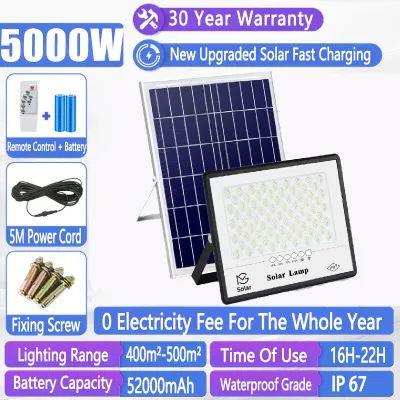
When selecting these high-output fixtures, you will encounter two primary configurations: integrated solar panels and split-panel designs. Integrated designs feature the solar panel directly on top of the light fixture, making installation quick and compact. However, these are only effective if the light itself can be positioned in direct sunlight. Split-panel designs feature a separate solar panel connected to the light fixture by a durable, weather-resistant cable, often ranging from 3 to 5 meters in length. This setup is highly advantageous for tropical homes, allowing you to mount the light fixture under a shaded carport, patio roof, or dense tree canopy while placing the solar panel high on a roof or wall where it can receive uninterrupted sunlight.
Beam angles and positioning play a critical role in the effectiveness of these lights. For aesthetic highlighting, position spotlights at the base of trees or walls, angling the beam upward to create dramatic shadows and textures—a technique known as uplighting. For security purposes, floodlights should be mounted high on walls or eaves, angled downward to cover wide entry points. Always verify the quality of the included mounting hardware before installation. Ensure that brackets, masonry plugs, and screws are corrosion-resistant and securely anchored to solid wood, concrete, or brick surfaces to prevent the fixtures from becoming loose during high winds or tropical storms.
Decorative and String Lights for Ambient Landscaping
To transform your patio, pergola, or garden borders into a cozy, inviting space for evening relaxation and entertainment, decorative solar string lights and lanterns are highly effective. These lights prioritize ambiance over high-intensity illumination, emitting a soft, warm glow that mimics traditional incandescent bulbs. They are perfect for draping across overhead structures, weaving through tree branches, or hanging along fences to define the social zones of your yard.
When installing solar string lights, safety and proper physical support are paramount. Never pull string light cables taut over long distances, as wind movement and thermal expansion can put excessive stress on the internal copper wiring and the hanging points. Instead, utilize safe hanging methods, such as running a stainless steel guide wire (tension wire) between your support posts or walls, and securing the light string to the wire using outdoor-rated cable ties. This method supports the physical weight of the cable and protects the electrical connections from tension damage. Always check the weight limits of any thin tree branches or decorative trellises before draping lights over them.
To achieve a professional landscape design, layer these decorative lights with your functional pathway and security lights. Avoid relying on a single, bright light source, which can create harsh shadows and a cold atmosphere. Instead, combine the soft, elevated glow of warm white string lights (typically around 2700K) with low-profile pathway stakes to create depth and visual interest. Choosing the right bulb shapes—such as classic Edison-style bulbs or delicate globe shapes—and selecting warm color temperatures will enhance the natural beauty of your tropical plants and outdoor furniture. Note that these decorative styles, perceived color temperatures, and spatial effects are conditional preferences based on personal taste rather than universal performance facts.
Key Specifications to Check Before Buying Lamo Solar Lights
Investing in outdoor solar lighting requires a careful look at technical specifications to ensure long-term performance and durability. Before making a purchase, always verify the voltage, base or interface type, wattage limits, physical dimensions, dimming methods, and electrical certifications on the product label or manufacturer’s manual.
- Brightness and Beam Angle: Brightness is measured in lumens, which indicates the total amount of visible light emitted by a source. For subtle pathway marking, fixtures emitting 50 to 200 lumens are generally sufficient. For focused accent lighting or spotlighting, look for fixtures offering 300 to 800 lumens. Security floodlights require much higher outputs, typically starting at 1,000 lumens and going up to 3,000 lumens or more. The beam angle dictates how wide the light will spread; a narrow 30-degree beam is perfect for spotlighting a garden feature, while a wide 120-degree beam is essential for floodlighting a driveway.
- Weather Resistance (IP Ratings): The Ingress Protection (IP) rating is a critical specification for any outdoor fixture, especially in the humid and rainy climate of the Philippines. An IP rating consists of two digits: the first represents protection against solid particles (0 to 6), and the second represents protection against liquids (0 to 9). For general garden use, a minimum rating of IP44 is required to protect against splashing water. However, for fixtures exposed to heavy tropical downpours and typhoons, look for ratings of IP65 or IP67, which indicate the light is completely dust-tight and highly resistant to powerful water jets or temporary submersion.
- Solar Panel and Battery Type: The efficiency of a solar light depends heavily on its photovoltaic panel and internal battery. Monocrystalline solar panels are highly efficient (typically 15% to 22% conversion efficiency) and perform significantly better on overcast or rainy days compared to Polycrystalline panels (typically 13% to 16% efficiency). For the battery, look for modern Lithium Iron Phosphate (LiFePO4) or Lithium-ion (Li-ion) chemistries. These batteries have a longer lifespan, handle high ambient temperatures better, and support more charge-discharge cycles than older Nickel-Metal Hydride (NiMH) batteries. Additionally, check if the battery is designed to be easily replaced when it eventually reaches the end of its life cycle.
- Material and Build Quality: Outdoor lights must endure constant exposure to ultraviolet (UV) radiation, moisture, and temperature fluctuations. High-grade ABS plastic is lightweight, rustproof, and cost-effective, but it must feature UV-resistant additives to prevent it from becoming brittle, yellowing, and cracking under the intense sun. For superior structural durability, anodized aluminum or stainless steel housings are highly recommended. If you live in a coastal area, ensure the metal components are specifically rated for marine or high-salt environments to prevent rapid corrosion and structural failure.
Installation and Maintenance Tips for Tropical Climates
To maximize the lifespan and daily runtime of your solar lights in the hot, humid, and rainy conditions of the Philippines, proper installation and consistent maintenance are essential. Since these lights are exposed to the elements, taking care of them ensures they remain a reliable part of your home’s exterior.
- Optimal Placement: Solar panels require direct, unshaded sunlight for at least 6 to 8 hours daily to fully charge the internal battery. When planning your installation, avoid placing the panels directly under dense tropical foliage, such as mango trees, banana plants, or low-hanging palms, which can block crucial sunlight. Be mindful of shadows cast by roof overhangs, fences, and adjacent buildings as the sun's angle changes throughout the day. In the Philippines, angling your solar panels slightly toward the south or west generally helps capture the maximum amount of direct sunlight year-round.
- Routine Cleaning: Over time, dust, pollen, bird droppings, and salt residue can accumulate on the surface of the solar panels, creating a physical barrier that blocks sunlight and reduces charging efficiency by up to 30%. To maintain optimal performance, establish a routine of cleaning the panels at least once a month. Use a soft, non-abrasive microfiber cloth or sponge dampened with clean water to gently wipe away debris. Avoid using harsh chemical detergents, glass cleaners, or abrasive scrubbing pads, as these can scratch or degrade the protective tempered glass or plastic coating on the panel, permanently reducing its light transmission.
- Battery and Seasonal Care: During the prolonged monsoon season, consecutive days of heavy cloud cover and continuous rain will limit the solar panel's ability to fully charge the battery. If your solar lights feature an accessible physical power switch and the manufacturer's manual permits, consider turning the lights off during multi-day storms. This prevents the battery from entering a state of deep discharge, which can permanently damage its capacity and shorten its overall lifespan. Periodically open the battery compartment (if designed to be user-accessible) to inspect for any signs of moisture entry, white powdery residue, or contact corrosion, wiping the contacts clean with a dry cloth if necessary.
- Safety Boundaries: Always prioritize electrical safety when handling outdoor lighting. Before performing any cleaning, inspection, or maintenance, ensure the power is completely isolated or switched off. Strictly consult the manufacturer's instruction manual before attempting to open the light housing or replace the internal rechargeable batteries. Never attempt to modify the internal wiring, bypass safety switches, or adapt low-voltage solar fixtures to connect directly to high-voltage AC mains power, as this poses severe risks of electrical shock, short circuits, and fire hazards. If you encounter damaged wiring, water ingress in sealed components, or if you are dealing with a complex hybrid system, always consult a qualified professional electrician.
Frequently Asked Questions (FAQ)
Do solar lights work effectively during the rainy season?
Yes, solar lights can still function during the rainy season, but their overall performance and runtime will be reduced. Solar panels do not require direct sunlight to charge; they can generate electricity from ambient daylight on overcast or cloudy days. However, because the intensity of this light is significantly lower, the battery will not charge fully, resulting in a shorter illumination period at night. To optimize performance during the rainy season, ensure your solar panels are completely free of dirt and positioned in the most open, unshaded area possible to capture all available daylight.
Can I replace the batteries in my solar garden lights?
Whether you can replace the batteries depends entirely on the design of your specific Lamo solar light model. You must consult the manufacturer’s product manual to confirm if the battery compartment is designed to be opened and if the batteries are user-replaceable. If they are, always use the exact battery chemistry (such as LiFePO4, Li-ion, or NiMH), voltage, and capacity specified by the manufacturer. Never install standard non-rechargeable alkaline batteries, as they can leak, explode, and permanently damage the fixture. Dispose of your old rechargeable batteries responsibly by taking them to a local electronic waste recycling center.

Community discussion
Share your experience or ask a question. Comments are reviewed before publication.